NewEra: Rethinking Repairs with Robotics and AI

EICHLER is taking part in the NewEra collaborative project

In future, repairs will be supported by digital technologies. The NewEra collaborative project is investigating how robotics, AI-supported image processing, sensor technology and digital twins can make repair processes more manageable. EICHLER is contributing the perspective gained from the day-to-day practice of repairing industrial electronics. The aim is to keep devices in use for longer and no further develop repair as part of the circular economy.

The trade magazine ROBOTIK UND PRODUKTION has also featured the NewEra collaborative project. EICHLER is part of the project and is contributing its perspective from the practical repair of indutrial electronics.

Key facts at a glance

  • Repairs require technical assessment, experience and a clear basis for decision-making.
  • Robotics can assist with routine repair tasks.
  • AI-powered image processing aids detection and evaluation
  • NewEra combines practical repair work with new technologies
  • Automation can make repair processes more traceable

Why repairs are strategically important

In industrial maintenance, repair has long been more than just a technical decision on a case-by-case basis. For operators, the key considerations are system availability, spare parts risks, costs, sustainability and the question of how long existing equipment can continue to be operated reliably.

At the same time, repair is challenging task. Equipment varies in design, condition, age, fault patterns and history. What looks the same on the outside may have very different underlying causes of damage internally. This is why thorough inspection, experience and a clear assessment are required: Is a repair technically feasible? Does it make economic sense? Are there alternatives such as replacement units, spare parts supply or stockpiling?

This is precisely where the NewEra collaborative project comes in.
What is the aim of NewEra

NewEra is exploring how repairs can be made more automated, digitally supported and cost-effective in the future. The focus is on a robot-assisted cell for repairing electrical appliances.

The project is not an end in itself. It is not about standardising repairs entirely or replacing human expertise. Rather, the aim is to make recurring repair steps more manageable and to develop processes in such a way that requires can be carried out more widely, transparently and cost-effectively in the future.

This is an important approach for the circular economy. After all, appliance that can be repaired sensibly and continue to be used does not need to be replaced immediately. This helps to conserve resources and prevent electronic waste.

Two robotic arms work together to carry out repair tasks

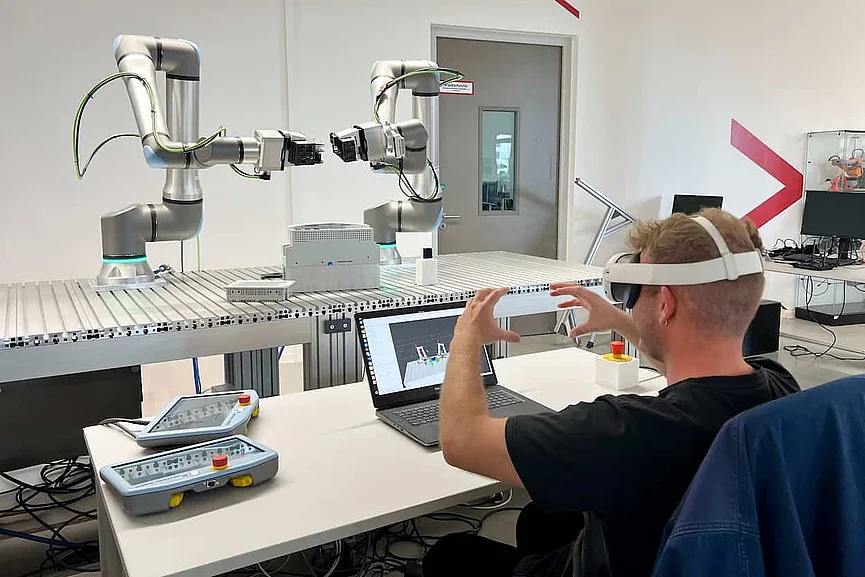
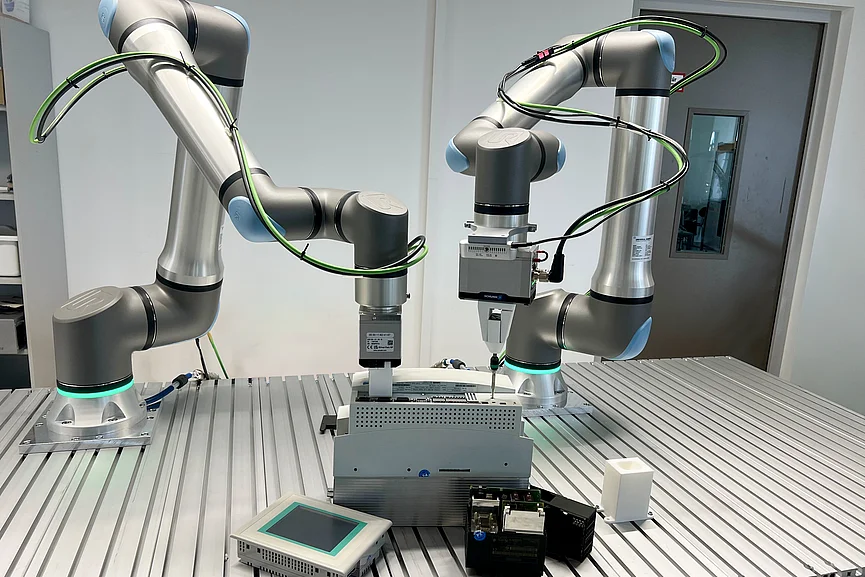
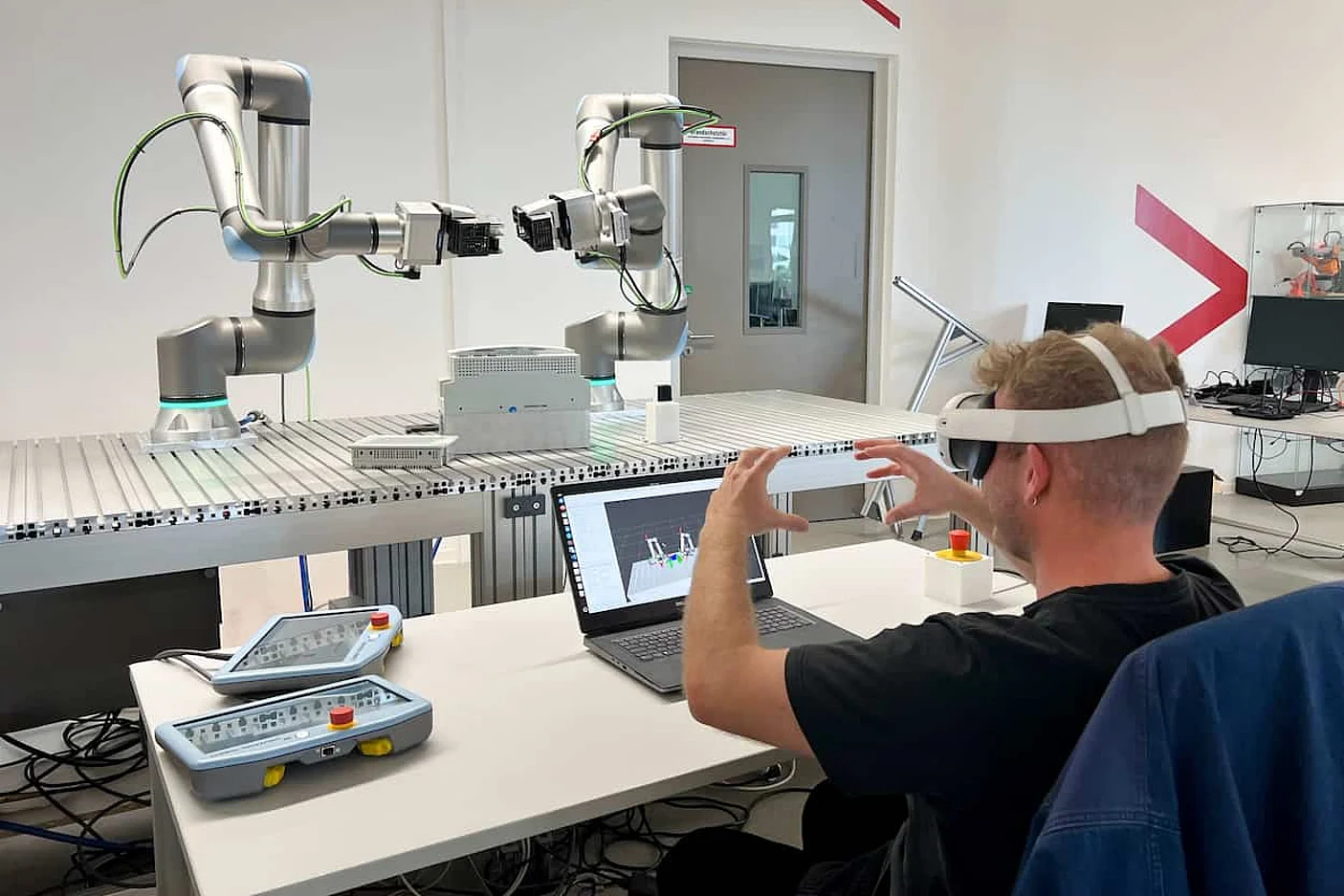
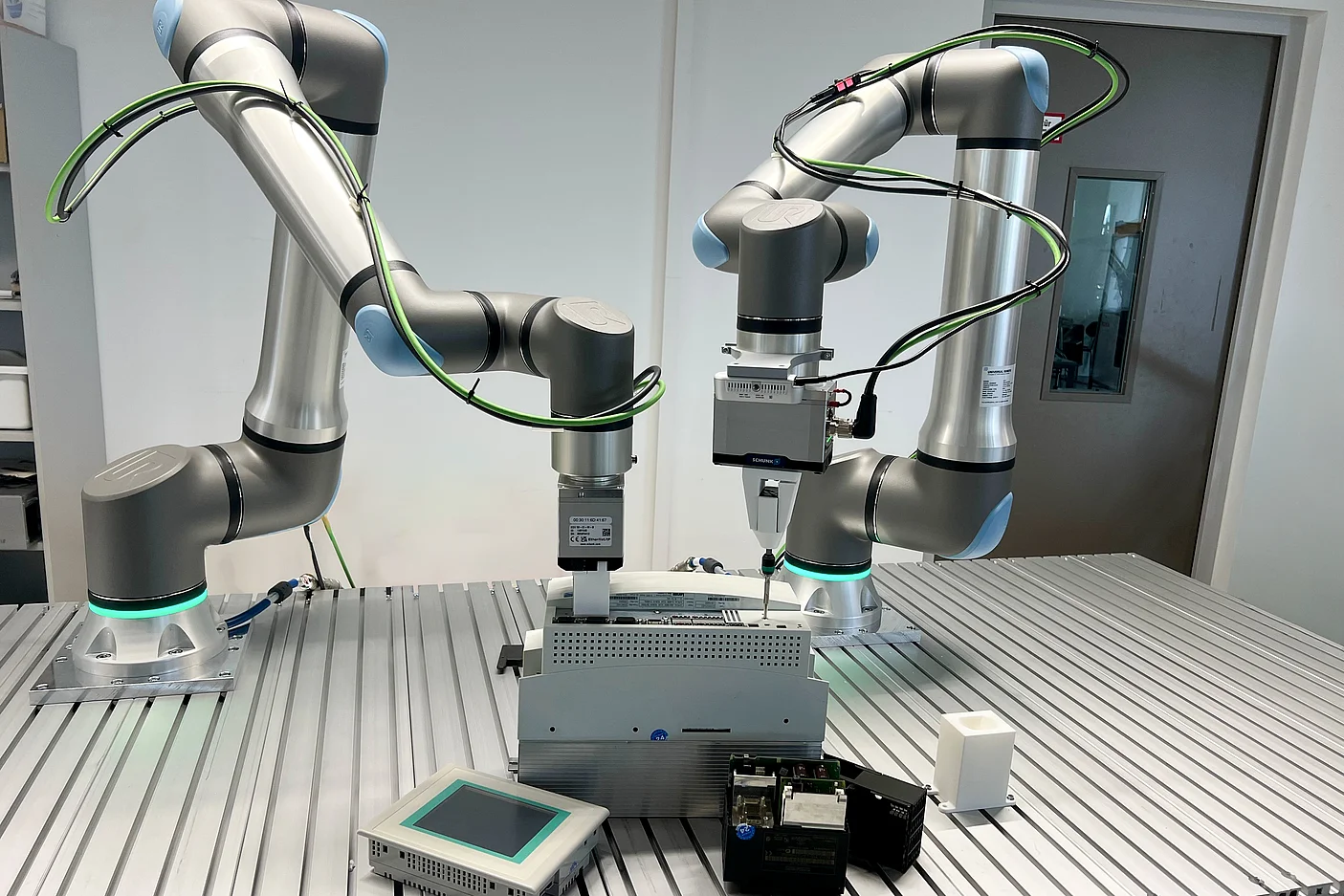
At the heart of the project is a modular robot cell featuring two collaborative robot arms. These are designed to carry out or assist with key steps in the repair process. These include, amongst other things, identifying devices, dismantling them and detecting faults.

It is precisely these stages of the process that are particularly challenging when it comes to repairs. First of all, the device must be correctly identified. Next, the casing, fixings, assemblies and components must be made accessible. Only then is it possible to assess what faults are present and what repair steps are feasible.

The robot cell is intended to demonstrate how such processes can be automated - in terms of preparation, execution and documentation - in the future. It is crucial that the systems remain flexible enough to cope with different device variants and conditions.

AI-powered image processing, sensor technology and digital twins

The robot cell is supported by AI-powered image processing, intelligent sensor technology and a digital twin.

Image processing can help to identify devices, components or visible anomalies. Sensors provide additional information for gripping, disassembly and inspection processes. The digital twin makes it possible to first develop, simulate and test processes virtually before implementing them in the actual robot cell.

This step is particularly relevant for repair processes. Unlinke in mas production, many repair jobs cannot be planned in full. Digital pre-development can help to prepare movements, gripping strategies and process sequences, and to identify potential sources of error at an earlier stage.

Why EICHLER is part of the project

EICHLER brings a practical perspective on repairs to the NewEra project. This experience is important for a project such as NewEra because automated repair processes are only viable if they can be measured against real-world requirements.

In practice, it is not just technical feasibility and process speed that count. Verifiability, documentation, cost-effectiveness, spare parts availability and the question of which solution makes the most sense for the system operator are also important.

For maintenance, procurement and production departments, a faulty assembly is rarely just a single component. It affects system availability, the risk of breakdowns, procurement channels and, frequently, the long-term spare parts strategy. It is precisely this perspective that EICHLER brings to the project.

Repairs as part of a robust operational strategy

NewEra demonstrates how repairs can be approached in a more digital and automated way in future. For operators of industrial systems, however, it remains crucial that this results in reliable courses of action.

Depending on the equipment, the nature of the fault and availability, the right decision may vary. Options include repair, a replacement unit, the supply of spare parts, stockpiling or modernisation. In future, automated support may help to make testing and repair processes more transparent and efficient.

Repairs are therefore viewed not merely as one-off measures, but as part of a forward-looking strategy for the continued operation of existing equipment.

Contribution to the circular economy

Repair rather than replace prematurely: this philosophy has been at the heart of EICHLER's approach for many years. NewEra builds on this and applies it to a research environment that brings together robotics, AI and digital process models.

If repairs become easier to plan, more repeatable and more cost-effective, this can ectend the service life of equipment. This is particularly relevant where faults occur more frequently, repair processes can be standardised, and equipment can continue to be used reliably after repair.

It is important to maintain a realistic assessment in this regard. Repair is not automatically the best solution in every case. It must be technically feasible, verifiable and economically viable. This is precisely why a thorough diagnosis, transparent documentation and a clear basis for decision-making are important.

Prospect

NewEra is all about looking to the future: how can repairs be organsied in the future when skilled workers are becoming scarcer, the risks associated with spare parts are increasing, and sustainability is playing a greater role in technical decision-making?

The answer does not lie in any single technology. What is crucial is the interplay between repair expertise, robotics, AI, sensor technology, digital simulation and practical asssessment.

For EICHLER, the investment in NewEra is therefore an important step towards rethinking repair. Practical expertise from the field of industrial electronics meets new technological approaches. The aim remains clear: to extend the useful life to equipment, make repair processes more manageable, and provide operators with viable options for continuing to use their technology.

Important documents

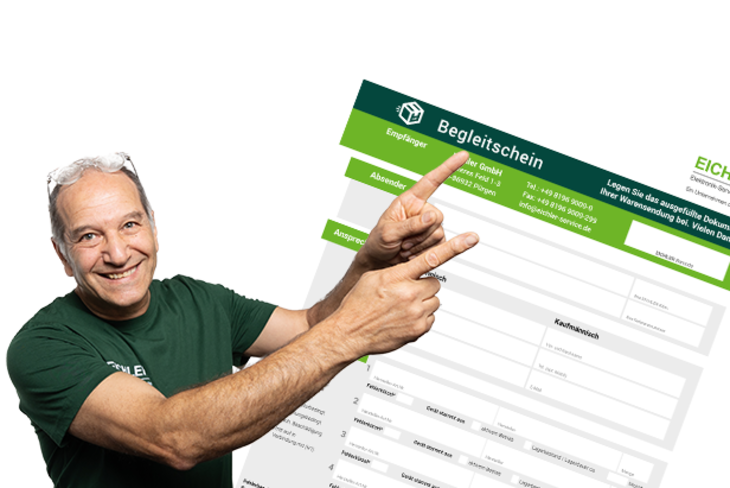
Repair accompanying note

Download the repair accompanying note as a PDF, or use the digital repair registration and send your defective modules to the EICHLER Service Centre for repair.

Laughing Eichler technician points to green PDF with special sale of automation technology

Your shopping basket

Loading shopping basket