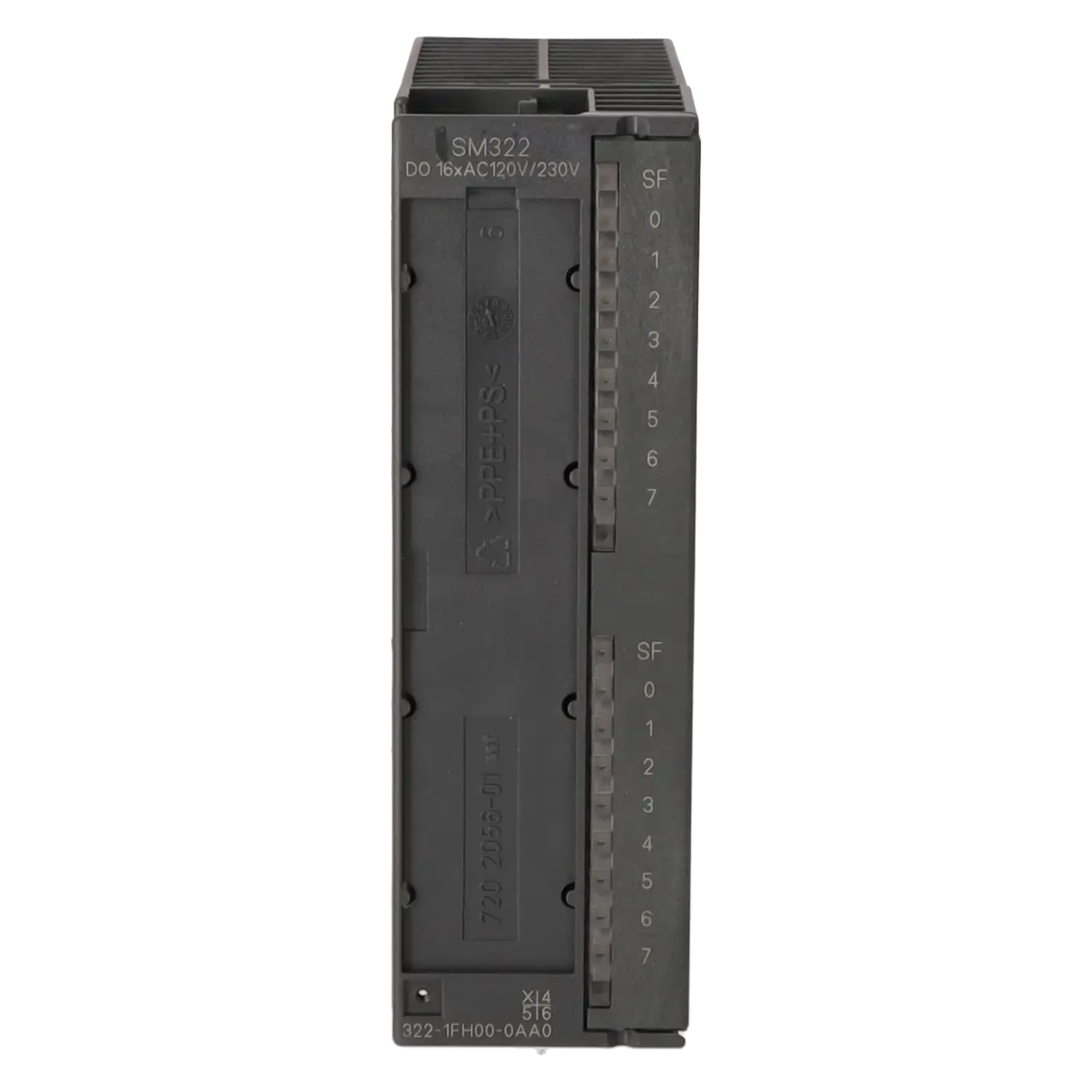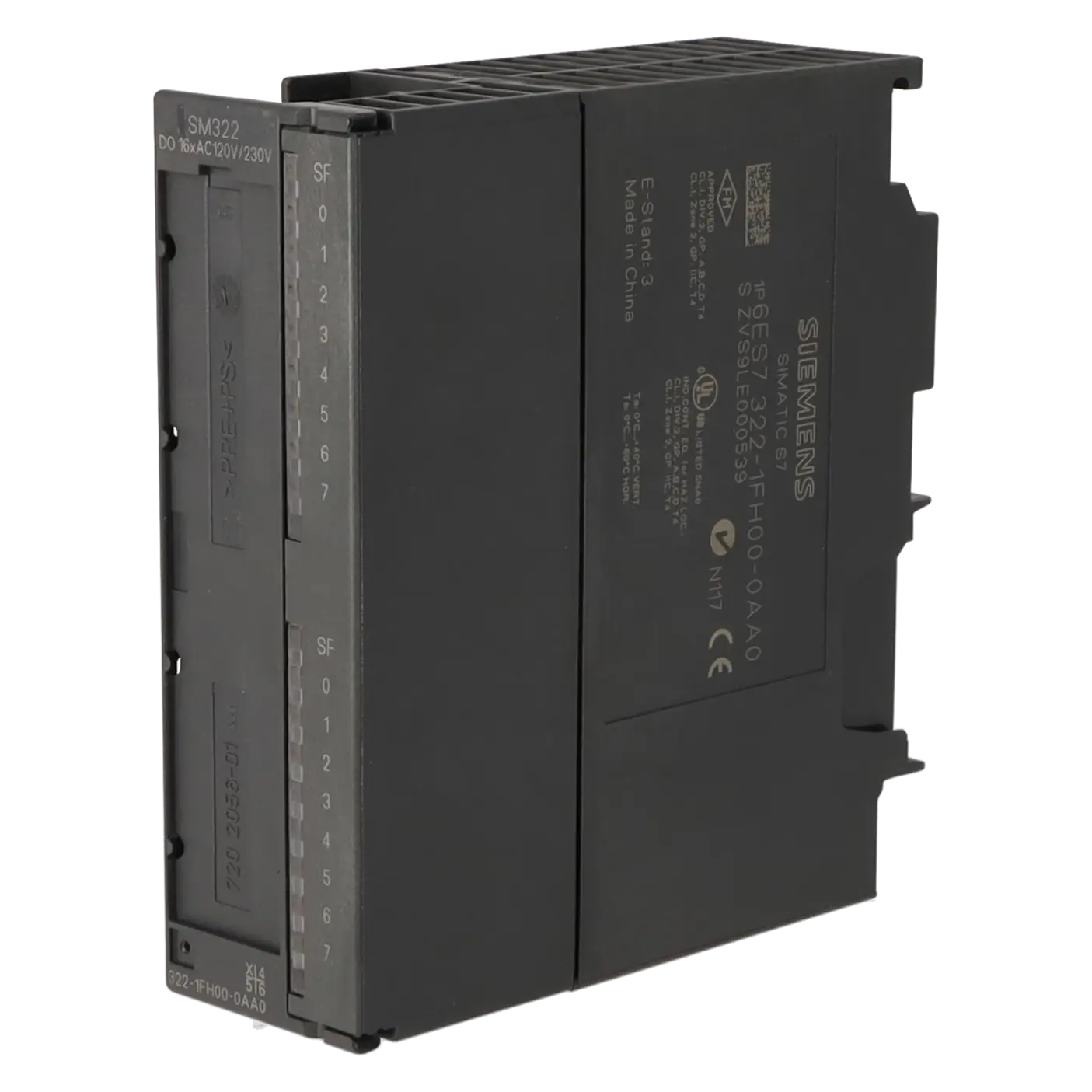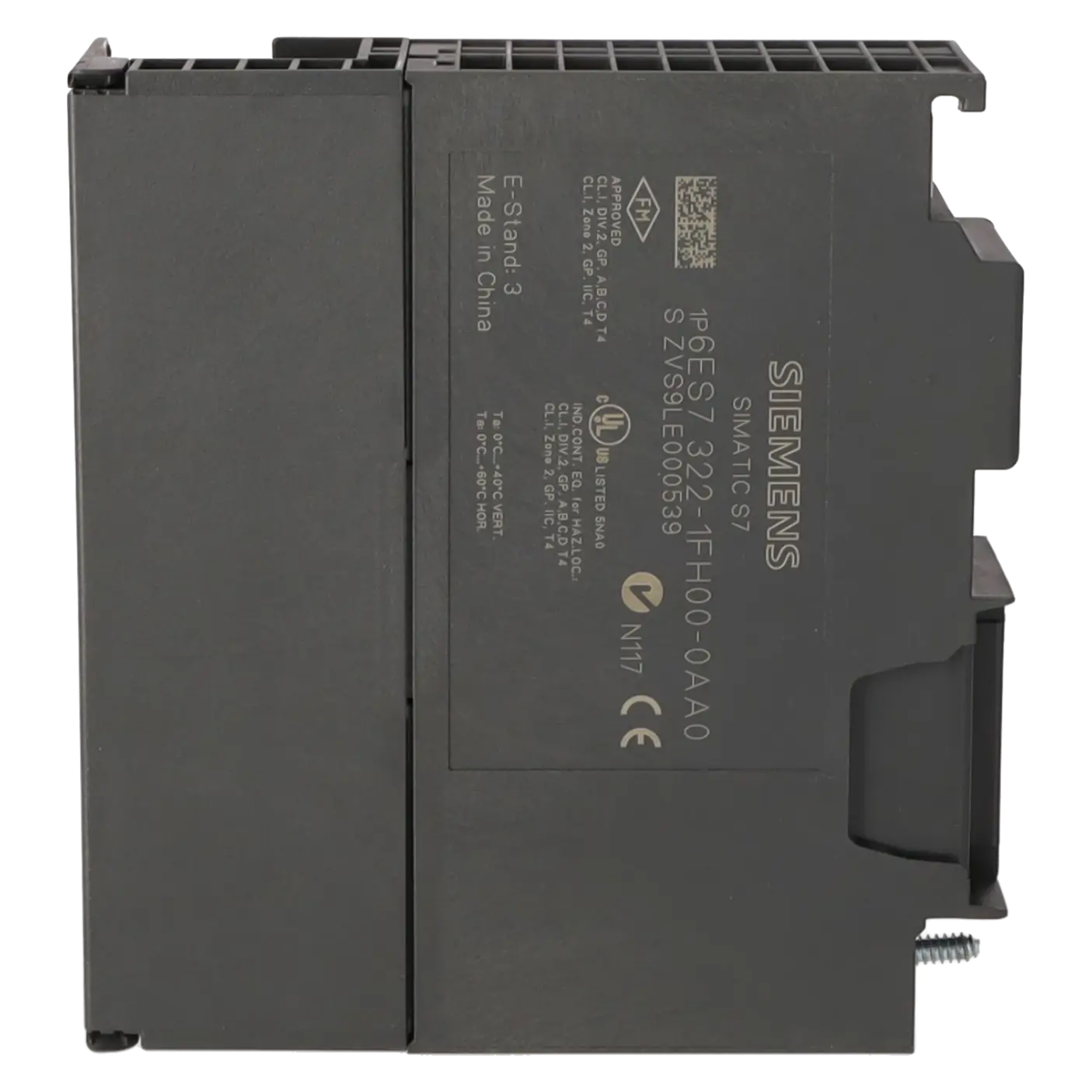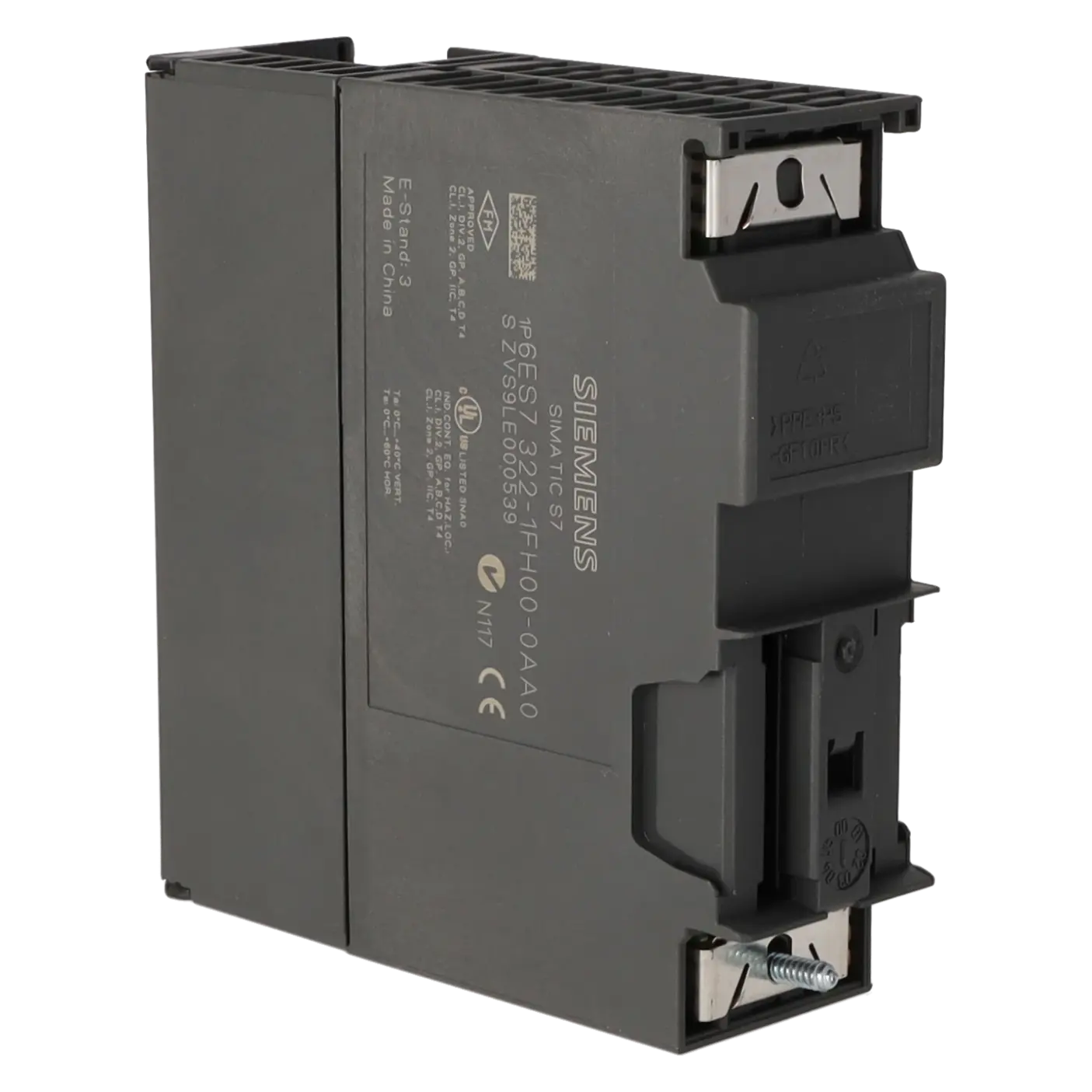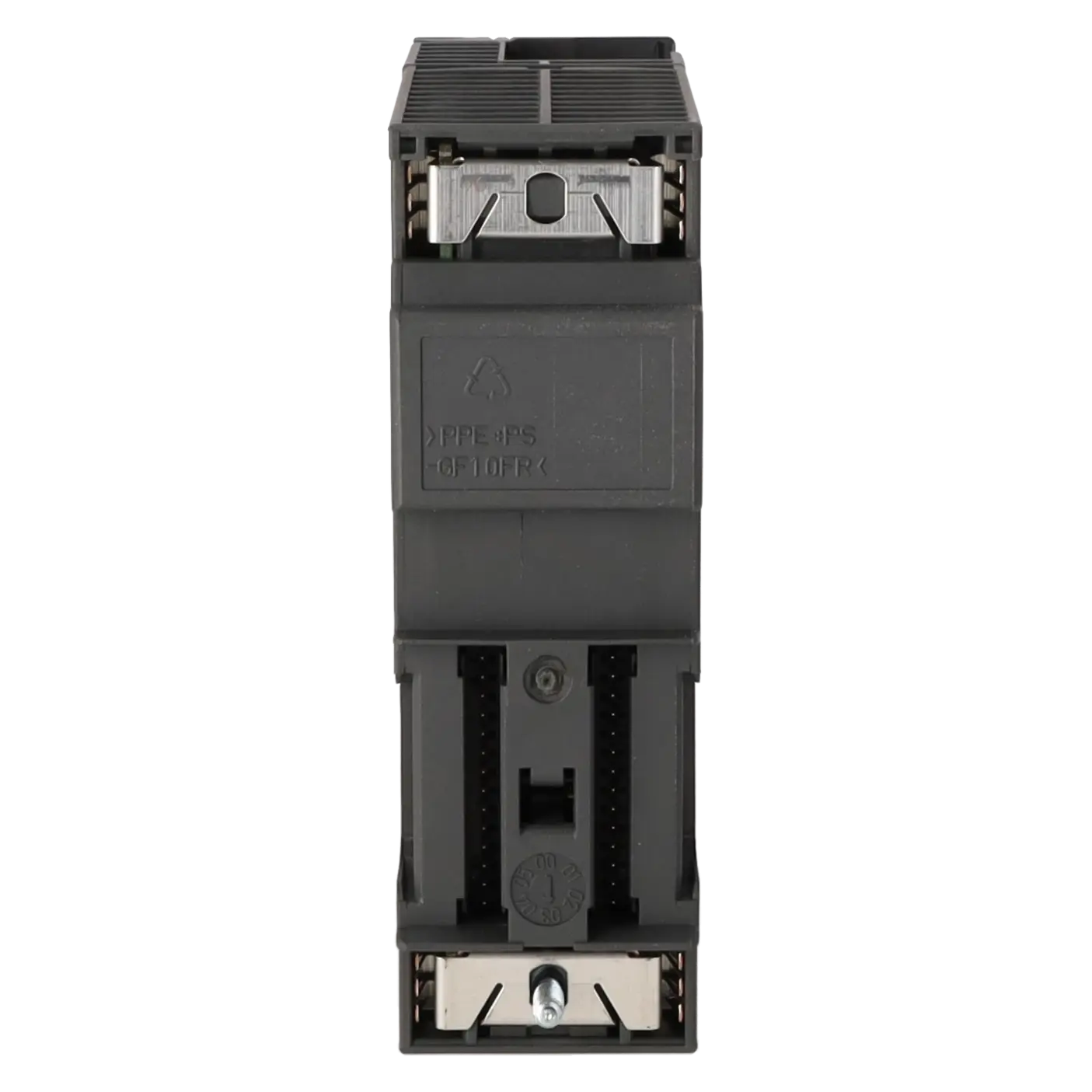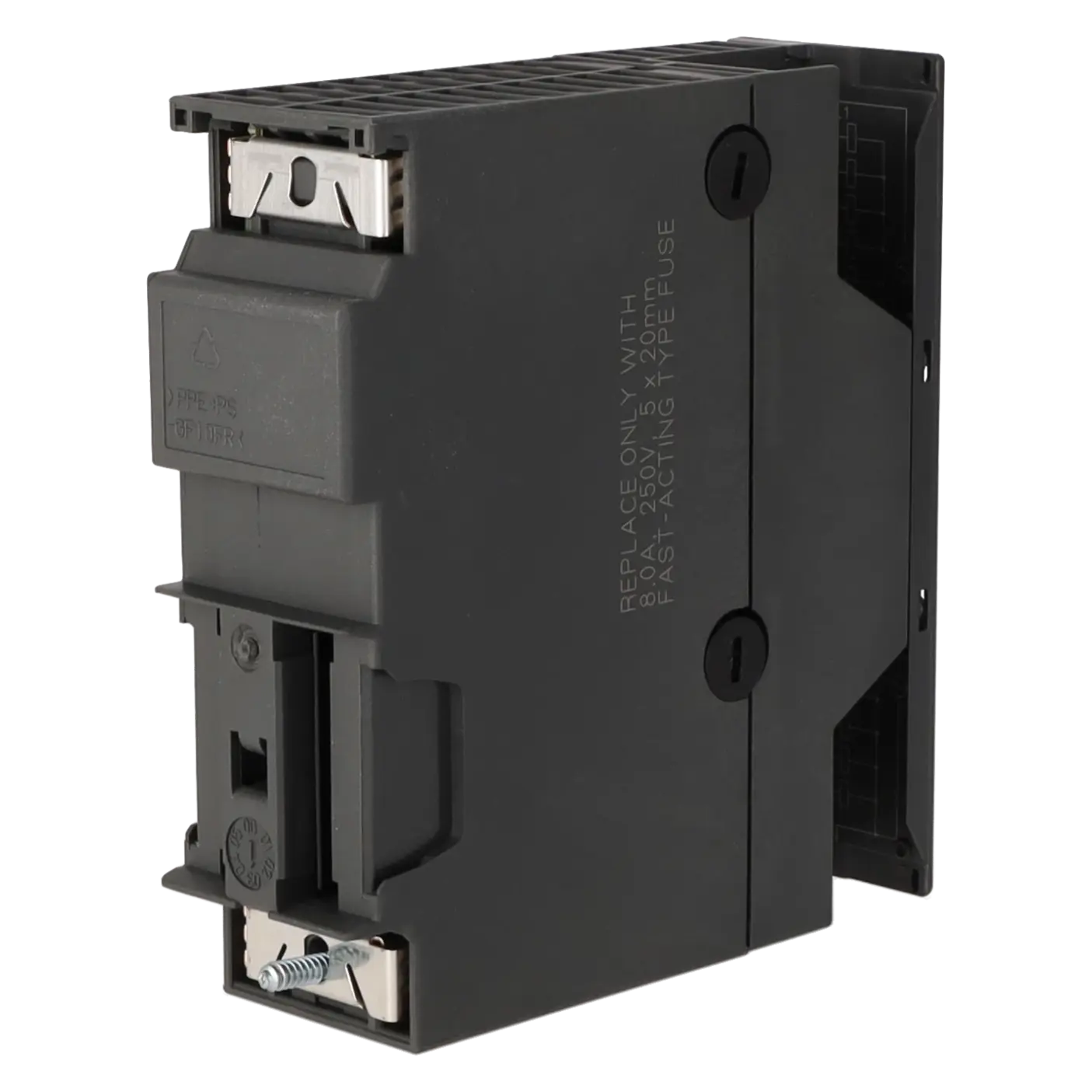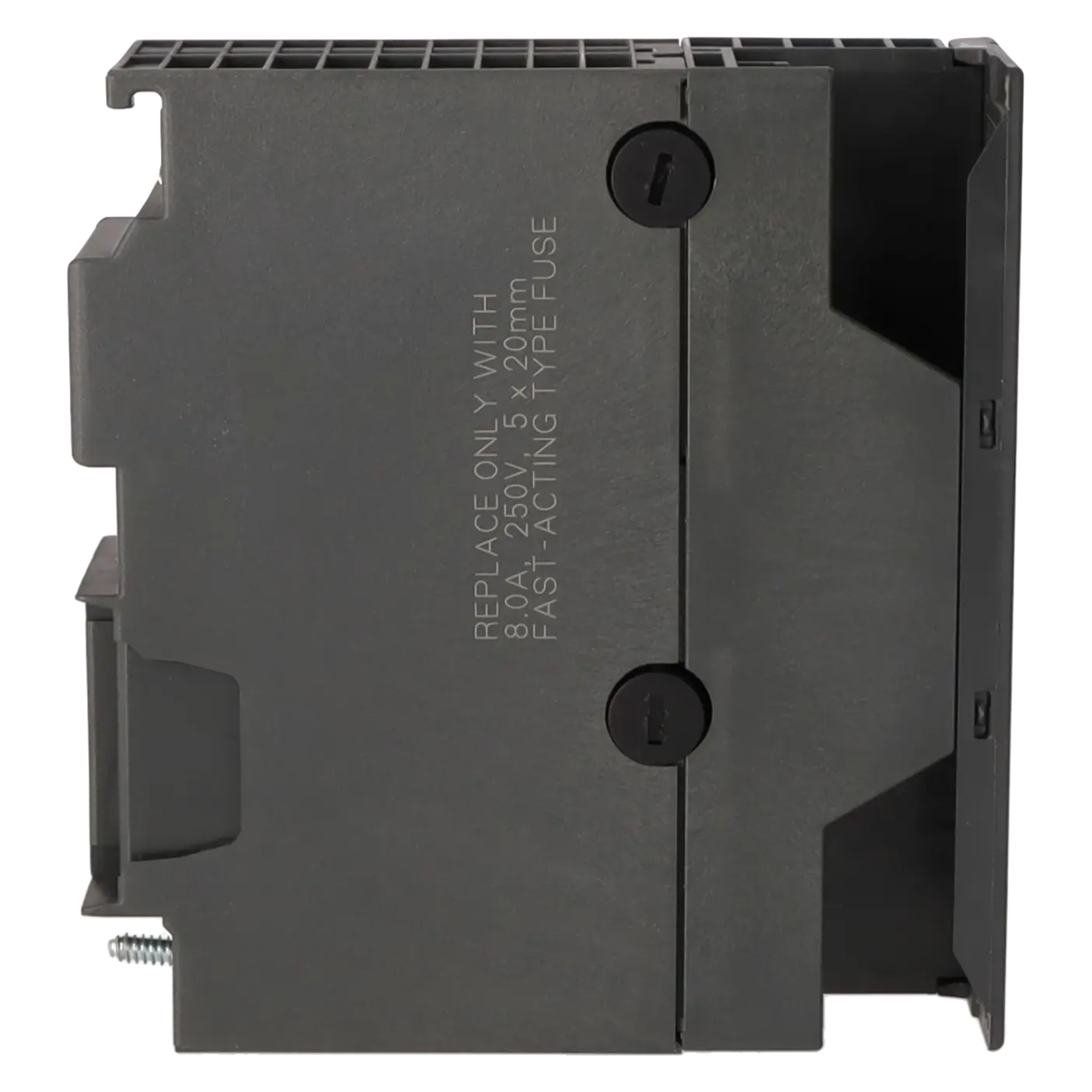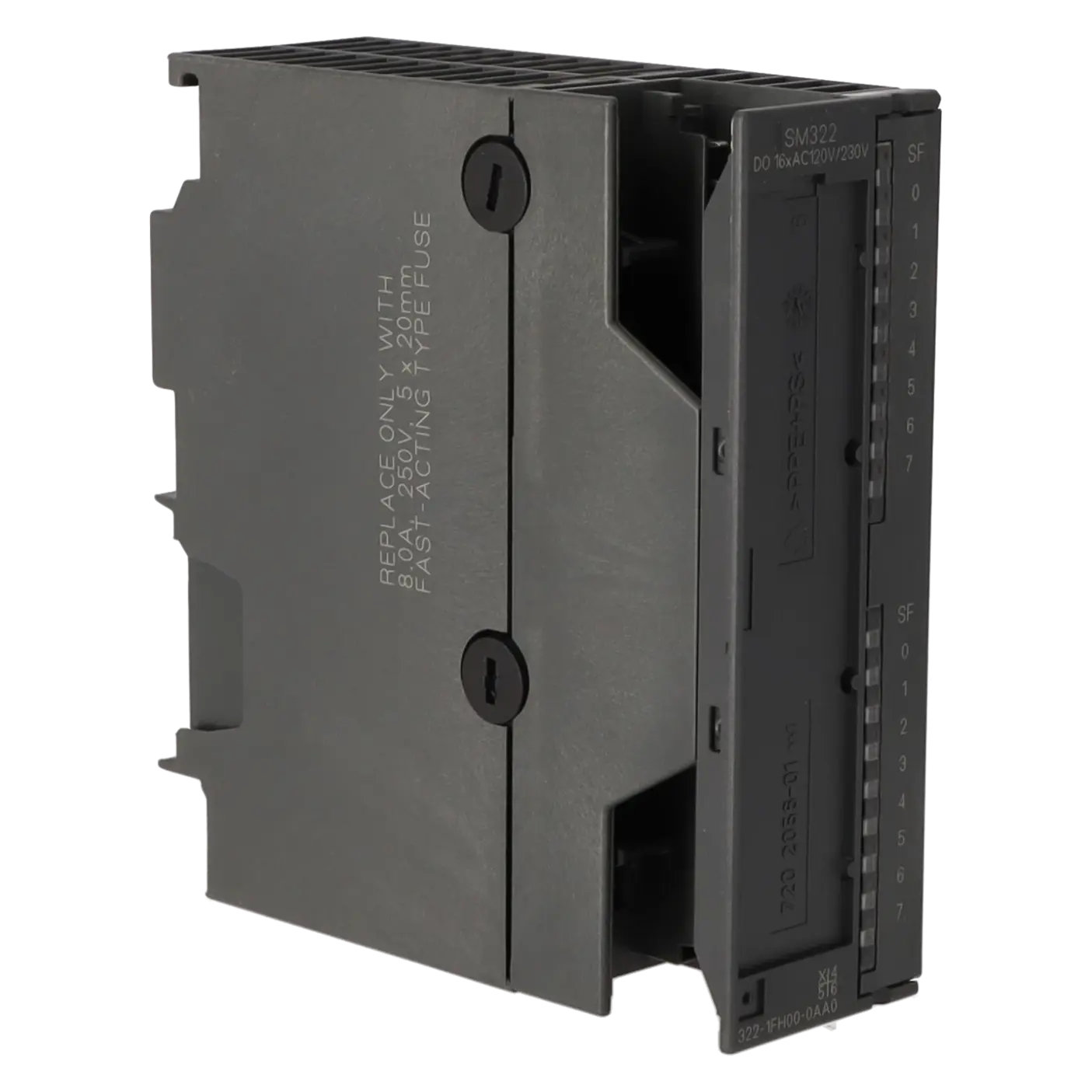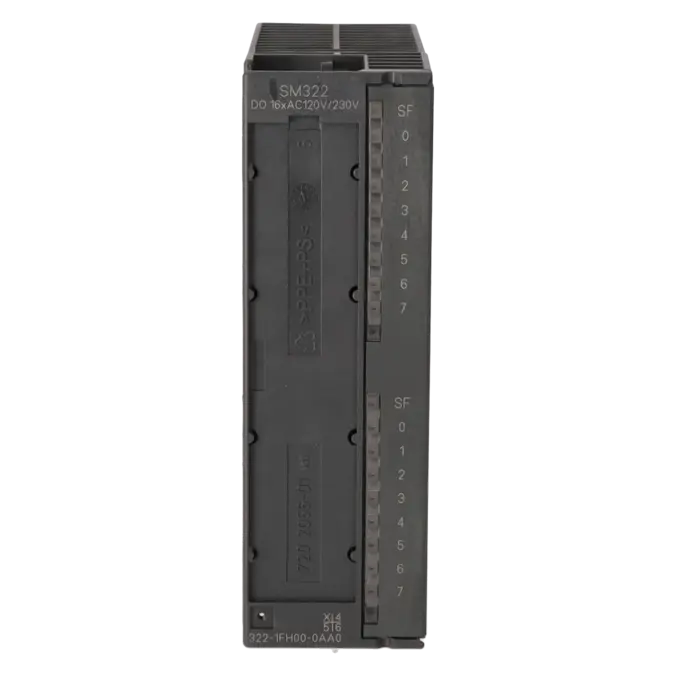
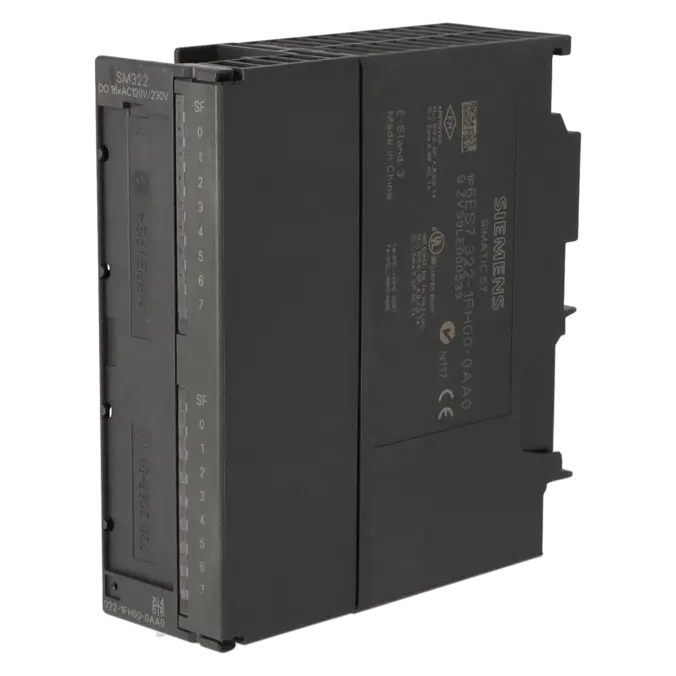
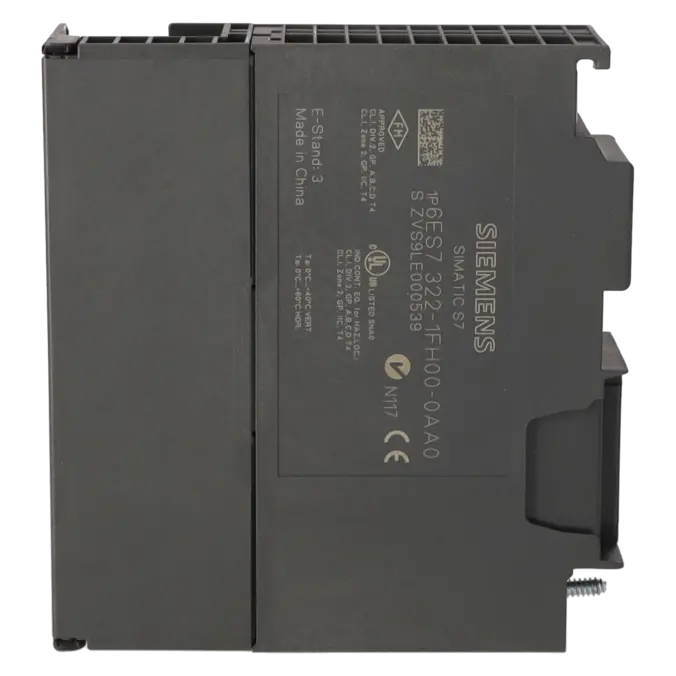
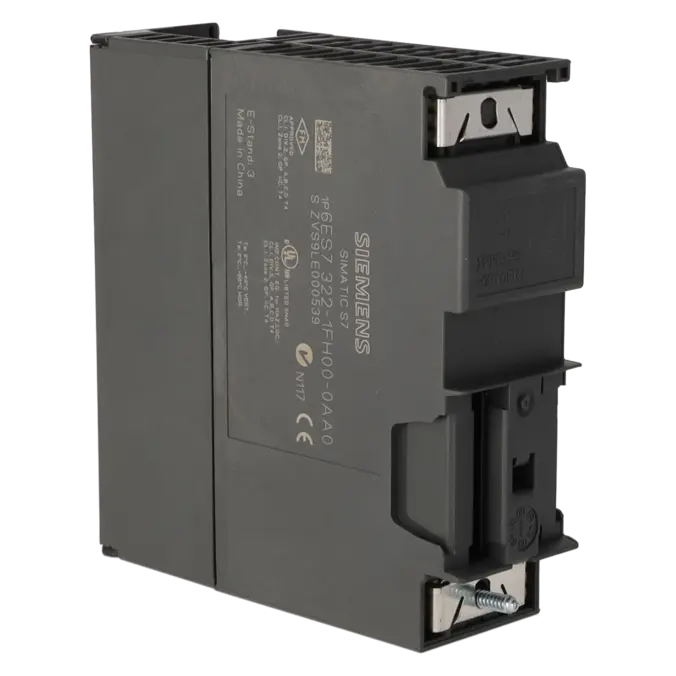
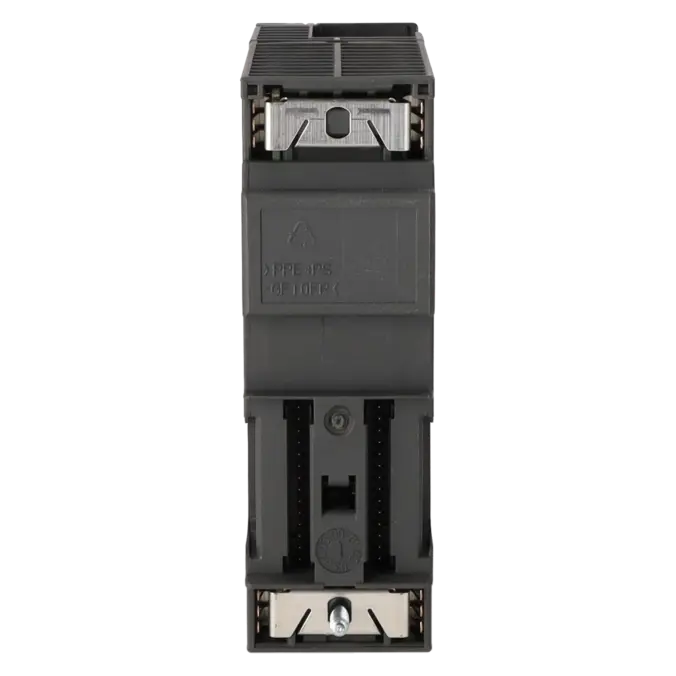
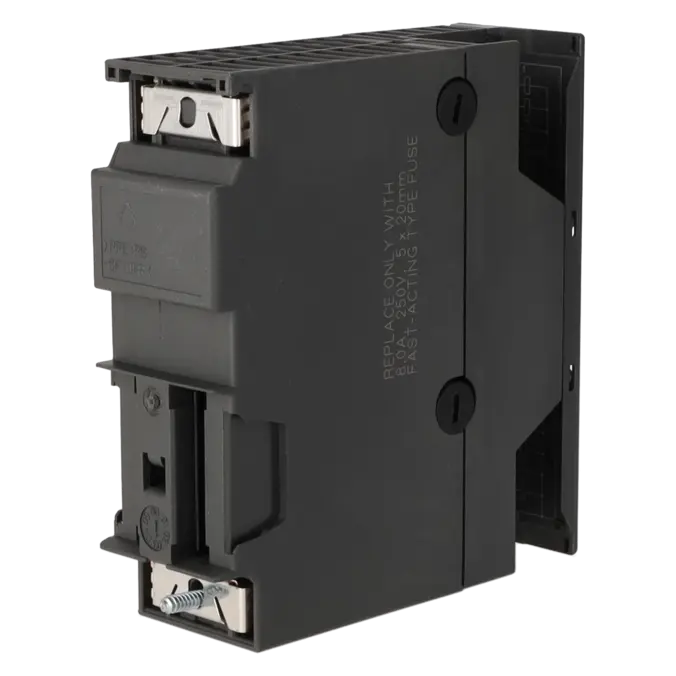
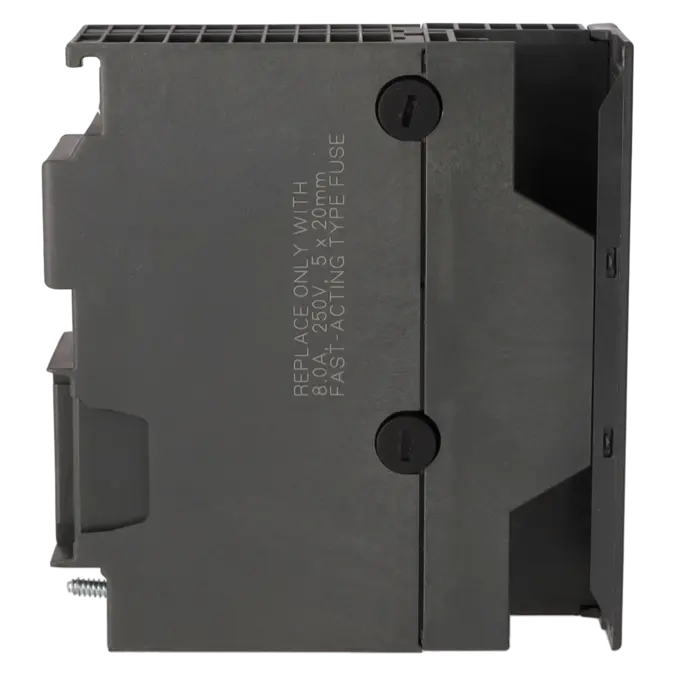
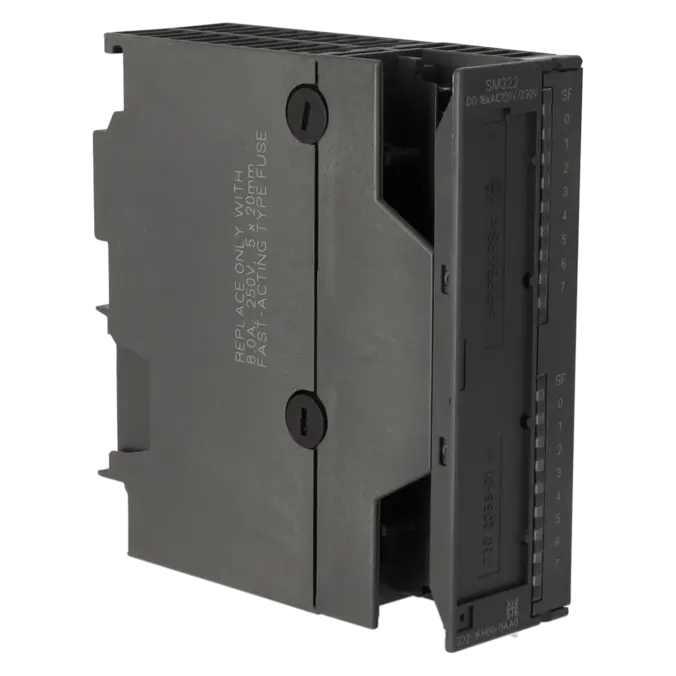
SIEMENS 6ES7322-1FH00-0AA0
- EICHLER-art.no.: K0118549
- EAN: 4019169350600
- UPC: 662643170955
Product description
SIMATIC S7-300, digital output SM 322, isolated 16 DO, 120/230 V AC, 1 A, 1x 20-pole
Services for SIEMENS 6ES7322-1FH00-0AA0
Repair
from 651,88 €
to 997,00 €
Replacement
Used
575,19 €
431,39 €
New
639,10 €
479,32 €
SIEMENS |
6ES7322-1FH00-0AA0 –
additional product information
| Delivery information | |||
|---|---|---|---|
| Export identifier | AL: N ECCN: N | ||
| Net weight | 0.325 | ||
| Quantity | 1 Stück | ||
| Packaging quantity | 1 | ||
| Additional product information | |||
|---|---|---|---|
| Product status | EOP: 2025-10-01 | ||
| EAN | 4019169350600 | ||
| UPC | 662643170955 | ||
| Static lot number | 85389091 | ||
| List indicator | ST73 | ||
| Product group | 4561 | ||
| Country of origin | DE | ||
| Compliance with the substance restrictions according to RoHS directive | Since: 20010504 | ||
| Product classifications | Version | Classification | |
|---|---|---|---|
| eClass | 4 | 27-24-03-04 | |
| eClass | 5.1 | 27-24-22-04 | |
| eClass | 6.0 | 27-24-22-04 | |
| ETIM | 3 | / | |
| ETIM | 4 | EC001419 | |
| ETIM | 5 | EC001419 | |
What is the 6ES7322-1FH00-0AA0 and where is it used?
The 6ES7322-1FH00-0AA0 is a Siemens SIMATIC S7-300 SM 322 digital output module featuring 16 digital AC outputs, designed for 120/230 V AC loads with 1 A per output. The module is used in traditional S7-300 controllers and within ET 200M environments whenever loads such as AC solenoid valves, contactors, motor starters, small AC motors, and signal lamps need to be switched reliably. For maintenance personnel, it is commonly found in long-running automation systems and legacy installations. For purchasing departments, the exact part number is important because it ensures clear identification within the spare-parts process. Wiring is carried out via a 20-pin front connector, making replacement in existing control cabinets straightforward and predictable.
Overview of the key technical specifications and what they mean
The module provides 16 outputs, is electrically isolated between the backplane bus and the output channels, and is internally divided into two groups of eight channels. The nominal load voltage L1 is 120/230 V AC, with a permissible range of 79 to 264 V AC according to Siemens. Each output can switch up to 1 A. The maximum group current is 4 A per group when installed horizontally at 40 °C; this limit is reduced at higher temperatures or in vertical mounting positions. In practice, this means that not only the current per channel must be considered, but also the ambient temperature, mounting orientation, and total group load. Each channel has a green status LED. In addition, a red SF LED indicates group-related faults such as a blown fuse or missing L1/N supply voltage. Protection is provided by an 8 A miniature fuse per group.
Product status, life-cycle status and obsolescence
For operators of existing installations, the product status is particularly important. Siemens currently classifies the 6ES7322-1FH00-0AA0 as a spare part and has placed the SIMATIC S7-300 and ET 200M product family in the PM400 product phase-out stage. This is a clear indication that spare-parts availability and inventory planning should be addressed proactively. For existing installations where wiring, PLC software and cabinet layouts are to remain unchanged, the original module is often still the most practical solution. For migration projects, Siemens identifies the 6ES7522-5FH00-0AB0 together with adapter 6EZ2041-8HR11-4DA0 as a migration path towards S7-1500 technology. However, this is a migration solution and not a universal plug-and-play replacement without engineering verification.
Available EICHLER services and when they are relevant
At EICHLER, the module is relevant not only as a spare part but also as part of a service strategy designed to minimise downtime. Repair services are particularly attractive when the existing hardware architecture should remain unchanged. EICHLER specifies a repair turnaround time of 2–5 days, including technical cleaning, preventive maintenance, comprehensive functional testing, and a minimum 24-month warranty. When downtime must be reduced immediately, new and refurbished units become particularly relevant. According to the product page, new units are available within 1–3 days, while refurbished units are available within 3–5 days. An exchange solution may be the preferred option when rapid return to operation is more important than repairing the original module.
| Attribute | Value |
|---|---|
| Supply voltage | |
| Load voltage L1 | |
| ● Rated value (AC) | 230 V; 120/230 V AC |
| ● permissible range, lower limit (AC) | 79 V |
| ● permissible range, upper limit (AC) | 264 V |
| Input current | |
| from load voltage L1 (without load), max. | 2 mA |
| from backplane bus 5 V DC, max. | 200 mA |
| Power loss | |
| Power loss, typ. | 8.6 W |
| Digital outputs | |
| Number of digital outputs | 16 |
| Short-circuit protection | Yes; Fuse 8 A, 250 V; per group |
| ● required current for fuse shutdown, min. | 40 A |
| ● Response time, max. | 300 ms |
| Controlling a digital input | Yes |
| Size of motor starters according to NEMA, max. | 4 NEMA compliant |
| Spare fuses | 8 A / quick response |
| Switching capacity of the outputs | |
| ● on lamp load, max. | 50 W |
| Output voltage | |
| ● for signal "1" (at max. current), min. | L1 (-1.5 V) |
| ● for signal "1" (at min. current), min. | L1 (-8.5 V) |
| Output current | |
| ● for signal "1" rated value | 1 A |
| ● for signal "1" permissible range for 0 to 40 °C, min. | 10 mA |
| ● for signal "1" permissible range for 0 to 40 °C, max. | 1 A |
| ● for signal "1" permissible range for 40 to 60 °C, min. | 10 mA |
| ● for signal "1" permissible range for 40 to 60 °C, max. | 0.5 A |
| ● for signal "1" minimum load current | 10 mA |
| ● for signal "1" permissible surge current, max. | 20 A; with 2 half waves |
| ● for signal "0" residual current, max. | 2 mA |
| Parallel switching of two outputs | |
| ● for uprating | No |
| ● for redundant control of a load | Yes; only outputs of the same group |
| Switching frequency | |
| ● with resistive load, max. | 10 Hz |
| ● with inductive load, max. | 0.5 Hz |
| ● with inductive load (acc. to IEC 60947-5-1, AC15), max. | 0.5 Hz |
| ● on lamp load, max. | 1 Hz |
| Total current of the outputs (per group) | |
| horizontal installation | |
| — up to 40 °C, max. | 4 A |
| — up to 60 °C, max. | 2 A |
| vertical installation | |
| — up to 40 °C, max. | 2 A |
| Cable length | |
| ● shielded, max. | 1 000 m |
| ● unshielded, max. | 600 m |
| Interrupts/diagnostics/status information | |
| Diagnostics function | Yes; Fuse blown or load voltage missing |
| Alarms | |
| ● Diagnostic alarm | No |
| Diagnoses | |
| ● Wire break | No |
| ● Short-circuit | No |
| ● Fuse blown | Yes |
| ● missing load voltage | No |
| Diagnostics indication LED | |
| ● Rated load voltage PWR (green) | No |
| ● Fuse OK FSG (green) | Yes; Red LED for fuse |
| ● Group error SF (red) | Yes |
| ● Status indicator digital output (green) | Yes |
| Potential separation | |
| Potential separation digital outputs | |
| ● between the channels, in groups of | 8 |
| ● between the channels and backplane bus | Yes; Optocoupler |
| Isolation | |
| Isolation tested with | 4 000 V DC |
| Connection method | |
| required front connector | 20-pin |
| Dimensions | |
| Width | 40 mm |
| Height | 125 mm |
| Depth | 120 mm |
| Weights | |
| Weight, approx. | 275 g |
| Fault description | Possible solution |
|---|---|
| Why does the SF LED on the 6ES7322-1FH00-0AA0 remain permanently illuminated? | According to Siemens, the red SF indicator on this module typically signals a blown fuse or a missing L1/N load supply voltage. First check the station hardware diagnostics. Then measure the supply voltage for each output group, verify both phase and neutral conductor connections, and inspect the 8 A fuse of the affected group. If the fuse trips again, check the connected loads for short circuits, overcurrent conditions or excessive inrush currents. A similar SF symptom is also described in a PLCtalk discussion relating specifically to this module. |
| Why does an output on the 6ES7322-1FH00-0AA0 not switch even though the channel LED is active? | In this situation, the load circuit and the module output should be tested separately. Siemens specifies 120/230 V AC as the load voltage for this module, and all load voltages must be connected to the same phase. Verify that L1 and N are actually present at the load, that the connected load is within the permissible range of 10 mA to 1 A, and that there are no wiring errors at the 20-pin front connector. With an incorrect supply voltage or an unsuitable load, the status LED may indicate a switched output while the connected device does not operate correctly. |
| Why does the fuse on the 6ES7322-1FH00-0AA0 keep blowing? | Siemens specifies a fast-acting 8 A fuse per output group. Repeated fuse failures usually indicate excessive group loading, high inrush currents or a fault within a connected load. Particular attention should be paid to lamps, solenoid coils and contactors when assessing startup conditions. In addition, verify that the permitted group current limits and cabinet temperature conditions are being observed. Siemens also specifies suitable fast-acting 8 A replacement fuses and a dedicated fuse kit for this module. |
| Why do several outputs on the 6ES7322-1FH00-0AA0 fail at the same time? | The module is organised into output groups. If several channels within the same group fail simultaneously, this strongly suggests a group-related fault, such as a missing L1/N supply or a blown group fuse. Therefore, do not limit troubleshooting to the individual channel. Always inspect the entire output group, its common supply voltage and all connected loads. Mounting orientation and group current limits should also be checked, as thermal overload conditions can affect an entire group rather than a single output. |
Is the 6ES7322-1FH00-0AA0 still available?
Yes, the module is still available, but the procurement process should be actively secured. Siemens classifies the 6ES7322-1FH00-0AA0 as a spare part, indicating an advanced life-cycle status. At the time of research, the EICHLER product page listed both new and used units, as well as repair services and an exchange option on request. For purchasing departments, this means that availability still exists, but the risk of future supply shortages increases as obsolescence progresses. Operators of critical systems should therefore consider building up spare stock or implementing a repair strategy for identical modules at an early stage.
Is the 6ES7322-1FH00-0AA0 suitable for S7-300 and ET 200M systems?
Yes. Siemens assigns the module to the SIMATIC S7-300 environment and also references it in connection with both S7-300 and ET 200M systems. This is important because many existing installations are configured either centrally in a rack or decentrally using ET 200M structures. Before replacing the module, the station configuration, front connector, voltage type and channel assignment should always be verified. The module uses a 20-pin front connector, making this a key factor for mechanical and electrical compatibility within the existing station.
Is there a direct Siemens successor to the 6ES7322-1FH00-0AA0?
Siemens currently classifies the original module as a spare part. For modernisation projects and platform migration, Siemens identifies the 6ES7522-5FH00-0AB0 together with the adapter 6EZ2041-8HR11-4DA0 as a suitable target solution. For operators, this means that there is a documented migration path, but not necessarily a simple 1:1 replacement in every existing installation. Wiring, I/O architecture, engineering requirements and approval processes must be reviewed before migration. If the system must continue operating in the short term, sourcing the original module is often the faster solution.
Which fuse and accessories are relevant for the 6ES7322-1FH00-0AA0?
Siemens specifies a fast-acting 8 A fuse per output group for this module. This is important because failures are often caused by the group fuse rather than by the module itself. For maintenance purposes, it is therefore advisable to keep suitable replacement fuses in stock. Siemens also offers the fuse set 6ES7973-1HD00-0AA0, which is listed for the 6ES7322-1FH00-0AA0 and contains 10 fuses and 2 fuse holders. The 20-pin front connector is also important because it provides the interface between the module and the existing field wiring.
When is repair more practical than purchasing a new module?
Repair is particularly beneficial when the existing system should remain unchanged, modifications are to be avoided and the original module can be restored economically. EICHLER describes its repair service as including technical cleaning, preventive maintenance, comprehensive functional testing and a minimum 24-month warranty. This is especially attractive for maintenance teams dealing with recurring faults or ageing hardware. Purchasing a replacement module may be preferable when immediate availability from stock is required or when a spare unit is being built up for critical production lines. In an obsolescence environment, the combination of repair capability and spare-part stockholding is often the lowest-risk strategy.
Which option is most economical: new, used or exchange?
The answer depends primarily on time pressure and operational risk. New units are the preferred choice when building a reliable spare-part inventory with minimal uncertainty. Used units are often attractive when extending the life of an older installation while keeping acquisition costs low. Exchange units are particularly useful when minimising downtime is the main objective and production must resume as quickly as possible. EICHLER offers new, used, repair and exchange options for this module. Ultimately, the most economical solution is determined not only by the purchase price, but also by its impact on downtime, procurement risk and long-term obsolescence management.