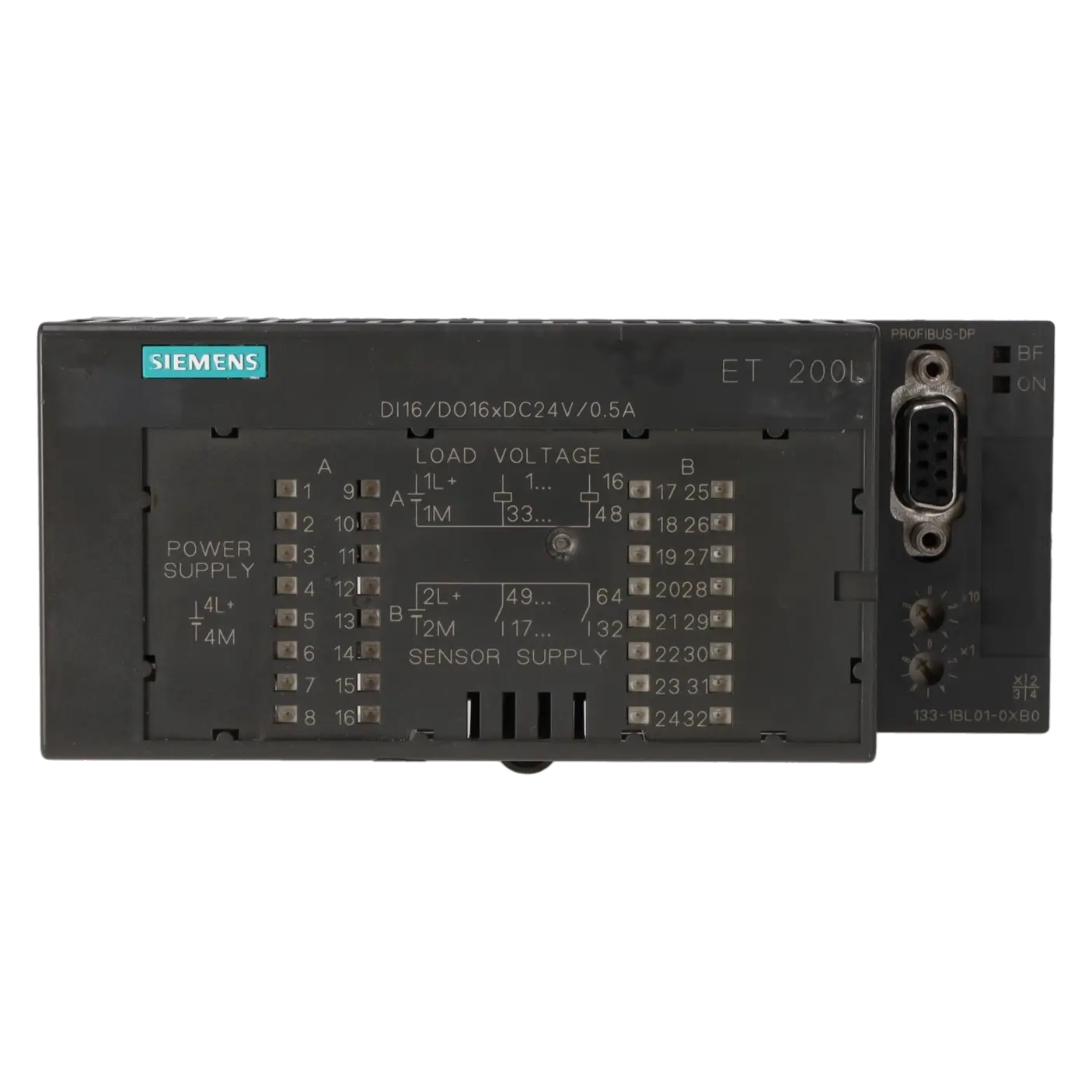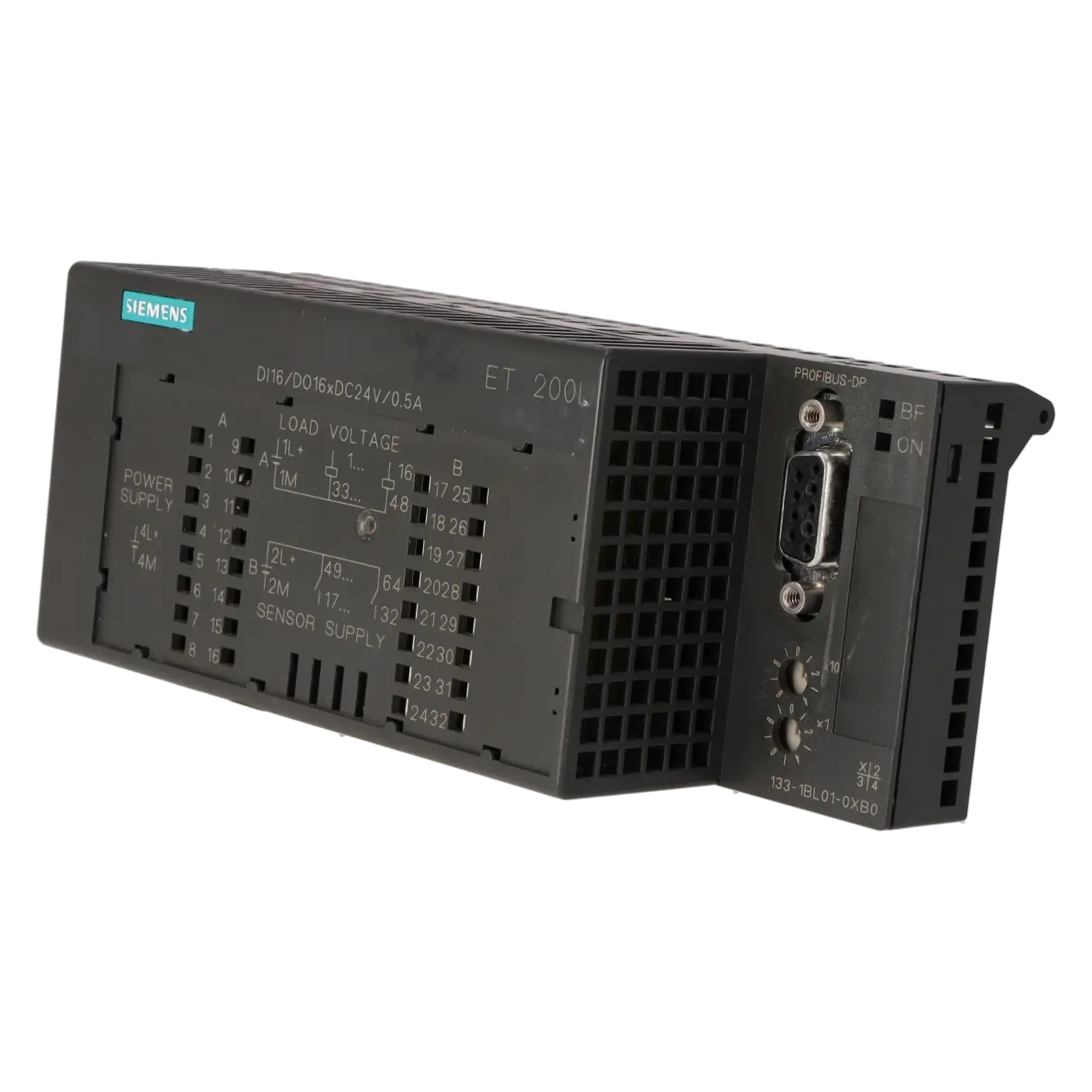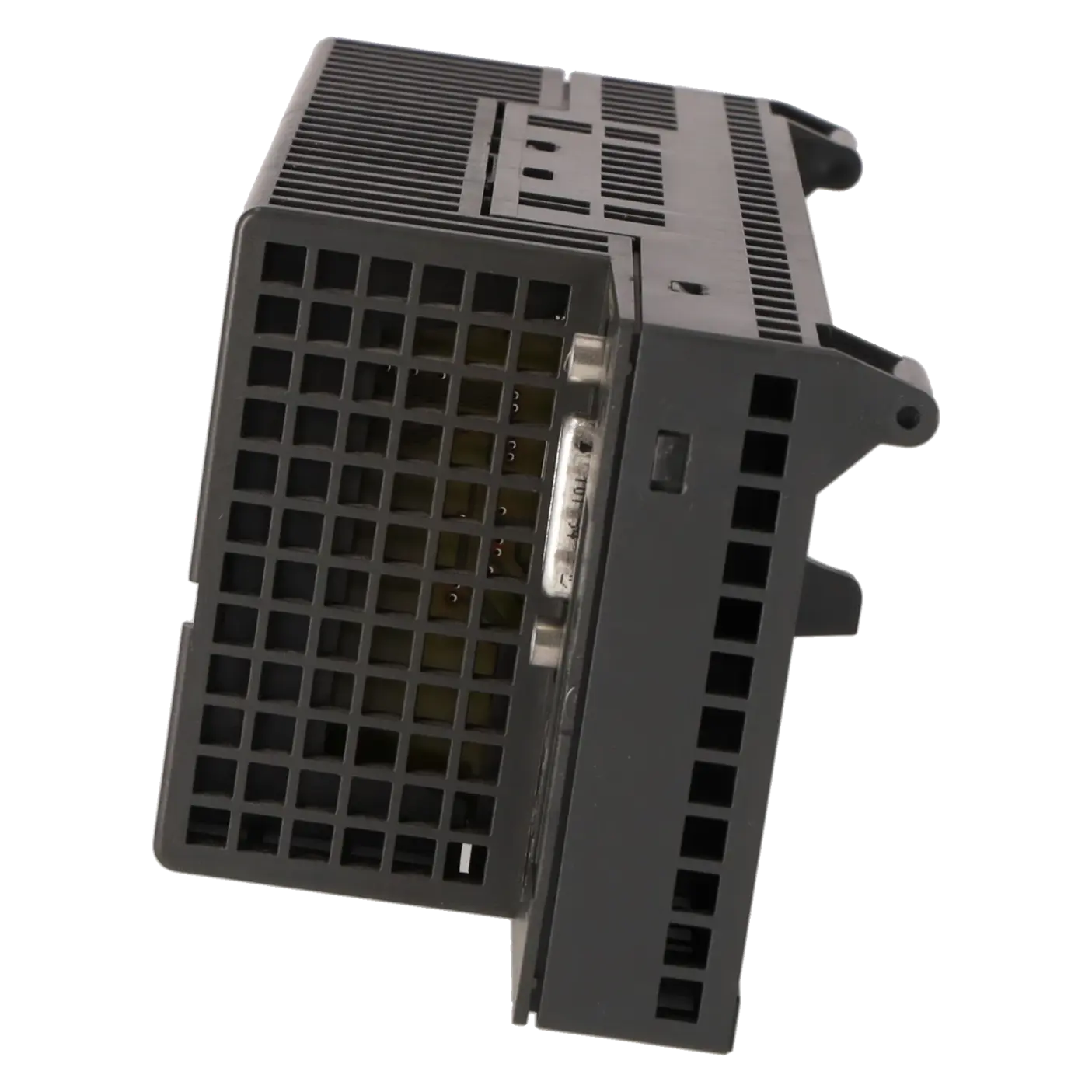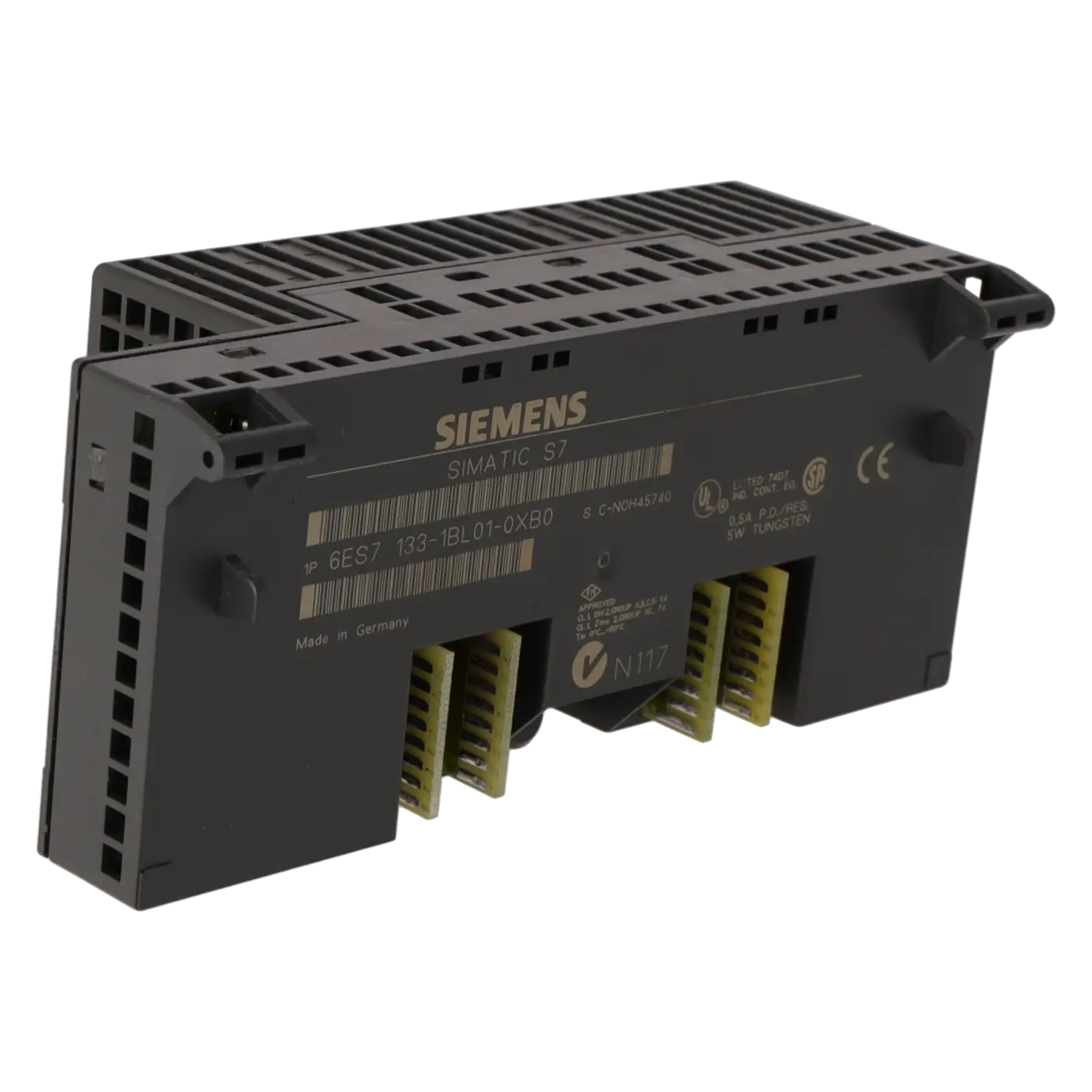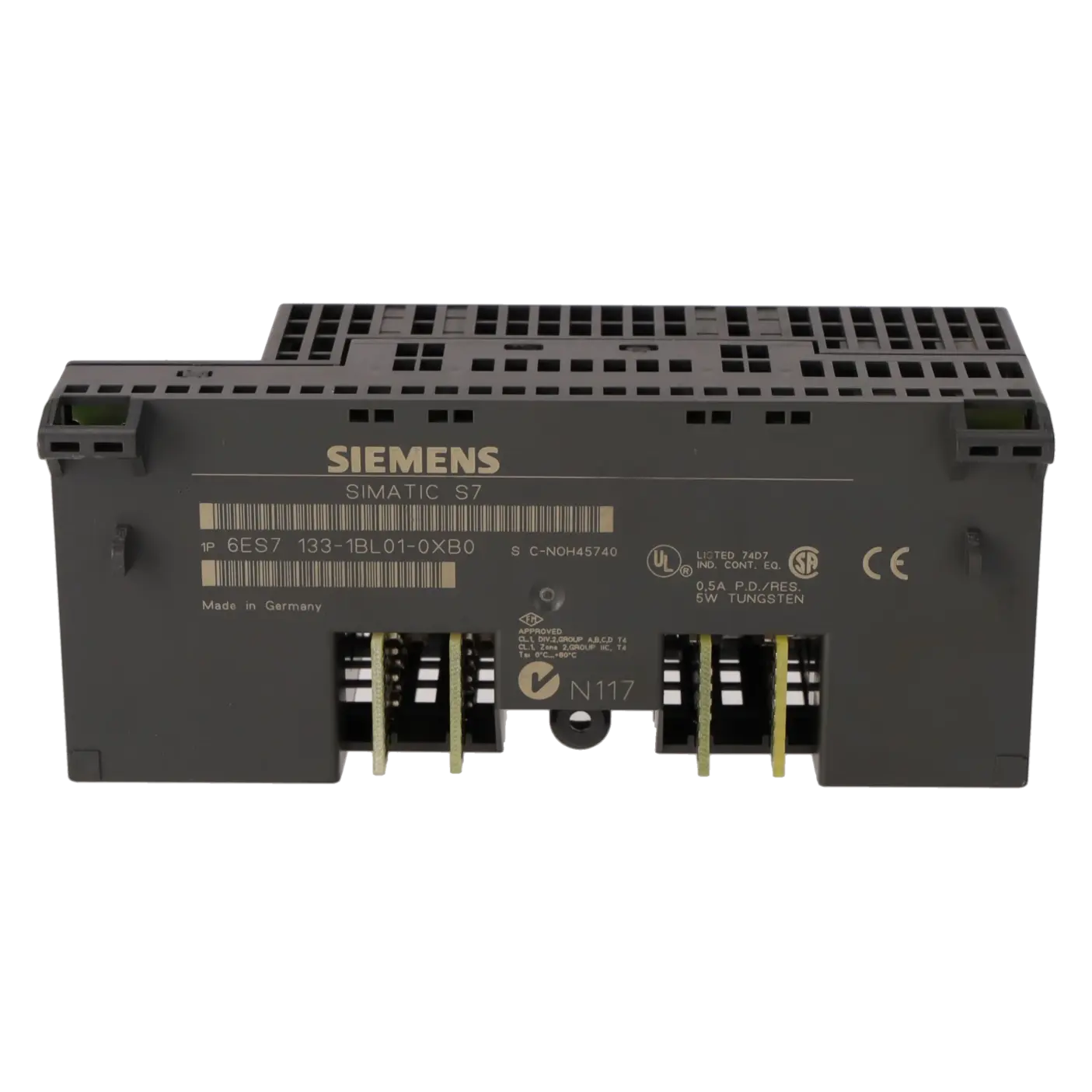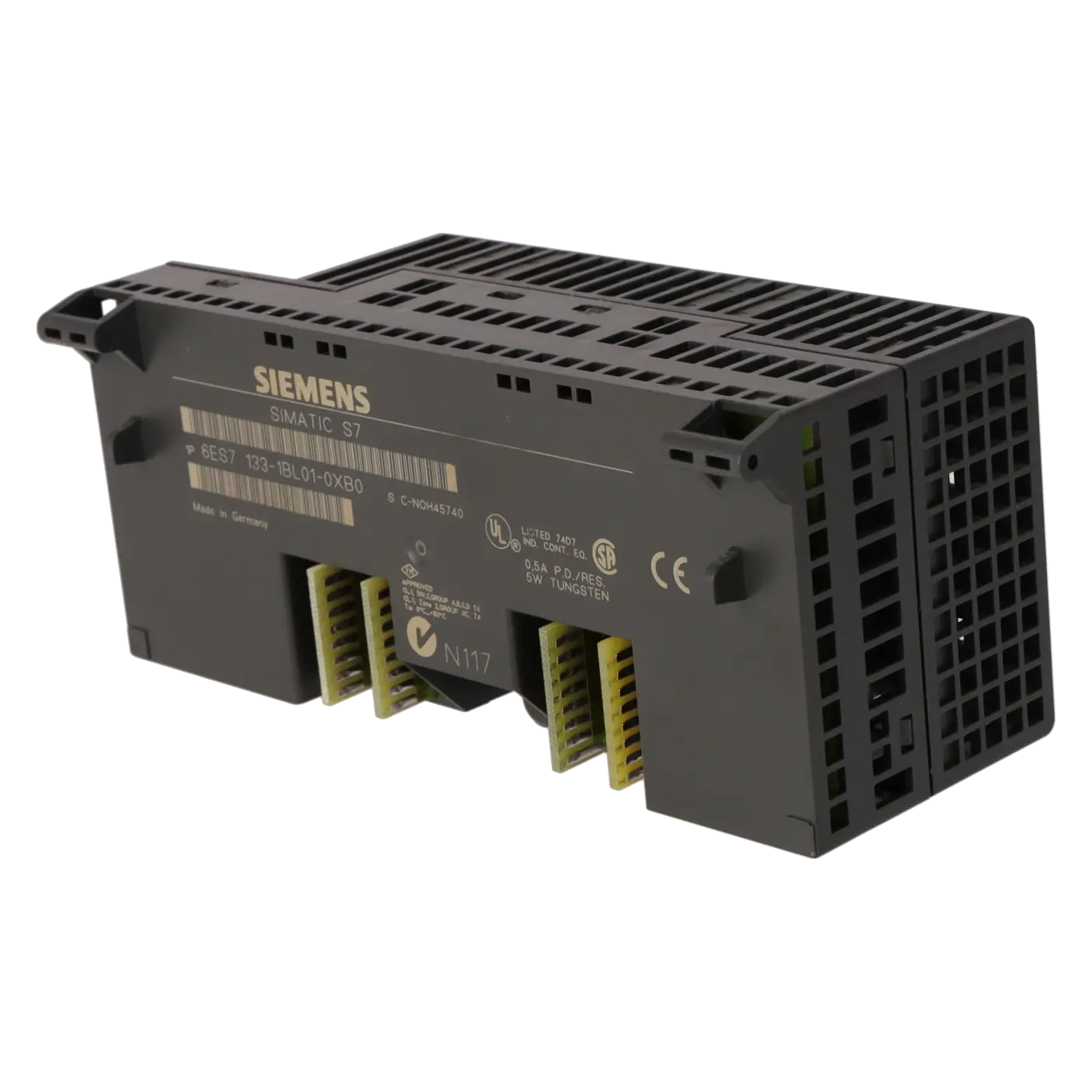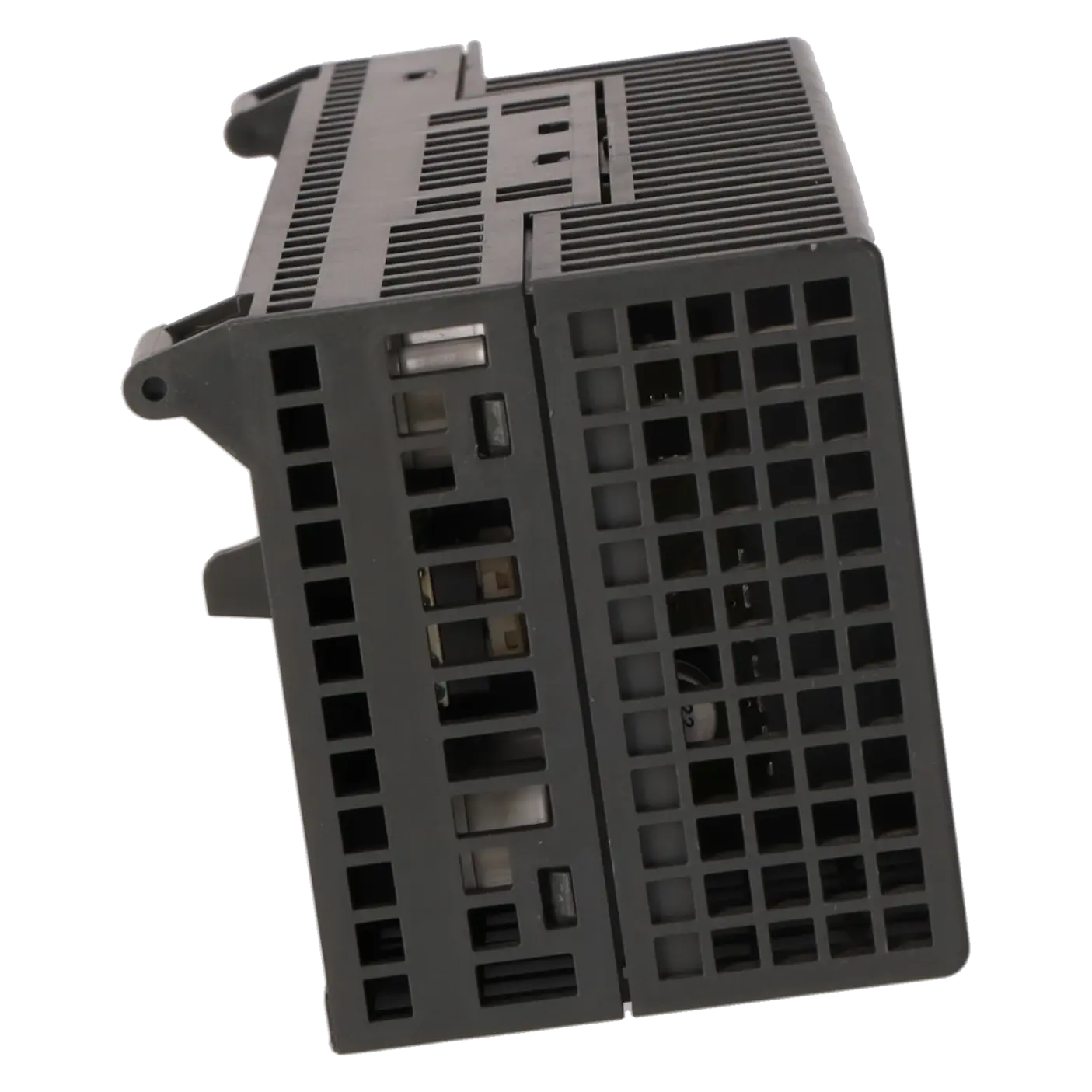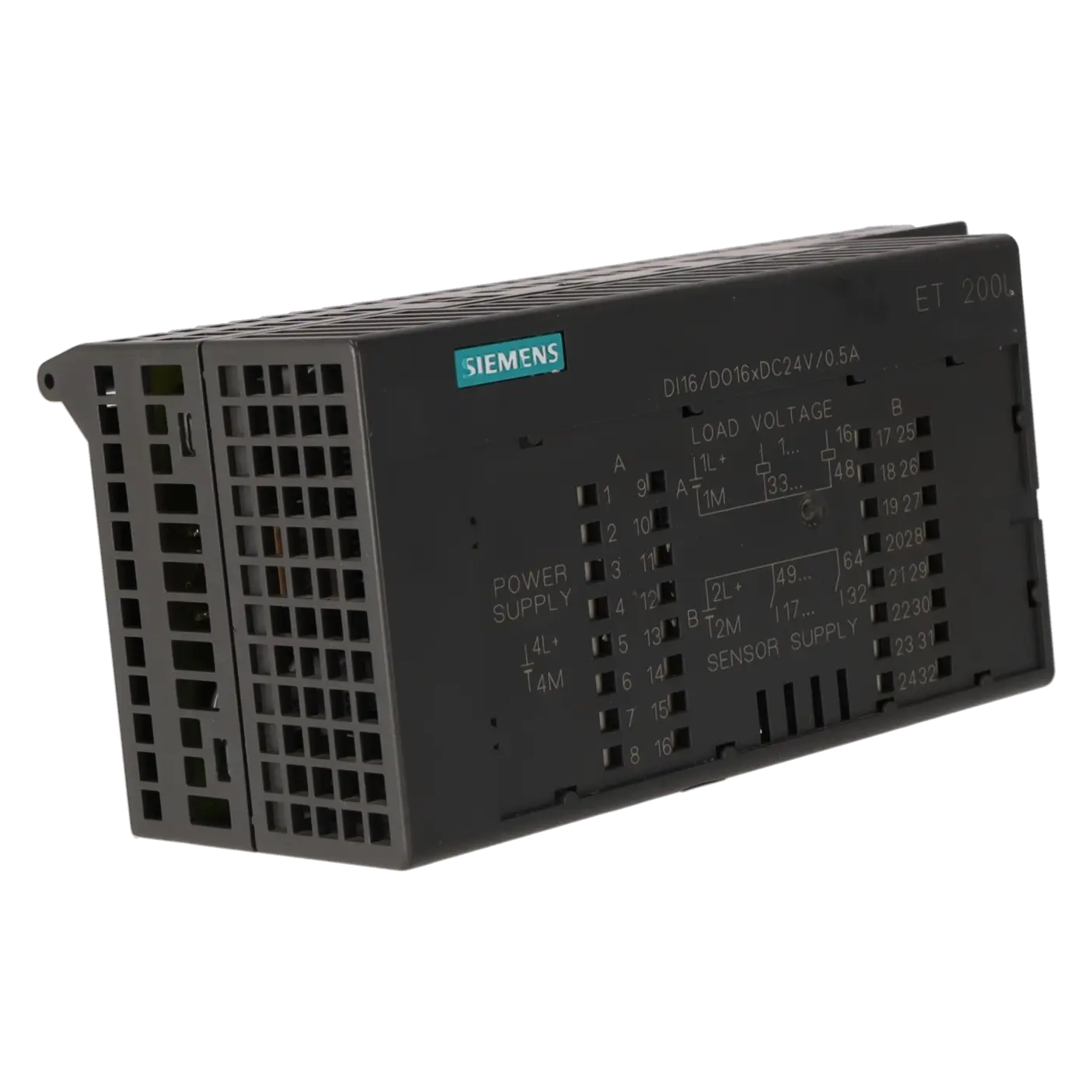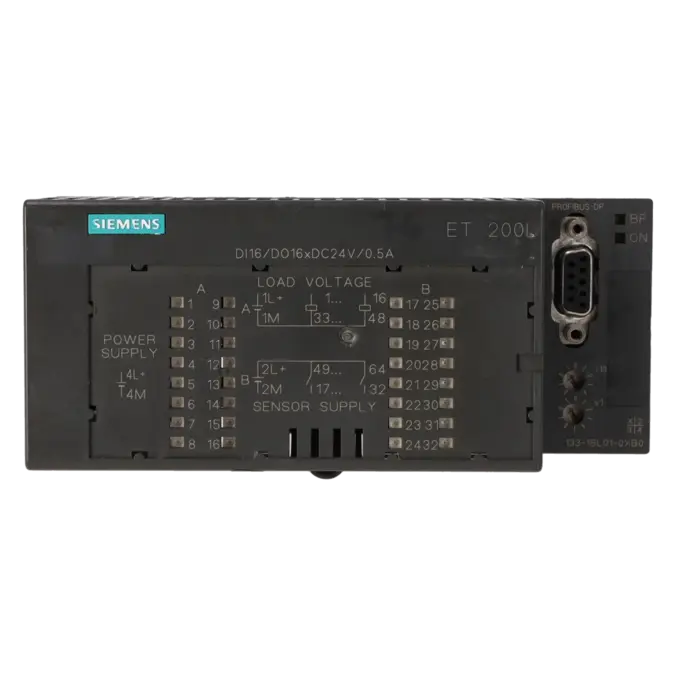
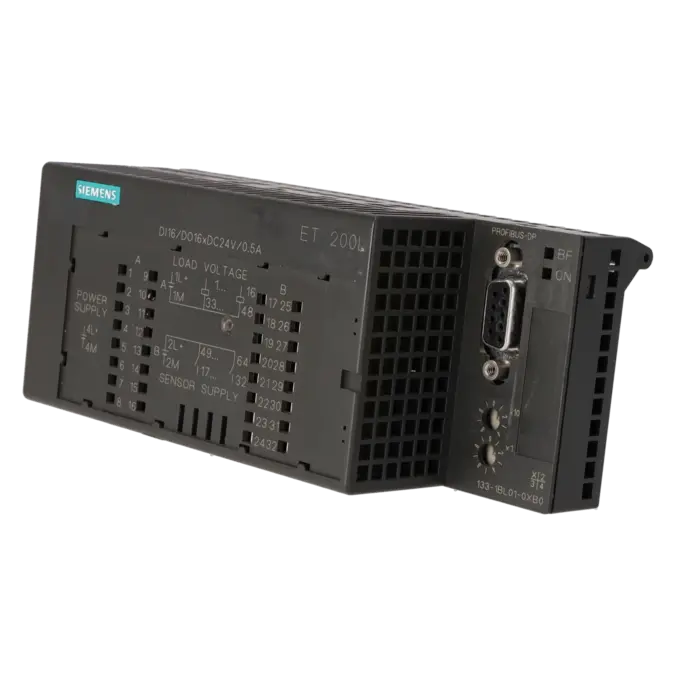
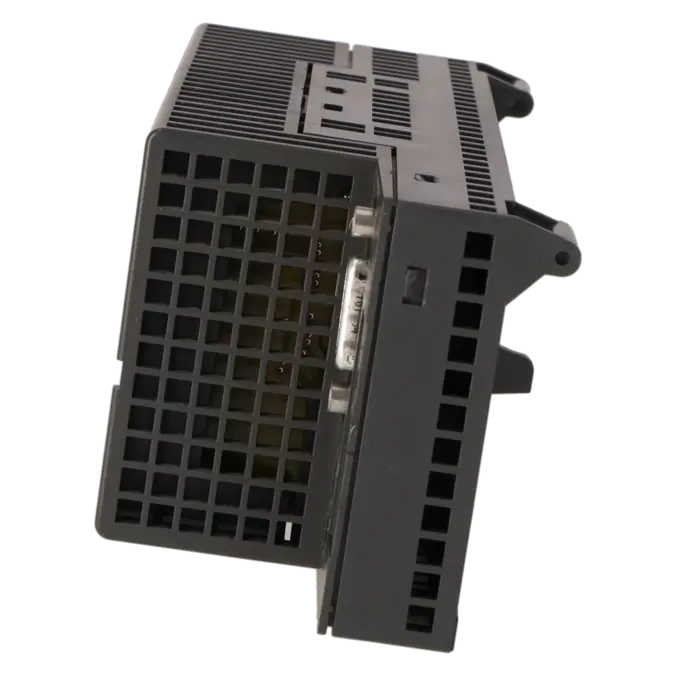
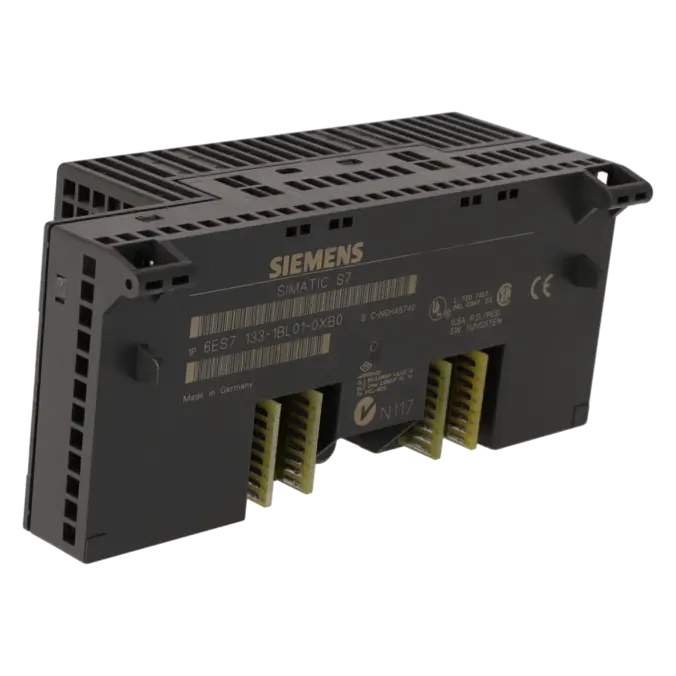
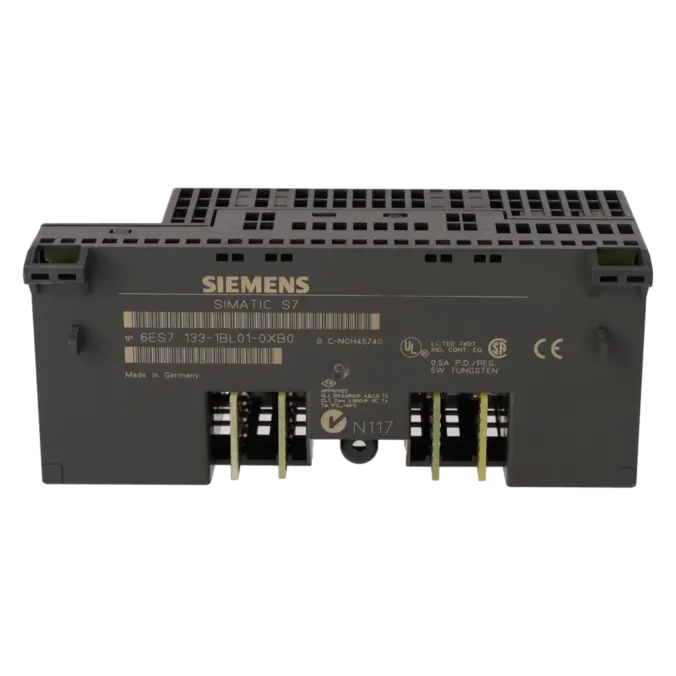
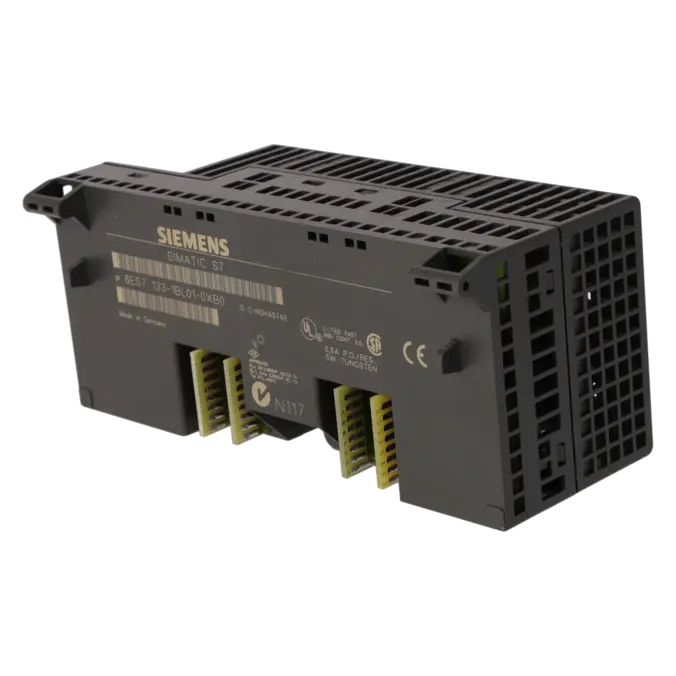
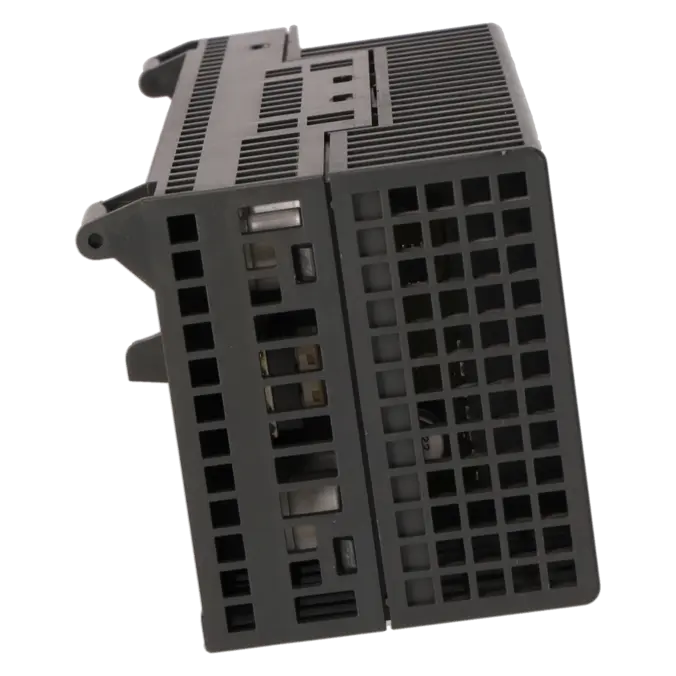
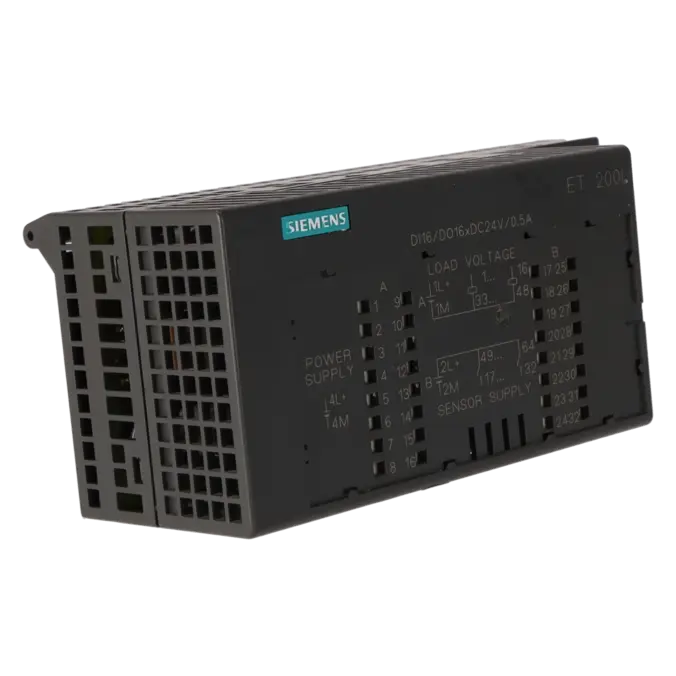
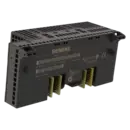
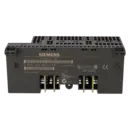
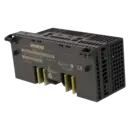
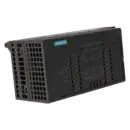
SIEMENS 6ES7133-1BL01-0XB0
- EICHLER-art.no.: K0118099
- EAN: 4025515066224
Product description
SIMATIC DP, electronic module for ET 200L 16 DI/16 DO, 24 V DC/0.5 A
Services for SIEMENS 6ES7133-1BL01-0XB0
Repair
from 488,15 €
to 878,67 €
Replacement
522,00 €
495,90 €
Used
580,00 €
551,00 €
New
SIEMENS |
6ES7133-1BL01-0XB0 –
additional product information
| Delivery information | |||
|---|---|---|---|
| Export identifier | AL: ECCN: | ||
| Net weight | 0.179 | ||
| Quantity | 1 Stück | ||
| Packaging quantity | 1 | ||
| Additional product information | |||
|---|---|---|---|
| Product status | EOP: 2016-10-01 | ||
| EAN | 4025515066224 | ||
| UPC | / | ||
| Static lot number | 85389091 | ||
| List indicator | / | ||
| Product group | 4467 | ||
| Country of origin | DE | ||
| Compliance with the substance restrictions according to RoHS directive | Since: / | ||
| Product classifications | Version | Classification | |
|---|---|---|---|
| eClass | 4 | / | |
| eClass | 5.1 | / | |
| eClass | 6.0 | / | |
| ETIM | 3 | / | |
| ETIM | 4 | / | |
| ETIM | 5 | / | |
What is the 6ES7133-1BL01-0XB0 and where is it used?
The 6ES7133-1BL01-0XB0 is a digital electronics block for the SIEMENS SIMATIC ET 200L system. The module operates as a decentralised PROFIBUS-DP I/O device and provides 16 digital inputs and 16 digital outputs for 24 V DC signals. Siemens classifies the module as a spare part for existing ET 200L installations. Typical application areas include legacy systems in conveyor technology, packaging machinery, assembly lines, special-purpose machinery and general factory automation, where an existing ET 200L infrastructure is to be maintained. For maintenance engineers, the module is particularly relevant when faulty field I/O must be identified and replaced quickly with minimal modification effort. For purchasing and production departments, it is primarily of interest in facilities with installed legacy equipment where breakdowns and re-engineering work are to be avoided.
Overview of the key technical data and what it means
The module provides 16 digital inputs (DI) and 16 digital outputs (DO), each rated for 24 V DC, with an output current of 0.5 A per channel. In practical terms, this makes it suitable for typical field devices such as switches, proximity sensors, solenoid valves, DC contactors and indicator lamps. The input module detects a logic “1” signal between 13 and 30 V, requires a typical input current of 5 mA and operates with an input delay of 2.0 to 4.5 ms. The outputs switch very quickly, are protected against short circuits and are subject to a limited total current per byte. Communication is carried out via PROFIBUS-DP at transmission rates ranging from 9.6 to 1500 kBaud. A key practical consideration is that there is no galvanic isolation between the channels, although galvanic isolation is provided between the module and the PROFIBUS-DP network.
Product status, life-cycle status and obsolescence
For the 6ES7133-1BL01-0XB0, the EICHLER product page lists the product status as EOP (End of Production): 1 October 2016. Siemens also classifies the module as a spare part, which clearly indicates a focus on supporting existing installations rather than new projects. No verified direct plug-in or form-fit successor is apparent for this article number. However, Siemens states in an FAQ that ET 200B, ET 200L and ET 200L-SC systems can be functionally replaced by ET 200SP solutions. For operators, this means that anyone wishing to retain the existing wiring, project configuration and ET 200L topology should primarily consider repair, replacement, used spare parts and stockholding strategies. Those planning a modernisation project should expect a migration process rather than a straightforward one-to-one replacement.
Available EICHLER services and when they are relevant in practice
For this module, EICHLER offers repair, replacement, used parts and new parts on request. Repair is particularly relevant when an existing machine needs to be returned to operation quickly while keeping the addressing, wiring and mechanical design unchanged. The repair service includes technical cleaning, preventive maintenance, comprehensive functional testing and a minimum 24-month warranty. Replacement or used-unit solutions are advisable when a failure must be bridged immediately and there is no time available for redesign or re-engineering. For purchasing departments, this provides valuable flexibility when dealing with obsolete modules. For decision-makers, it reduces the risk that an otherwise productive legacy system suffers an unplanned breakdown or is forced into premature migration solely because spare parts are no longer readily available.
| Attribute | Value |
|---|---|
| Usable terminal block | TB 32L |
| Supply voltage | |
| Rated value (DC) | 24 V |
| Reverse polarity protection | Yes |
| Mains buffering | |
| ● Mains/voltage failure stored energy time | 20 ms |
| Load voltage L+ | |
| ● Rated value (DC) | 24 V; 1L+, 2L+, 3L+ |
| Input current | |
| from supply voltage L+, max. | 70 mA; L4+ / L5+ |
| from load voltage L+ (without load), max. | 50 mA |
| Power loss | |
| Power loss, typ. | 5 W |
| Digital inputs | |
| Number of digital inputs | 16 |
| Input characteristic curve in accordance with IEC 61131, type 1 | Yes |
| Number of simultaneously controllable inputs | |
| ● Number of simultaneously controllable inputs | 16 |
| Input voltage | |
| ● Rated value (DC) | 24 V |
| ● for signal "0" | -30 to +5 V |
| ● for signal "1" | 13 to 30V |
| Input current | |
| ● for signal "0", max. (permissible quiescent current) | 1.5 mA |
| ● for signal "1", typ. | 5 mA |
| Input delay (for rated value of input voltage) | |
| for standard inputs | |
| — at "0" to "1", min. | 2 ms |
| — at "0" to "1", max. | 4.5 ms |
| — at "1" to "0", min. | 2 ms |
| — at "1" to "0", max. | 4.5 ms |
| Cable length | |
| ● shielded, max. | 1 000 m |
| ● unshielded, max. | 600 m |
| Digital outputs | |
| Number of digital outputs | 16 |
| Short-circuit protection | Yes |
| ● Response threshold, typ. | 0.7 A |
| Limitation of inductive shutdown voltage to | Typ. (L1+ or L2+ / L3+) -55 V |
| Controlling a digital input | Yes |
| Switching capacity of the outputs | |
| ● on lamp load, max. | 5 W |
| Load resistance range | |
| ● lower limit | 41 Ω |
| ● upper limit | 28 kΩ |
| Output voltage | |
| ● Rated value (DC) | 24 V |
| ● for signal "1", min. | Ua - 3 V |
| Output current | |
| ● for signal "1" permissible range, min. | 1 mA |
| ● for signal "1" permissible range, max. | 0.5 A |
| ● for signal "0" residual current, max. | 1 mA |
| Output delay with resistive load | |
| ● "0" to "1", max. | 50 µs |
| ● "1" to "0", max. | 200 µs |
| Parallel switching of two outputs | |
| ● for uprating | No |
| ● for redundant control of a load | Yes |
| Switching frequency | |
| ● with resistive load, max. | 100 Hz |
| ● with inductive load, max. | 0.5 Hz |
| ● on lamp load, max. | 8 Hz |
| Total current of the outputs (per group) | |
| horizontal installation | |
| — up to 30 °C, max. | 4 A |
| — up to 40 °C, max. | 3 A |
| — up to 60 °C, max. | 2 A |
| all other mounting positions | |
| — up to 40 °C, max. | 2 A |
| Cable length | |
| ● shielded, max. | 1 000 m |
| ● unshielded, max. | 600 m |
| Encoder | |
| Connectable encoders | |
| ● 2-wire sensor | Yes |
| Interfaces | |
| Transmission rate, max. | 1.5 Mbit/s |
| Protocols | |
| Bus protocol/transmission protocol | PROFIBUS DP |
| PROFIBUS DP | |
| Services | |
| — SYNC capability | Yes |
| — FREEZE capability | Yes |
| — Direct data exchange (slave-to-slave communication) | Yes; Transmitter (for digital outputs and hybrid modules ET 200L: not for L-SC or IM-SC) |
| Interrupts/diagnostics/status information | |
| Alarms | No |
| Diagnostics function | Yes |
| Diagnostics indication LED | |
| ● Bus fault BF (red) | Yes |
| ● Status indicator digital input (green) | Yes |
| ● Status indicator digital output (green) | Yes |
| ● Monitoring 24 V voltage supply ON (green) | Yes |
| Potential separation | |
| between PROFIBUS DP and all other circuit components | Yes |
| Potential separation digital inputs | |
| ● between the channels | No |
| ● between the channels and PROFIBUS DP | Yes |
| Potential separation digital outputs | |
| ● between the channels | No |
| ● between the channels and PROFIBUS DP | Yes |
| Isolation | |
| Isolation tested with | 500 V DC |
| Degree and class of protection | |
| IP degree of protection | IP20 |
| Ambient conditions | |
| Ambient temperature during operation | |
| ● horizontal installation, min. | 0 °C |
| ● horizontal installation, max. | 60 °C; 40°C for other mountings |
| Air pressure acc. to IEC 60068-2-13 | |
| ● permissible range, lower limit | 795 hPa |
| ● permissible range, upper limit | 1 080 hPa |
| Relative humidity | |
| ● Operation, min. | 5 % |
| ● Operation, max. | 95 %; RH class 2 in accordance with IEC 1131-2 |
| Vibrations | |
| ● Operation, tested according to IEC 60068-2-6 | Yes; IEC 68, Part 2-6; 10 to 57 Hz; (constant amplitude 0.075 mm); 57 to 150 Hz; (constant acceleration 1 g) |
| Shock testing | |
| ● tested according to IEC 60068-2-27 | Yes; IEC 68, Part 2-27; half-sine, 15 g, 11 ms |
| connection method | |
| Design of electrical connection for the inputs and outputs | Screw-type and spring-loaded terminals, permanent wiring; standard: 2-wire connection, optional: 3 and 4-wire connection |
| Dimensions | |
| Width | 145 mm |
| Height | 60 mm |
| Depth | 60.5 mm |
| Weights | |
| Weight, approx. | 130 g |
| Fault Description | Possible Solution |
|---|---|
| Why is the BF LED on the ET 200L illuminated red and no input or output signals are being transmitted? | First, check the PROFIBUS connection, the DP master, the hardware configuration and the configured PROFIBUS address. After an address change, the ET 200L only adopts the new address after a power cycle. If the BF LED remains active, communication with the master is often missing or the station has not yet received valid configuration data. |
| Why does the DP master report that the configuration data does not match the DP slave configuration? | Compare the station type, the exact module population and the input/output configuration in the hardware configuration with the actual installed hardware. Siemens explicitly identifies this as a diagnostic cause for the ET 200L when the configuration data transmitted by the master does not correspond to the physical station configuration. |
| Why is the DP master unable to communicate with the ET 200L slave? | Check whether the correct PROFIBUS address has been set, whether the bus connector is properly installed, whether the 24 V power supply is present and whether any RS-485 repeater is correctly parameterised. Afterwards, power down the station and restart it. Siemens specifically recommends these measures when a DP slave cannot be addressed by the DP master. |
| Why do the outputs not switch even though the station can generally be reached? | Check the electronics supply separately at terminals 4L+ and 5L+, and the load voltages at terminals 1L+, 2L+ and 3L+. In addition, the load connected to each output must remain within the permitted limits: 0.5 A per channel, a limited total current per byte and a suitable load type. If the load voltage is missing or the connected load is too high, the outputs may remain inactive despite otherwise functioning communication. |
| Why are sensors or proximity switches not being detected reliably at the inputs? | The assembly expects an input signal of “1” within a voltage range of 13 to 30 V DC. The input current is typically 5 mA at 24 V. For two-wire proximity sensors, a maximum leakage current of 1.5 mA must be observed. If the sensor signal falls below the required level or the sensor supply is wired incorrectly, the inputs may become unstable or fail to detect the signal. |
| Why does an output fail under load or only respond briefly? | Check for short circuits, excessive loads, unsuitable lamp loads or unfavourable inductive loads. Siemens specifies short-circuit protection for the outputs with a typical response threshold of 0.7 A to 1.5 A, permits a maximum lamp load of 5 W and significantly limits the switching frequency for inductive loads. This is particularly important when operating valves, relays and older signalling lamps. |
Is the 6ES7133-1BL01-0XB0 still a current Siemens product?
No. The module is no longer part of a current ET 200L product platform. The EICHLER product page lists an EOP (End of Production) date of 1 October 2016, and Siemens classifies the module as a spare part. From an operational perspective, this means that the module is primarily relevant for existing installations, spare-parts management, replacement and repair strategies rather than for new standard projects.
Which terminal block is compatible with the 6ES7133-1BL01-0XB0?
The TB32L terminal block is intended for use with the 6ES7133-1BL01-0XB0. Siemens specifies the variants 6ES7193-1CL00-0XA0 for screw terminals and 6ES7193-1CL10-0XA0 for spring terminals. This is important for procurement, as the electronics assembly and the corresponding terminal block should be considered together when a station is to continue operating mechanically and electrically without modification.
Is there a direct successor to the 6ES7133-1BL01-0XB0?
No verified direct one-to-one successor is apparent for this article number. For the ET 200B, ET 200L and ET 200L-SC product families, Siemens refers to ET 200SP as a functional successor solution. In practice, this usually means migration rather than direct replacement, involving new project configuration, verification of signal assignments and often modifications to the system layout and wiring, rather than a simple plug-and-play exchange.
What loads can the assembly switch at its outputs?
The outputs are designed for 24 V DC and 0.5 A per channel. Siemens lists typical actuators such as solenoid valves, DC contactors and indicator lamps. In addition, the total current per byte is limited depending on the ambient temperature. This is an important consideration for purchasing and maintenance teams, as an apparently suitable assembly may still cause problems in the field if multiple loads simultaneously exceed the permissible group load.
How can I recognise that an ET 200L station has been commissioned correctly?
During normal data exchange, the green ON LED is illuminated, the BF LED is off, and the inputs and outputs are enabled. Switched channels are indicated by their respective status LEDs. If the BF LED remains permanently illuminated, there is typically an issue with the bus connection, hardware configuration, address setting or power supply. This LED combination therefore provides the quickest initial diagnostic check directly at the system.
Is repair or replacement the better option for an obsolete ET 200L assembly?
For legacy systems that remain in operation, repair or replacement is often the lower-risk solution when the wiring, addressing and system logic are to remain unchanged. This is particularly true when no direct one-to-one successor is available and migration to ET 200SP would constitute a larger migration project rather than a straightforward replacement. For operators, a professionally repaired assembly or a suitable replacement part can therefore be more cost-effective than an unplanned modernisation project carried out under time pressure.