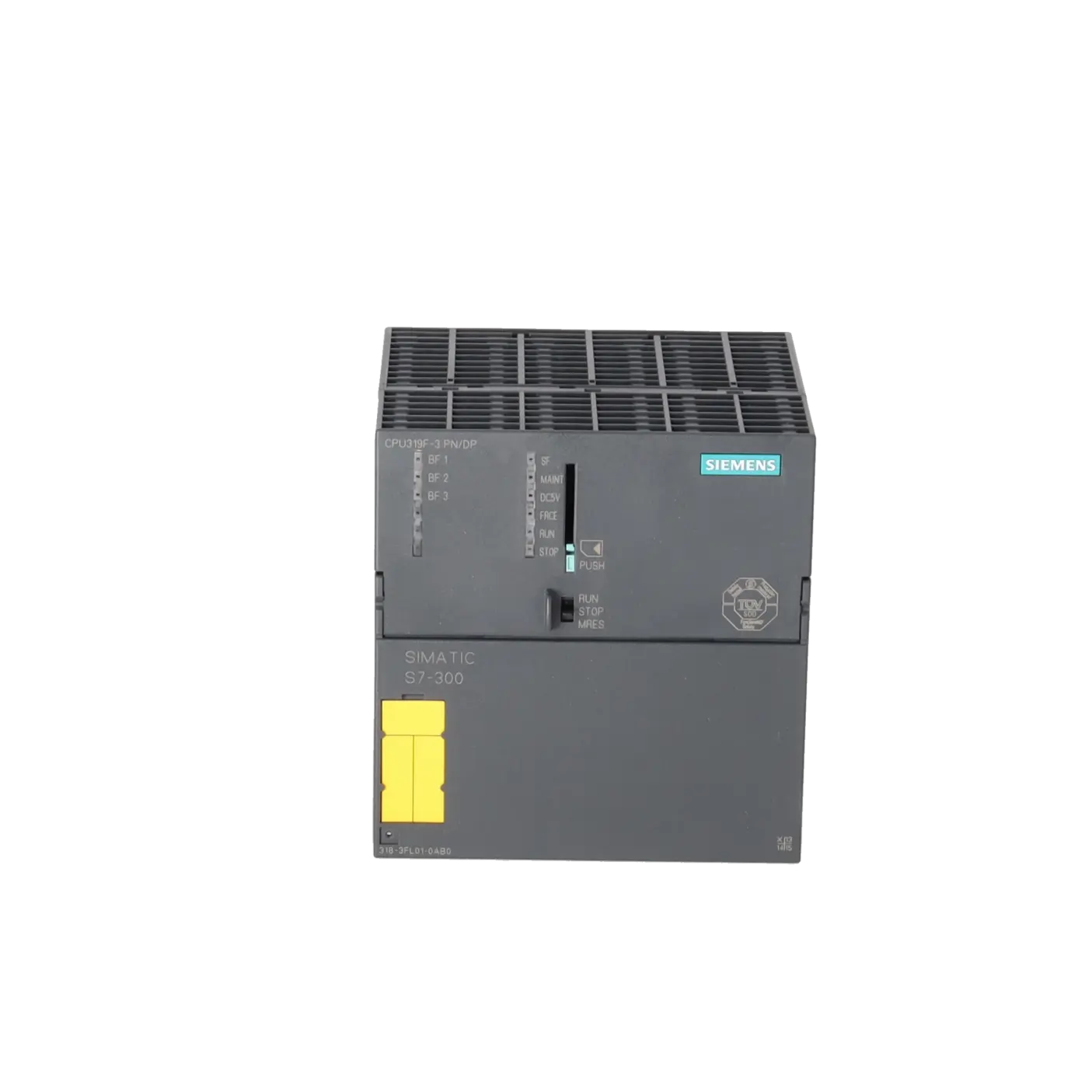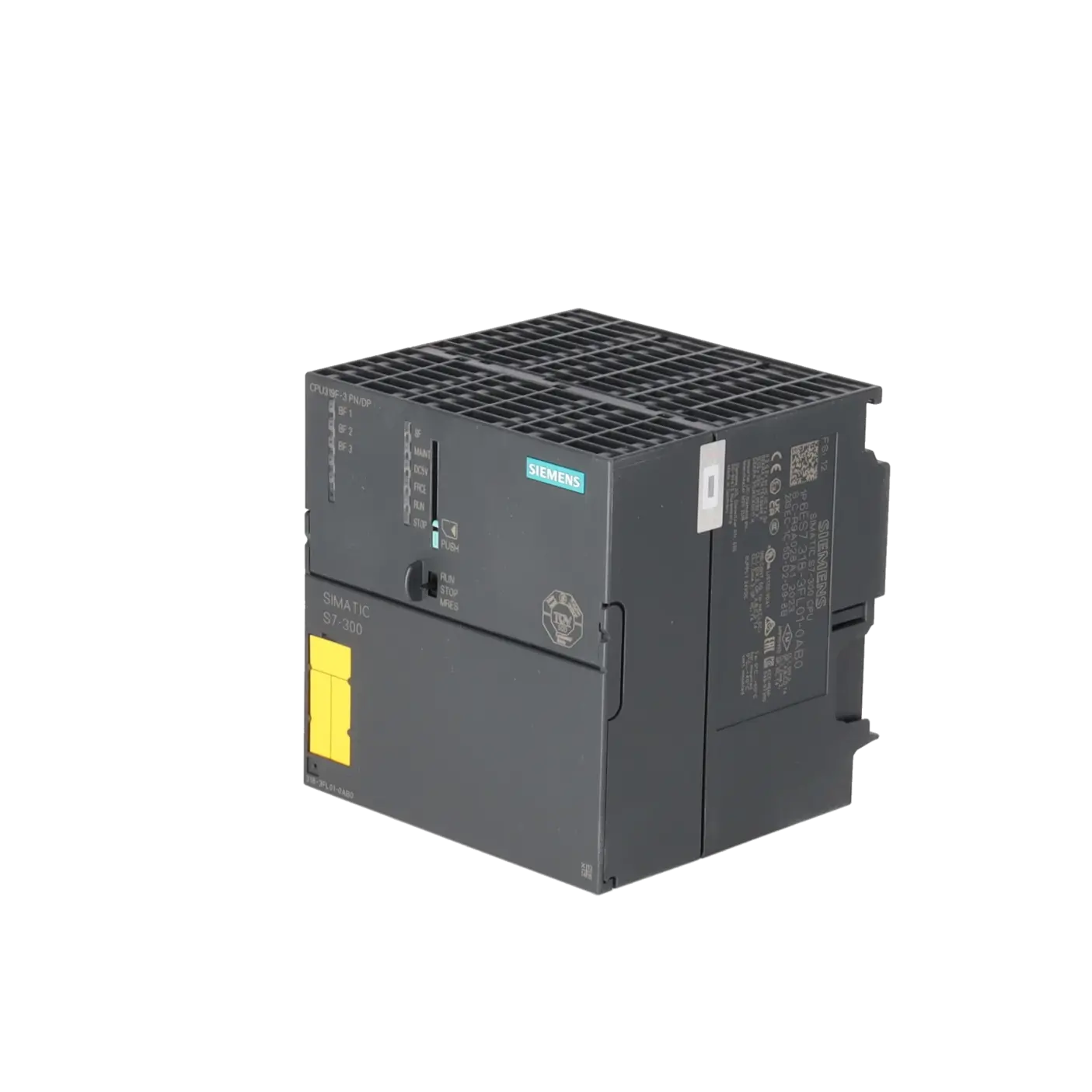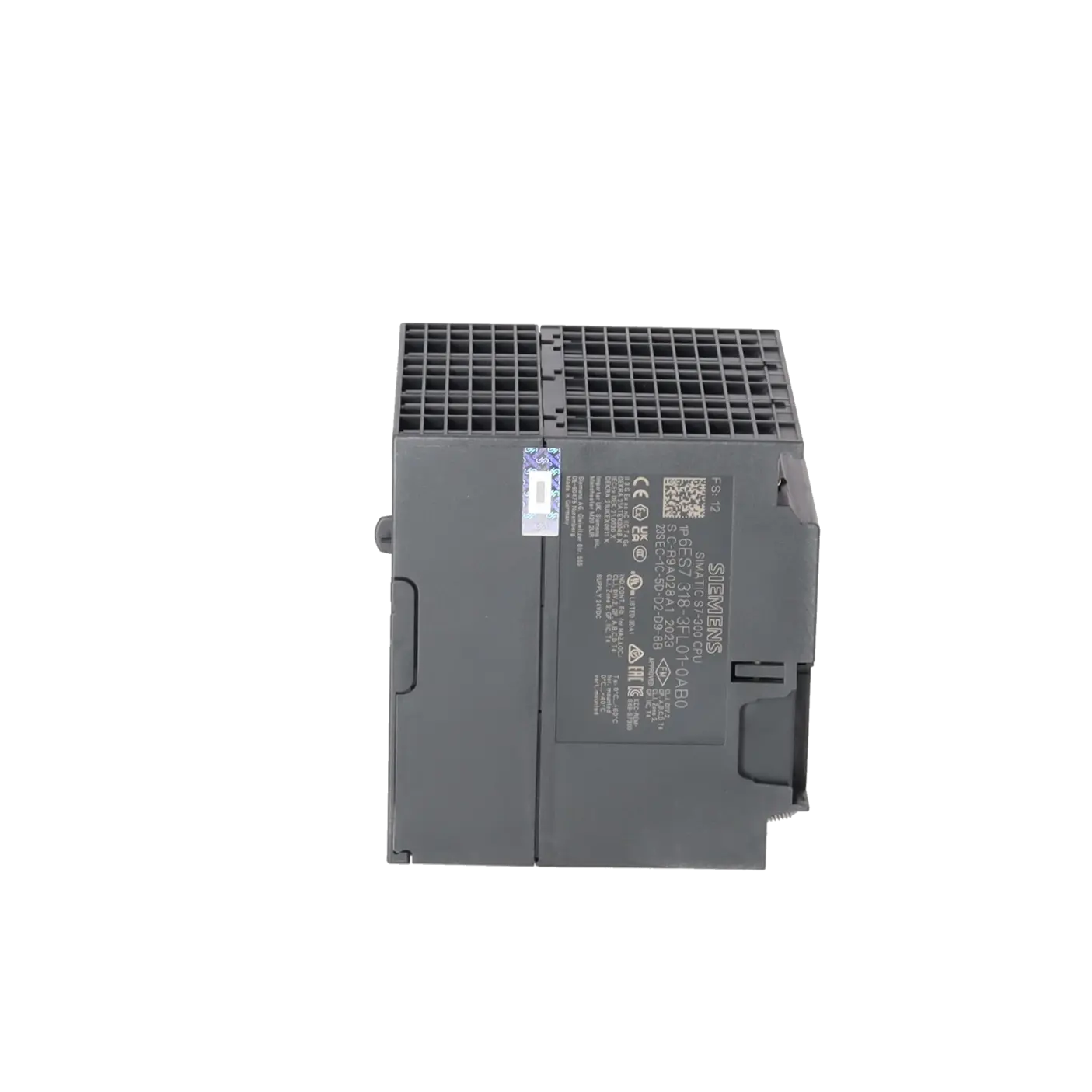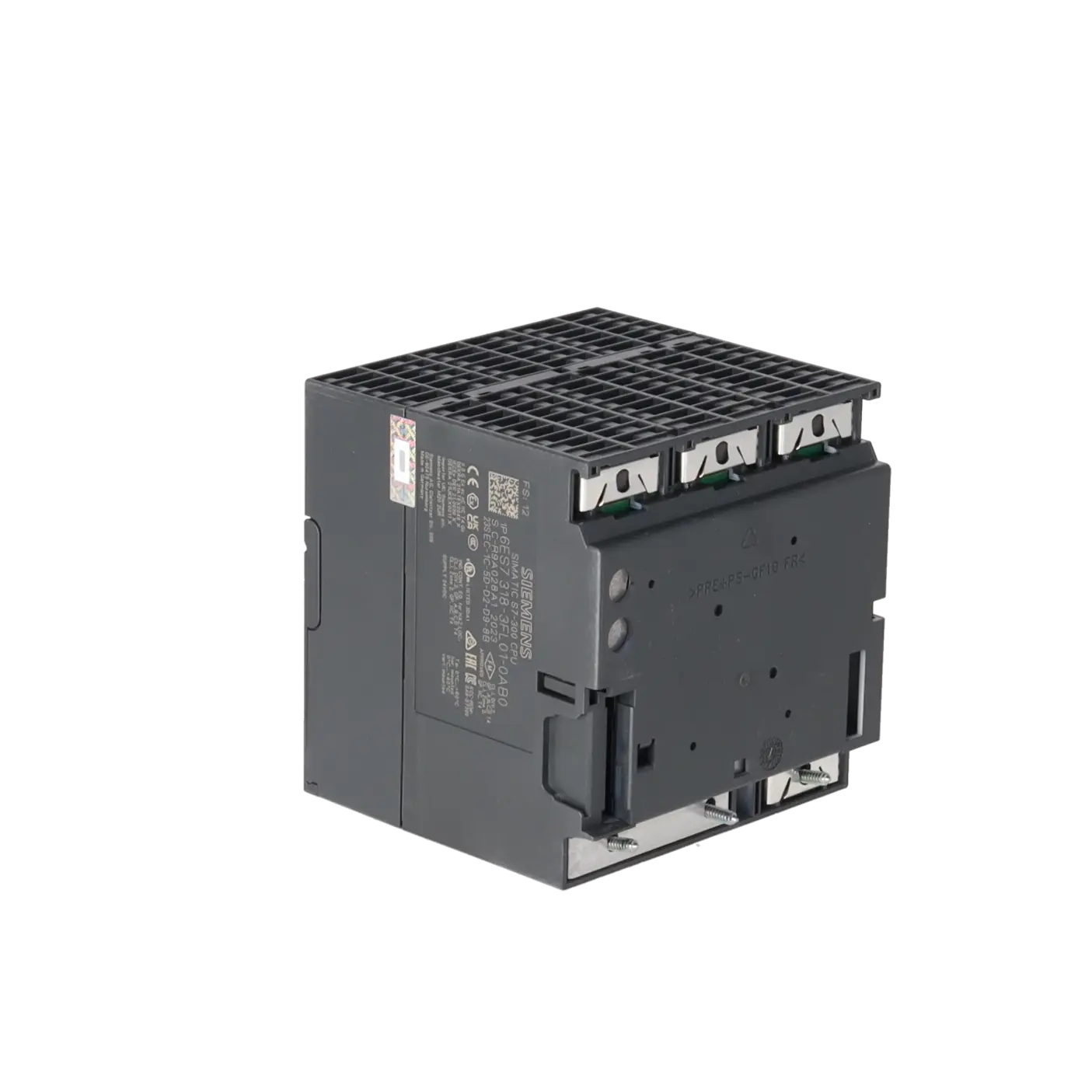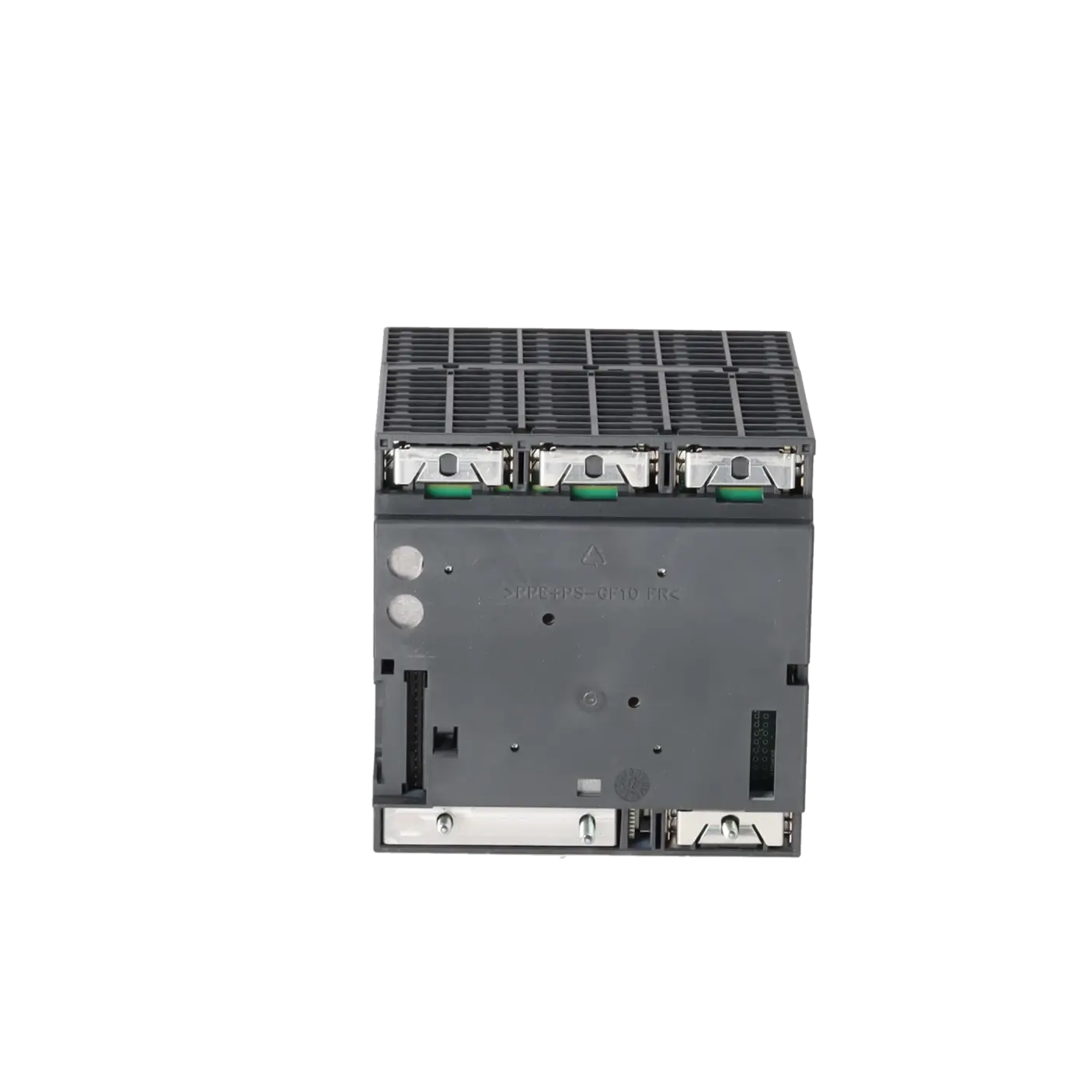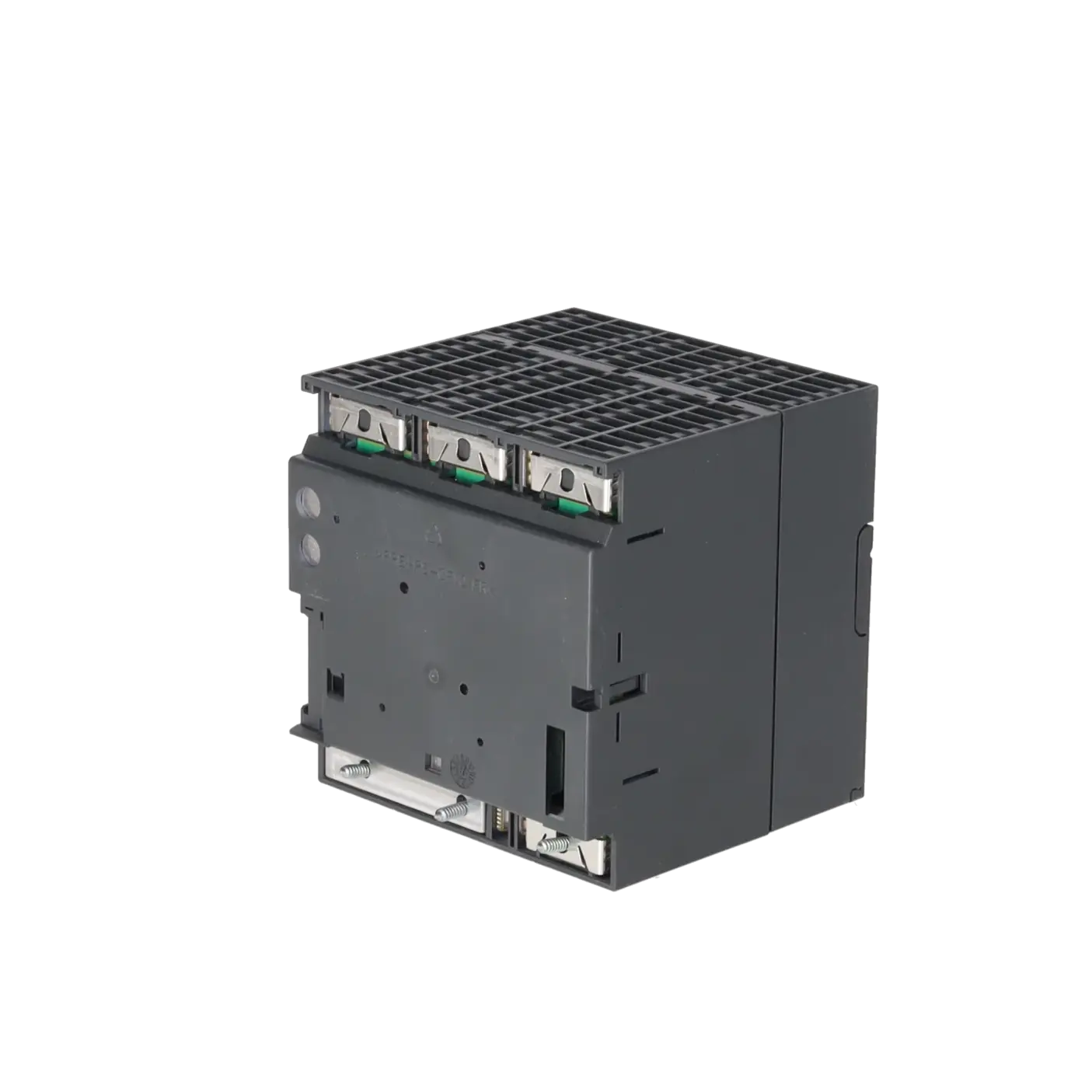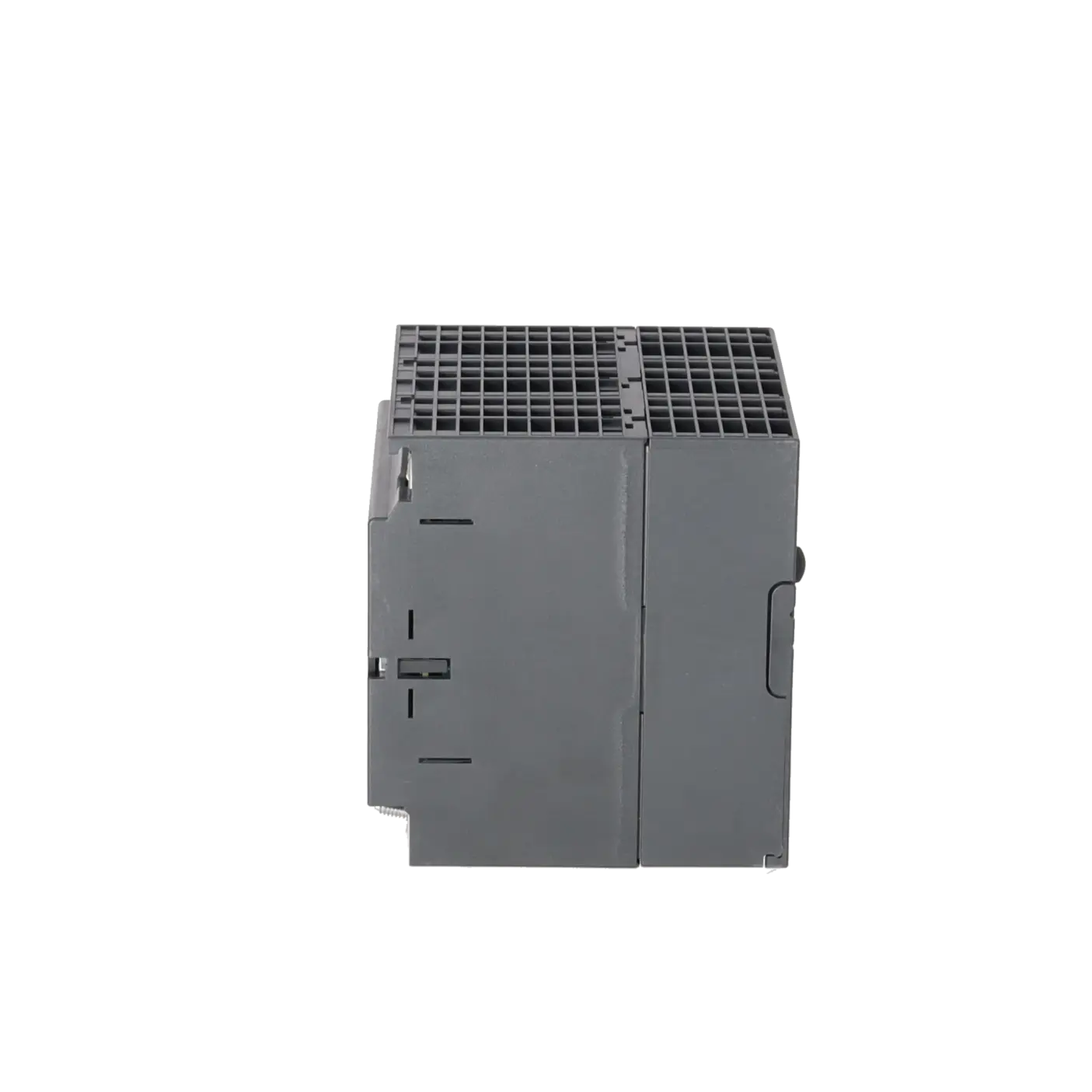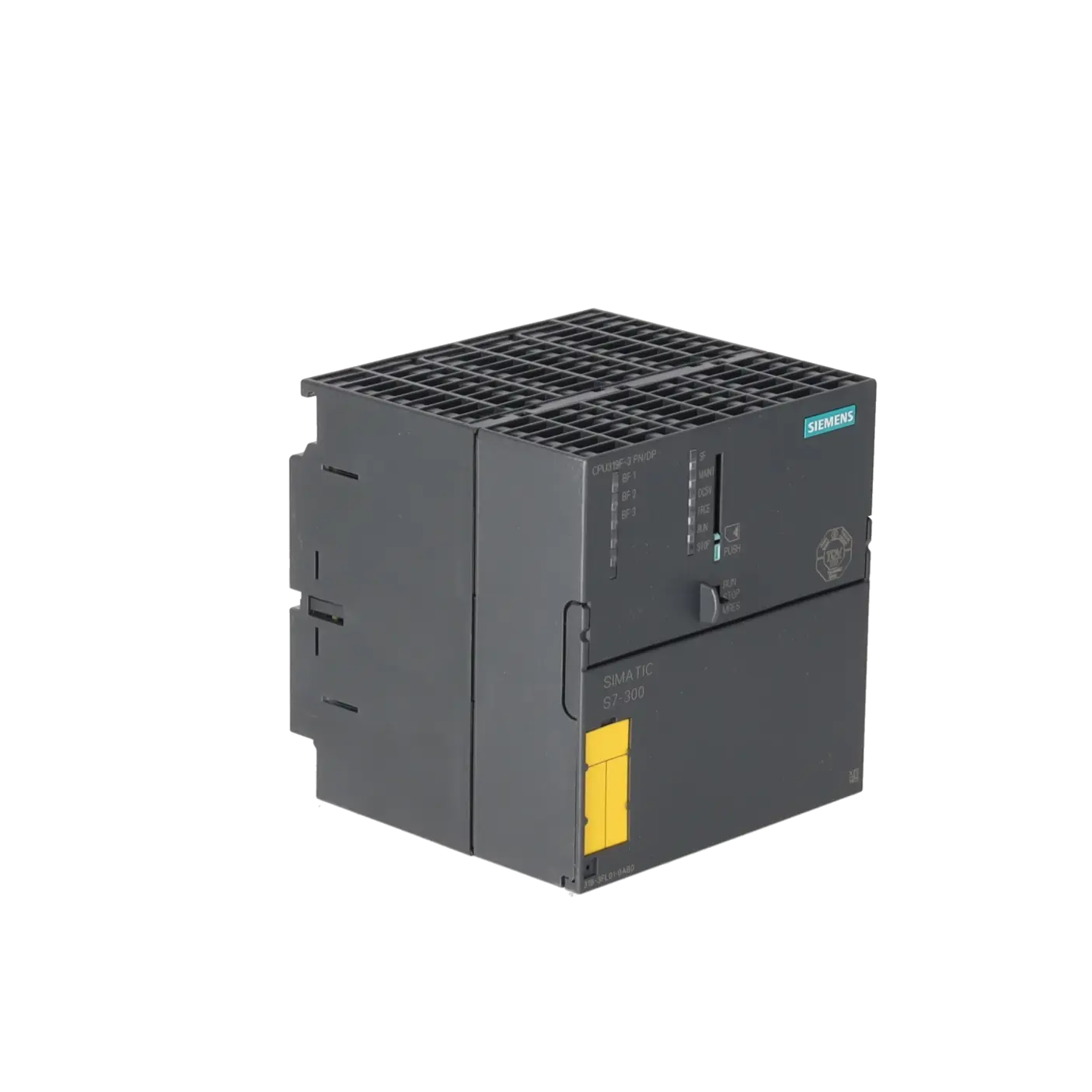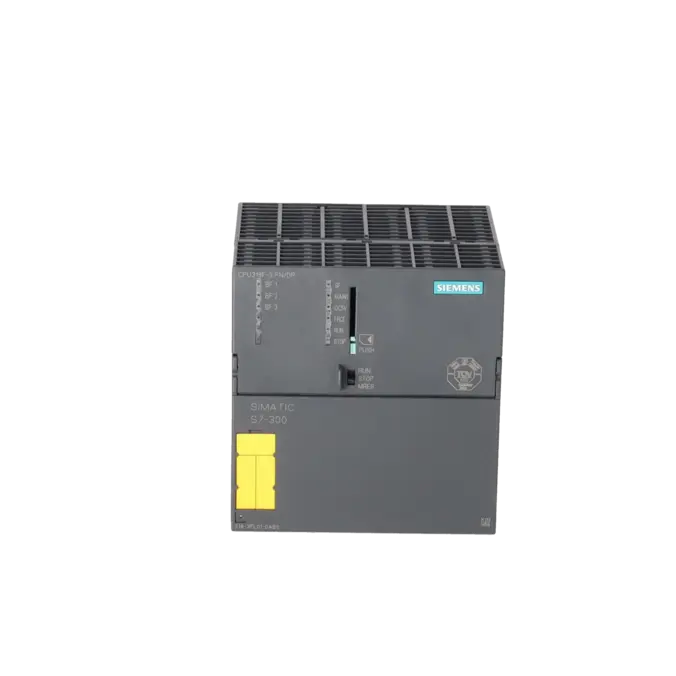
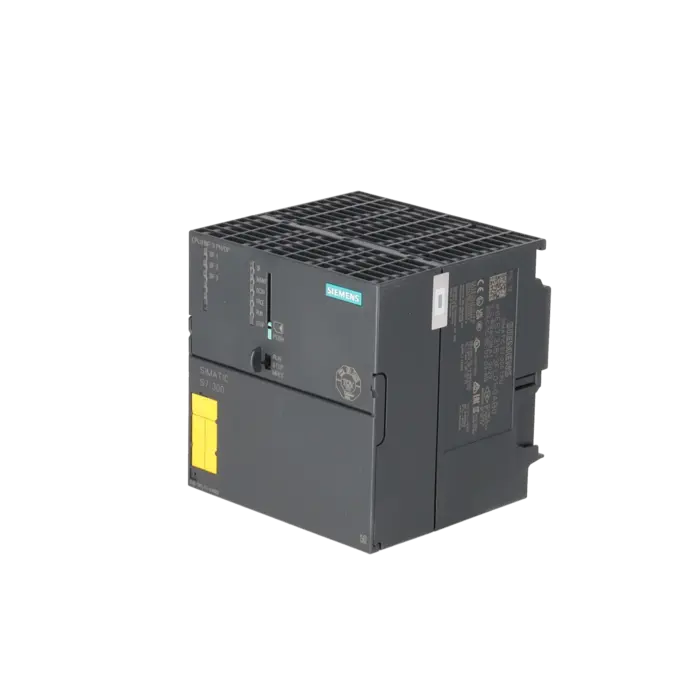
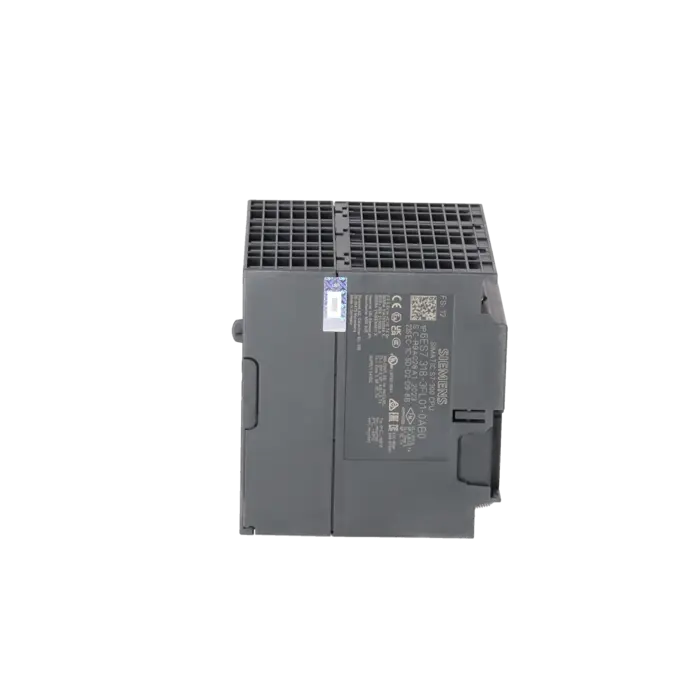
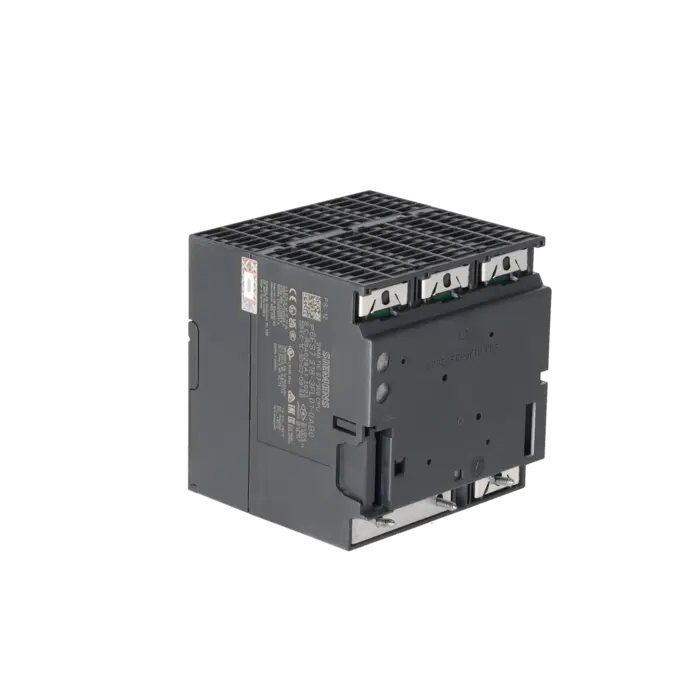
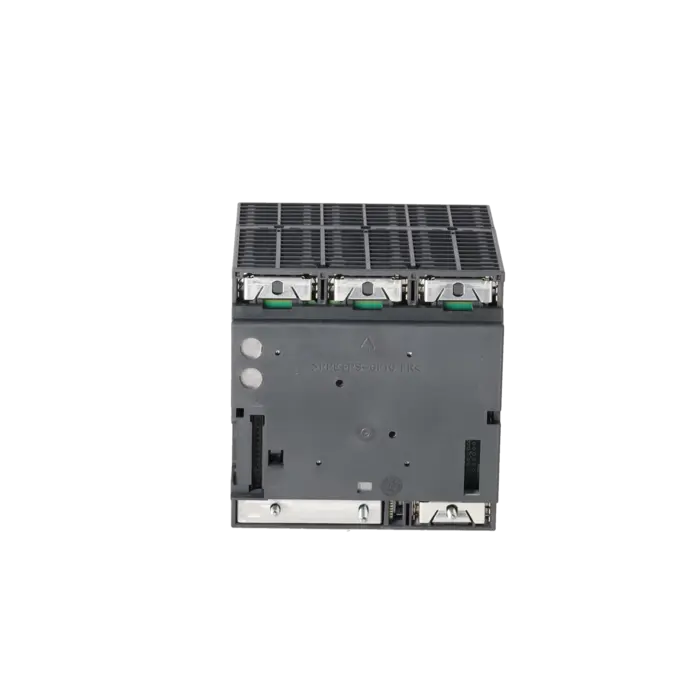
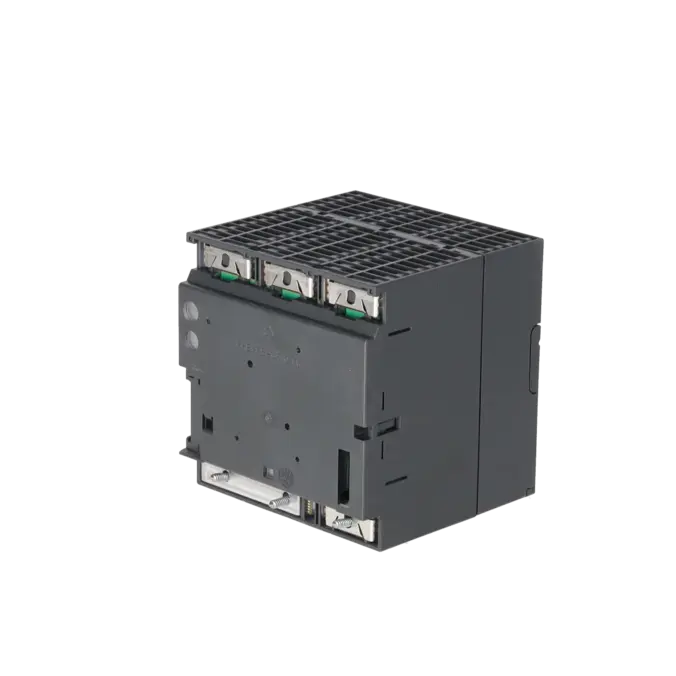
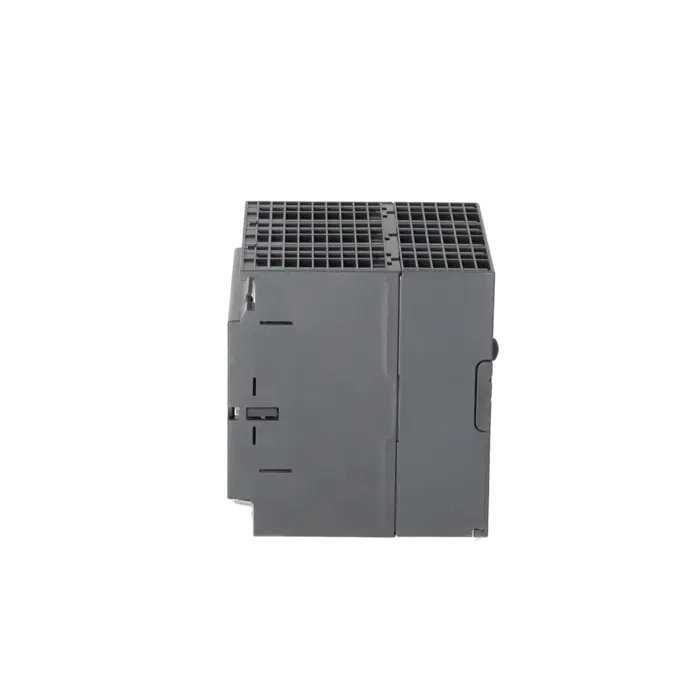
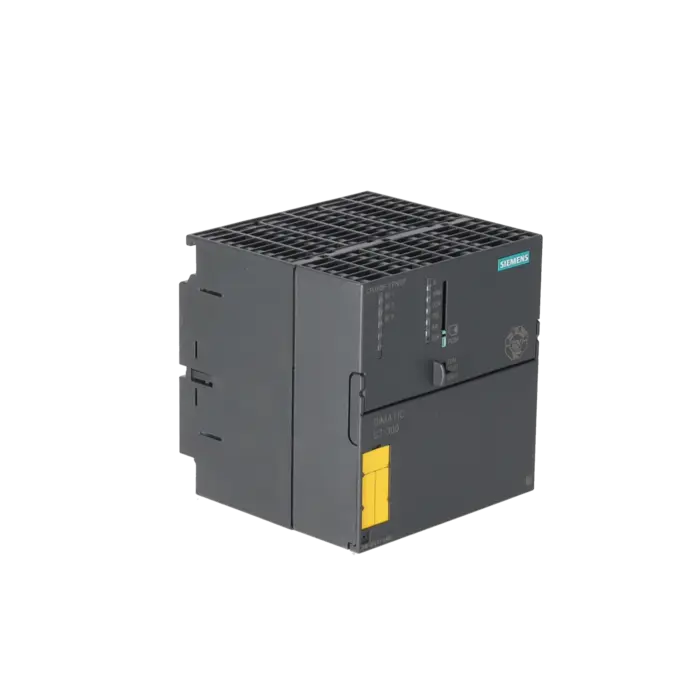
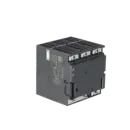
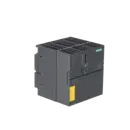
SIEMENS 6ES7318-3FL01-0AB0
- EICHLER-art.no.: K0252218
- EAN: 4025515077886
- UPC: 040892692990
Product description
SIMATIC S7-300 CPU319F-3 PN/DP, CENTRAL PROCESSING UNIT WITH 2.5 MB WORK MEMORY, 1ST INTERFACE MPI/DP 12 MBIT/S, 2ND INTERFACE DP MASTER/SLAVE 3RD INTERFACE ETHERNET PROFINET, MICRO MEMORY CARD REQUIRED
Services for SIEMENS 6ES7318-3FL01-0AB0
Repair
from 1.523,81 €
to 2.742,86 €
Replacement
4.591,11 €
3.443,33 €
Used
6.439,25 €
4.829,44 €
New
9.505,10 €
7.128,82 €
SIEMENS |
6ES7318-3FL01-0AB0 –
additional product information
| Delivery information | |||
|---|---|---|---|
| Export identifier | AL: N ECCN: EAR99H | ||
| Net weight | 1.4 | ||
| Quantity | 1 Stück | ||
| Packaging quantity | 1 | ||
| Additional product information | |||
|---|---|---|---|
| Product status | EOP: 2025-10-01 | ||
| EAN | 4025515077886 | ||
| UPC | 040892692990 | ||
| Static lot number | 85371091 | ||
| List indicator | ST73 | ||
| Product group | 4A89 | ||
| Country of origin | DE | ||
| Compliance with the substance restrictions according to RoHS directive | Since: 20100806 | ||
| Product classifications | Version | Classification | |
|---|---|---|---|
| eClass | 4 | 27-24-03-02 | |
| eClass | 5.1 | 27-24-22-07 | |
| eClass | 6.0 | 27-24-22-07 | |
| ETIM | 3 | / | |
| ETIM | 4 | EC000236 | |
| ETIM | 5 | EC000236 | |
What is 6ES7318-3FL01-0AB0 and where is it used?
6ES7318-3FL01-0AB0 is a fail-safe central processing assembly of the type SIMATIC S7-300 CPU 319F-3 PN/DP. The CPU is designed for demanding automation applications where, in addition to standard control logic, safety functions are required. Siemens describes it as an F-CPU for personnel and machine safety as well as for burner control systems; at the same time, standard PLC applications can also be executed on the same assembly. Typical areas of application include legacy systems based on the S7-300 architecture, machines with PROFIBUS and PROFINET connectivity, and retrofit projects where a high-performance CPU is required within an existing automation environment. In the EICHLER shop, the assembly is listed as a Siemens PLC module from the SIMATIC S7-300 range.
Overview of the key technical data and what they mean
The CPU operates on 24 V DC within a permissible range of 19.2 to 28.8 V, requires a typical current consumption of 1.25 A, and has a typical power dissipation of 14 W. Particularly important for practical applications are the integrated 2.5 MB work memory, the removable SIMATIC Micro Memory Card (MMC) used as load memory, battery-free data retention, and the three communication interfaces: MPI/DP, PROFIBUS DP master/slave, and PROFINET with an integrated 2-port switch. In practice, this means fast program execution, excellent integration into existing PROFIBUS environments, and at the same time support for modern Ethernet and PROFINET communication. The CPU also supports up to 4,096 blocks, retentive data areas of up to 700 kB, and engineering with STEP 7 V5.5 and Distributed Safety V5.4 SP4.
Product status, life cycle status and obsolescence
From a procurement perspective, the product status is particularly important. Siemens lists the 6ES7318-3FL01-0AB0 as a spare part, and the EICHLER shop specifies an EOP (End of Product) status with the date 01 October 2025. This clearly indicates that the CPU belongs to the discontinued S7-300 platform and should now be assessed from an obsolescence management perspective. Within the 319F-3 product line, the 6ES7318-3FL01-0AB0 itself was introduced as the compatible successor to the older 6ES7318-3FL00-0AB0. Siemens explicitly describes the updated 319(F)-3 PN/DP CPUs as spare-part compatible with their predecessor versions. For operators of existing systems, the focus therefore shifts away from conventional new purchases towards a combination of spare parts strategy, repair capability, strategic stockholding, and, for modernisation projects, migration towards the S7-1500 platform.
Available EICHLER services and when they are relevant
For operators, maintenance personnel, and purchasing departments, this CPU becomes particularly critical when a failure results in production downtime or when the system can no longer be supported directly through the manufacturer due to discontinuation. In the EICHLER shop, the 6ES7318-3FL01-0AB0 is currently available with the following options: Repair with a turnaround time of 2–5 days, Exchange on request, Used units with 3–5 days, and New units with 1–3 days delivery time. In addition, an optional F-CPU test report is available. The repair service is particularly practical because it includes technical cleaning, preventive maintenance, functional testing, and a minimum 24-month warranty. EICHLER also offers standardised repair processes, express service options, and lifecycle management services such as configuration management, Life Cycle Checks, and supply strategy planning. This combination helps ensure long-term operational reliability even after obsolescence and reduces the risk of unplanned procurement issues.
| Attribut | Wert |
|---|---|
| General information | |
| Product type designation | CPU 319F-3 PN/DP |
| HW functional status | 1 |
| Firmware version | V3.2 |
| Product function | |
| ● Isochronous mode | Yes; Via 2nd PROFIBUS DP or PROFINET interface |
| Engineering with | |
| ● Programming package | STEP 7 V5.5 or higher, Distributed Safety V5.4 SP4 |
| Supply voltage | |
| Rated value (DC) | 24 V |
| permissible range, lower limit (DC) | 19.2 V |
| permissible range, upper limit (DC) | 28.8 V |
| external protection for power supply lines (recommendation) | 2 A min. |
| Mains buffering | |
| ● Mains/voltage failure stored energy time | 5 ms |
| ● Repeat rate, min. | 1 s |
| Input current | |
| Current consumption (rated value) | 1 250 mA |
| Current consumption (in no-load operation), typ. | 500 mA |
| Inrush current, typ. | 4 A |
| I²t | 1.2 A²·s |
| Power loss | |
| Power loss, typ. | 14 W |
| Memory | |
| Work memory | |
| ● integrated | 2 560 kbyte |
| ● expandable | No |
| Load memory | |
| ● Plug-in (MMC) | Yes |
| ● Plug-in (MMC), max. | 8 Mbyte |
| ● Data management on MMC (after last programming), min. | 10 a |
| Backup | |
| ● present | Yes |
| ● without battery | Yes |
| CPU processing times | |
| for bit operations, typ. | 0.004 µs |
| for word operations, typ. | 0.01 µs |
| for fixed point arithmetic, typ. | 0.01 µs |
| for floating point arithmetic, typ. | 0.04 µs |
| CPU-blocks | |
| Number of blocks (total) | 4 096; (DBs, FCs, FBs); the maximum number of loadable blocks can be reduced by the MMC used. |
| DB | |
| ● Number, max. | 4 096; Number range: 1 to 16000 |
| ● Size, max. | 64 kbyte |
| FB | |
| ● Number, max. | 4 096; Number range: 0 to 7999 |
| ● Size, max. | 64 kbyte |
| FC | |
| ● Number, max. | 4 096; Number range: 0 to 7999 |
| ● Size, max. | 64 kbyte |
| OB | |
| ● Size, max. | 64 kbyte |
| ● Number of free cycle OBs | 1; OB 1 |
| ● Number of time alarm OBs | 1; OB 10 |
| ● Number of delay alarm OBs | 2; OB 20, 21 |
| ● Number of cyclic interrupt OBs | 4; OB 32, 33, 34, 35 (OB 35: smallest settable clock pulse = 500 µs) |
| ● Number of process alarm OBs | 1; OB 40 |
| ● Number of DPV1 alarm OBs | 3; OB 55, 56, 57 |
| ● Number of isochronous mode OBs | 1; OB 61 |
| ● Number of startup OBs | 1; OB 100 |
| ● Number of asynchronous error OBs | 6; OB 80, 82, 83, 85, 86, 87 (OB83 only for PROFINET IO) |
| ● Number of synchronous error OBs | 2; OB 121, 122 |
| Nesting depth | |
| ● per priority class | 16 |
| ● additional within an error OB | 4 |
| Counters, timers and their retentivity | |
| S7 counter | |
| ● Number | 2 048 |
| Retentivity | |
| — adjustable | Yes |
| — preset | Z 0 to Z 7 |
| Counting range | |
| — adjustable | Yes |
| — lower limit | 0 |
| — upper limit | 999 |
| IEC counter | |
| ● present | Yes |
| ● Type | SFB |
| ● Number | Unlimited (limited only by RAM capacity) |
| S7 times | |
| ● Number | 2 048 |
| Retentivity | |
| — adjustable | Yes |
| — preset | No retentivity |
| Time range | |
| — lower limit | 10 ms |
| — upper limit | 9 990 s |
| IEC timer | |
| ● present | Yes |
| ● Type | SFB |
| ● Number | Unlimited (limited only by RAM capacity) |
| Data areas and their retentivity | |
| Retentive data area (incl. timers, counters, flags), max. | 700 kbyte |
| Flag | |
| ● Size, max. | 8 192 byte |
| ● Retentivity available | Yes; From MB 0 to MB 8 191 |
| ● Retentivity preset | MB 0 to MB 15 |
| ● Number of clock memories | 8; 1 memory byte |
| Data blocks | |
| ● Retentivity adjustable | Yes; via non-retain property on DB |
| ● Retentivity preset | Yes |
| Local data | |
| ● per priority class, max. | 32 768 byte; Max. 2048 bytes per block |
| Address area | |
| I/O address area | |
| ● Inputs | 8 192 byte |
| ● Outputs | 8 192 byte |
| of which distributed | |
| — Inputs | 8 192 byte |
| — Outputs | 8 192 byte |
| Process image | |
| ● Inputs | 8 192 byte |
| ● Outputs | 8 192 byte |
| ● Inputs, adjustable | 8 192 byte |
| ● Outputs, adjustable | 8 192 byte |
| ● Inputs, default | 1 024 byte |
| ● Outputs, default | 1 024 byte |
| Subprocess images | |
| ● Number of subprocess images, max. | 1; With PROFINET IO, the length of the user data is limited to 1600 bytes |
| Digital channels | |
| ● Inputs | 65 536 |
| — of which central | 1 024 |
| ● Outputs | 65 536 |
| — of which central | 1 024 |
| Analog channels | |
| ● Inputs | 4 096 |
| — of which central | 256 |
| ● Outputs | 4 096 |
| — of which central | 256 |
| Hardware configuration | |
| Number of DP masters | |
| ● integrated | 2 |
| ● via CP | 4 |
| Number of operable FMs and CPs (recommended) | |
| ● FM | 8 |
| ● CP, PtP | 8 |
| ● CP, LAN | 10 |
| Rack | |
| ● Racks, max. | 4 |
| ● Modules per rack, max. | 8 |
| Time of day | |
| Clock | |
| ● Hardware clock (real-time) | Yes |
| ● retentive and synchronizable | Yes |
| ● Backup time | 6 wk; At 40 °C ambient temperature |
| ● Deviation per day, max. | 10 s; Typ.: 2 s |
| ● Behavior of the clock following POWER-ON | Clock continues running after POWER OFF |
| ● Behavior of the clock following expiry of backup period | the clock continues at the time of day it had when power was switched off |
| Operating hours counter | |
| ● Number | 4 |
| ● Number/Number range | 0 to 3 |
| ● Range of values | 0 to 2^31 hours (when using SFC 101) |
| ● Granularity | 1 h |
| ● retentive | Yes; Must be restarted at each restart |
| Clock synchronization | |
| ● supported | Yes |
| ● to MPI, master | Yes |
| ● on MPI, device | Yes |
| ● to DP, master | Yes; With DP slave only slave clock |
| ● on DP, device | Yes |
| ● in AS, master | Yes |
| ● in AS, device | Yes |
| ● on Ethernet via NTP | Yes; As client |
| Digital inputs | |
| Number of digital inputs | 0 |
| Digital outputs | |
| Number of digital outputs | 0 |
| Analog inputs | |
| Number of analog inputs | 0 |
| Interfaces | |
| Number of PROFINET interfaces | 1 |
| Number of RS 485 interfaces | 2 |
| Number of RS 422 interfaces | 0 |
| 1. Interface | |
| Interface type | Integrated RS 485 interface |
| Isolated | Yes |
| Interface types | |
| ● RS 485 | Yes |
| ● Output current of the interface, max. | 150 mA |
| Protocols | |
| ● MPI | Yes |
| ● PROFIBUS DP master | Yes |
| ● PROFIBUS DP device | Yes; A DP slave at both interfaces simultaneously is not possible |
| ● Point-to-point connection | No |
| MPI | |
| ● Transmission rate, max. | 12 Mbit/s |
| Services | |
| — PG/OP communication | Yes |
| — Routing | Yes |
| — Global data communication | Yes |
| — S7 basic communication | Yes |
| — S7 communication | Yes |
| — S7 communication, as client | No; but via CP and loadable FB |
| — S7 communication, as server | Yes |
| PROFIBUS DP master | |
| ● Transmission rate, max. | 12 Mbit/s |
| ● max. number of DP devices | 124 |
| Services | |
| — PG/OP communication | Yes |
| — Routing | Yes |
| — Global data communication | No |
| — S7 basic communication | Yes; I blocks only |
| — S7 communication | Yes |
| — S7 communication, as client | No |
| — S7 communication, as server | Yes |
| — Equidistance | Yes |
| — Isochronous mode | No |
| — SYNC/FREEZE | Yes |
| — activation/deactivation of DP devices | Yes |
| — max. number of DP devices that can be activated/deactivated at the same time | 8 |
| — Direct data exchange (slave-to-slave communication) | Yes; as subscriber |
| — DPV1 | Yes |
| Address area | |
| — Inputs, max. | 8 kbyte |
| — Outputs, max. | 8 kbyte |
| User data per DP device | |
| — Inputs, max. | 244 byte |
| — Outputs, max. | 244 byte |
| PROFIBUS DP device | |
| ● Transmission rate, max. | 12 Mbit/s |
| ● automatic baud rate search | Yes; only with passive interface |
| ● Address area, max. | 32 |
| ● User data per address area, max. | 32 byte |
| Services | |
| — PG/OP communication | Yes |
| — Routing | Yes; with interface active |
| — Global data communication | No |
| — S7 basic communication | No |
| — S7 communication | Yes |
| — S7 communication, as client | No |
| — S7 communication, as server | Yes; Connection configured on one side only |
| — Direct data exchange (slave-to-slave communication) | Yes |
| — DPV1 | No |
| Transfer memory | |
| — Inputs | 244 byte |
| — Outputs | 244 byte |
| 2. Interface | |
| Interface type | Integrated RS 485 interface |
| Isolated | Yes |
| Interface types | |
| ● RS 485 | Yes |
| ● Output current of the interface, max. | 200 mA |
| Protocols | |
| ● MPI | No |
| ● PROFINET IO Controller | No |
| ● PROFINET IO Device | No |
| ● PROFINET CBA | No |
| ● PROFIBUS DP master | Yes |
| ● PROFIBUS DP device | Yes; A DP slave at both interfaces simultaneously is not possible |
| ● Open IE communication | No |
| ● Web server | No |
| PROFIBUS DP master | |
| ● Transmission rate, max. | 12 Mbit/s |
| ● max. number of DP devices | 124 |
| Services | |
| — PG/OP communication | Yes |
| — Routing | Yes |
| — Global data communication | No |
| — S7 basic communication | Yes; I blocks only |
| — S7 communication | Yes |
| — S7 communication, as client | No |
| — S7 communication, as server | Yes; Connection configured on one side only |
| — Equidistance | Yes |
| — Isochronous mode | Yes; OB 61 - isochronous mode is possible either on DP or PROFINET IO (not simultaneously) |
| — SYNC/FREEZE | Yes |
| — activation/deactivation of DP devices | Yes |
| — max. number of DP devices that can be activated/deactivated at the same time | 8 |
| — Direct data exchange (slave-to-slave communication) | Yes; as subscriber |
| — DPV1 | Yes |
| Address area | |
| — Inputs, max. | 8 kbyte |
| — Outputs, max. | 8 kbyte |
| User data per DP device | |
| — Inputs, max. | 244 byte |
| — Outputs, max. | 244 byte |
| PROFIBUS DP device | |
| ● GSD file | The latest GSD file is available at: http://www.siemens.com/profibus-gsd |
| ● Transmission rate, max. | 12 Mbit/s |
| ● automatic baud rate search | Yes; only with passive interface |
| ● Address area, max. | 32 |
| ● User data per address area, max. | 32 byte |
| Services | |
| — PG/OP communication | Yes |
| — Routing | Yes; with interface active |
| — Global data communication | No |
| — S7 basic communication | No |
| — S7 communication | Yes |
| — S7 communication, as client | No |
| — S7 communication, as server | Yes; Connection configured on one side only |
| — Direct data exchange (slave-to-slave communication) | Yes |
| — DPV1 | No |
| Transfer memory | |
| — Inputs | 244 byte |
| — Outputs | 244 byte |
| 3. Interface | |
| Interface type | PROFINET |
| Isolated | Yes |
| automatic detection of transmission rate | Yes; 10/100 Mbit/s |
| Autonegotiation | Yes |
| Autocrossing | Yes |
| Change of IP address at runtime, supported | Yes |
| Interface types | |
| ● RJ 45 (Ethernet) | Yes |
| ● Number of ports | 2 |
| ● integrated switch | Yes |
| Protocols | |
| ● MPI | No |
| ● PROFINET IO Controller | Yes; Also simultaneously with I-Device functionality |
| ● PROFINET IO Device | Yes; Also simultaneously with IO Controller functionality |
| ● PROFINET CBA | Yes |
| ● PROFIBUS DP master | No |
| ● PROFIBUS DP device | No |
| ● Open IE communication | Yes; Via TCP/IP, ISO on TCP, and UDP |
| ● Web server | Yes |
| ● Media redundancy | Yes |
| PROFINET IO Controller | |
| ● Transmission rate, max. | 100 Mbit/s |
| Services | |
| — PG/OP communication | Yes |
| — Routing | Yes |
| — S7 communication | Yes; with loadable FBs, max. configurable connections: 16, max. number of instances: 32 |
| — Isochronous mode | Yes; OB 61 - isochronous mode is possible either on DP or PROFINET IO (not simultaneously) |
| — Shared device | Yes |
| — Prioritized startup | Yes |
| — Number of IO devices with prioritized startup, max. | 32 |
| — Number of connectable IO Devices, max. | 256 |
| — Of which IO devices with IRT, max. | 64 |
| — of which in line, max. | 64 |
| — Number of IO Devices with IRT and the option "high flexibility" | 256 |
| — of which in line, max. | 61 |
| — Number of connectable IO Devices for RT, max. | 256 |
| — of which in line, max. | 256 |
| — Activation/deactivation of IO Devices | Yes |
| — Number of IO Devices that can be simultaneously activated/deactivated, max. | 8 |
| — IO Devices changing during operation (partner ports), supported | Yes |
| — Number of IO Devices per tool, max. | 8 |
| — Device replacement without swap medium | Yes |
| — Send cycles | 250 μs, 500 μs,1 ms; 2 ms, 4 ms (not in the case of IRT with "high flexibility" option) |
| — Updating time | 250 µs to 512 ms (depending on the operating mode, see Manual "S7-300 CPU 31xC and CPU 31x, technical Data" for more details) |
| Address area | |
| — Inputs, max. | 8 kbyte |
| — Outputs, max. | 8 kbyte |
| — User data consistency, max. | 1 024 byte |
| PROFINET IO Device | |
| Services | |
| — PG/OP communication | Yes |
| — Routing | Yes |
| — S7 communication | Yes; with loadable FBs, max. configurable connections: 16, max. number of instances: 32 |
| — Isochronous mode | No |
| — IRT | Yes |
| — PROFIenergy | Yes; With SFB 73 / 74 prepared for loadable PROFIenergy standard FB for I-Device |
| — Shared device | Yes |
| — Number of IO Controllers with shared device, max. | 2 |
| Transfer memory | |
| — Inputs, max. | 1 440 byte; Per IO Controller with shared device |
| — Outputs, max. | 1 440 byte; Per IO Controller with shared device |
| Submodules | |
| — Number, max. | 64 |
| — User data per submodule, max. | 1 024 byte |
| PROFINET CBA | |
| ● acyclic transmission | Yes |
| ● cyclic transmission | Yes |
| Open IE communication | |
| ● Number of connections, max. | 32 |
| ● Local port numbers used at the system end | 0, 20, 21, 23, 25, 80, 102, 135, 161, 443, 8080, 34962, 34963, 34964, 65532, 65533, 65534, 65535 |
| ● Keep-alive function, supported | Yes |
| Protocols | |
| PROFIsafe | Yes |
| Redundancy mode | |
| Media redundancy | |
| — Switchover time on line break, typ. | 200 ms; PROFINET MRP |
| — Number of stations in the ring, max. | 50 |
| Open IE communication | |
| ● TCP/IP | Yes; via integrated PROFINET interface and loadable FBs |
| — Number of connections, max. | 32 |
| — Data length for connection type 01H, max. | 1 460 byte |
| — Data length for connection type 11H, max. | 32 768 byte |
| ● ISO-on-TCP (RFC1006) | Yes; via integrated PROFINET interface and loadable FBs |
| — Number of connections, max. | 32 |
| — Data length, max. | 32 768 byte |
| ● UDP | Yes; via integrated PROFINET interface and loadable FBs |
| — Number of connections, max. | 32 |
| — Data length, max. | 1 472 byte |
| Web server | |
| ● supported | Yes |
| ● User-defined websites | Yes |
| ● Number of HTTP clients | 5 |
| Communication functions | |
| PG/OP communication | Yes |
| Data record routing | Yes |
| Global data communication | |
| ● supported | Yes |
| ● Number of GD loops, max. | 8 |
| ● Number of GD packets, max. | 8 |
| ● Number of GD packets, transmitter, max. | 8 |
| ● Number of GD packets, receiver, max. | 8 |
| ● Size of GD packets, max. | 22 byte |
| ● Size of GD packet (of which consistent), max. | 22 byte |
| S7 basic communication | |
| ● supported | Yes |
| ● User data per job, max. | 76 byte |
| ● User data per job (of which consistent), max. | 76 byte; 76 bytes (with X_SEND or X_RCV); 64 bytes (with X_PUT or X_GET as server) |
| S7 communication | |
| ● supported | Yes |
| ● as server | Yes |
| ● as client | Yes; via integrated PROFINET interface and loadable FB or via CP and loadable FB |
| ● User data per job, max. | See online help of STEP 7 (shared parameters of the SFBs/FBs and of the SFCs/FCs of S7 Communication) |
| S5 compatible communication | |
| ● supported | Yes; via CP and loadable FC |
| PROFINET CBA (at set setpoint communication load) | |
| ● Setpoint for the CPU communication load | 20 % |
| ● Number of remote interconnection partners | 32 |
| ● number of master/device functions | 50 |
| ● total of all master/device connections | 3 000 |
| ● data length of all incoming master/device connections, max. | 24 000 byte |
| ● data length of all outgoing master/device connections, max. | 24 000 byte |
| ● Number of device-internal and PROFIBUS interconnections | 1 000 |
| ● Data length of device-internal und PROFIBUS interconnections, max. | 8 000 byte |
| ● Data length per connection, max. | 1 400 byte |
| Remote interconnections with cyclic transmission | |
| — Transmission frequency: Transmission interval, min. | 1 ms |
| — Number of incoming interconnections | 300 |
| — Number of outgoing interconnections | 300 |
| — Data length of all incoming interconnections, max. | 4 800 byte |
| — Data length of all outgoing interconnections, max. | 4 800 byte |
| — Data length per connection, max. | 450 byte |
| HMI variables via PROFINET (acyclic) | |
| — Number of stations that can log on for HMI variables (PN OPC/iMap) | 3; 2x PN OPC/1x iMap |
| — HMI variable updating | 500 ms |
| — Number of HMI variables | 600 |
| — Data length of all HMI variables, max. | 9 600 byte |
| PROFIBUS proxy functionality | |
| — supported | Yes |
| — Number of linked PROFIBUS devices | 32 |
| — Data length per connection, max. | 240 byte; Slave-dependent |
| Number of connections | |
| ● overall | 32 |
| ● usable for PG communication | 31 |
| — reserved for PG communication | 1 |
| — adjustable for PG communication, min. | 1 |
| — adjustable for PG communication, max. | 31 |
| ● usable for OP communication | 31 |
| — reserved for OP communication | 1 |
| — adjustable for OP communication, min. | 1 |
| — adjustable for OP communication, max. | 31 |
| ● usable for S7 basic communication | 30 |
| — reserved for S7 basic communication | 0 |
| — adjustable for S7 basic communication, min. | 0 |
| — adjustable for S7 basic communication, max. | 30 |
| ● usable for S7 communication | 16 |
| — reserved for S7 communication | 0 |
| — adjustable for S7 communication, min. | 0 |
| — adjustable for S7 communication, max. | 16 |
| ● total number of instances, max. | 32 |
| ● usable for routing | X1 as MPI: max. 10; X1 as DP master: max. 24; X1 as DP slave (active): max. 14; X2 as DP master: max. 24; X2 as DP slave (active): max. 14; X3 as PROFINET: 48 max. |
| S7 message functions | |
| Number of login stations for message functions, max. | 32; Depending on the configured connections for PG/OP and S7 basic communication |
| Process diagnostic messages | Yes |
| simultaneously active Alarm_S blocks, max. | 300 |
| Test commissioning functions | |
| Status block | Yes; Up to 2 simultaneously |
| Single step | Yes |
| Number of breakpoints | 4 |
| Status/control | |
| ● Status/control variable | Yes |
| ● Variables | Inputs, outputs, memory bits, DB, times, counters |
| ● Number of variables, max. | 30 |
| — of which status variables, max. | 30 |
| — of which control variables, max. | 14 |
| Forcing | |
| ● Forcing | Yes |
| ● Forcing, variables | Inputs, outputs |
| ● Number of variables, max. | 10 |
| Diagnostic buffer | |
| ● present | Yes |
| ● Number of entries, max. | 500 |
| — adjustable | No |
| — of which powerfail-proof | 100 |
| ● Number of entries readable in RUN, max. | 499 |
| — adjustable | Yes; From 10 to 499 |
| — preset | 10 |
| Service data | |
| ● can be read out | Yes |
| Ambient conditions | |
| Ambient temperature during operation | |
| ● min. | 0 °C |
| ● max. | 60 °C |
| Configuration | |
| Configuration software | |
| ● STEP 7 | Yes; V5.5 or higher |
| Programming | |
| ● Command set | see instruction list |
| ● Nesting levels | 8 |
| ● System functions (SFC) | see instruction list |
| ● System function blocks (SFB) | see instruction list |
| Programming language | |
| — LAD | Yes |
| — FBD | Yes |
| — STL | Yes |
| — SCL | Yes |
| — CFC | Yes |
| — GRAPH | Yes |
| — HiGraph® | Yes |
| Know-how protection | |
| ● User program protection/password protection | Yes |
| ● Block encryption | Yes; With S7 block Privacy |
| Dimensions | |
| Width | 120 mm |
| Height | 125 mm |
| Depth | 130 mm |
| Weights | |
| Weight, approx. | 1 250 g |
| Fault description | Possible solution |
|---|---|
| Why does my CPU 319F-3 PN/DP report “Inconsistent safety program” and switch to STOP during start-up? | Siemens describes a start-up protection mechanism for this F-CPU when an inconsistent safety program is detected. If the CPU identifies an incomplete or contradictory safety-related program during start-up, it switches to STOP and generates this diagnostic entry. Therefore, the safety project should be fully and consistently compiled in STEP 7 / Distributed Safety, all safety-relevant blocks should be downloaded again, the F-signature should be verified, and only then should the CPU be restarted. |
| Why does the CPU lose actual values after power-up or report event 16#4580? | Siemens provides firmware and operating system updates for the CPU 319F-3 PN/DP that specifically address this sporadic behaviour. Before performing the update, all relevant values should be backed up. The current firmware should then be installed via STEP 7, followed by a restart and testing under actual operating conditions. According to Siemens, this resolves the sporadic loss of actual values and the occurrence of event 16#4580. |
| Why does the CPU fail to start correctly after power-up or after memory operations when an MMC is inserted? | A SIMATIC Micro Memory Card (MMC) is mandatory for the operation of this CPU. Siemens also refers to MMC-related CPU responses during memory operations and explicitly warns against formatting the card under Microsoft Windows. In practice, a compatible MMC should be used, the card contents should be backed up, any suspect card should be replaced, and the project and firmware should then be downloaded again correctly. |
| Why does the 6ES7318-3FL01-0AB0 not appear in the STEP 7 hardware catalogue, or why does the project not match the CPU? | Siemens specifies STEP 7 V5.5 and Distributed Safety V5.4 SP4 as the engineering basis for this CPU. In addition, discussions within the PLC community indicate that for firmware version V3.2, no additional Hardware Support Package (HSP) is required because the CPU is already included in the STEP 7 V5.5 hardware catalogue. Therefore, the installed software packages, the software versions required by the project, and the exact MLFB 6ES7318-3FL01-0AB0 should all be verified. |
| Why are certain safety data missing after a firmware update or after performing “RAM to ROM”? | Siemens points out that, for this F-CPU, safety-program data blocks are not copied into the load memory by the “RAM to ROM” function. Siemens also notes that actual values may be lost during a firmware update. For this reason, safety projects should always be fully archived, not merely backed up via individual values, and should be downloaded again completely and consistently after any modifications. |
Which Siemens software is required for the 6ES7318-3FL01-0AB0?
For engineering the CPU, Siemens specifies STEP 7 V5.5 or later. When the CPU is used in a safety-related application, Distributed Safety V5.4 SP4 or the corresponding Safety package is also required. This is particularly important in legacy systems, as many commissioning issues are caused not by the hardware itself but by incompatible engineering versions or incompletely migrated legacy projects. The software environment must therefore be compatible with the CPU version V3.2.
Does the CPU 319F-3 PN/DP require a Micro Memory Card?
Yes. Siemens explicitly states that a SIMATIC Micro Memory Card (MMC) is required for the 6ES7318-3FL01-0AB0. The MMC serves as the removable load memory, while the work memory is integrated into the CPU itself. For operators, this means that normal operation is not possible without a suitable MMC. During CPU replacement, firmware maintenance, or troubleshooting, the memory card should always be treated as a separate inspection point. For this CPU, the MMC is not an accessory but an essential operational component.
Is the 6ES7318-3FL01-0AB0 still available or already discontinued?
Siemens currently lists the assembly as a spare part, and the EICHLER product page specifies an EOP (End of Product) date of 01 October 2025. At the same time, the EICHLER shop demonstrates that market availability can still be maintained, with repair, used units, and new units currently offered. For purchasing and maintenance departments, the key consideration is therefore no longer the traditional production status of the product, but rather how quickly it can be procured, repaired, or strategically stocked.
Can the 6ES7318-3FL01-0AB0 replace the older 6ES7318-3FL00-0AB0?
Yes. Siemens describes the updated 319(F)-3 PN/DP CPUs as spare-part compatible with their predecessor versions. In addition, Siemens explicitly identifies the 6ES7318-3FL01-0AB0 as the successor product for the older 6ES7318-3FL00-0AB0. In practice, this means that 3FL01 is the correct part number to search for when replacing an older 3FL00 in an existing S7-300F system. Nevertheless, before commissioning, the project version, firmware version, and hardware configuration should always be verified carefully.
Can an existing S7-300F system using this CPU be migrated to S7-1500F?
Yes. Siemens provides a dedicated migration guide for moving from S7-300/S7-400 systems to the S7-1500 platform. This guide also explains that all S7-1500 CPUs are available in F versions for safety applications. However, it is important to understand that migration is not a simple 1:1 hardware replacement. Siemens explicitly states that a complete hardware migration must take the entire application into account, including the user program, safety functions, I/O system, communication architecture, and diagnostic concept.