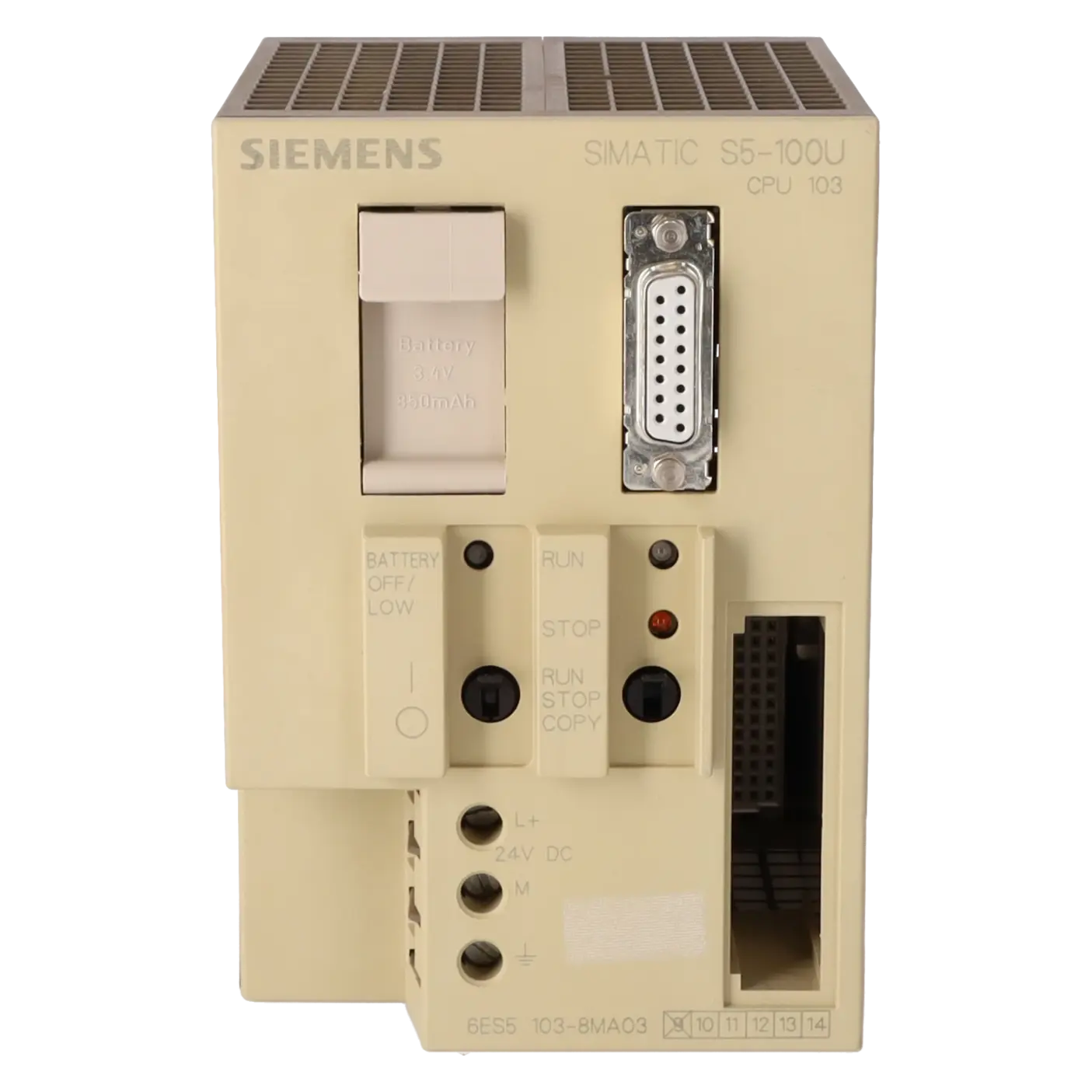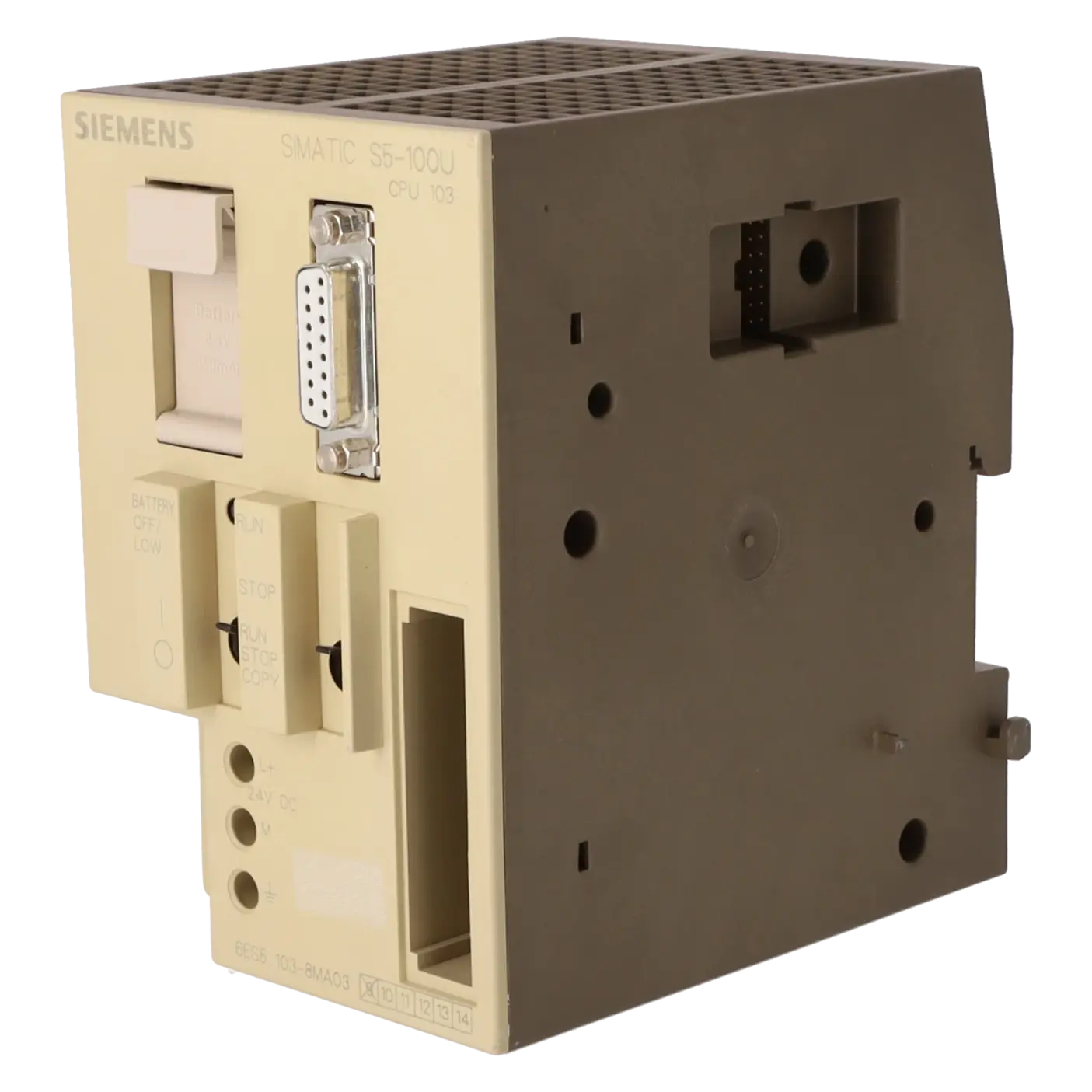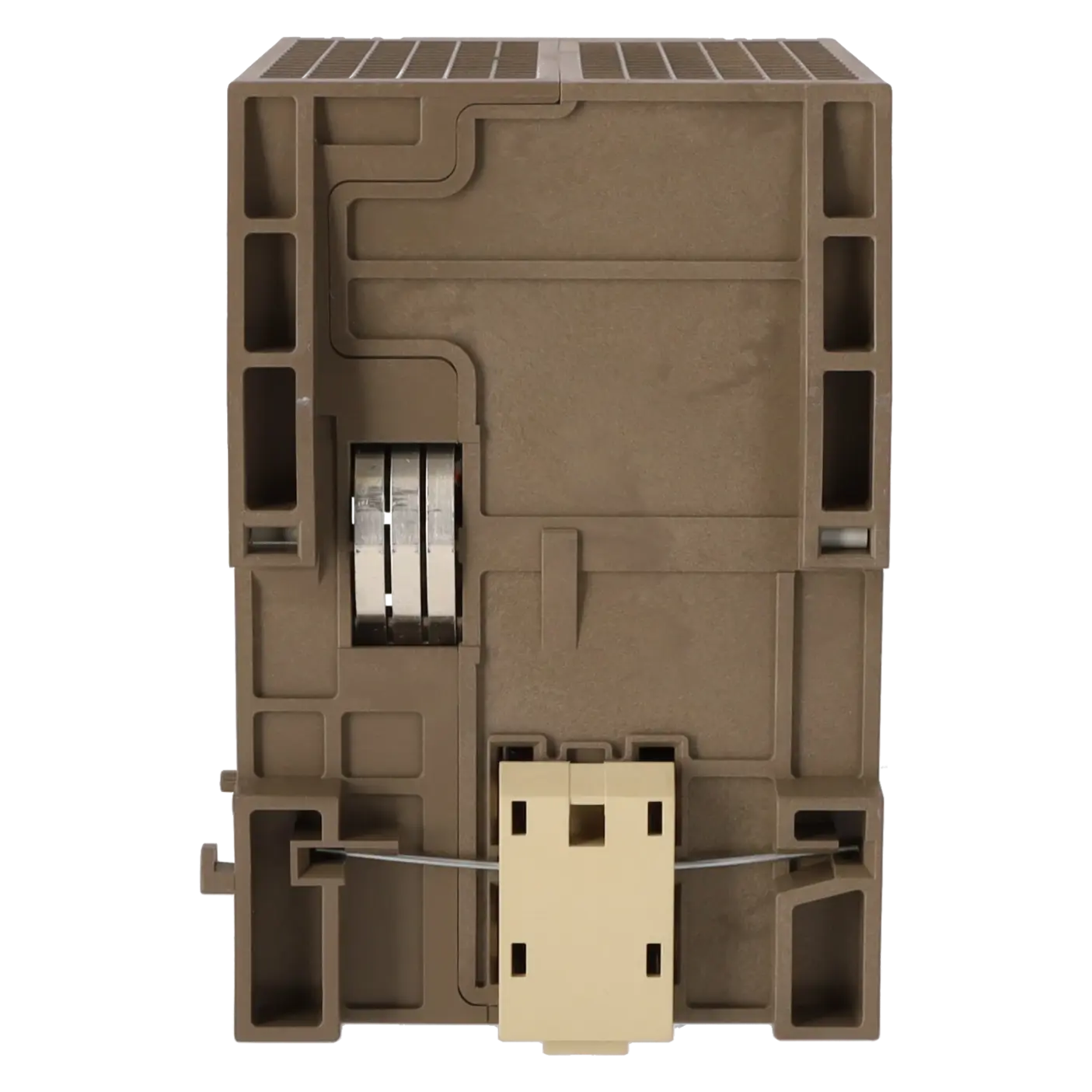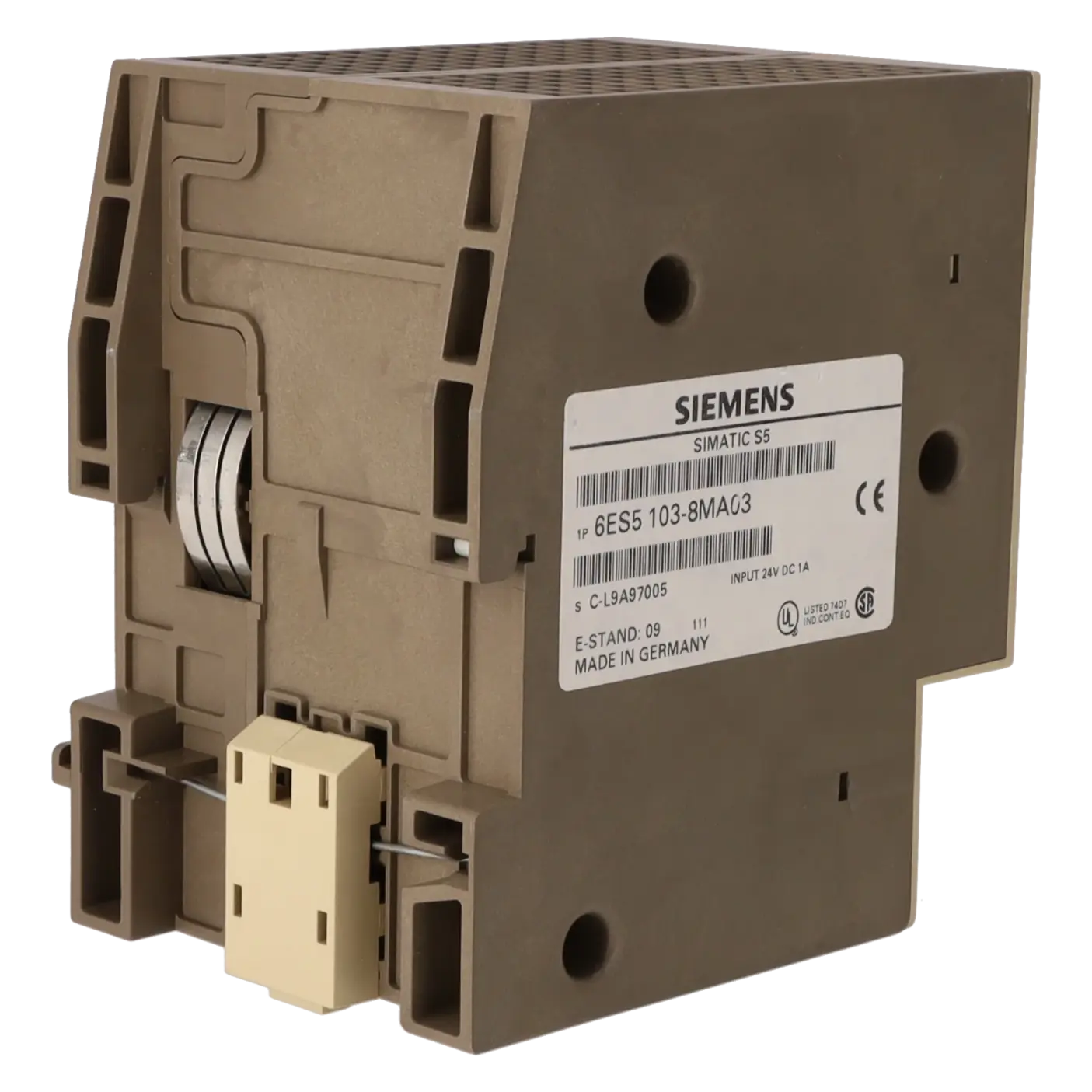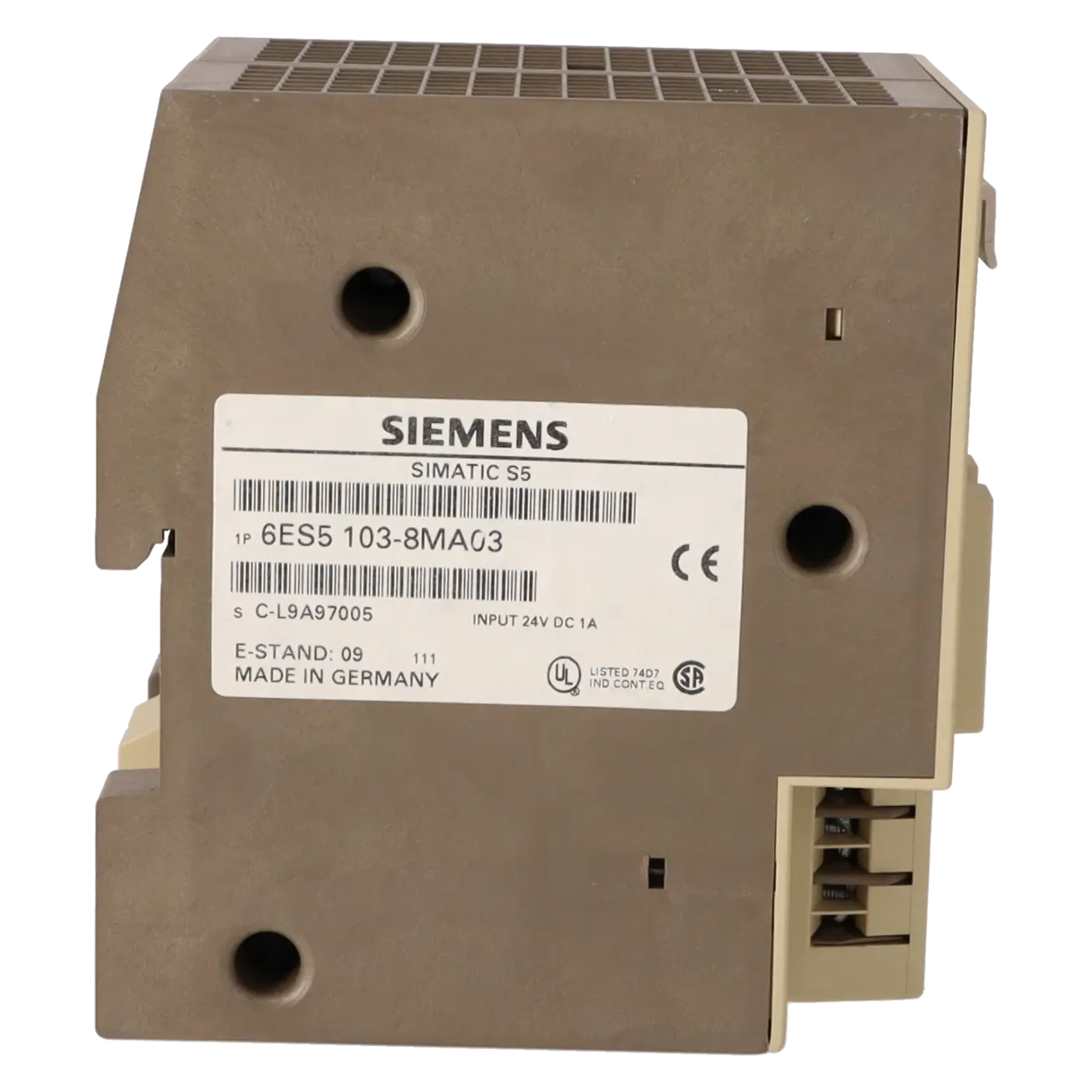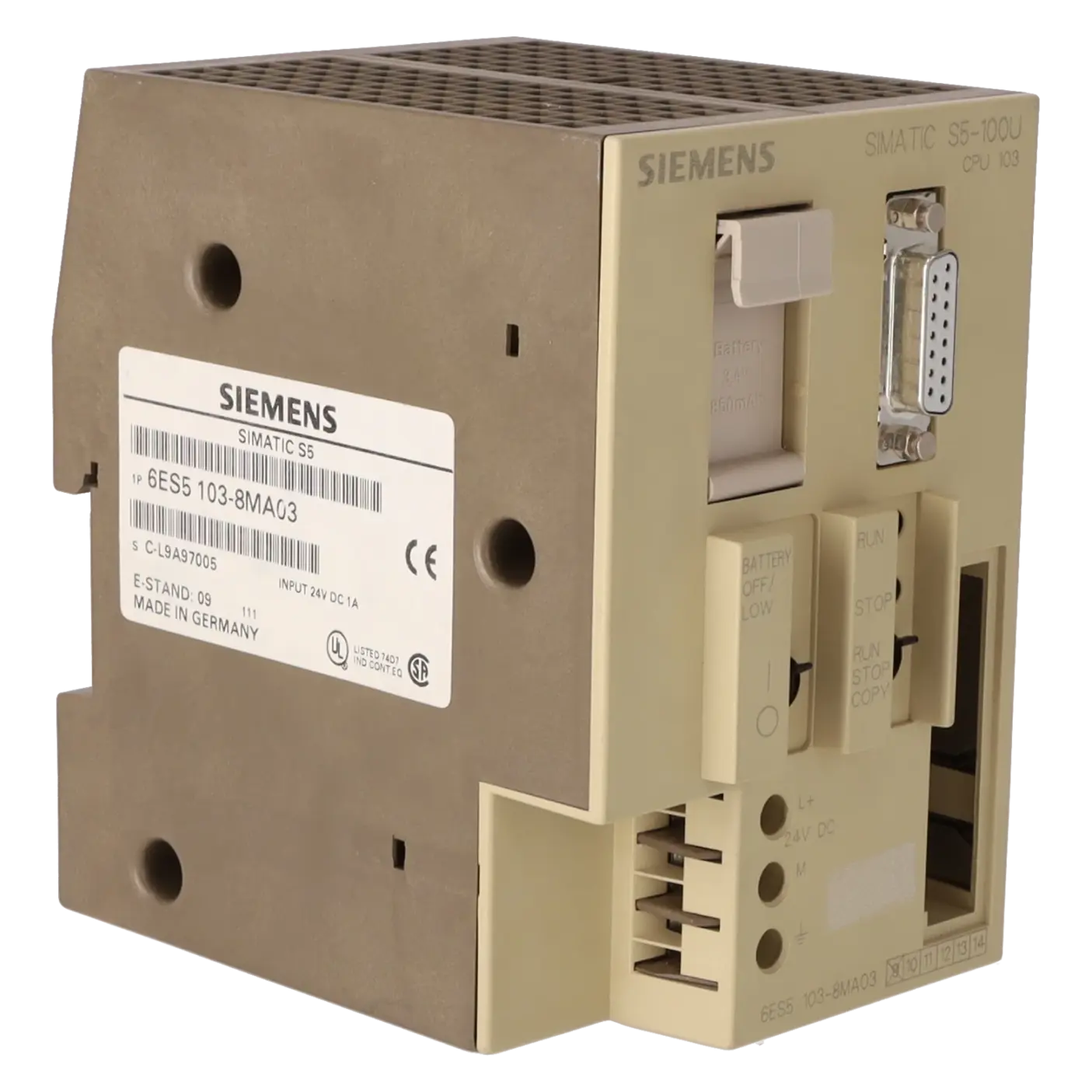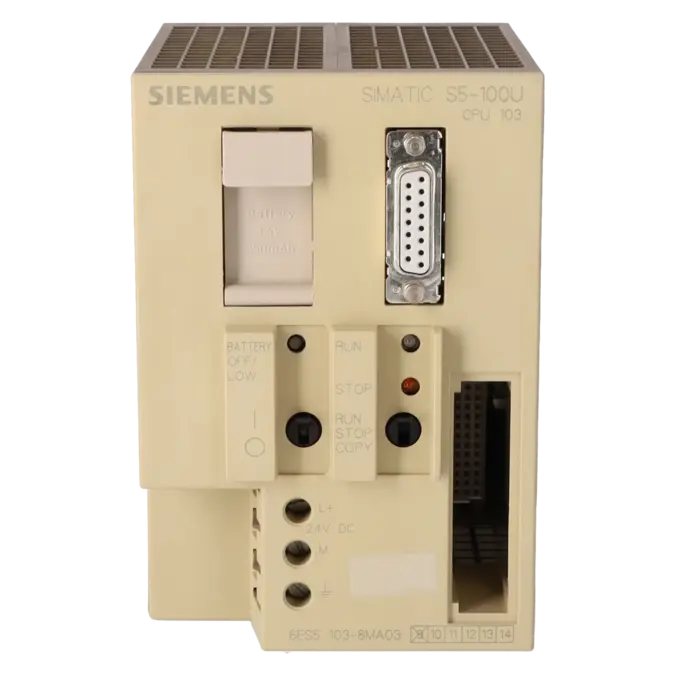
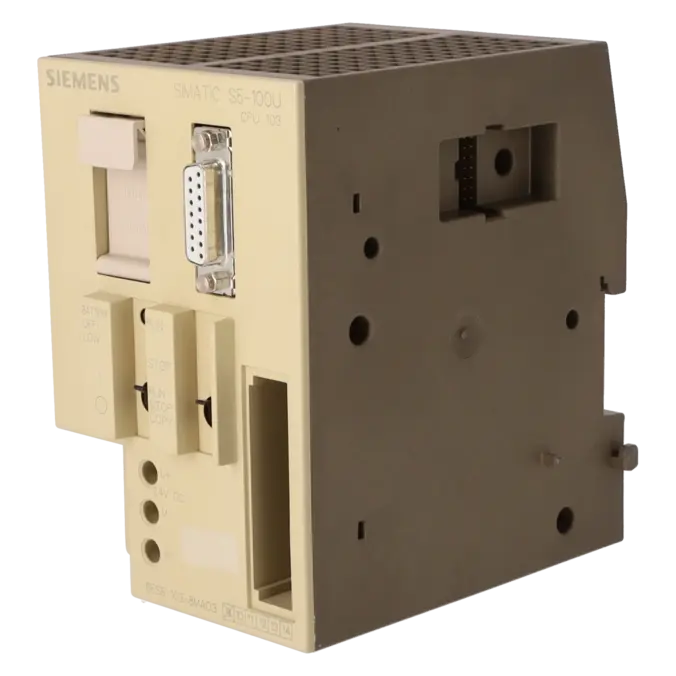
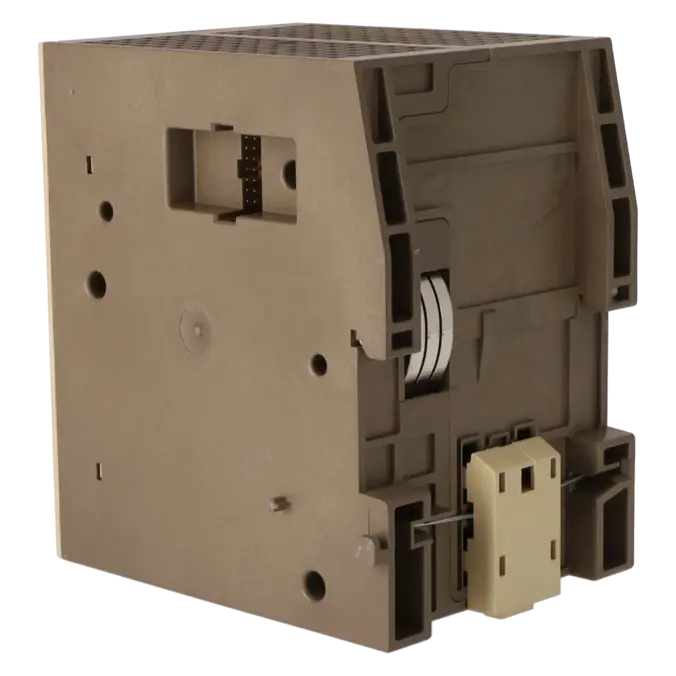
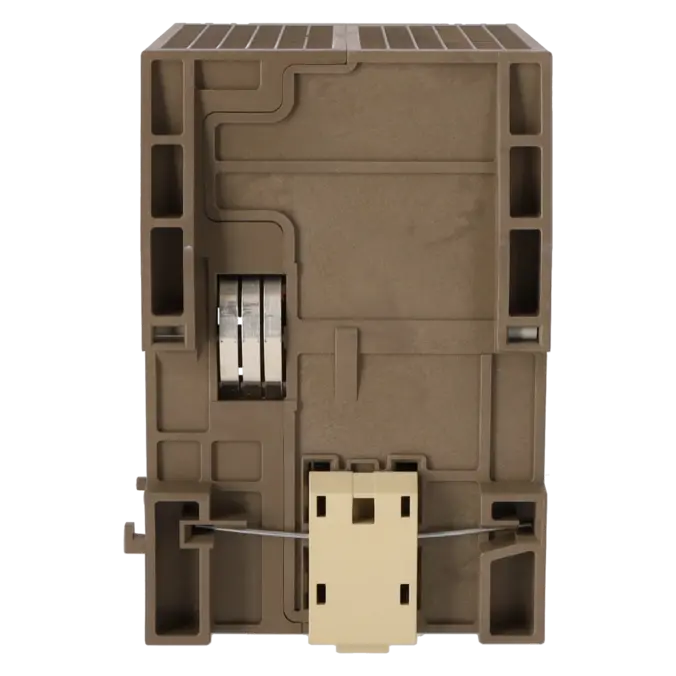
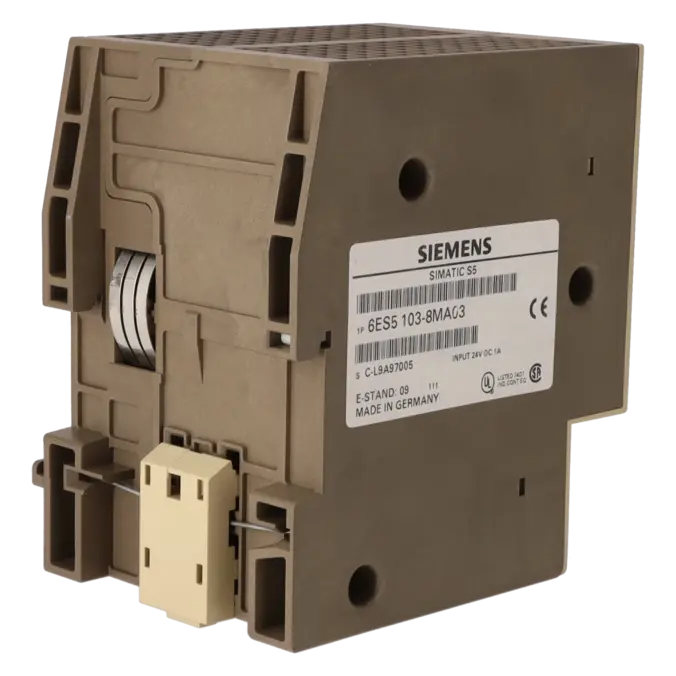
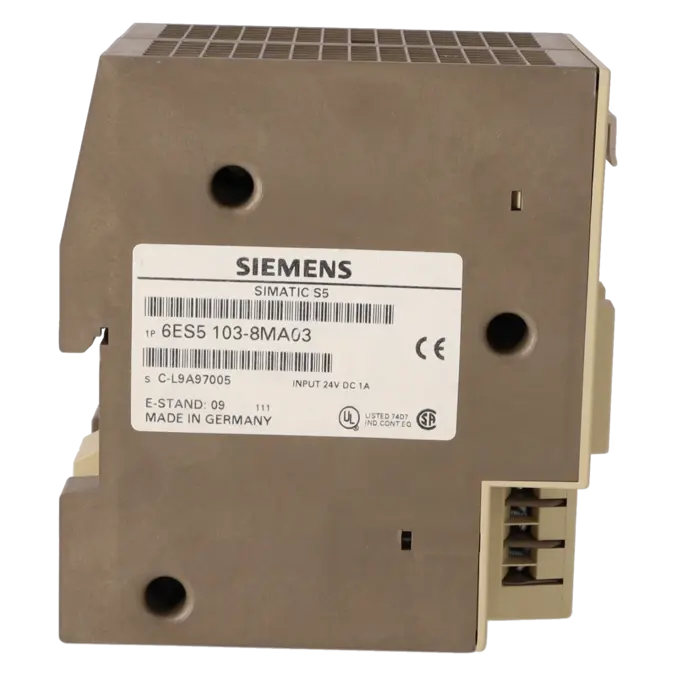
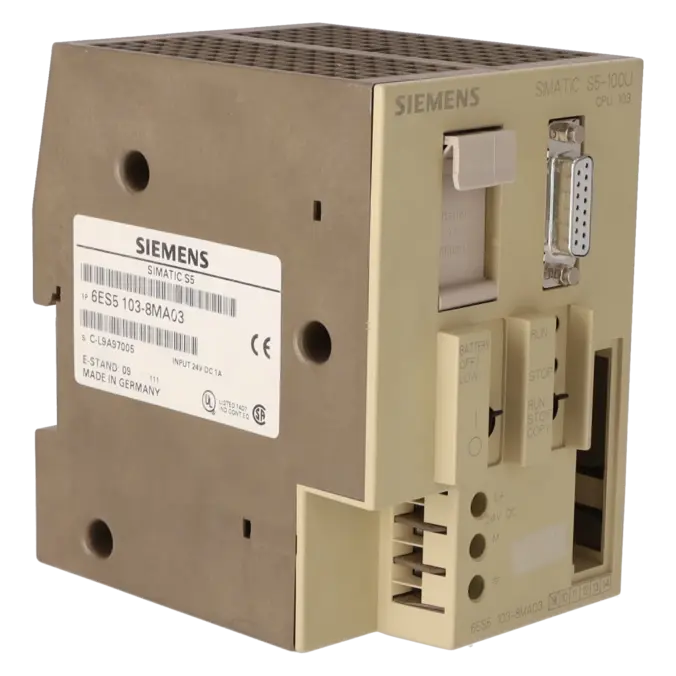
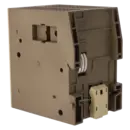
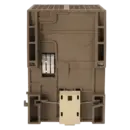
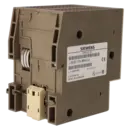
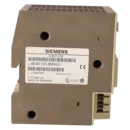
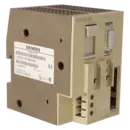
SIEMENS 6ES5103-8MA03
- EICHLER-art.no.: K0117392
- EAN: 4025515052647
Product description
SIMATIC S5, CPU 103 CENTRAL PROCESSING UNIT FOR S5-100U
Services for SIEMENS 6ES5103-8MA03
SIEMENS |
6ES5103-8MA03 –
additional product information
| Delivery information | |||
|---|---|---|---|
| Export identifier | AL: ECCN: | ||
| Net weight | 0.695 | ||
| Quantity | 1 Stück | ||
| Packaging quantity | 1 | ||
| Additional product information | |||
|---|---|---|---|
| Product status | EOP: 2004-10-01 | ||
| EAN | 4025515052647 | ||
| UPC | / | ||
| Static lot number | 85389011 | ||
| List indicator | / | ||
| Product group | 4234 | ||
| Country of origin | DE | ||
| Compliance with the substance restrictions according to RoHS directive | Since: / | ||
| Product classifications | Version | Classification | |
|---|---|---|---|
| eClass | 4 | / | |
| eClass | 5.1 | / | |
| eClass | 6.0 | / | |
| ETIM | 3 | / | |
| ETIM | 4 | / | |
| ETIM | 5 | / | |
What is the 6ES5103-8MA03 and where is it used?
The SIEMENS 6ES5103-8MA03 is a CPU 103 central processing assembly for the SIMATIC S5-100U system. It executes the actual control logic of the system and is typically used in legacy machines where a compact S5-100U controller is to remain in operation together with the existing input and output assemblies. The EICHLER product page describes the assembly as a CPU 103 supplied with a battery. According to the Siemens device manual, the CPU is designed for connecting programming devices, operator panels and monitors via its serial interface and can also be integrated into existing SINEC L1 environments. For maintenance engineers, it is therefore particularly relevant when a legacy system must be kept operational, restarted quickly after a breakdown, or secured without requiring a complete retrofit.
Overview of the key technical data and what it means
Technically, the CPU operates as a byte- and bit-oriented processor with internal RAM for 10,240 instructions and optional EPROM or EEPROM memory modules. It features an integrated real-time clock with an accuracy of approximately ±2 seconds per day, processes a binary operation in around 0.8 µs and a word operation in approximately 100 µs. Other important practical specifications include 2,048 flags, of which 512 are retentive, 128 timers with a range from 0.01 to 9,990 seconds, 128 counters, a maximum of 256 digital inputs and outputs, and a total of 32 analogue channels. Supported organisation blocks include OB1, OB2, OB13, OB21, OB22, OB31, OB34 and OB251. In practice, this means that the assembly is well suited to classical machine control logic, start-up and restart functions, timing applications, battery diagnostics and predefined special functions within existing S5-100U systems.
Product status, life-cycle status and obsolescence
For purchasing and risk assessment purposes, the life-cycle status is a key consideration. The EICHLER product page lists an EOP (End of Production) date of 1 October 2004 in the additional product information. Siemens currently classifies the 6ES5103-8MA03 in the SIOS portal as PM500: Discontinued Product or End of PLM & Support, with a PLM effective date of 1 October 2022. Siemens also explicitly states that the product has been discontinued without a replacement. Consequently, there is no verified official Siemens successor for this specific article number. For operators of legacy S5-100U systems, this means that long-term support can no longer rely on standard manufacturer supply but instead depends on available stock, replacement parts, repair services and a planned modernisation strategy. This is precisely why a robust life-cycle and spare-parts management strategy is particularly important for this CPU.
Available EICHLER services and when they are relevant
For the 6ES5103-8MA03, EICHLER offers repair, replacement, used parts and new parts. The product page specifies a repair turnaround time of 2–5 working days. EICHLER’s repair service always includes technical cleaning, preventive maintenance, comprehensive functional testing and a minimum 24-month warranty; these services are exclusively available to business customers. For maintenance engineers, this is especially relevant when an unexpected failure must be resolved quickly without modifying the existing S5 control logic. For purchasing departments, replacement, used-part and new-part options provide flexibility in limiting the costs associated with a breakdown. For decision-makers, these services are particularly valuable because Siemens has officially discontinued the CPU without providing a successor product.
| Fault Description | Possible Solution |
|---|---|
| Why does my S5-100U CPU 103 briefly enter RUN mode and then immediately switch back to STOP? | If the CPU starts briefly and then immediately stops, the cause is often not a simple switch issue but rather a program or peripheral fault. Typical starting points for troubleshooting include checking the ISTACK and BSTACK using STEP 5, investigating possible DB1 issues, verifying that all required data blocks are present and checking for assembly faults. Technical discussions relating to the S5-100U describe this behaviour as an indication that the user program starts cyclic operation but subsequently encounters an error condition that forces the CPU into STOP mode. |
| What does a battery failure (OB34) mean on the CPU 103 and how can it be resolved? | The Siemens manual describes OB34 as the organisation block executed in response to a battery failure. When a battery fault occurs, OB34 is processed before every cycle until the battery has been replaced. It is therefore advisable to first back up the project and any retentive data, then replace the battery in a controlled manner and finally check how OB34 has been programmed to respond. In older S5 systems, it is also important to verify that all retentive data remains fully intact after the battery replacement. |
| Why does the system fail to start correctly after a power failure or battery replacement? | In the S5-100U, part of the program may still be available from EPROM after a memory loss, but data blocks are not automatically restored in every situation as expected by the user program. Technical reports describe cases where a CPU enters STOP mode after a power failure because required DBs are missing. The correct solution is therefore to reload the complete STEP 5 project, including all data blocks, or to verify that the start-up blocks correctly create and initialise the required DBs during start-up. In addition, the battery condition and age should be checked. |
| How do I resolve the STUEB message or a block stack overflow on the CPU 103? | The Siemens manual documents that the CPU 103 version 8MA03 can enter STOP mode if the nesting depth of called blocks becomes excessive. The corresponding diagnostic message is STUEB (Block Stack Overflow). The solution is to review the call structure of OB, PB and FB chains, reduce recursive or unnecessarily deep nesting and pay particular attention to time-controlled or interrupt-controlled routines. Although the CPU 103 supports a higher stack depth than some earlier variants, it still has a finite limit of 32 levels. |
| Why do the clock, OB13 or time-controlled functions stop working after a CPU replacement or memory reset? | Siemens describes time-controlled program execution via OB13 together with the CPU's integrated clock. For version 8MA03, clock parameterisation is explicitly handled through DB1. If these DB1 parameters are missing or incorrect following a CPU replacement, memory reset or program reload, time functions, clock access and start-up behaviour may operate unpredictably. Therefore, DB1, the assignment of clock data and status words, as well as the initialisation performed by start-up blocks such as OB21 and OB22, should all be checked carefully. |
Is there an official Siemens successor to the 6ES5103-8MA03?
No. Siemens classifies the 6ES5103-8MA03 in the SIOS portal as a discontinued product and explicitly states that it has been “deleted without replacement”. From a spare-parts strategy perspective, this means that operators wishing to continue running an existing S5-100U system must rely on repair, replacement, certified used parts or a planned migration strategy. At the same time, Siemens provides a migration guide for moving from SIMATIC S5 to SIMATIC S7-1500. This is important for operators because short-term availability and long-term modernisation planning should be considered in parallel.
How can I determine whether the CPU 103 is the correct assembly for my system?
The correct identification starts with the exact article number, 6ES5103-8MA03, and confirmation that the platform is SIMATIC S5-100U. The CPU functions and application program should then be reviewed. The CPU 103 provides features including 128 timers, 128 counters, data blocks up to DB255, time-controlled processing via OB13, battery monitoring via OB34 and, in version 8MA03, clock parameterisation through DB1. If the STEP 5 project uses these specific functions, the replacement assembly should be functionally compatible. In practice, this means that not only the designation on the front panel but also the project structure, OB usage, memory requirements and clock or timing functions must all match.
For an obsolete S5 CPU, is repair or modernisation the better option?
In the event of an acute breakdown, repair or replacement is often the faster solution because the existing wiring, peripheral equipment and STEP 5 logic can continue to be used. EICHLER specifies a repair turnaround time of 2–5 working days for this CPU and combines the service with technical cleaning, preventive maintenance, comprehensive functional testing and a minimum 24-month warranty. From a strategic perspective, however, it remains important to recognise that Siemens has discontinued the product without a successor. If failures become more frequent, spare-parts inventories decrease or STEP 5 expertise becomes increasingly difficult to obtain, a migration project should also be planned. The most economical decision therefore depends on whether the priority is to minimise downtime immediately or to reduce obsolescence risks permanently.
What should always be backed up before replacing the battery or performing a reset?
Before carrying out any intervention, the complete STEP 5 project should be backed up, including all data blocks, retentive values and, where applicable, the contents of memory modules. Siemens describes battery-failure handling via OB34, while technical discussions relating to the S5-100U also show that, after memory loss, programs stored in EPROM may only be partially restored and missing DBs can still force the CPU into STOP mode. For this reason, it is not sufficient simply to have an EPROM available somewhere. The complete operational project version, including all start-up and initialisation logic, should always be secured.
Which functions make the CPU 103 particularly attractive for legacy systems?
The CPU 103 remains attractive for older but business-critical machines because it combines many important functions required for continued operation in a compact design. These include RAM for 10,240 instructions, 2,048 flags, 128 timers, 128 counters, an integrated clock, dedicated start-up and diagnostic OBs, and support for up to 256 digital and 32 analogue channels in total. In addition, it provides a serial interface for programming and operator devices, as well as support for memory modules and DB1 parameters that allow existing S5 projects to continue operating. For operators, this means that while the CPU is not modern, it remains technically well suited to the requirements of many legacy machine designs.
Can the 6ES5103-8MA03 still be purchased today?
Yes, but no longer as a standard production item from the manufacturer. Siemens classifies the assembly as discontinued without a replacement, while EICHLER continues to offer repair, replacement, used parts and new parts on request for this article number. This is particularly important for purchasing departments, as the procurement of obsolete PLC assemblies is often no longer based on normal series availability but instead relies on service partners, available stock or certified exchange programmes. Organisations requiring supply security should therefore evaluate not only the purchase price but also testing procedures, warranty coverage, response times and the technical traceability of the supplied assembly.