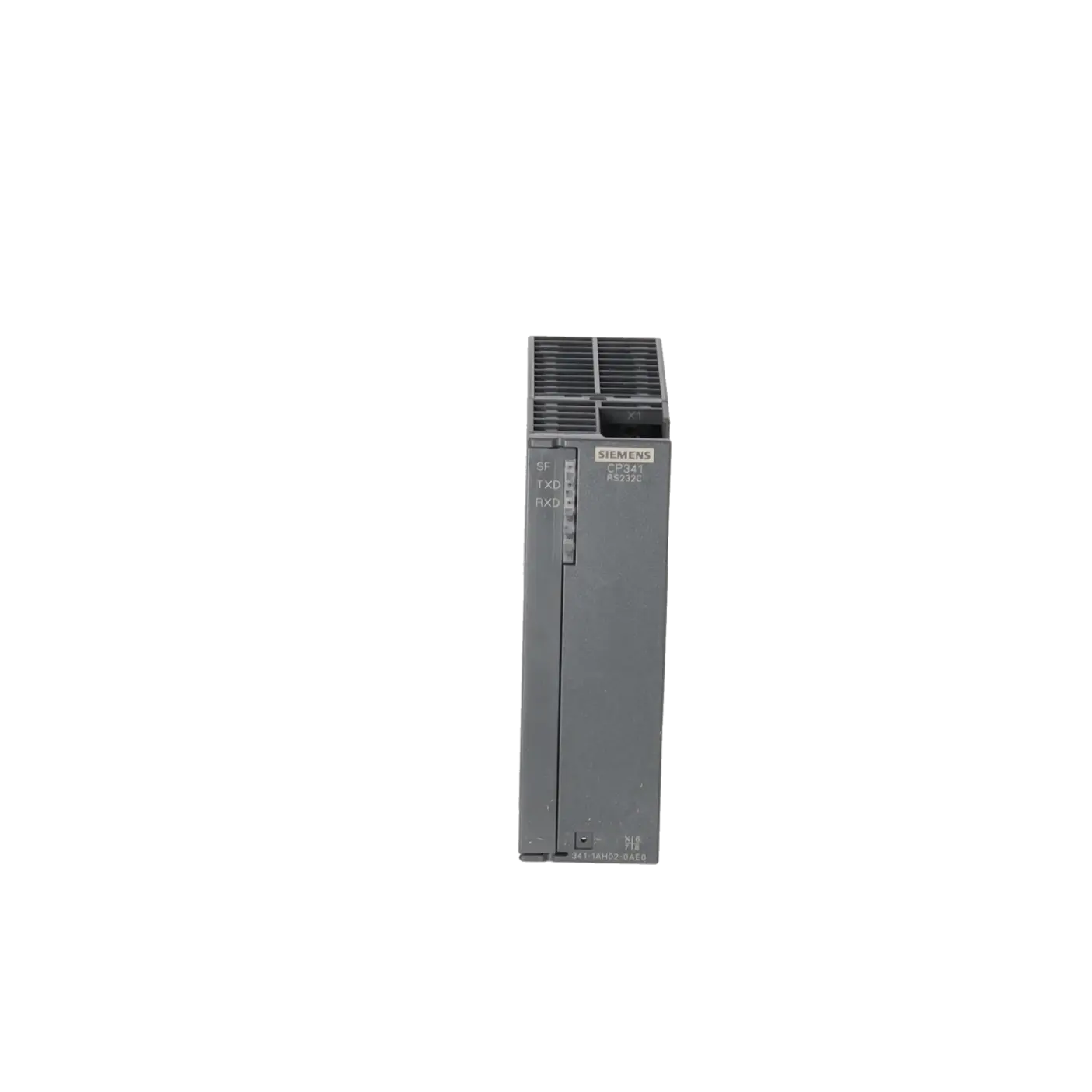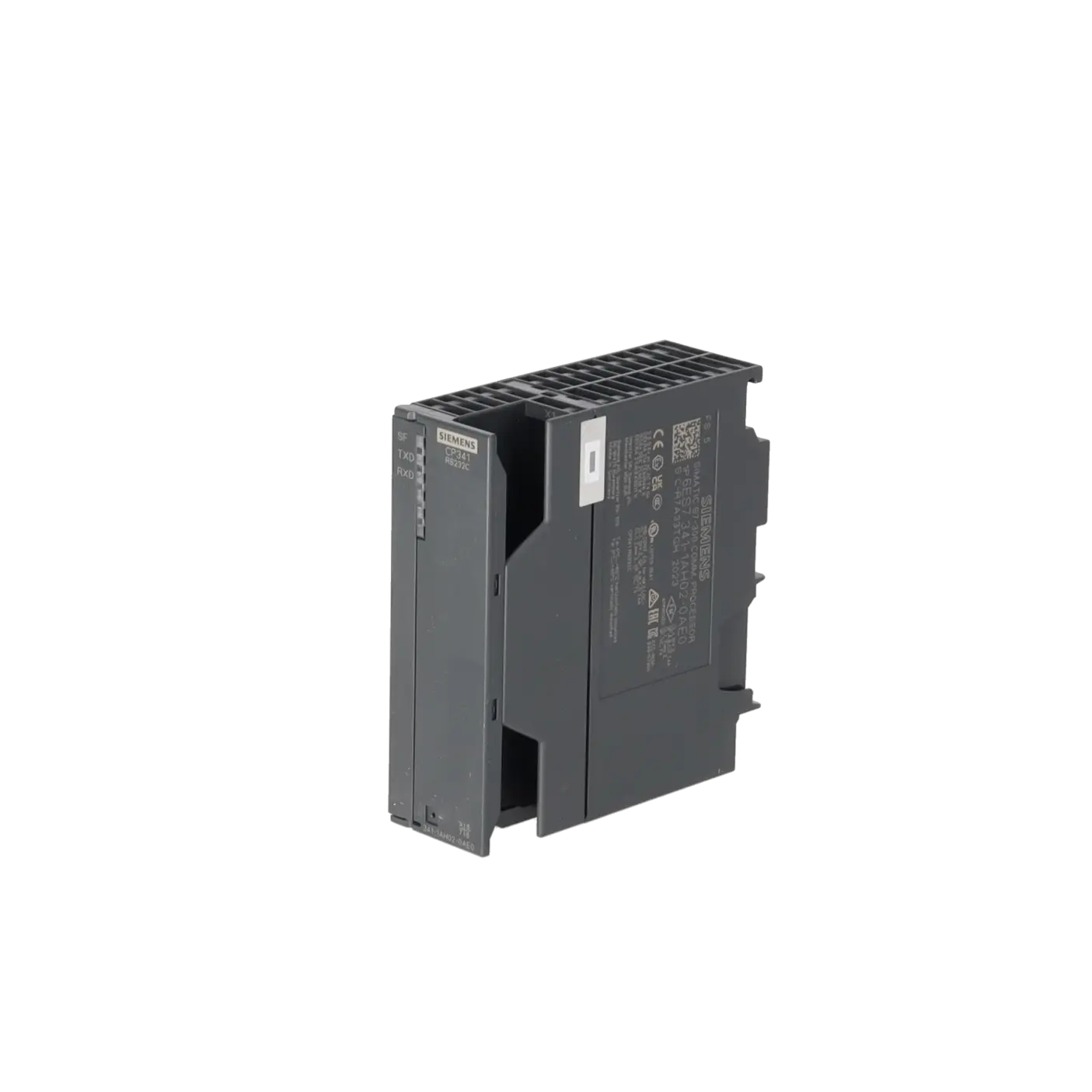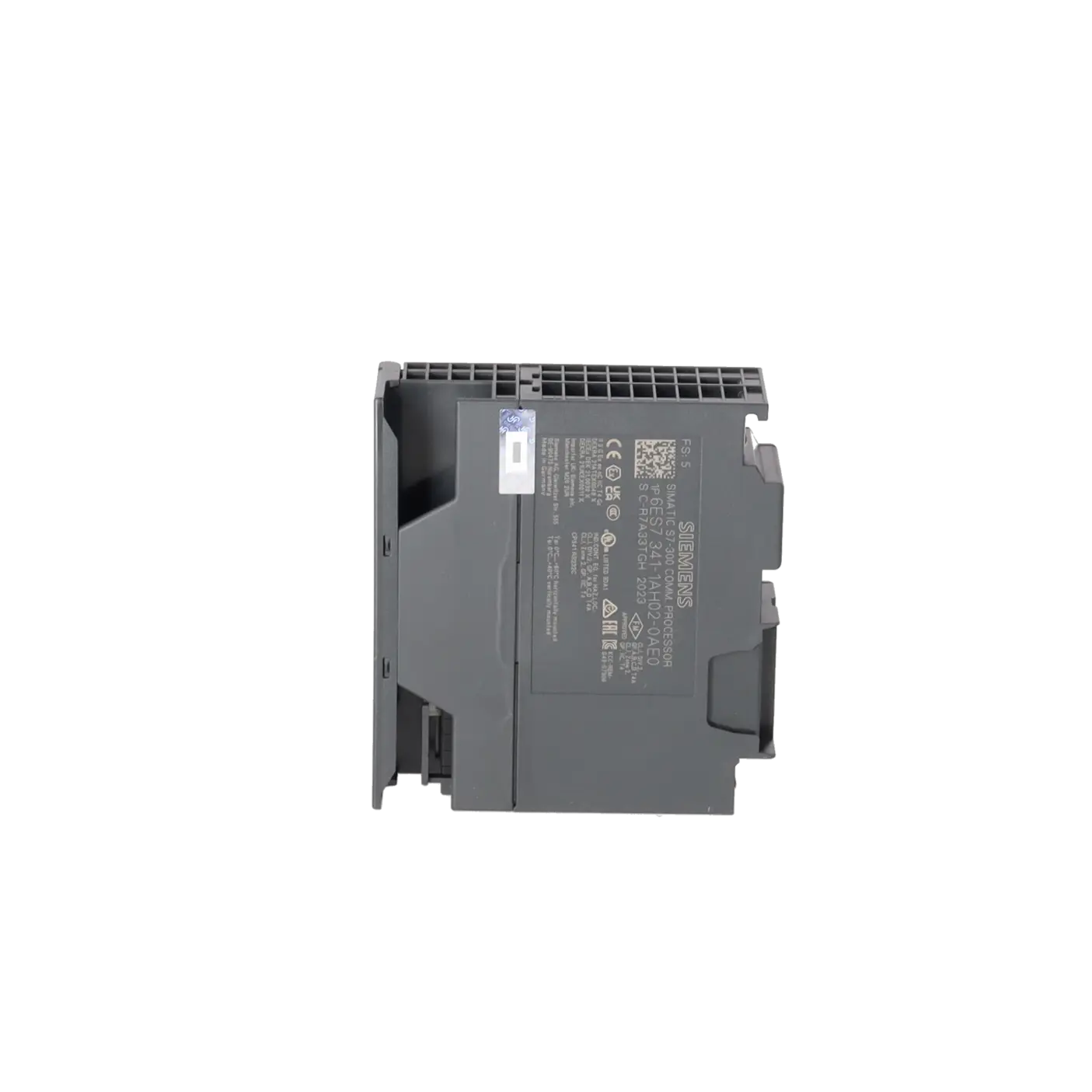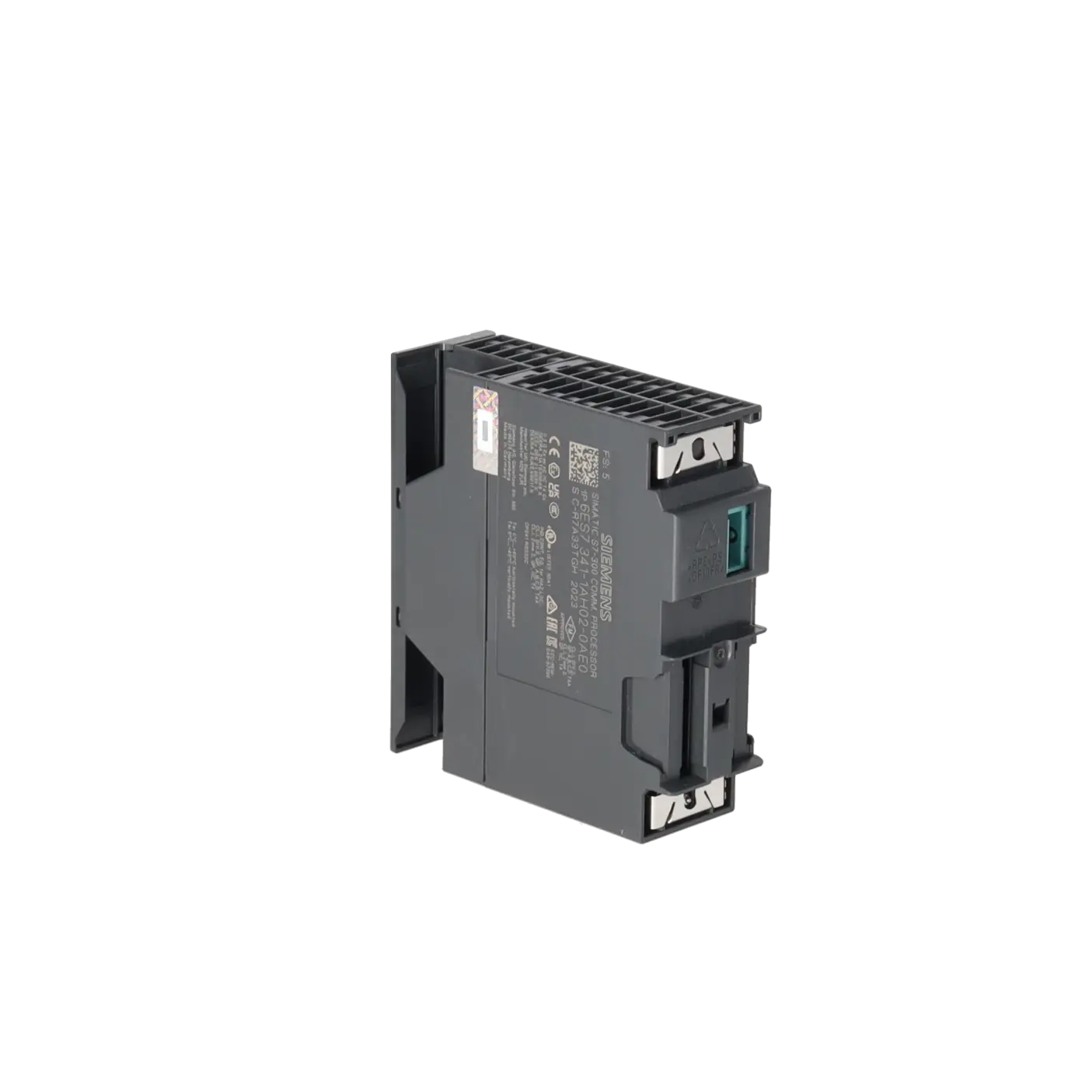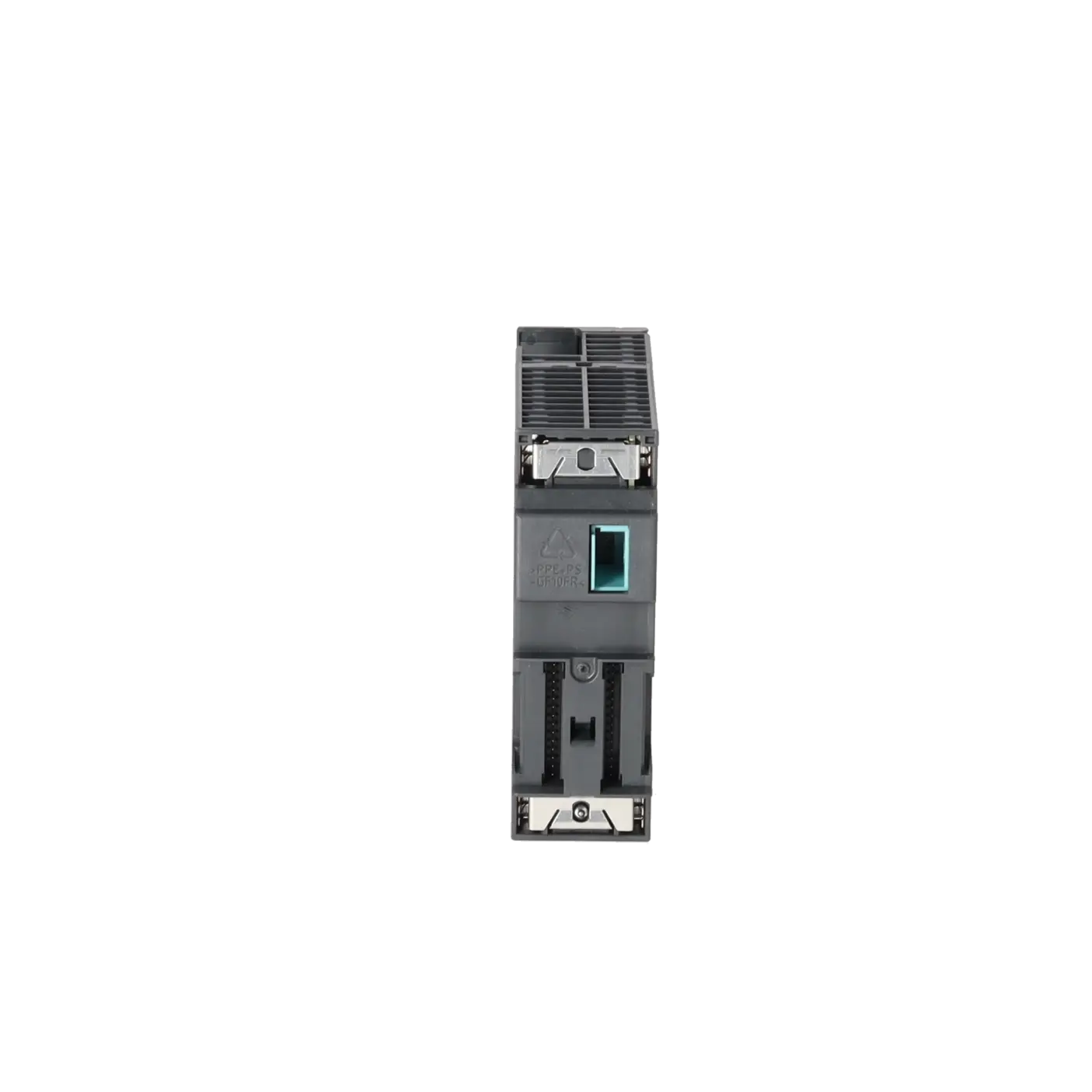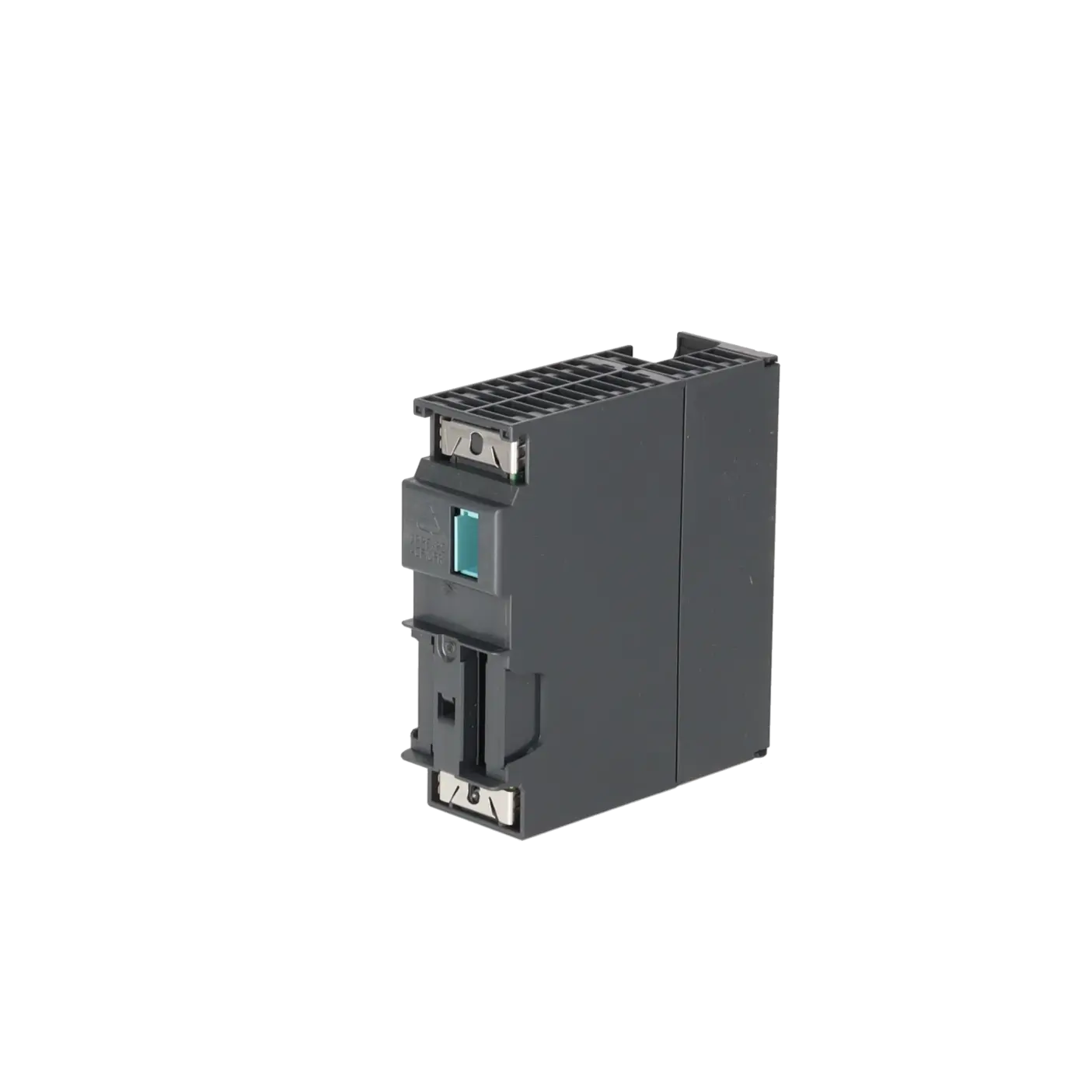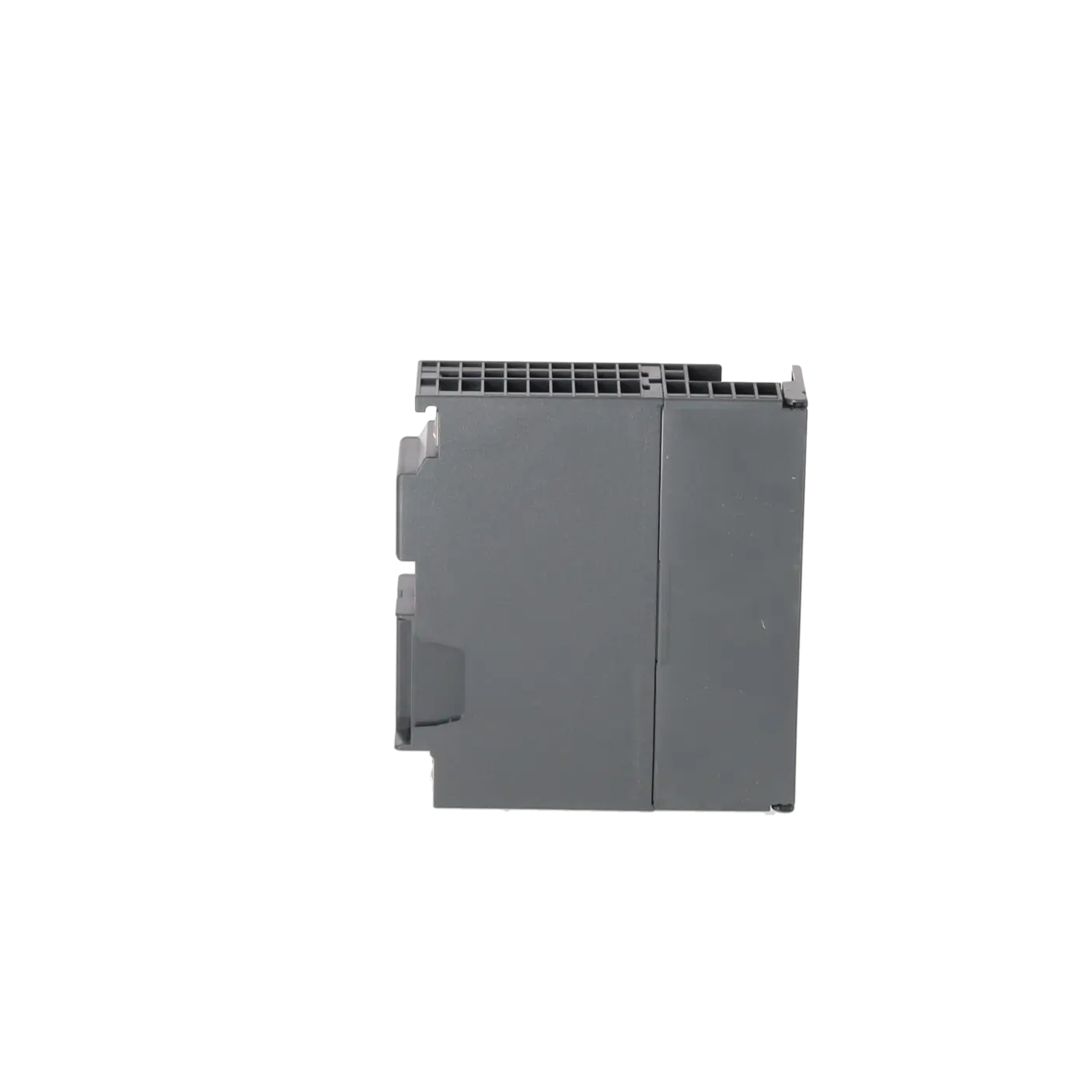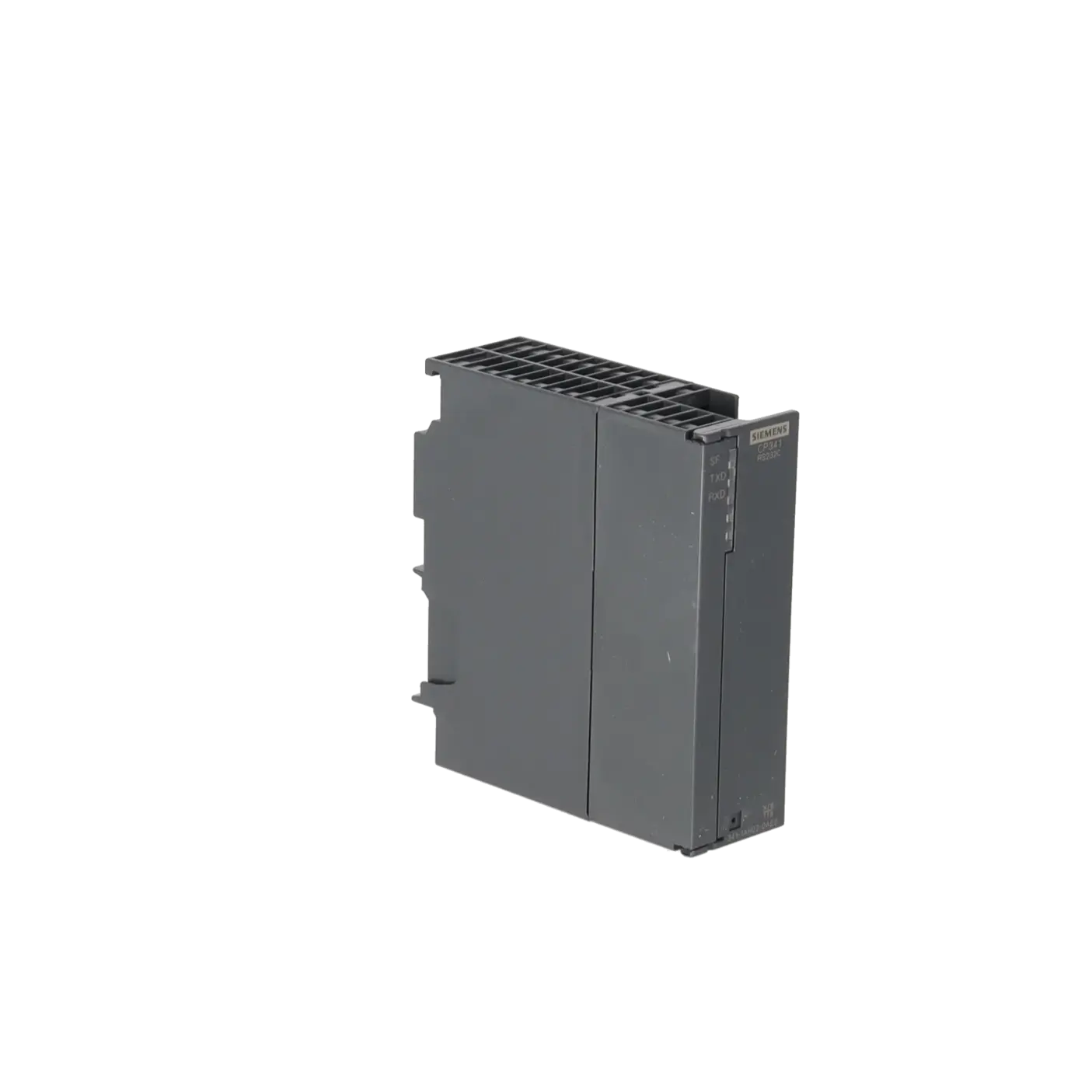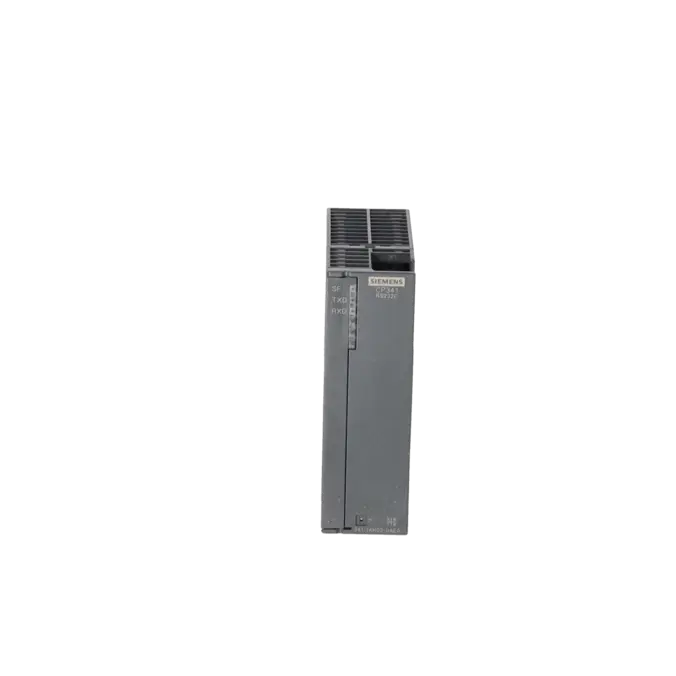
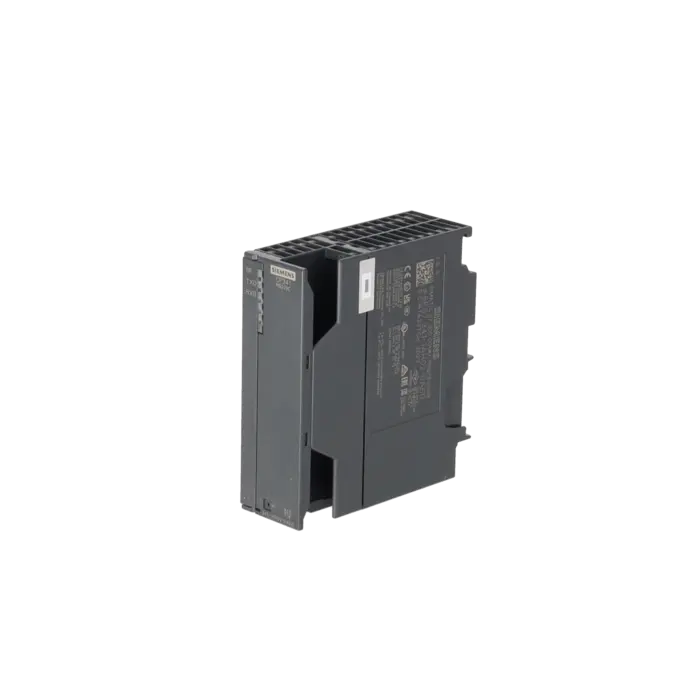
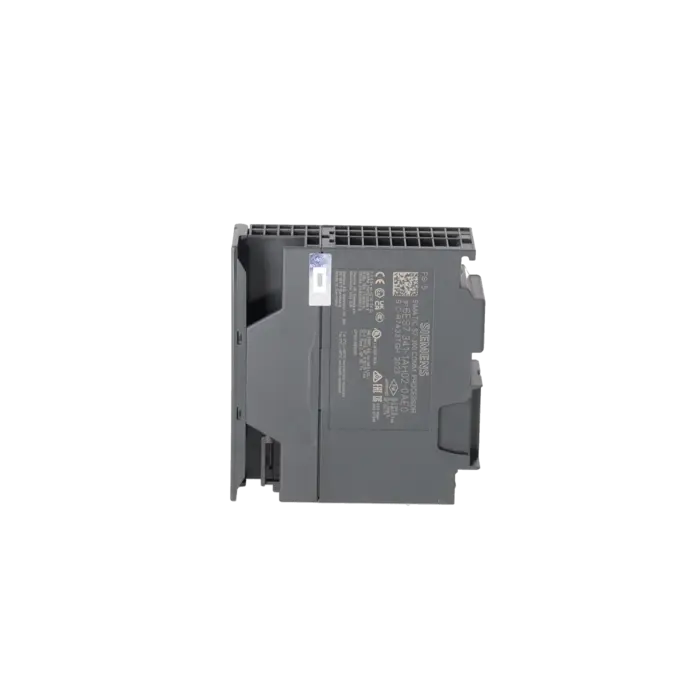
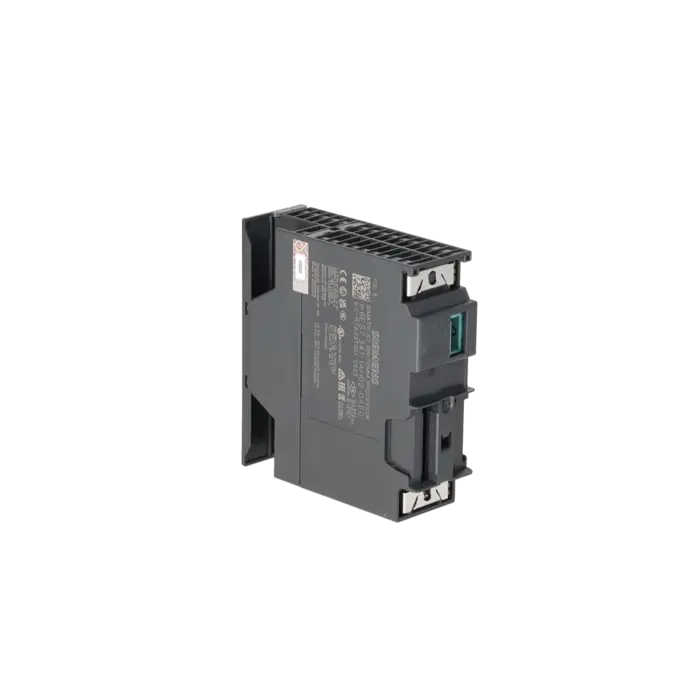
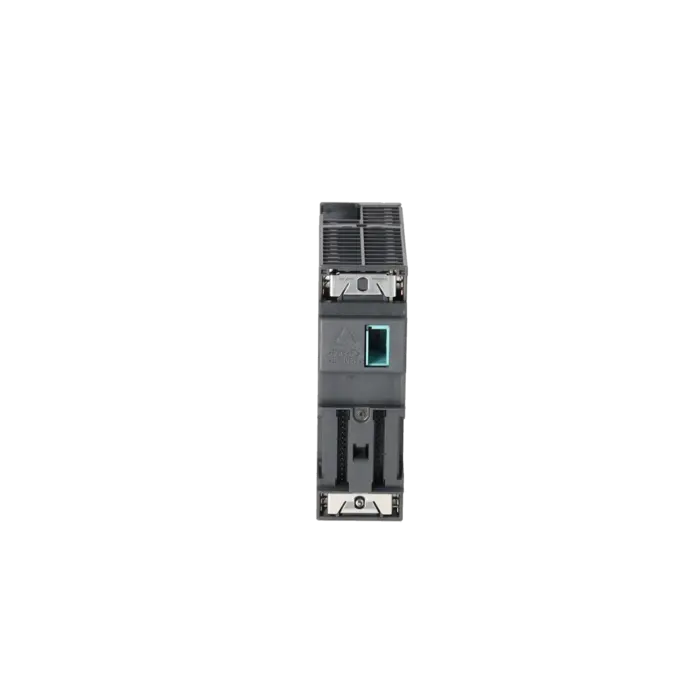
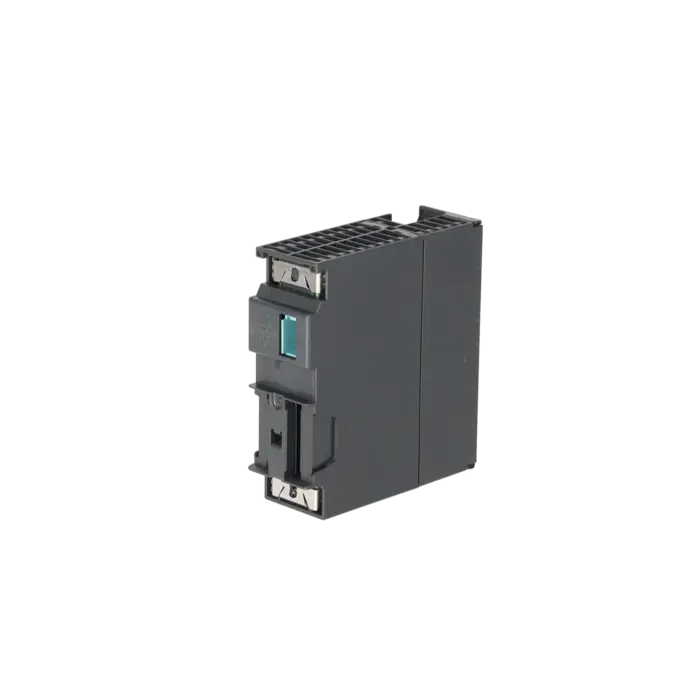
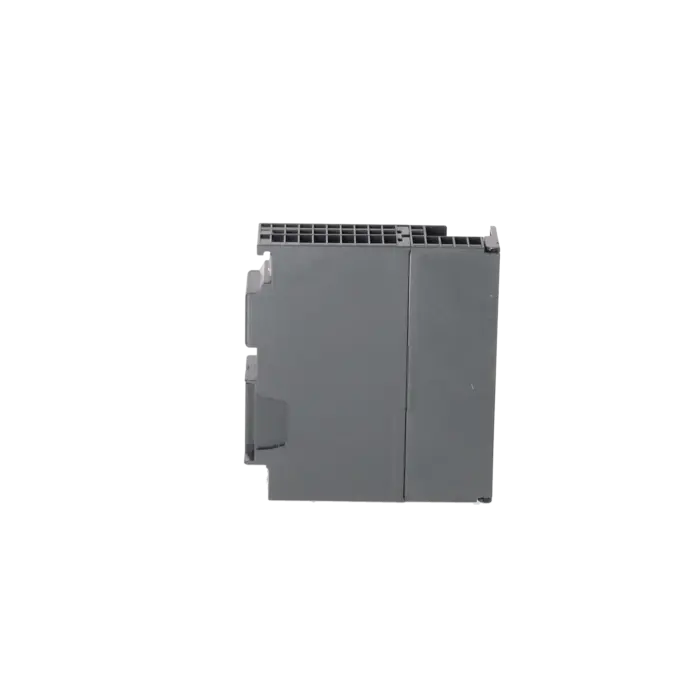
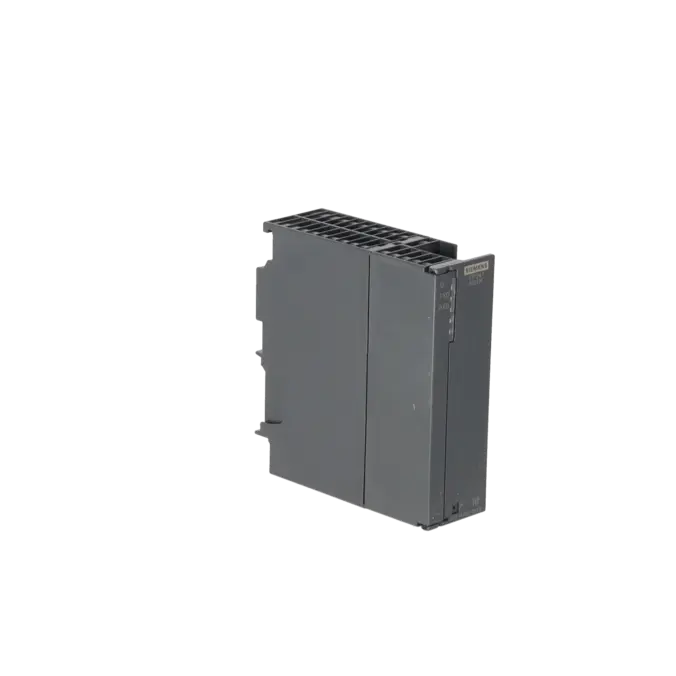

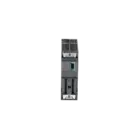
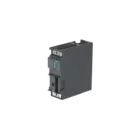
SIEMENS 6ES7341-1AH02-0AE0
- EICHLER-art.no.: K0252224
- EAN: 4025515077022
- UPC: 662643401493
Product description
SIMATIC S7-300, CP 341 COMMUNICATIONS PROCESSOR WITH RS232C INTERFACE (RS-232-C) INCL. CONFIGURATION PACKAGE ON CD
Services for SIEMENS 6ES7341-1AH02-0AE0
Repair
from 949,89 €
to 1.396,89 €
Replacement
Used
New
1.552,10 €
1.164,07 €
SIEMENS |
6ES7341-1AH02-0AE0 –
additional product information
| Delivery information | |||
|---|---|---|---|
| Export identifier | AL: N ECCN: EAR99H | ||
| Net weight | 0.302 | ||
| Quantity | 1 Stück | ||
| Packaging quantity | 1 | ||
| Additional product information | |||
|---|---|---|---|
| Product status | |||
| EAN | 4025515077022 | ||
| UPC | 662643401493 | ||
| Static lot number | 85176200 | ||
| List indicator | ST73 | ||
| Product group | X07Y | ||
| Country of origin | DE | ||
| Compliance with the substance restrictions according to RoHS directive | Since: 20080331 | ||
| Product classifications | Version | Classification | |
|---|---|---|---|
| eClass | 4 | 27-24-03-09 | |
| eClass | 5.1 | 27-24-22-08 | |
| eClass | 6.0 | 27-24-22-08 | |
| ETIM | 3 | / | |
| ETIM | 4 | EC001423 | |
| ETIM | 5 | EC001423 | |
What is 6ES7341-1AH02-0AE0 and where is it used?
6ES7341-1AH02-0AE0 is a SIMATIC S7-300 communication processor CP 341 with an RS-232C (V.24) interface. The module is designed for point-to-point communication and connects an S7-300 PLC to other automation devices, computers or serial third-party systems. Typical applications include the connection of measuring instruments, barcode scanners, weighing systems, printers, legacy controllers and supervisory systems where reliable serial communication is required. Siemens also specifies its use with third-party PLCs, devices using simple protocol structures and serial printers. For operators of existing installations, the module is particularly important when an existing RS-232 communication link must remain unchanged and major system modifications are to be avoided.
Overview of the key technical data and what it means
The CP 341 operates on 24 V DC, requiring a maximum of 100 mA from L+ and up to 70 mA from the backplane bus. It features a galvanically isolated RS-232C interface with a 9-pin Sub-D connector. Data rates range from 0.3 to 115.2 kbit/s, with a maximum cable length of 15 m. Supported integrated protocol drivers include 3964(R), ASCII and RK 512, and a printer driver is also available. The maximum telegram length is 4,096 bytes. Diagnostic information is provided via the RxD, TxD and SF LEDs. Additional installation data includes an operating temperature range of 0 to 60 °C, dimensions of 40 × 125 × 120 mm and a weight of approximately 300 g. For maintenance personnel, this means a compact design, straightforward diagnostics and reliable serial communication within existing automation systems.
Product status, lifecycle status and obsolescence
Siemens currently lists 6ES7341-1AH02-0AE0 as a spare part. At the same time, the Siemens Industry Mall shows the lifecycle status PM410 / Product Cancellation with effect from 01 October 2025. For purchasing and maintenance departments, this is an important indication that the module has entered a late product lifecycle phase, making spare-part strategies, repair options and replacement planning increasingly important. For migration projects, Siemens identifies the CM PtP RS232 HF 6ES7541-1AD00-0AB0 as the corresponding successor product within the migration path from S7-300 to S7-1500. However, this mapping is intended primarily for planned migration projects rather than for maintaining an existing S7-300 installation on a like-for-like basis.
Available EICHLER services and when they are relevant
For operators of ageing or obsolete automation systems, several procurement and support options are available. EICHLER offers repair, exchange, used and new units for 6ES7341-1AH02-0AE0. According to the product page, repair services are typically completed within 2–5 days and include technical cleaning, preventive maintenance, comprehensive functional testing and a minimum 24-month warranty. Exchange services and used modules are also available on request. At the time of research, new units were listed with a delivery time of 1–3 days. Repair is particularly attractive when the existing parameterisation, application logic and wiring should remain unchanged. For purchasing managers and decision-makers, exchange, used or new modules offer practical options for reducing downtime, mitigating supply risks and maintaining plant availability despite the product’s advanced lifecycle status. EICHLER provides these services exclusively for business customers.
| Attribute | Value |
|---|---|
| Supply voltage | |
| Rated value (DC) | |
| ● 24 V DC | Yes |
| Input current | |
| from supply voltage L+, max. | 100 mA |
| from backplane bus 5 V DC, max. | 70 mA |
| Power loss | |
| Power loss, typ. | 1.6 W |
| Power loss, max. | 2.4 W |
| Interfaces | |
| Interfaces/bus type | RS 232C (V.24) |
| Number of interfaces | 1; Isolated |
| Transmission rate, min. | 0.3 kbit/s |
| Transmission rate, max. | 115.2 kbit/s |
| Point-to-point connection | |
| ● Cable length, max. | 15 m |
| ● supported printers | Serial printers |
| ● Connector type | 9-pin sub D connector |
| Integrated protocol driver | |
| — 3964 (R) | Yes |
| — ASCII | Yes |
| — RK 512 | Yes |
| Telegram length, max. | |
| — 3964 (R) | 4 096 byte |
| — ASCII | 4 096 byte |
| — RK 512 | 4 096 byte |
| Transmission speed, RS 232 | |
| — with 3964 (R) protocol, max. | 115.2 kbit/s |
| — with ASCII protocol, max. | 115.2 kbit/s |
| — with printer driver, max. | 115.2 kbit/s |
| — with RK 512 protocol, max. | 115.2 kbit/s |
| Interrupts/diagnostics/status information | |
| Diagnostics indication LED | |
| ● Receive RxD | Yes |
| ● Transmit TxD | Yes |
| ● Group error SF (red) | Yes |
| Ambient conditions | |
| Ambient temperature during operation | |
| ● min. | 0 °C |
| ● max. | 60 °C |
| Ambient temperature during storage/transportation | |
| ● min. | -40 °C |
| ● max. | 70 °C |
| Software | |
| Block | |
| ● FB length in RAM, max. | 6 100 byte; Data communication, sending and receiving |
| Connection method | |
| Design of electrical connection for supply voltage | 3 screw-type terminals: L+, M, GND |
| Dimensions | |
| Width | 40 mm |
| Height | 125 mm |
| Depth | 120 mm |
| Weights | |
| Weight, approx. | 300 g |
| Fault description | Possible solution |
|---|---|
| Why does the SF LED on the CP 341 light up immediately after power-up or after a power failure? | The CP 341 reinitialises after power-on and only receives its parameterisation during CPU startup. Therefore, check the startup sequence of the CPU, CP and communication partner, reload the system data if necessary and only enable send/receive function blocks once the CPU and interface are operating reliably. Also verify whether the connected RS-232 device or the cable causes an invalid line condition during startup. |
| Why does the send job abort with STATUS 0708H? | Siemens specifies this status for situations where no XON is received while software flow control is active, or where CTS does not switch to ON. Check the complete RS-232 handshake wiring, the RTS/CTS or XON/XOFF configuration of the communication partner and the configured timeout values. If handshake signals are not wired correctly or the partner configuration differs, the CP 341 will stop the transmission. |
| Why does the CP 341 not receive any data or stop receiving after approximately 10 seconds? | Siemens error (04)09H indicates that the receive block is not being called or is blocked, that the CPU data area cannot be accessed, or that the destination area is too small. Check the cyclic call of P_RCV_RK, possible blocking conditions, the correct LADDR and the assigned DB area with sufficient length. |
| Why does the diagnostic buffer report DSR = OFF or CTS = OFF? | In this case, the CP 341 detects that the communication partner has switched the handshake lines to OFF before or during transmission. Check the partner device, cable wiring and signal routing for DSR and CTS. Also ensure that the automatic handling of the V.24 signals matches the selected parameterisation and that the configured data transmission and RTS release times are suitable for the connected device. |
| Why do parity, stop-bit or buffer-overflow errors occur? | These messages usually indicate mismatched serial communication parameters or disturbances on the transmission line. Compare the baud rate, data bits, parity, stop bits and telegram structure on both devices. With the 3964(R) protocol, the CP 341 automatically attempts retransmissions. If these retries fail, or if the communication partner does not start the retransmission within the configured block timeout period, reception is aborted. |
Is 6ES7341-1AH02-0AE0 still available or has it been discontinued?
Siemens continues to classify the module as a spare part, while the Industry Mall shows the lifecycle status PM410 / Product Cancellation effective from 01.10.2025. In practice, this means that the module is no longer a future-oriented standard product but an item in a late lifecycle phase. For operators of existing machines, stock availability, repair, exchange and qualified used-part procurement therefore become more important than a purely new-part strategy. EICHLER lists exactly these options in parallel for this model.
Which devices can I connect to the CP 341 RS232?
The CP 341 is designed for point-to-point communication and is suitable for connecting automation devices, computers, third-party PLCs and other serial devices. Siemens also explicitly mentions devices with simple protocol structures and serial printers. This makes the module particularly interesting where RS-232 interfaces are still required in existing systems, for example for legacy devices, measuring systems or identification systems. According to Siemens, the CP 341 can also be operated remotely on an ET 200M.
Which protocols are supported by 6ES7341-1AH02-0AE0?
The integrated drivers 3964(R), ASCII and RK 512 are supported; in addition, a printer driver is available. This is important for procurement and retrofit projects because it allows many older or proprietary communication links to continue operating. The maximum telegram length is 4,096 bytes and the interface operates at up to 115.2 kbit/s. Anyone planning to replace an existing device should therefore compare not only the part number but also the protocol, baud rate and handshake configuration.
Is there an official Siemens successor?
For migration projects from S7-300 to S7-1500, Siemens assigns the CM PtP RS232 HF 6ES7541-1AD00-0AB0 to the CP 341 RS232 6ES7341-1AH02-0AE0. This is the relevant information for plant operators planning a modernisation. For pure maintenance within an existing S7-300 environment, however, supplying an original module, exchange module or repair service is usually the more economical solution because the wiring, interface logic and existing programs can remain unchanged.
How can I determine whether repair or exchange is more economical?
Repair is particularly worthwhile when the system is intended to continue operating unchanged, the parameterisation has proven reliable and rapid reinstallation is more important than a modification. EICHLER specifies 2–5 days for repair and describes the service scope as including technical cleaning, preventive maintenance, comprehensive functional testing and a minimum 24-month warranty. Exchange or used equipment becomes attractive when immediate availability is the priority or when an internal spare-parts inventory needs to be replenished quickly. For S7-300 modules approaching obsolescence, a combination of repair capability and secured spare-parts supply is usually more effective than relying on a single strategy.
What should I check before replacing the module in the control cabinet?
Before replacement, the slot position, LADDR, 24 V DC supply, protocol selection, baud rate, parity, stop bits, handshake signals and the configured DB area should be checked. The physical conditions are equally important: the CP 341 has an isolated RS-232C interface, uses a 9-pin Sub-D connector and is designed for a maximum cable length of 15 m. After installation, the RxD, TxD and SF LEDs assist with initial diagnostics. This helps prevent a correctly functioning replacement module from being mistakenly considered defective due to incorrect parameterisation or wiring.