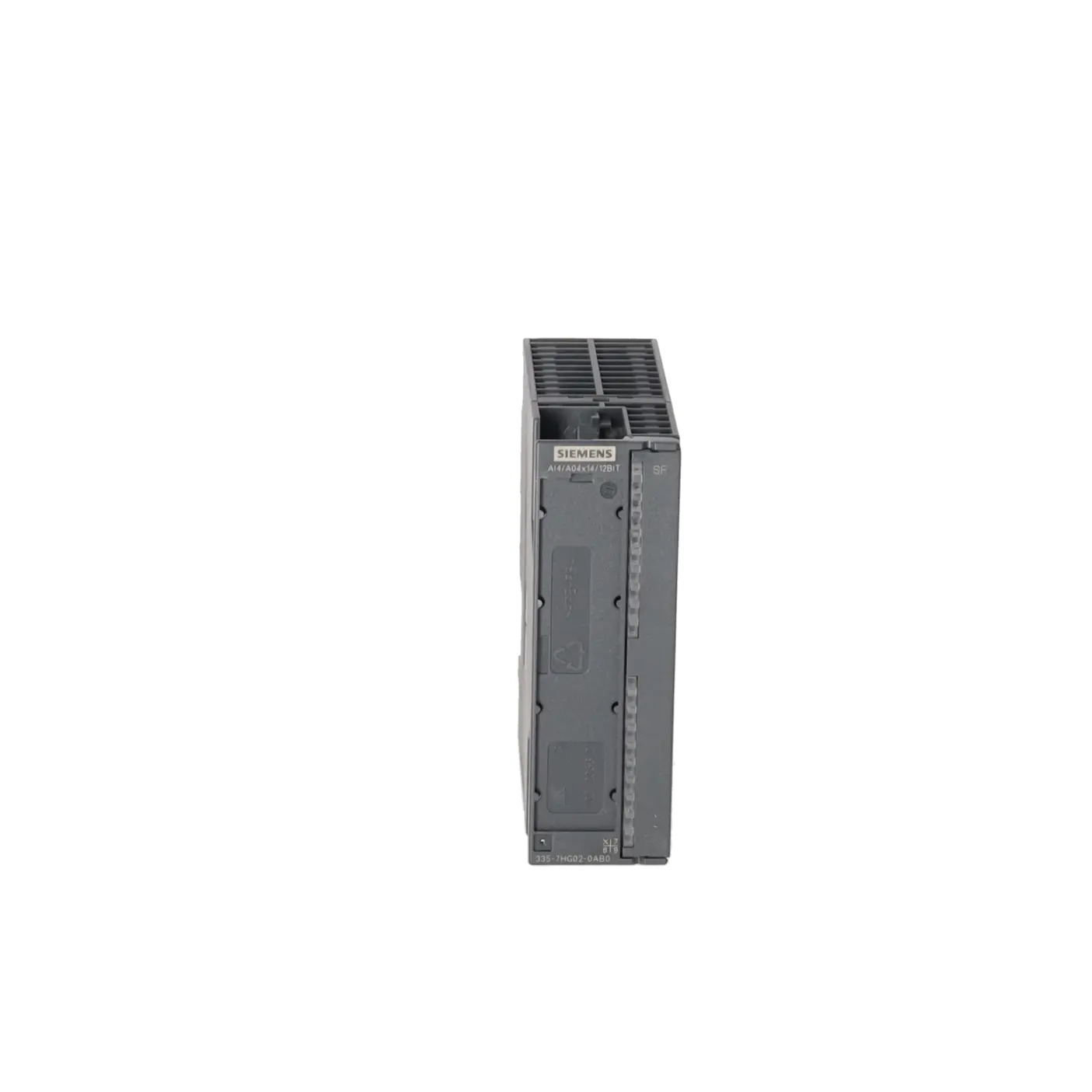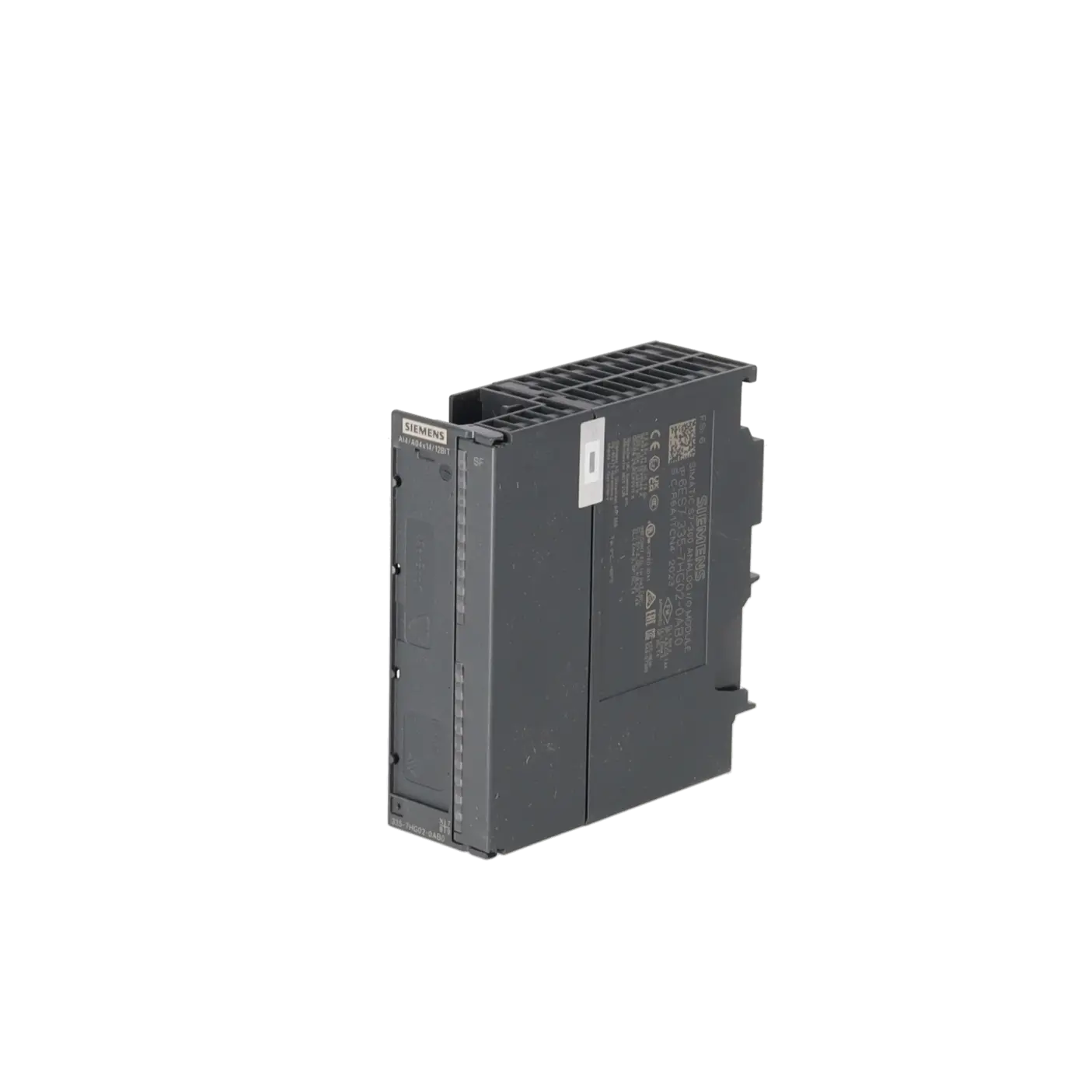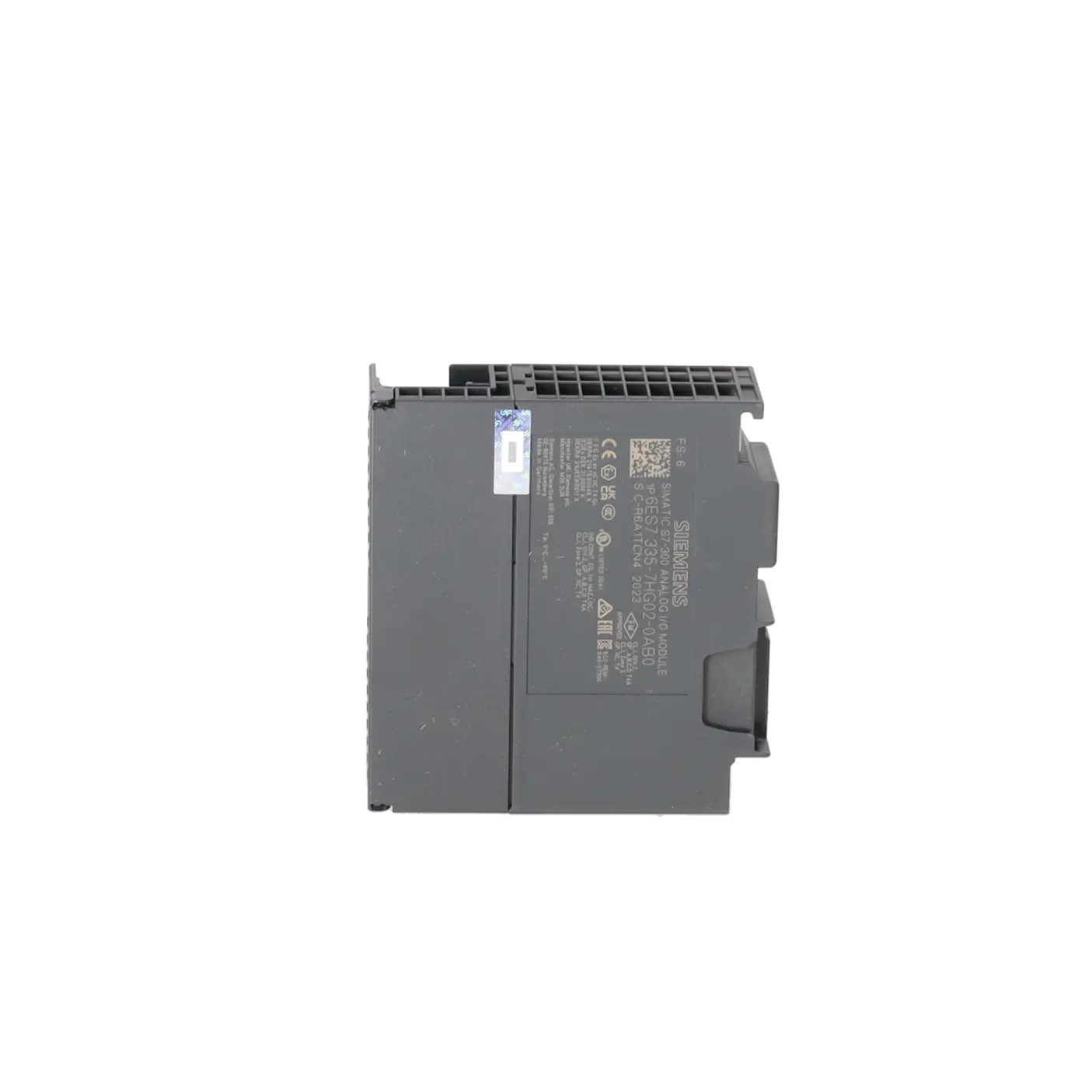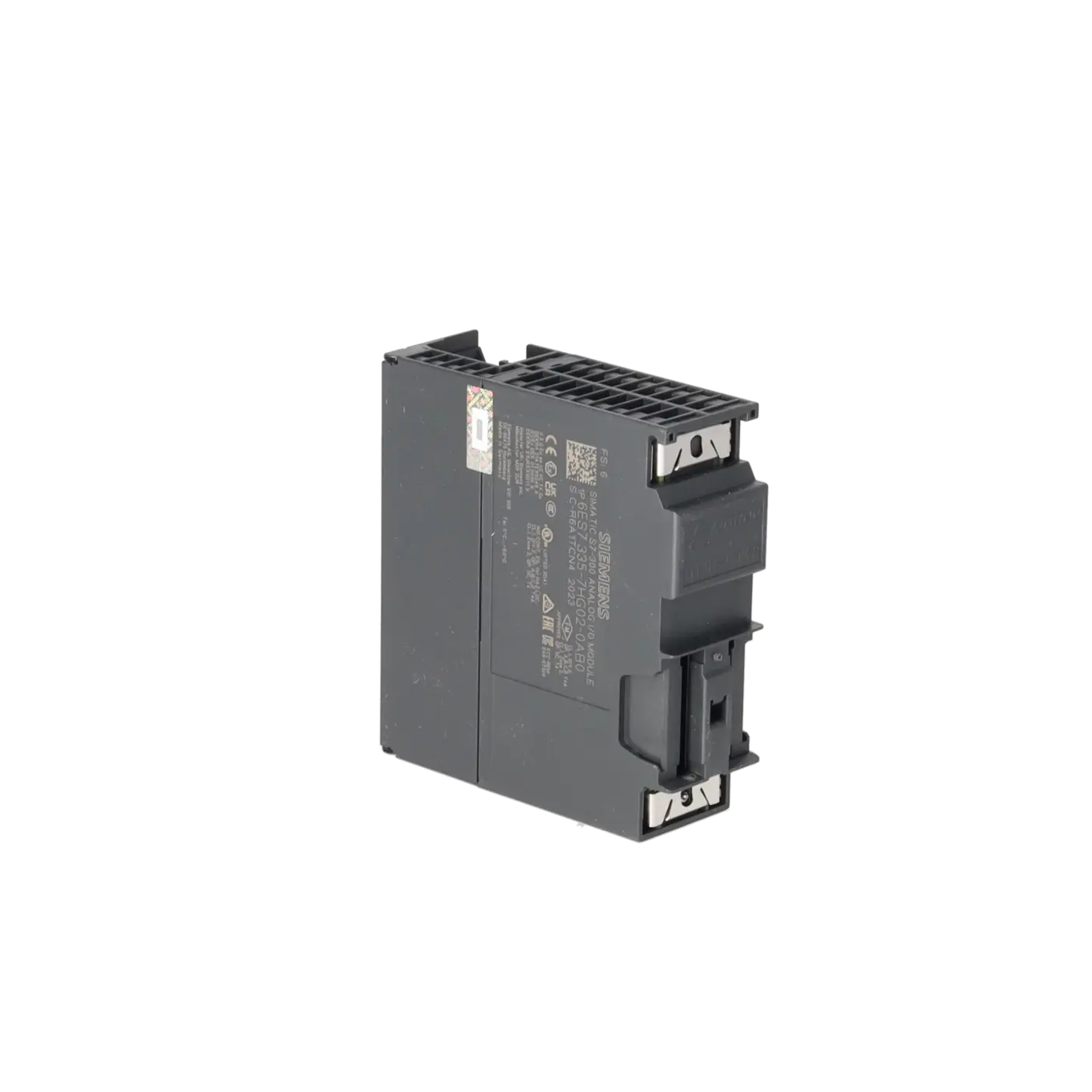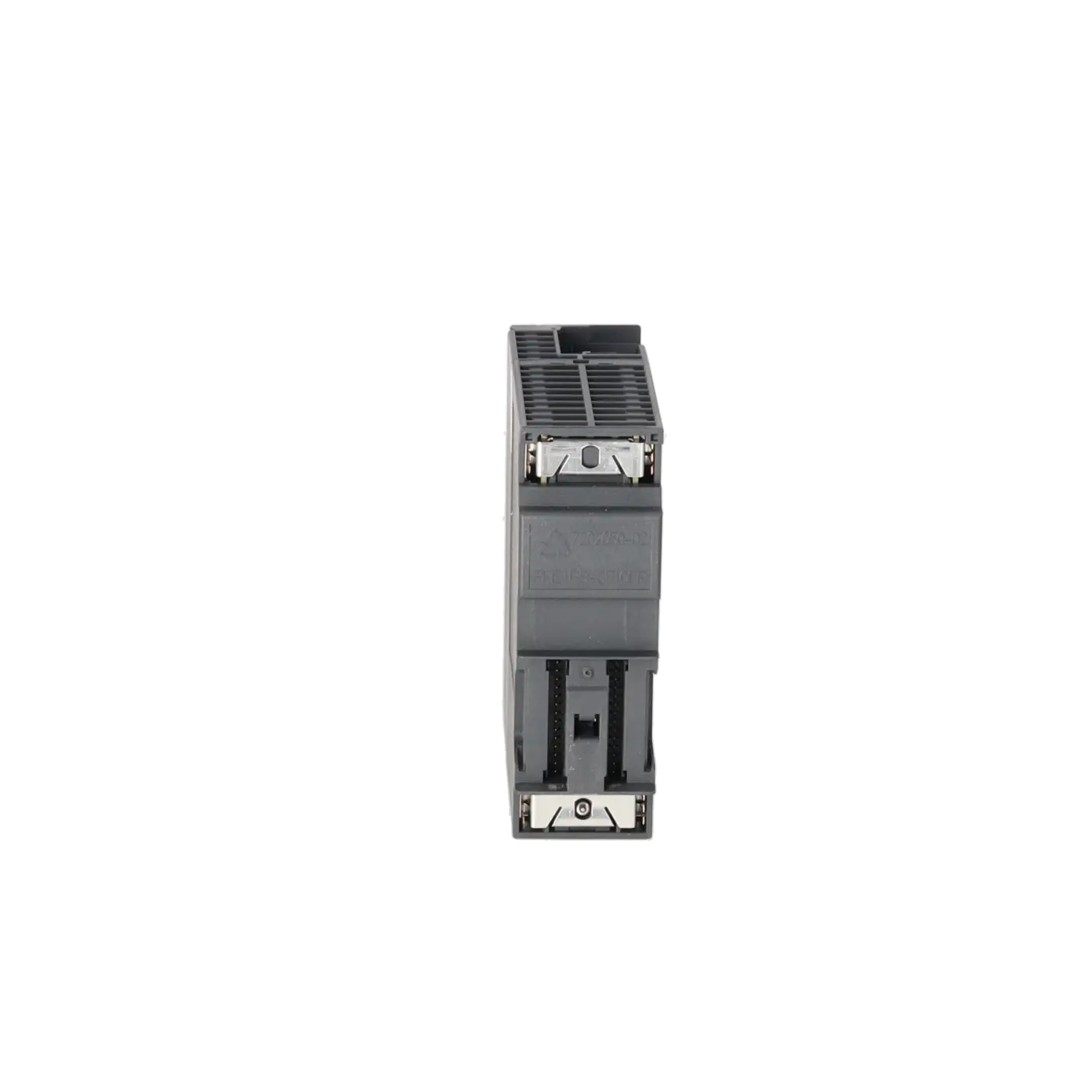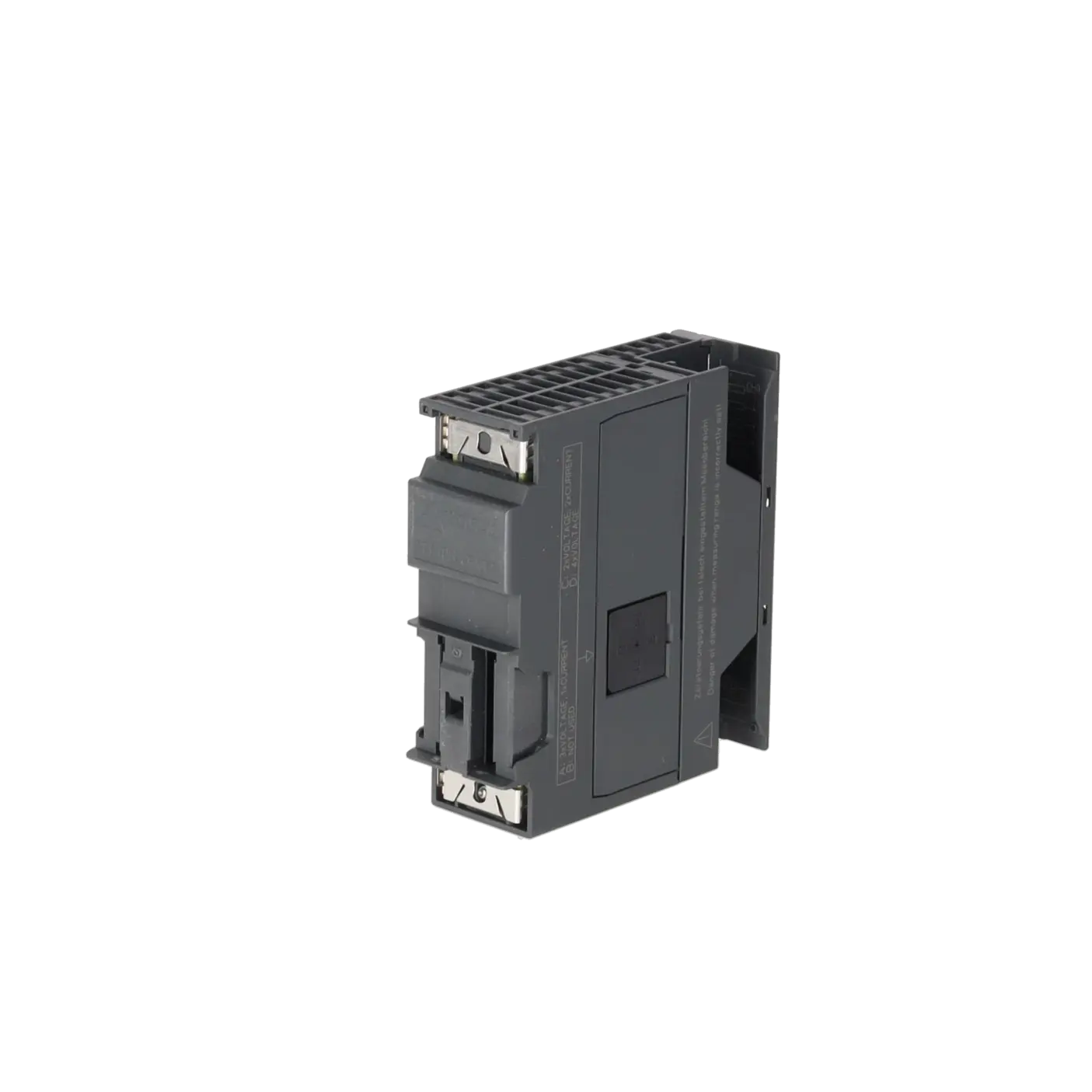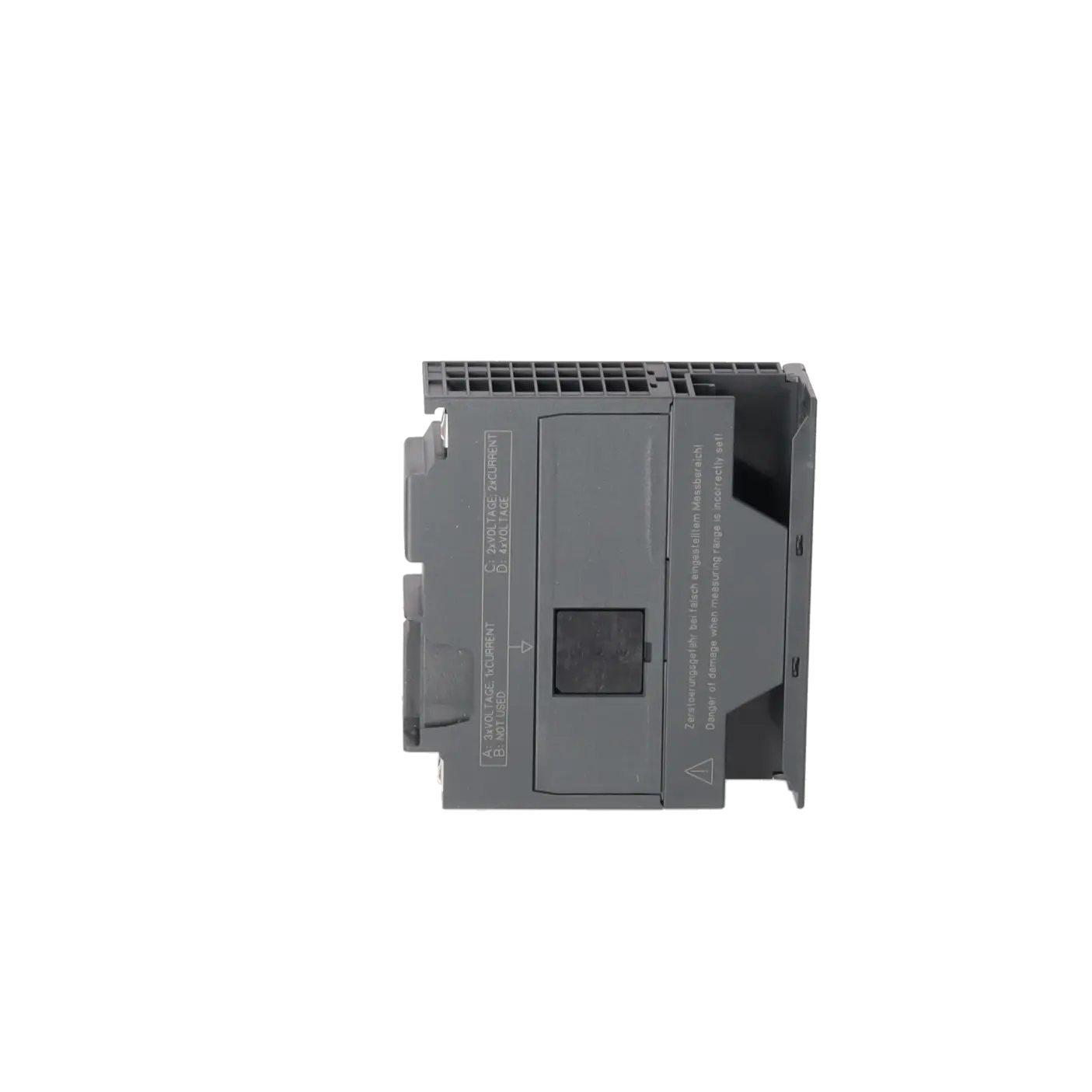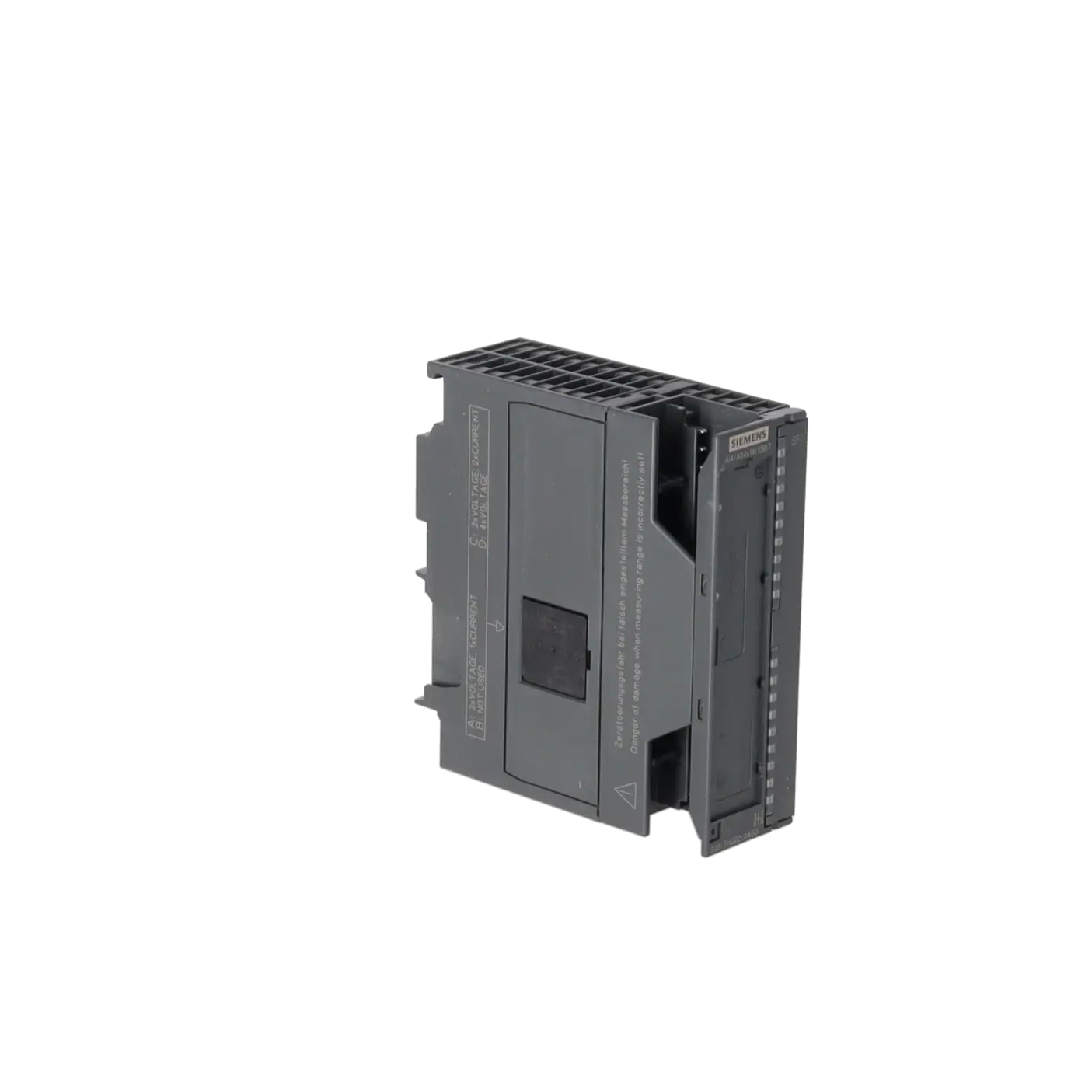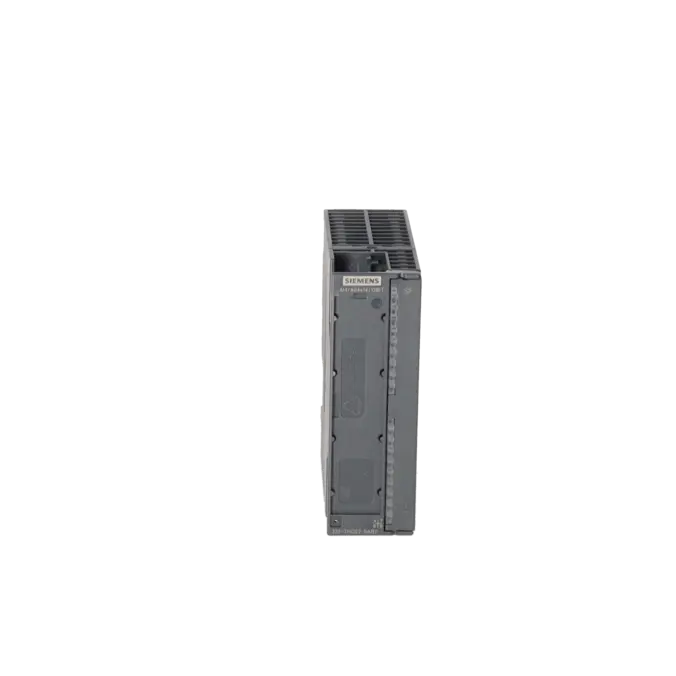
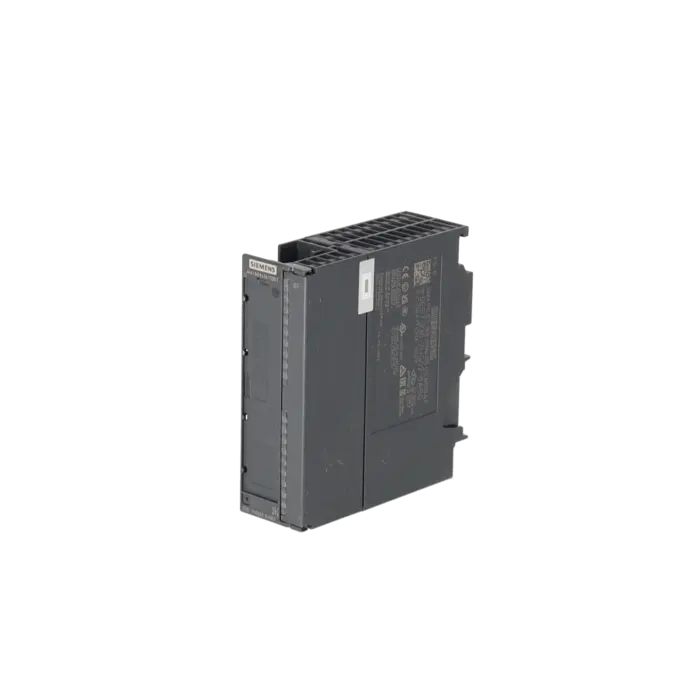
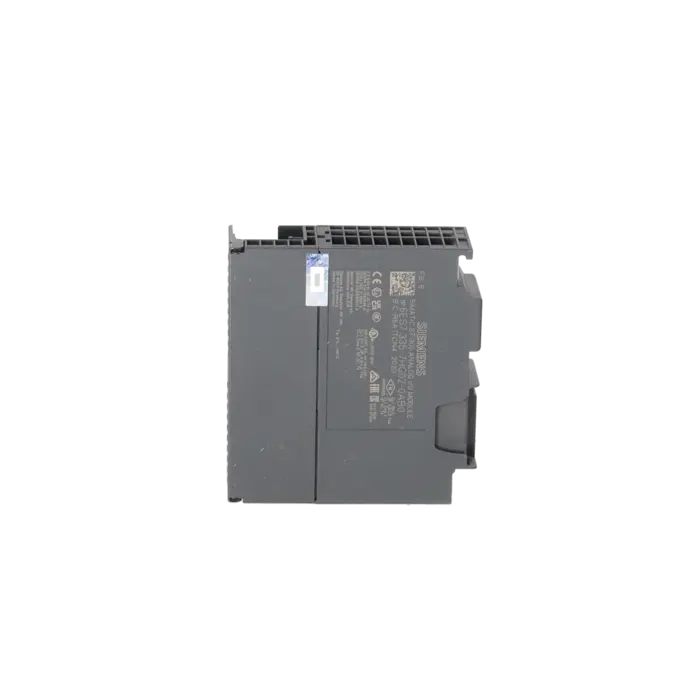
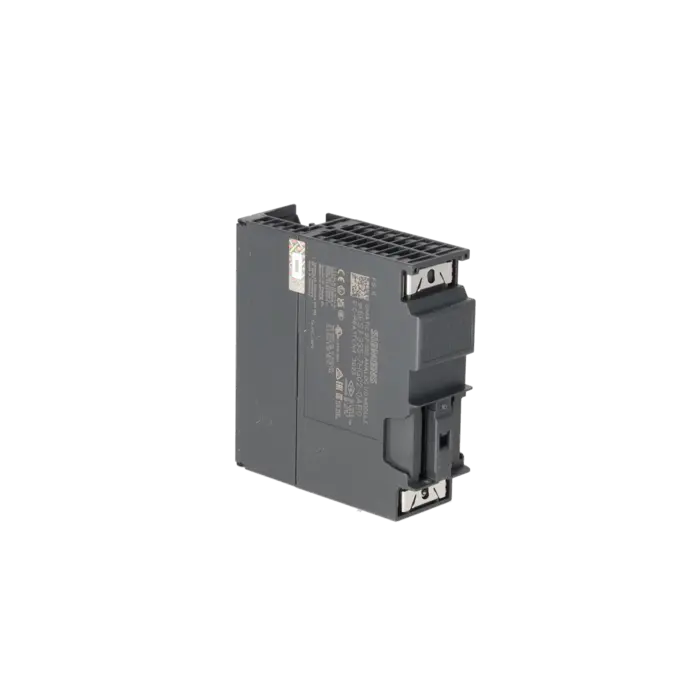
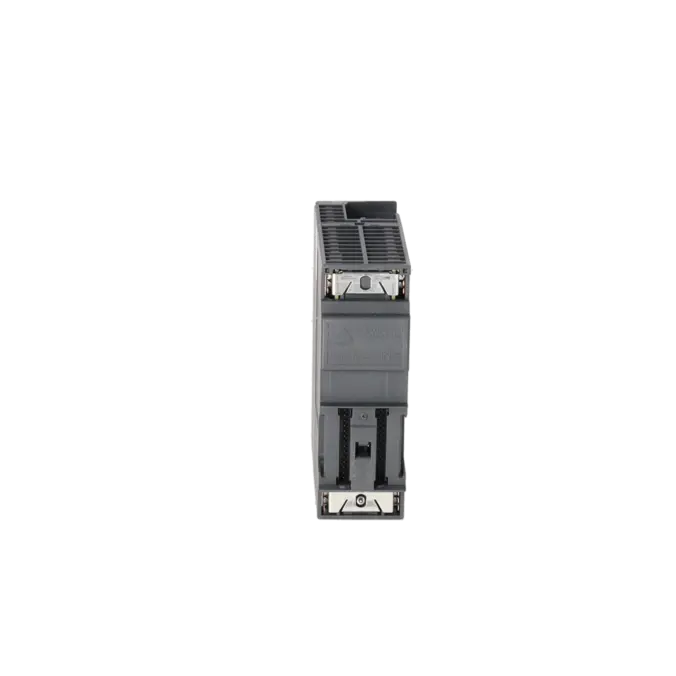
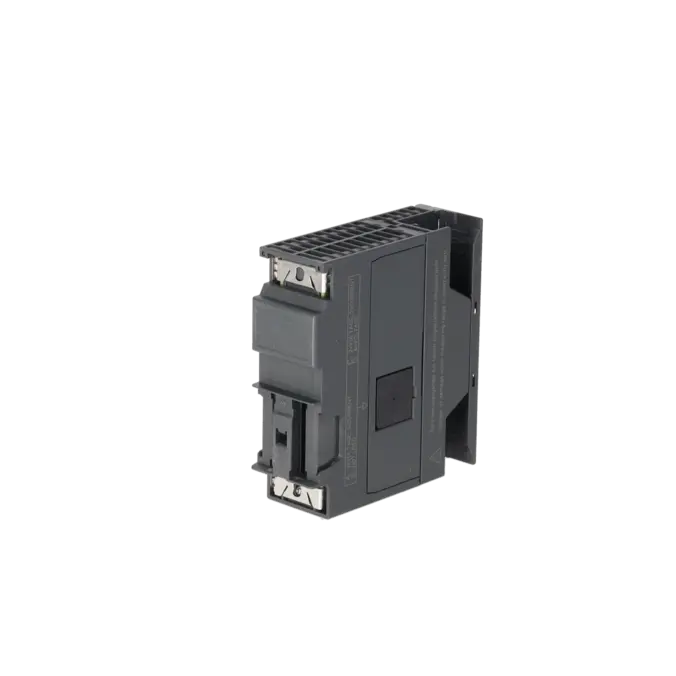
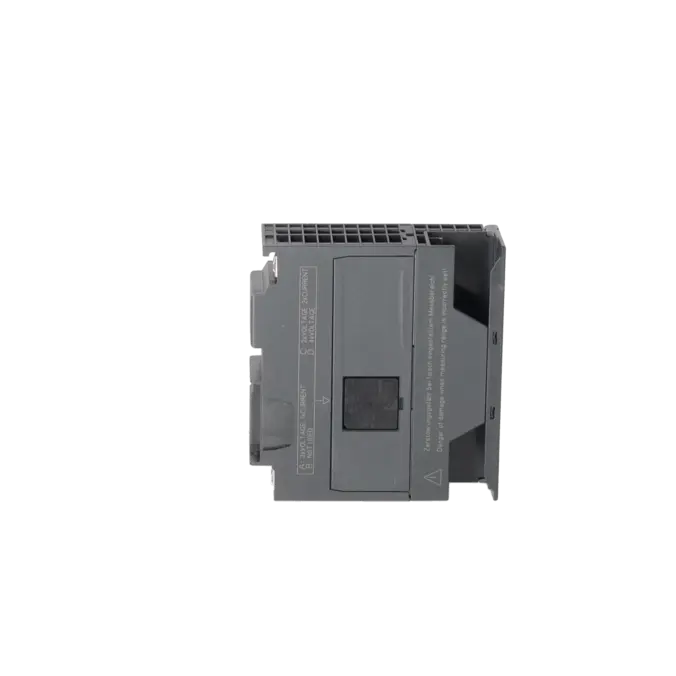
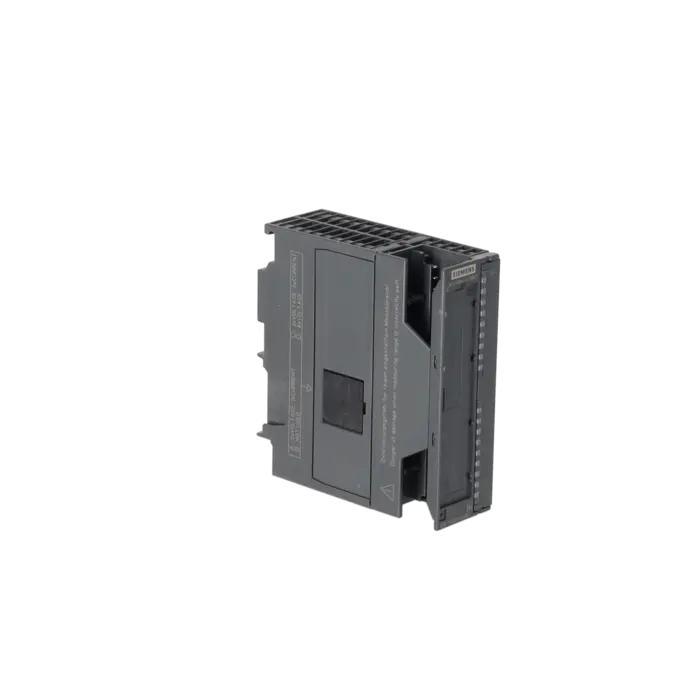
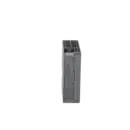
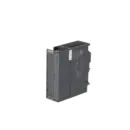
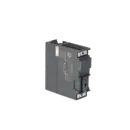
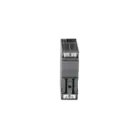
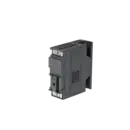
SIEMENS 6ES7335-7HG02-0AB0
- EICHLER-art.no.: K0226237
- EAN: 4025515077558
- UPC: 662643475753
Product description
SIMATIC S7-300, ANALOG MODULE SM 335, OPTICALLY ISOLATED U/I; DIAGNOSTICS; INTERRUPT, 4 AI 14 BIT RESOL., 4 AO 11/12 BIT 1 X 20-PINS
Services for SIEMENS 6ES7335-7HG02-0AB0
Repair
from 693,07 €
to 1.019,22 €
Replacement
Used
1.223,07 €
917,30 €
New
1.358,96 €
1.019,22 €
SIEMENS |
6ES7335-7HG02-0AB0 –
additional product information
| Delivery information | |||
|---|---|---|---|
| Export identifier | AL: N ECCN: EAR99H | ||
| Net weight | 0.349 | ||
| Quantity | 1 Stück | ||
| Packaging quantity | 1 | ||
| Additional product information | |||
|---|---|---|---|
| Product status | EOP: 2024-10-01 | ||
| EAN | 4025515077558 | ||
| UPC | 662643475753 | ||
| Static lot number | 85389091 | ||
| List indicator | ST73 | ||
| Product group | 9483 | ||
| Country of origin | DE | ||
| Compliance with the substance restrictions according to RoHS directive | Since: 20090202 | ||
| Product classifications | Version | Classification | |
|---|---|---|---|
| eClass | 4 | 27-24-03-05 | |
| eClass | 5.1 | 27-24-22-01 | |
| eClass | 6.0 | 27-24-22-01 | |
| ETIM | 3 | / | |
| ETIM | 4 | EC001420 | |
| ETIM | 5 | EC001420 | |
What is the 6ES7335-7HG02-0AB0 and where is it used?
The 6ES7335-7HG02-0AB0 is a SIMATIC S7-300 SM 335 analogue I/O assembly designed for applications where analogue process values must be acquired and analogue control signals must be generated. The module provides 4 analogue inputs and 4 analogue outputs, features galvanic isolation, includes diagnostic and alarm functions, and is connected via a 20-pin front connector. It is typically used in existing S7-300 installations, such as machinery and process applications involving setpoint control, feedback signals, control loops or other demanding analogue tasks. Because the SM 335 combines analogue inputs and outputs within a single assembly, it is particularly attractive where existing hardware slots, wiring and control logic are to be retained.
Overview of the key technical data and what it means
The SM 335 provides 4 analogue inputs for voltage and current measurement, but it does not support thermocouples, RTDs (resistance thermometers) or resistance measurement. The input resolution is up to 14 bits, while the output resolution is 11/12 bits. Different input configurations are available depending on the position of the measuring-range module, with the factory default position being D. The module also includes an integrated 10 V / 25 mA sensor supply, 4 voltage outputs supporting ±10 V or 0–10 V, and short-circuit protection on the voltage outputs. The compact dimensions are 40 × 125 × 120 mm. For maintenance personnel, one particularly important point is that the outputs are voltage outputs, and actuators are connected only in a 2-wire configuration.
Product status, life-cycle status and obsolescence
The 6ES7335-7HG02-0AB0 is classified by Siemens as a spare part, with the official lifecycle status Product Cancellation / EOP, effective from 01 October 2024. For operators, this means that the module is no longer part of an active product portfolio and has entered the phase of spare-parts support and remaining-stock availability. For procurement and maintenance teams, this is a clear indication that stock levels, repair options and failure risks should be assessed proactively. For modernisation and replacement projects, Siemens documents the 6ES7335-7HG02-0AB0 as being compatible with the earlier 6ES7335-7HG01-0AB0. However, the reviewed Siemens documentation does not identify a clearly designated direct successor for the 6ES7335-7HG02-0AB0 itself.
EICHLER services for the 6ES7335-7HG02-0AB0 and when they are relevant
For operators of discontinued S7-300 technology, EICHLER offers repair, exchange, used equipment and new equipment solutions. Repair is particularly relevant when a system must be returned to operation quickly, the existing parameterisation should be retained, or a complete migration project is not yet desirable. According to the product page, the repair service includes technical cleaning, preventive maintenance, comprehensive functional testing and a minimum 24-month warranty. In addition, a test report for analogue inputs and analogue outputs is available. Particularly for obsolete modules, these services help reduce the risk of unplanned downtime, strengthen the spare-parts strategy and postpone costly retrofit projects until a more suitable and planned stage. These services are intended exclusively for business customers.
| Attribute | Value |
|---|---|
| Analog inputs | |
| Number of analog inputs | 4 |
| Input ranges | |
| ● Voltage | Yes |
| ● Current | Yes |
| ● Thermocouple | No |
| ● Resistance thermometer | No |
| ● Resistance | No |
| Analog outputs | |
| Number of analog outputs | 4 |
| Analog value generation for the inputs | |
| Integration and conversion time/resolution per channel | |
| ● Resolution with overrange (bit including sign), max. | 14 bit |
| Analog value generation for the outputs | |
| Integration and conversion time/resolution per channel | |
| ● Resolution with overrange (bit including sign), max. | 12 bit |
| Dimensions | |
| Width | 40 mm |
| Height | 125 mm |
| Depth | 120 mm |
| Fault description | Possible solution |
|---|---|
| Why does the SM 335 report “External fault” or “Module fault”? | This general diagnostic on the SM 335 typically occurs when the measuring-range module is missing or incorrectly installed, the external 24 V auxiliary supply has failed, a common-mode fault, wire break, underrange or overrange condition is present on an input, or an output has a short circuit to ground. To narrow down the cause, first check the diagnostic buffer and module status in STEP 7, then compare the position of the measuring-range module with the hardware configuration, measure the 24 V load voltage and finally inspect the affected channels individually. If the diagnostic alarm is enabled, the cause can be analysed specifically using OB 82 and SFC 59. |
| Why do I read 7FFFH or 32767 at an input although the signal appears plausible? | On the SM 335, 7FFFH or 32767 indicates an overrange condition or a diagnostic state. This may be triggered by measurement range violations, common-mode faults or wire breaks. In addition, a documented case from a PLC forum showed that an incorrect reference potential wiring arrangement can also cause apparently implausible overrange values. Therefore, do not only check the configured measuring range in the hardware configuration, but also verify MANA, signal ground, shielding and the wiring at the front connector. If the fault follows the channel or moves with the module, a hardware defect should also be considered. |
| Why do I receive a wire-break alarm even though the sensor is connected? | On the SM 335, wire-break detection operates reliably only under certain conditions. In the 4–20 mA range, the module reports a wire break when the current falls below 1.185 mA. In the 0–10 V range, detection is performed using short current pulses; for this reason, the combined capacitance of the cable and sensor must not exceed 10 nF, cable lengths up to 30 m are generally considered uncritical, and the source resistance must not exceed 2.5 kΩ. If the sensor installation falls outside these limits, false wire-break alarms may occur even when the wiring is intact. In such cases, adjust the diagnostic settings, measuring range and sensor wiring accordingly. |
| Why does the analogue output report a short circuit or provide only a reduced voltage? | The analogue outputs of the SM 335 are designed as voltage outputs. Siemens specifies a 2-wire connection, and the permissible load range starts at 3 kΩ. A short circuit, an unsuitable load or a connection to a de-energised remote device may therefore result in diagnostic alarms and implausible output voltages. A PLC forum example additionally showed that connecting the output to a second CPU that was switched off could generate external fault messages and voltage drops. In practice, the load resistance, reference potentials and the condition of the connected device should therefore be checked carefully. In coupled systems, the use of an isolating amplifier may be advisable. |
| Why does the SM 335 report a parameterisation fault? | A parameterisation fault occurs when the configuration in HW Config does not match the actual position of the measuring-range module or the physical channel wiring. This is particularly critical on the SM 335 because positions A, C and D determine which inputs operate as voltage inputs or current inputs. The solution is to verify the measuring-range module position directly on the assembly, configure the channel parameters accordingly in STEP 7, download the hardware configuration again and then recheck the diagnostic information. Many apparent module faults can be identified and resolved through this procedure alone. |
| Why does the message “24 V load voltage missing” or an ADU/DAU fault appear? | According to Siemens, an ADU/DAU fault can be triggered when the 24 V load voltage is missing or falls below 15 V, when an EMC disturbance is present or when an internal hardware fault exists. Therefore, first measure the 24 V supply under load, inspect the connectors and grounding concept, and assess possible interference caused by the shielding and cable routing. If the fault remains despite a stable power supply and correct wiring, this indicates a likely internal module defect, making repair or replacement the most appropriate course of action. |
Is the 6ES7335-7HG02-0AB0 the correct replacement for the 6ES7335-7HG01-0AB0?
Yes. Siemens explicitly describes the 6ES7335-7HG02-0AB0 as being compatible with the 6ES7335-7HG01-0AB0. For operators of existing installations, this is important because it allows established SM 335-based system concepts to be continued. Siemens also highlights a practical advantage: the interference suppression filter required with the predecessor module is no longer necessary with the 7HG02 version. Before replacing the module, however, the measuring-range module, hardware configuration, front connector assignment and the actual field wiring should still be checked to ensure that compatibility is fully maintained within the specific control cabinet environment.
Is the module still regularly available or only as a spare part?
From the manufacturer's perspective, the module has the lifecycle status Product Cancellation / EOP and is classified as a spare part. This means that it is no longer part of an active standard supply programme and is instead supported through spare-parts channels. At the same time, remaining stock, used equipment, exchange units and even new stock items may still be available through specialised suppliers and the aftermarket. For procurement and maintenance teams, the important consideration is therefore not only the part number itself but also the overall procurement strategy. Anyone wishing to minimise downtime should consider availability, repair options and internal stockholding together rather than relying solely on the purchase of new equipment.
Which signals does the SM 335 actually support?
The SM 335 supports voltage and current signals on its inputs but does not support thermocouples, RTDs (resistance thermometers) or resistance measurement. The 4 analogue outputs are designed as voltage outputs and can be configured for ±10 V or 0–10 V operation. This is important because, although the module is often regarded as a highly flexible mixed I/O assembly, it does not directly support every analogue signal type. If applications involve Pt100 sensors, thermocouples or purely current-output devices, suitability should be verified against the actual field signals before implementation. This helps prevent incorrect purchasing decisions, parameterisation errors and subsequent diagnostic issues.
How can I read SM 335 diagnostics effectively in STEP 7?
When diagnostic alarms are enabled, the SM 335 generates an alarm whenever a fault is detected and the CPU calls OB 82. Siemens recommends reading the detailed diagnostic information via SFC 59 (RD_REC), which allows the evaluation of DS1 diagnostic data, including channel-specific information. In practice, this means first checking the diagnostic buffer, then obtaining the module start address from the local data of OB 82, and finally reading DS1 in a targeted manner. This transforms a generic fault indication into a reliable root-cause diagnosis. For time-critical applications, it is often advisable to store only the address within OB 82 and perform the detailed analysis later in OB 1.
What should I pay particular attention to regarding wiring and reference potential?
With the SM 335, stable analogue values depend not only on correct parameterisation but also on proper reference potential management. Siemens documentation makes it clear that the measuring-range module, channel type and hardware configuration must match each other. A documented PLC forum case also demonstrated that a missing connection between MANA and the analogue reference potential can lead to overrange values and incorrect measurements, even when the signal wiring itself is correctly connected. In practice, this means that signal ground, MANA, shielding, channel assignment and front connector wiring should always be checked together. Especially in systems combining analogue inputs and outputs, many intermittent faults can be resolved in this way before considering module replacement.
When is repair a better option than purchasing a replacement 6ES7335-7HG02-0AB0?
For a discontinued assembly such as the 6ES7335-7HG02-0AB0, repair is particularly worthwhile when the installation must be returned to operation quickly, when the existing parameterisation and wiring should remain unchanged, or when a retrofit project is not currently economically justified. According to the EICHLER product page, repair includes technical cleaning, preventive maintenance, functional testing and a minimum 24-month warranty. In combination with the module’s EOP/Product Cancellation status, this often represents the most economical strategy for operators wishing to reduce downtime costs and extend the useful life of existing S7-300 installations in a controlled and predictable manner. In this context, repair becomes not only a corrective measure but also an important component of an overall obsolescence management strategy.