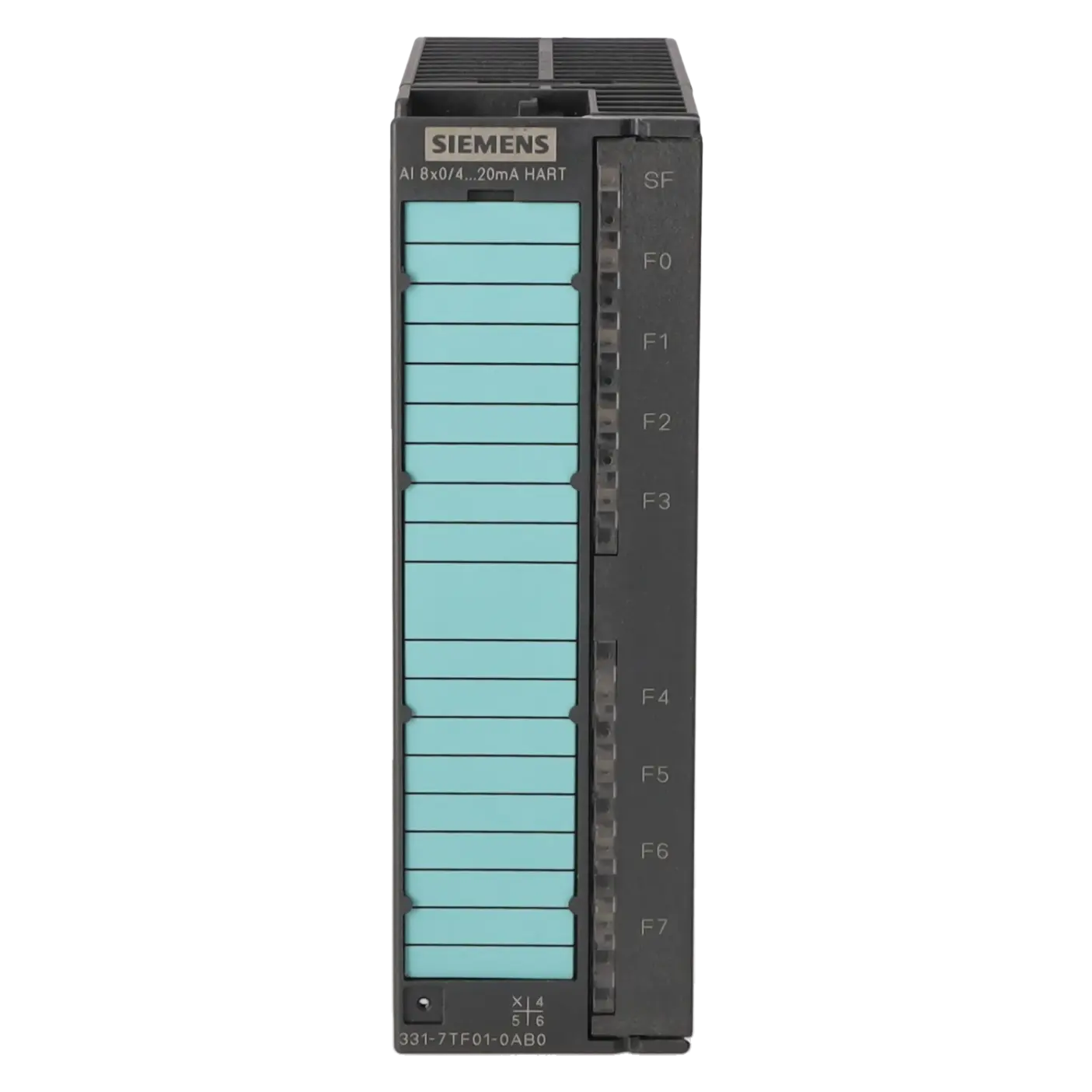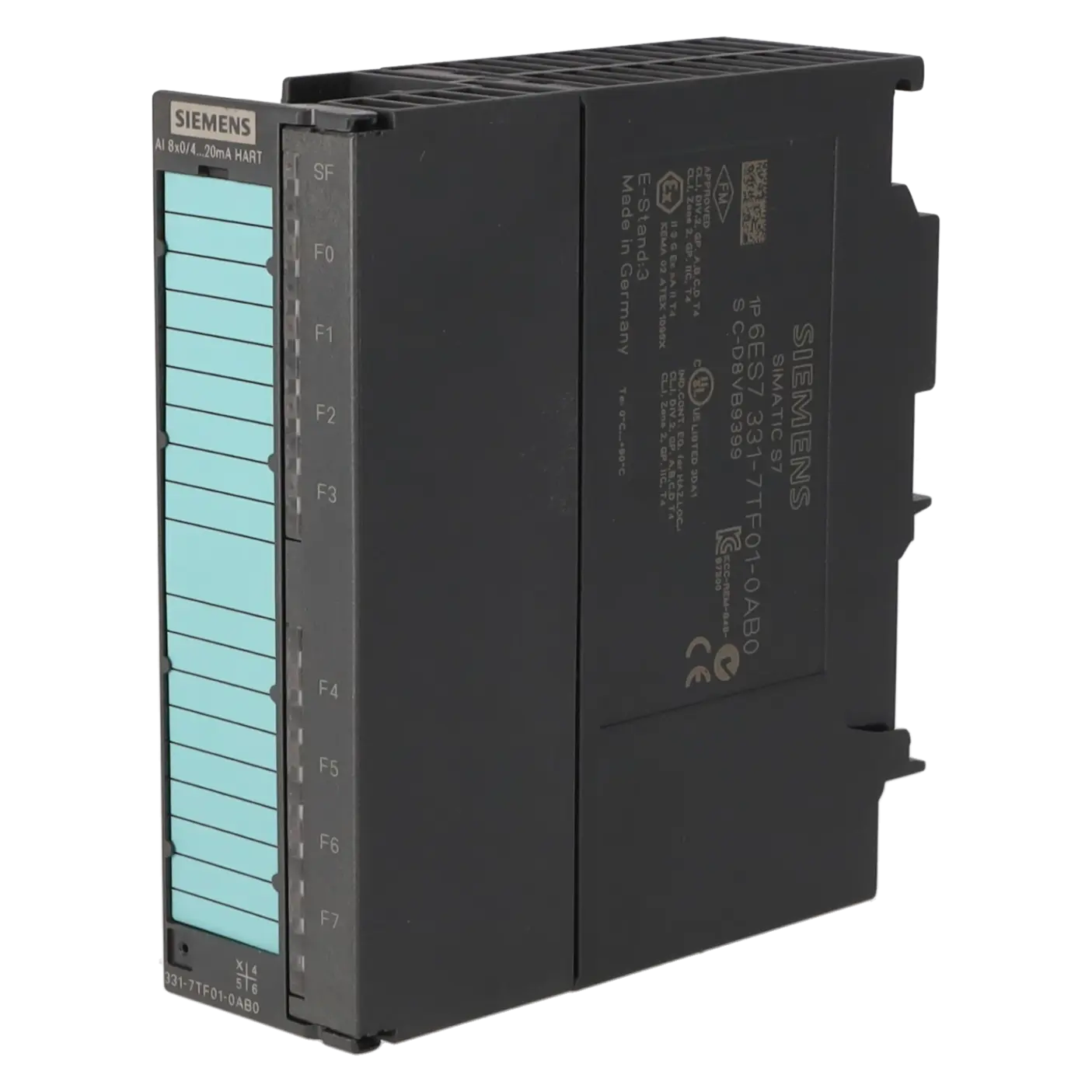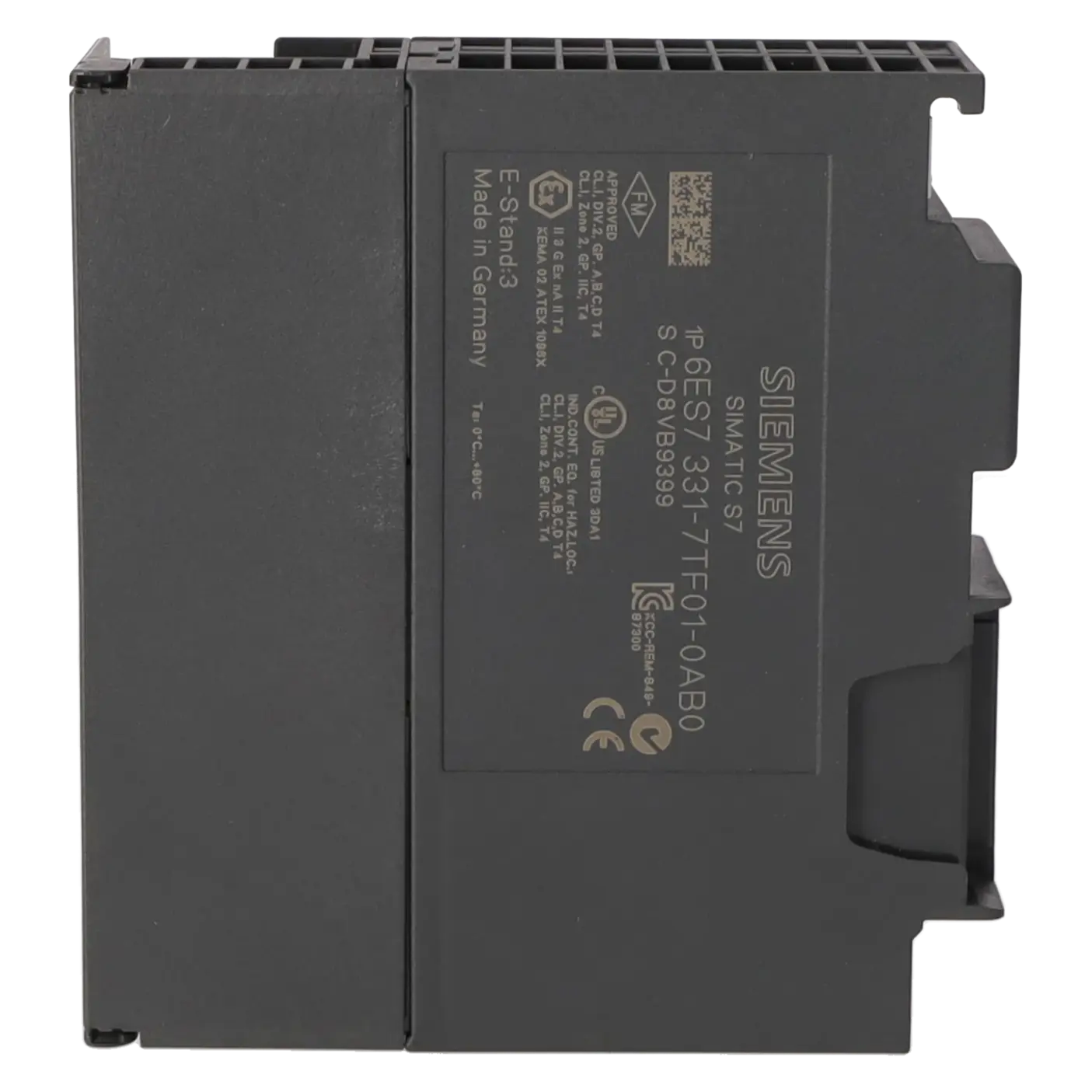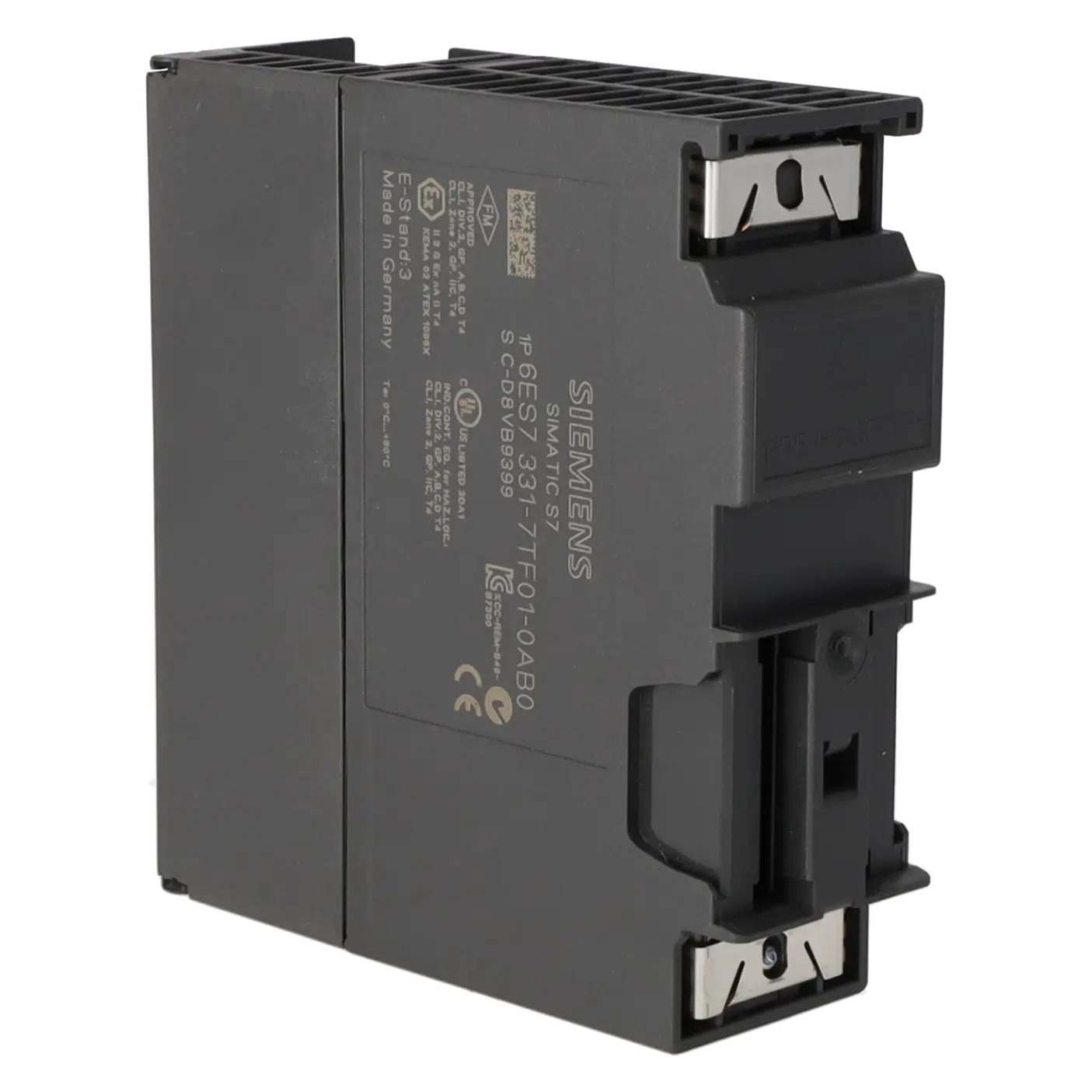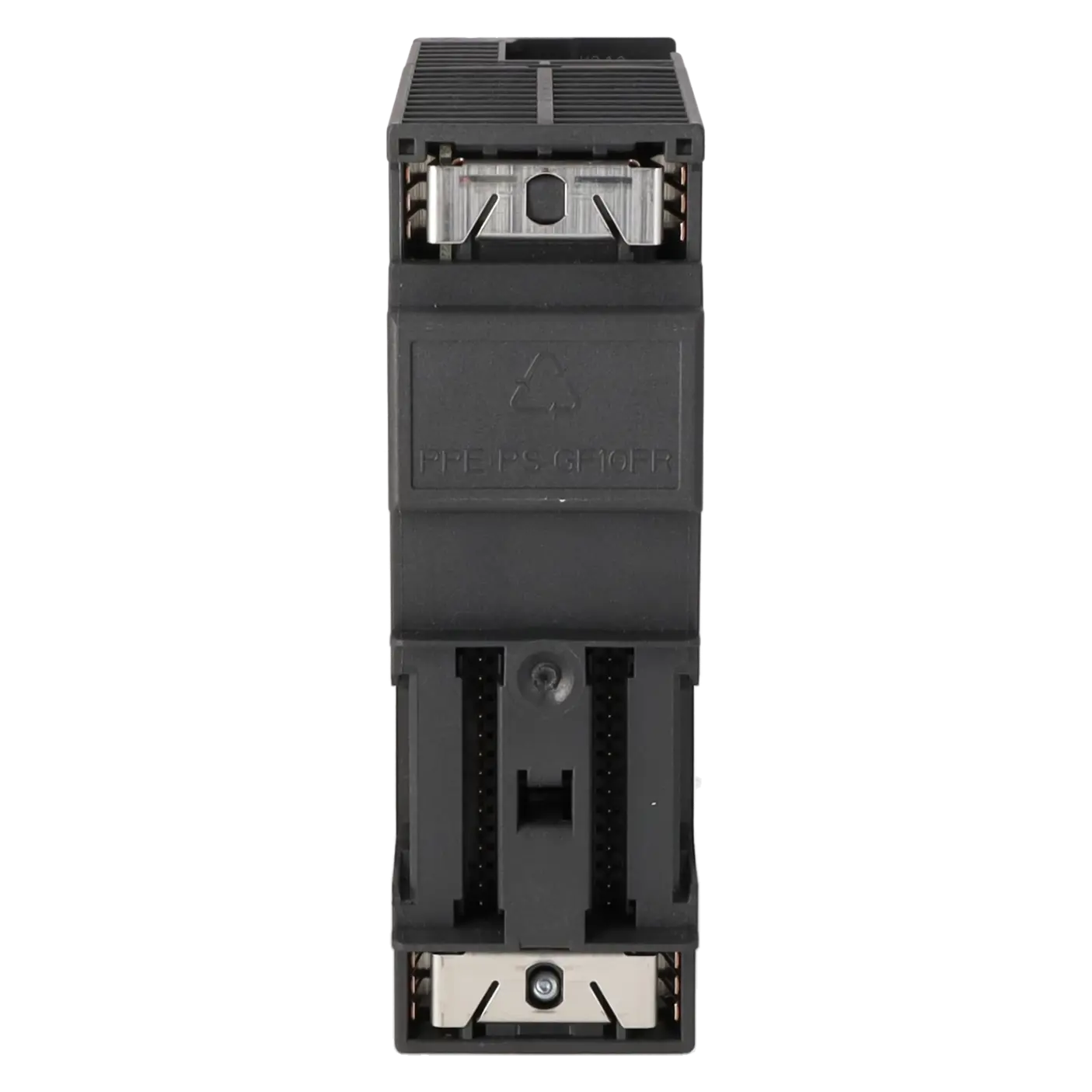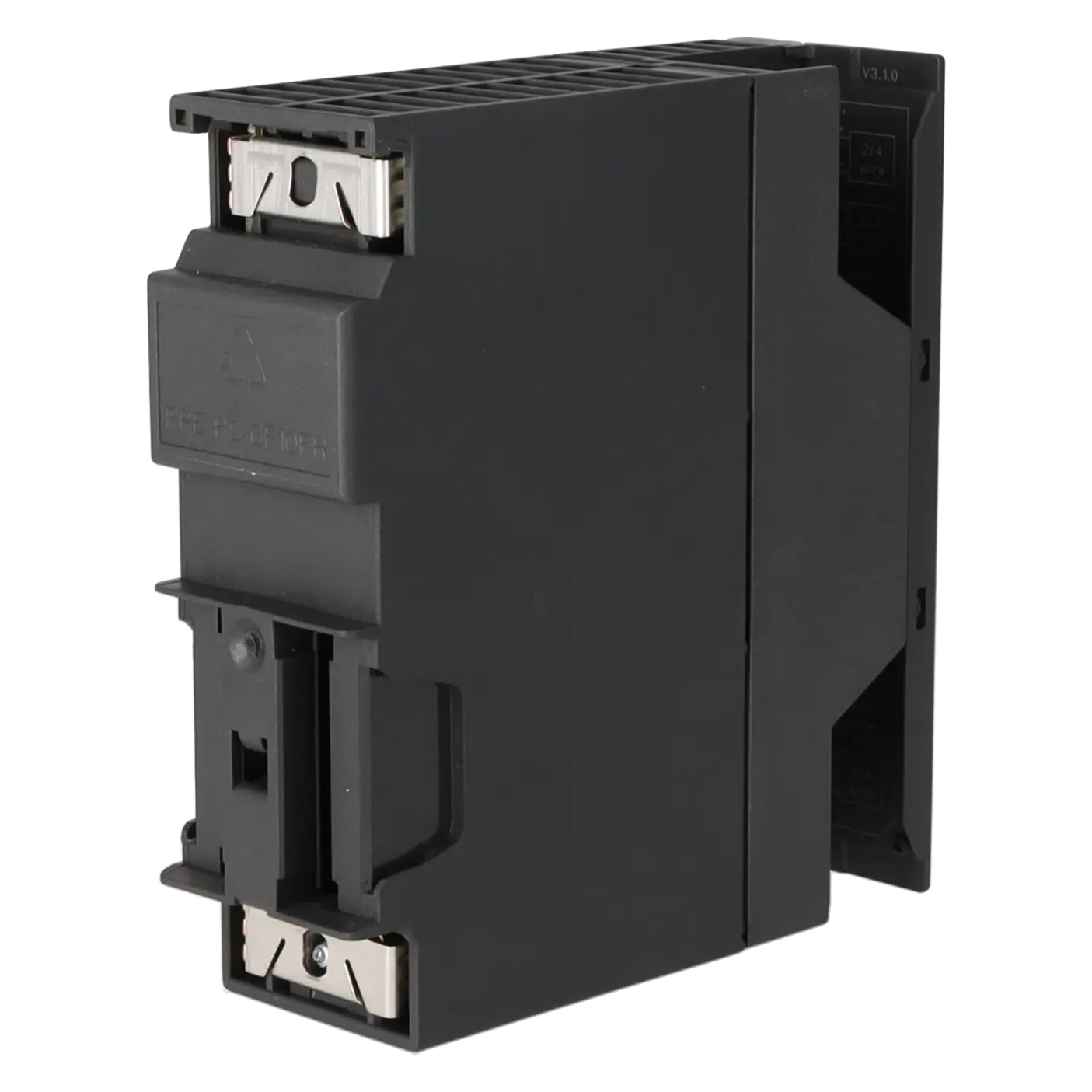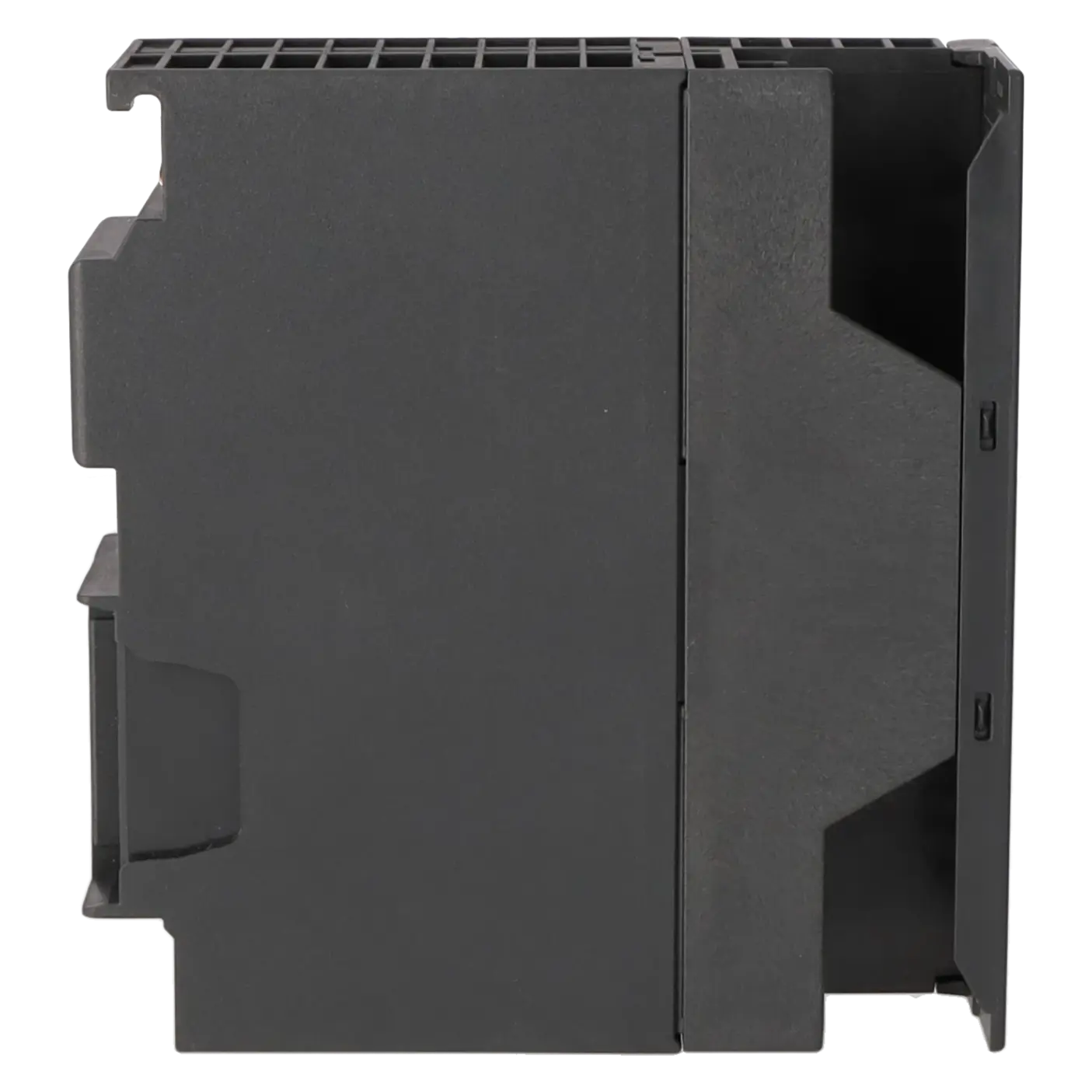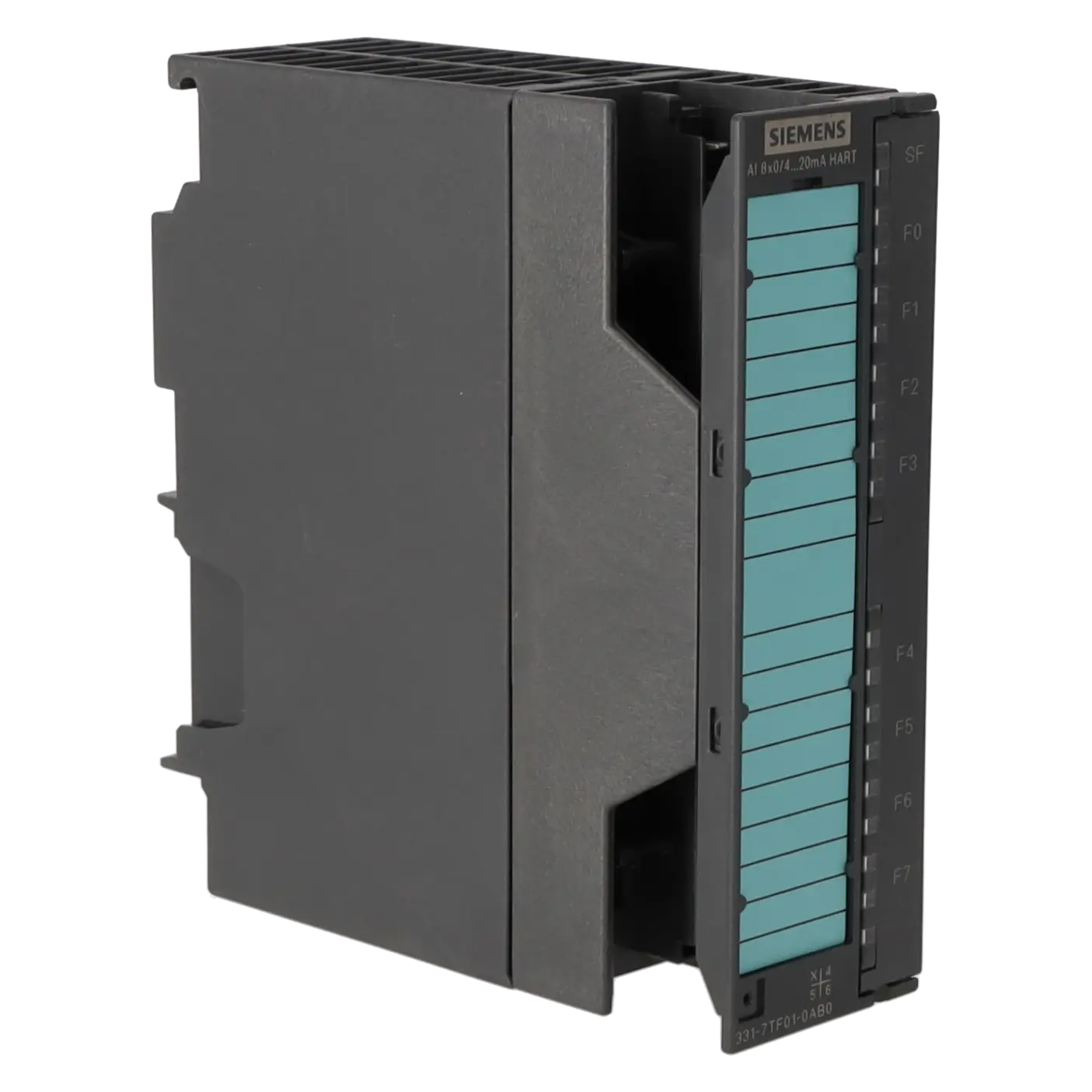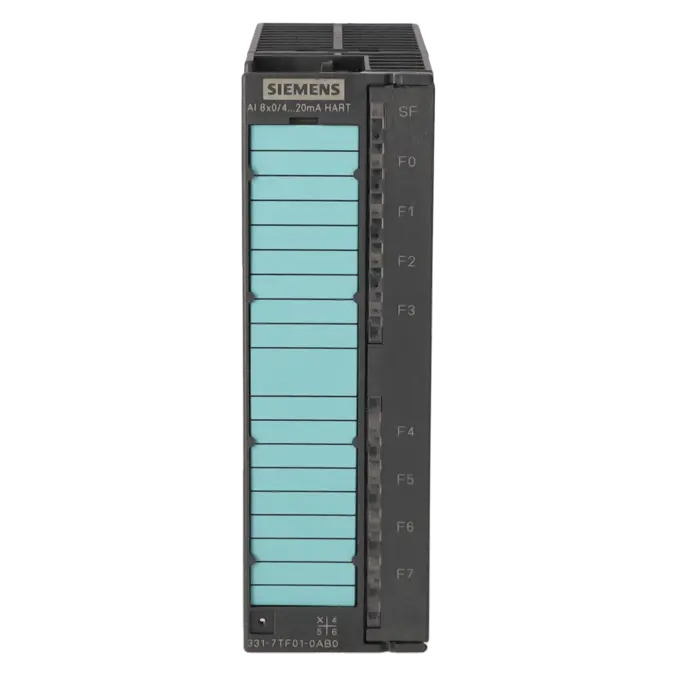
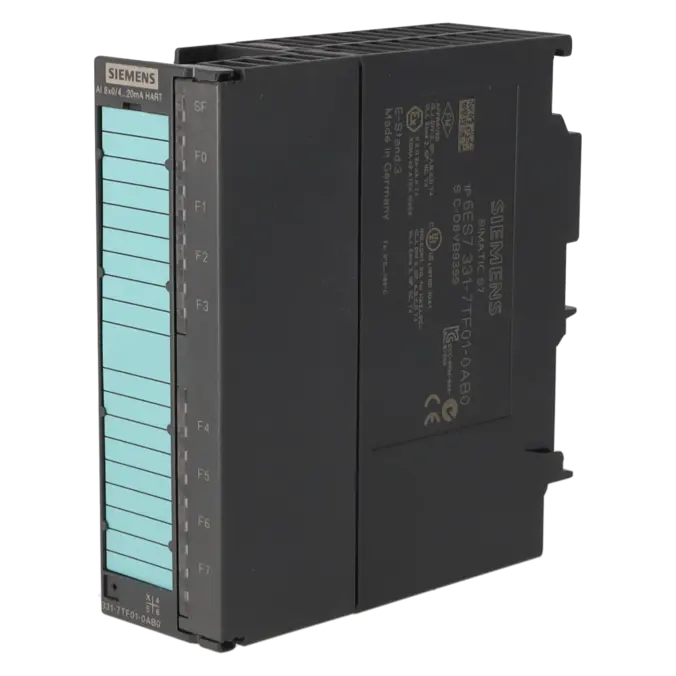
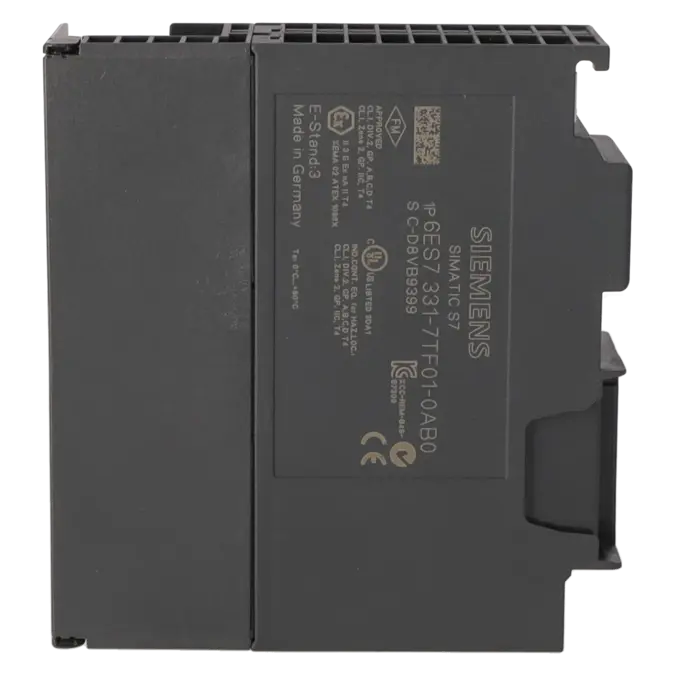
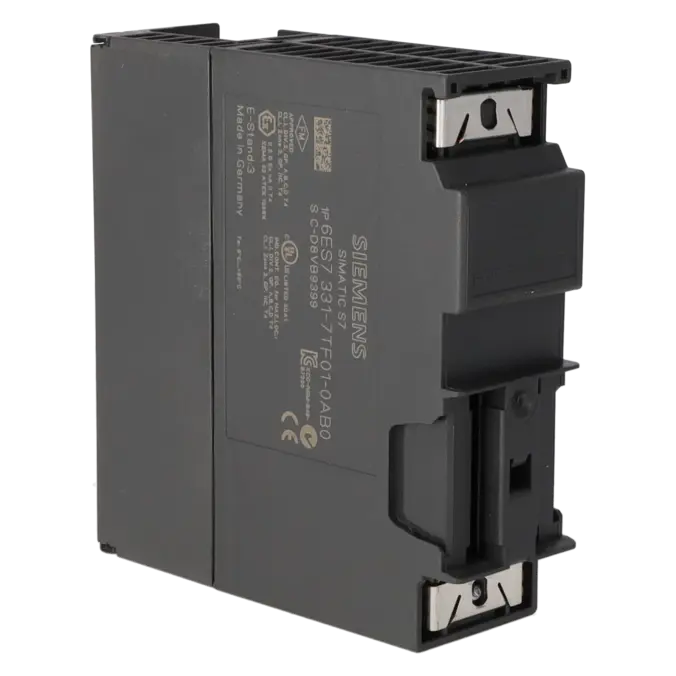
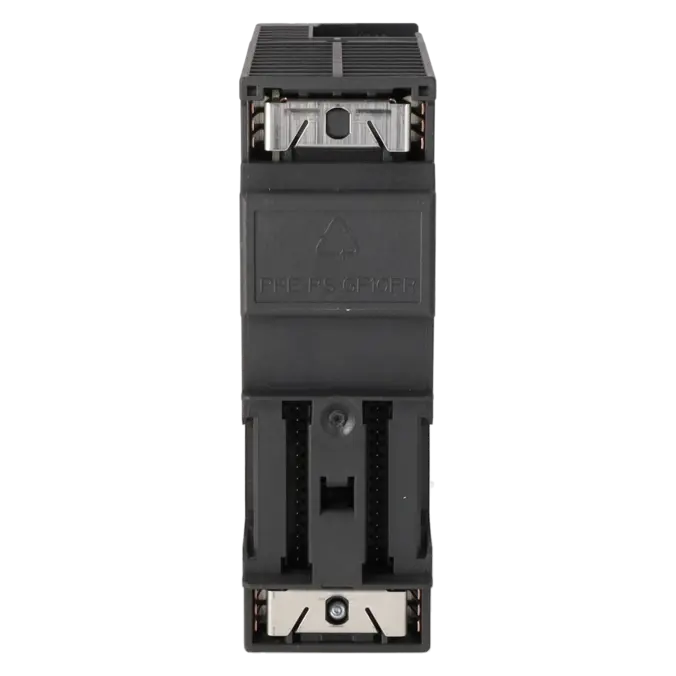
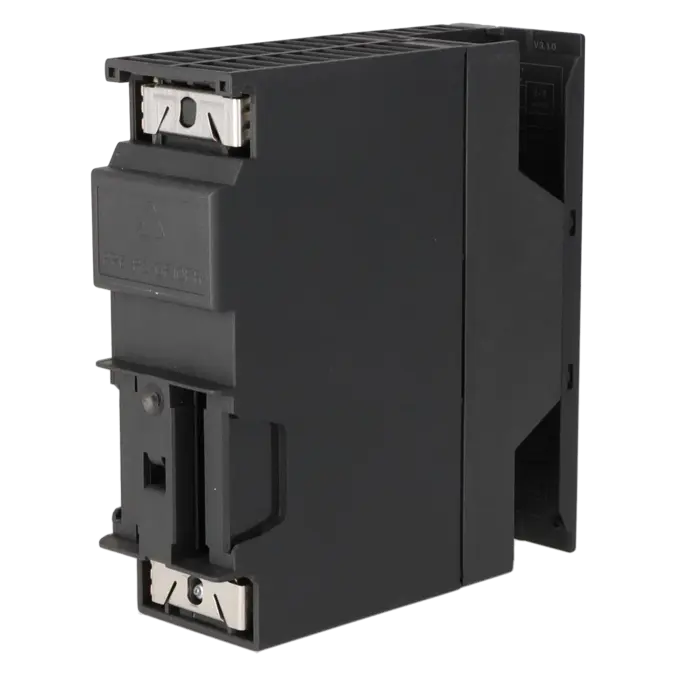
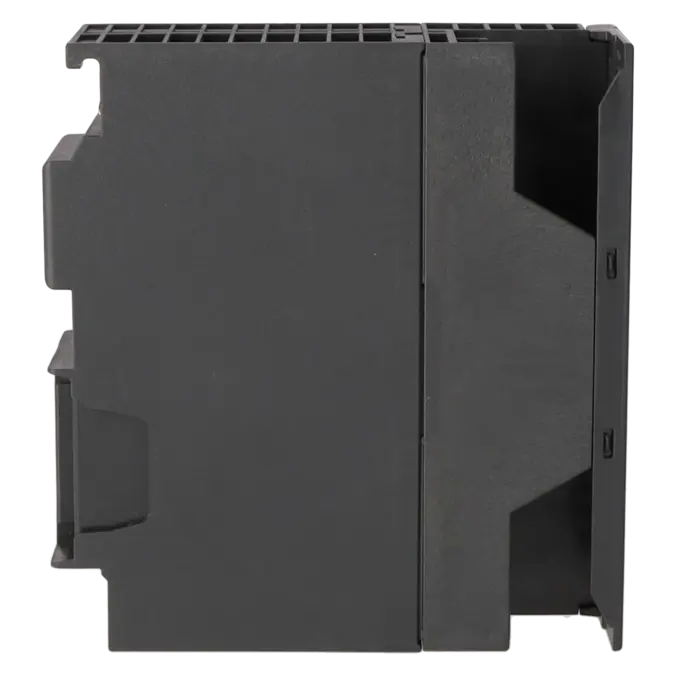
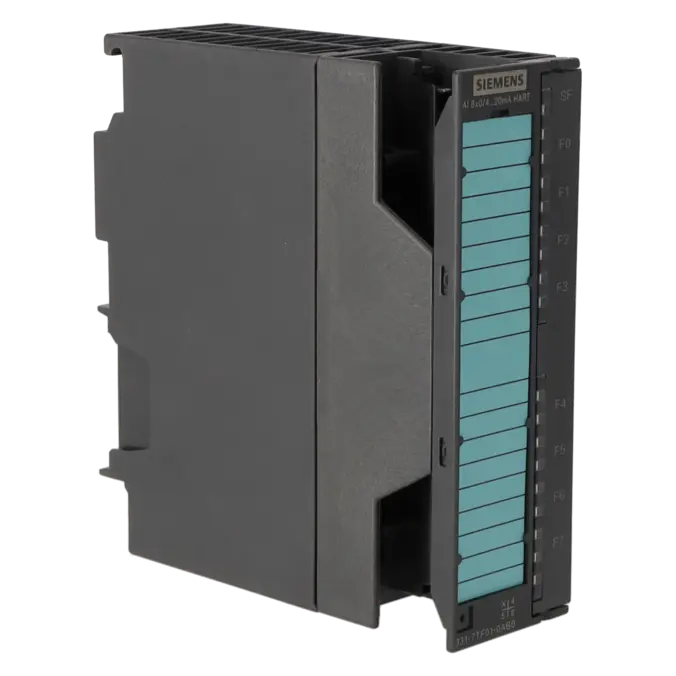
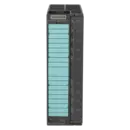
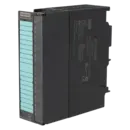
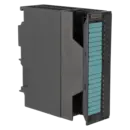
SIEMENS 6ES7331-7TF01-0AB0
- EICHLER-art.no.: K0219487
- EAN: 4025515075813
- UPC: 662643401455
Product description
SIMATIC DP, HART ANALOG INPUT SM 331, 8 AI, 0/4 - 20 MA HART, FOR ET200M WITH IM153-2, 1 X 20-POLE, FUNCTIONS: FW UPDATE, HART AUXILIARY VARIABLES, REDUNDANCY, LOCAL DIAGNOSTIC BUFFER WITH TIME STAMPING,
Services for SIEMENS 6ES7331-7TF01-0AB0
Repair
from 586,36 €
to 1.055,44 €
Replacement
Used
New
1.693,00 €
1.269,75 €
SIEMENS |
6ES7331-7TF01-0AB0 –
additional product information
| Delivery information | |||
|---|---|---|---|
| Export identifier | AL: N ECCN: EAR99H | ||
| Net weight | 0.251 | ||
| Quantity | 1 Stück | ||
| Packaging quantity | 1 | ||
| Additional product information | |||
|---|---|---|---|
| Product status | |||
| EAN | 4025515075813 | ||
| UPC | 662643401455 | ||
| Static lot number | 85389091 | ||
| List indicator | ST73 | ||
| Product group | 4428 | ||
| Country of origin | DE | ||
| Compliance with the substance restrictions according to RoHS directive | Since: 20091125 | ||
| Product classifications | Version | Classification | |
|---|---|---|---|
| eClass | 4 | 27-24-03-05 | |
| eClass | 5.1 | 27-24-26-01 | |
| eClass | 6.0 | 27-24-26-01 | |
| ETIM | 3 | / | |
| ETIM | 4 | EC001596 | |
| ETIM | 5 | EC001596 | |
What is the 6ES7331-7TF01-0AB0 and where is it used?
The 6ES7331-7TF01-0AB0 is a SIEMENS SIMATIC DP HART analogue input assembly SM 331 for ET 200M systems, designed for use with an IM153-2 interface module and a 20-pin front connector. The module is intended to acquire eight analogue current signals from field devices, typically pressure, flow, level and temperature transmitters operating within the 0/4–20 mA range. Its key advantage is that it not only processes the conventional analogue value but also supports HART communication, allowing access to extended device information. This makes the assembly particularly attractive for process automation applications where diagnostics, additional process variables and seamless integration of existing field instruments are important.
Overview of the key technical data and what it means
The assembly provides 8 analogue inputs as well as 8 supply outputs for powering 2-wire transmitters. It operates from 24 V DC, offers a resolution of 15 bits plus sign, and supports 0–20 mA, ±20 mA and 4–20 mA measurement ranges; HART communication is available when operating in the 4–20 mA range. In practice, this means that both conventional 4–20 mA instrumentation and HART-enabled field devices can be integrated without compromising reliable analogue signal acquisition.
For commissioning, it is important to note that when using 2-wire transmitters, a jumper must be installed between terminals 10 and 11. With support for screened cable lengths up to 800 m, diagnostic alarms, limit-value alarms and an IP20 protection rating, the module is clearly designed for installation in control cabinets and industrial process environments.
Product status, life-cycle status and obsolescence
Siemens currently classifies the 6ES7331-7TF01-0AB0 as a spare part. At the same time, the PM400 Product Phase-Out Announcement milestone for the SIMATIC S7-300 / ET 200M platform was set to 01 October 2023. For operators, this means that while the module remains available, it has already become part of many organisations' strategic spare-parts management, repair planning and migration strategy.
As a documented migration path, Siemens identifies the 6DL1134-6TH00-0PH1 together with the I/O Adapter 6EZ2041-8HR35-4AE0 for migration towards the ET 200SP HA platform. This should not be viewed as a simple plug-and-play replacement, but rather as part of a planned upgrade project requiring engineering and hardware modifications.
Available EICHLER services and when they are relevant
For organisations seeking to minimise downtime, the availability of repair, exchange, used equipment and new equipment is particularly valuable. EICHLER currently offers repair services with a lead time of 2–5 days, including technical cleaning, preventive maintenance, comprehensive functional testing and a minimum 24-month warranty. This option is especially useful when the assembly is already configured within the installation and should be returned to operation without re-engineering.
In addition, exchange units and used equipment are available on request, while new equipment is currently listed with a lead time of 1–3 days. This allows operators to choose the most appropriate solution based on the specific situation, balancing rapid restoration of availability, budget considerations and long-term obsolescence management.
| Attribute | Value |
|---|---|
| General information | |
| Product function | |
| ● Isochronous mode | No |
| Supply voltage | |
| Load voltage L+ | |
| ● Rated value (DC) | 24 V |
| ● Reverse polarity protection | Yes |
| Input current | |
| from load voltage L+ (without load), max. | 20 mA |
| from backplane bus 5 V DC, max. | 120 mA |
| Output voltage | |
| Power supply to the transmitters | |
| ● present | Yes |
| ● Rated value (DC) | 24 V |
| ● short-circuit proof | Yes |
| ● Supply current, max. | 60 mA |
| Power loss | |
| Power loss, typ. | 1.5 W |
| Analog inputs | |
| Number of analog inputs | 8 |
| permissible input current for current input (destruction limit), max. | 40 mA |
| Input ranges (rated values), currents | |
| ● 0 to 20 mA | Yes |
| — Input resistance (0 to 20 mA) | 140 Ω |
| ● 4 mA to 20 mA | |
| — Input resistance (4 mA to 20 mA) | 140 Ω |
| Cable length | |
| ● shielded, max. | 800 m |
| Analog value generation for the inputs | |
| Measurement principle | Sigma Delta |
| Integration and conversion time/resolution per channel | |
| ● Resolution with overrange (bit including sign), max. | 16 bit |
| ● Integration time, parameterizable | Yes |
| ● Integration time (ms) | 20 ms at 50 Hz; 16.6 ms at 60 Hz; 100 ms at 100 Hz |
| ● Basic conversion time, including integration time (ms) | 55 ms @ 60 Hz, 65 ms @ 50 Hz, 305 ms @ 100 Hz |
| ● Interference voltage suppression for interference frequency f1 in Hz | 10 / 50 / 60 Hz |
| Smoothing of measured values | |
| ● parameterizable | Yes |
| ● Step: None | Yes |
| ● Step: low | Yes |
| ● Step: Medium | Yes |
| ● Step: High | Yes |
| Encoder | |
| Connection of signal encoders | |
| ● for current measurement as 2-wire transducer | Yes |
| ● for current measurement as 4-wire transducer | Yes |
| Errors/accuracies | |
| Operational error limit in overall temperature range | |
| ● Current, relative to input range, (+/-) | 0.15 % |
| Basic error limit (operational limit at 25 °C) | |
| ● Current, relative to input range, (+/-) | 0.1 % |
| Interrupts/diagnostics/status information | |
| Diagnostics function | Yes |
| Alarms | |
| ● Diagnostic alarm | Yes |
| ● Limit value alarm | Yes |
| Diagnostics indication LED | |
| ● Group error SF (red) | Yes |
| ● Channel fault indicator F (red) | Yes |
| Potential separation | |
| Potential separation analog inputs | |
| ● between the channels | No |
| ● between the channels and backplane bus | Yes |
| Isolation | |
| Isolation tested with | 500 V DC |
| Degree and class of protection | |
| IP degree of protection | IP20 |
| Connection method | |
| required front connector | 20-pin |
| Dimensions | |
| Width | 40 mm |
| Height | 125 mm |
| Depth | 117 mm |
| Weights | |
| Weight, approx. | 205 g |
| Fault description | Possible solution |
|---|---|
| Why does the 6ES7331-7TF01-0AB0 report “external load voltage missing”? | First check the 24 V DC load voltage (L+) at the module. If this supply is missing, the assembly generates a diagnostic message and the channel values are no longer reliable. Check the power supply, terminals, fuses and the wiring up to the module. Once the L+ supply has been restored, the message will normally disappear automatically. |
| Why does the SM 331 HART report a wire break? | When wire-break monitoring is enabled, the module interprets an input current of ≤ 1.185 mA within the 4–20 mA range as a wire break. Typical causes include a broken cable, an open channel, excessively high loop resistance or unsuitable wiring. Check the connection between the sensor and the module, disable unused channels correctly through the selected measurement type, and for long cable runs consider using conductors with a larger cross-section. Important: when wire-break monitoring is active, underrange detection is disabled. |
| Why do I receive an underrange indication on the 6ES7331-7TF01-0AB0? | An underrange condition indicates that the input value has fallen below the permitted lower measurement range. Siemens identifies common causes as an incorrect measurement range setting or a 4–20 mA sensor connected with reversed polarity. Select the correct measurement range and verify the polarity at both the sensor and the front connector. If the module is operating with wire-break monitoring enabled, a genuine wiring fault may be reported as a wire break rather than an underrange condition. |
| Why does the module indicate an overrange condition? | An overrange condition means that the input value exceeds the permissible upper measurement range. This typically occurs when the configured measurement range does not match the actual signal or when the applied current is incompatible with the channel parameter settings. Check the actual process signal, the scaling of the connected transmitter, and the configured measurement type in the hardware project. Reliable channel values can only be achieved when the measurement range, sensor and wiring are correctly matched. |
| What does the message “Module without parameters” with Event ID 16#F553:8006 mean? | In practice, this message can occur on the HART module when the parameter set has not yet been transferred correctly or when an old, inactive condition remains stored in the diagnostic buffer. Therefore, first verify that the hardware configuration has been fully downloaded. In one documented field case, the message was present even though the module was operating correctly; after the variables had been configured in HW Config, the values could be read normally. If the message remains active, the parameter configuration, firmware version and sensor connection should be checked again. |
Is the 6ES7331-7TF01-0AB0 suitable for 2-wire and 4-wire transmitters?
Yes. The assembly supports both 2-wire current transmitters and 4-wire current transmitters. For 2-wire devices, the module provides dedicated transmitter supply outputs. Siemens also specifies that a jumper must be installed between terminals 10 and 11 when operating in this mode. This is particularly important during commissioning, as a missing jumper can quickly result in implausible measurement values or diagnostic messages. For procurement and maintenance teams, this is relevant whenever existing field devices are to be retained and only the analogue input module is being replaced.
Can the module provide HART data in addition to the 4–20 mA value?
Yes. In addition to the conventional analogue process value, the module can provide HART secondary variables. Siemens states that HART analogue input modules may support 0, 4 or 8 HART secondary variables, depending on the implementation. Practical experience confirms that the received HART values can be made available through additional input addresses and, in documented applications, could be read directly from the configured addresses without requiring additional SFC58/SFC59 calls solely for variable access. This is particularly useful when, besides the primary process value, additional process variables or device status information are required.
How can I recognise that the module actually has a diagnostic fault?
A key indicator is the red SF LED. Siemens states that the SF LED illuminates whenever a diagnostic message is generated by the analogue input module and extinguishes again once all faults have been corrected. In addition, when a fault is detected, the analogue input assembly outputs the value 7FFFH, regardless of parameter settings. This value may indicate an overrange condition, a fault condition or a disabled channel. For accurate fault analysis, the STEP 7 module diagnostics, channel parameterisation and the actual field wiring should always be evaluated together.
Is there a verified Siemens successor to the 6ES7331-7TF01-0AB0?
Yes, but as part of a migration concept rather than a direct plug-compatible replacement. Siemens maps the 6ES7331-7TF01-0AB0 to the ET 200SP HA analogue input module 6DL1134-6TH00-0PH1, supplemented by the I/O Adapter 6EZ2041-8HR35-4AE0. Siemens also identifies ET 200SP HA as the appropriate successor platform for ET 200M modernisation projects. For decision-makers, this means that Siemens provides a clear long-term migration path. However, where short-term availability is the priority, repair, exchange units or strategic stockholding of the existing ET 200M hardware are often the more practical solutions.
Which systems is the module compatible with?
The assembly is designed for ET 200M systems with an IM153-2 interface module and uses a 20-pin front connector. Siemens explicitly describes it as a HART analogue input module for this distributed I/O platform. According to the documentation, operation with PROFINET IO is also possible, provided that the appropriate STEP 7 version and the current GSDML file for the interface module are used. For procurement and maintenance purposes, this distinction is important because, although the part number is unique, compatibility must always be verified against the existing ET 200M / IM153-2 environment.
When is repair more appropriate than purchasing a new module immediately?
Repair is particularly attractive when the existing module has already been fully engineered and the installation needs to return to operation without configuration changes. EICHLER specifies a repair turnaround time of 2–5 days and describes the service as including technical cleaning, preventive maintenance, functional testing and a minimum 24-month warranty. New equipment is also available, currently with a lead time of 1–3 days and available stock. For operators, this means that new equipment may be preferable for planned maintenance shutdowns or spare-parts stocking, whereas repair is often the more economical and easily integrated option when dealing with obsolescence, budget constraints or a requirement for a like-for-like return to service.