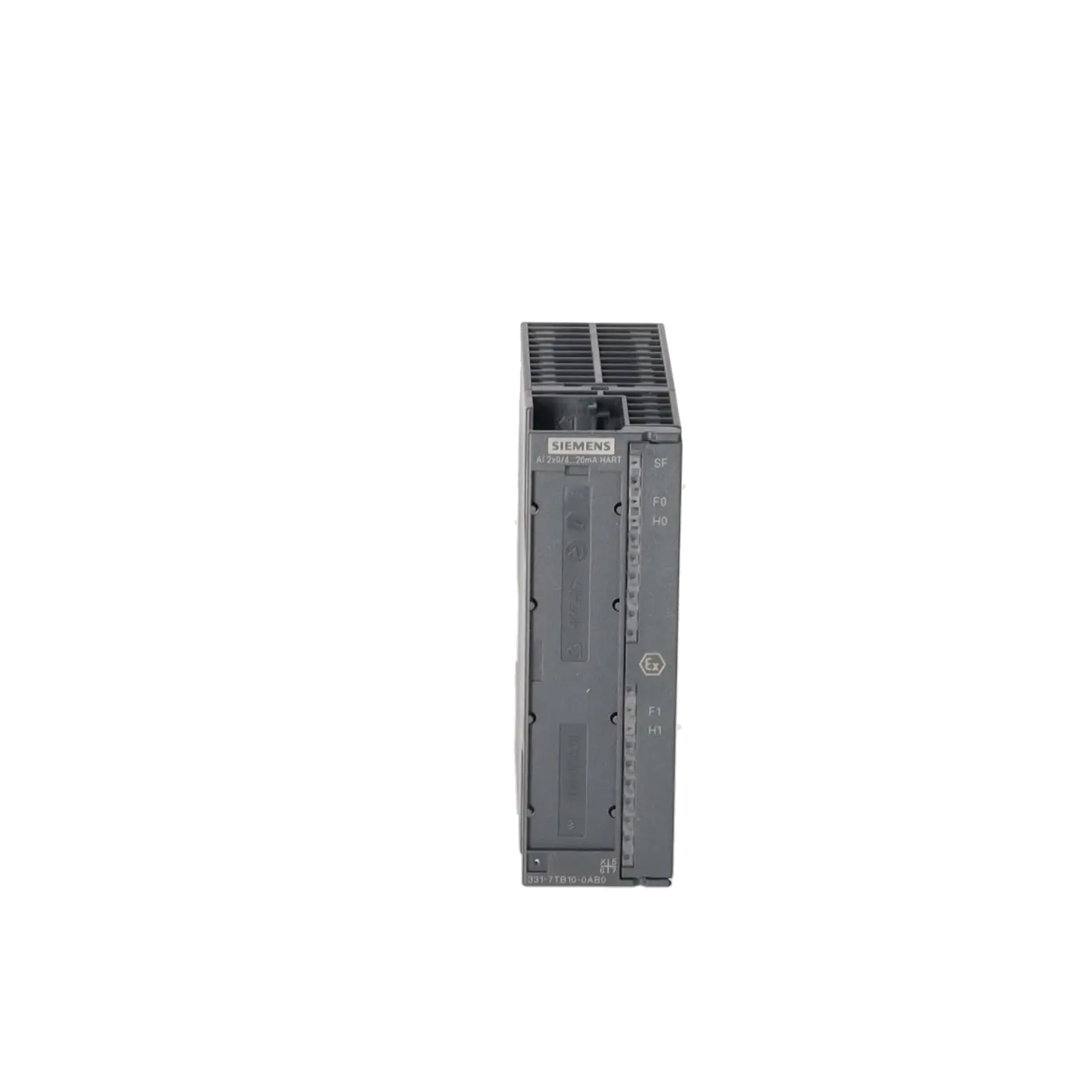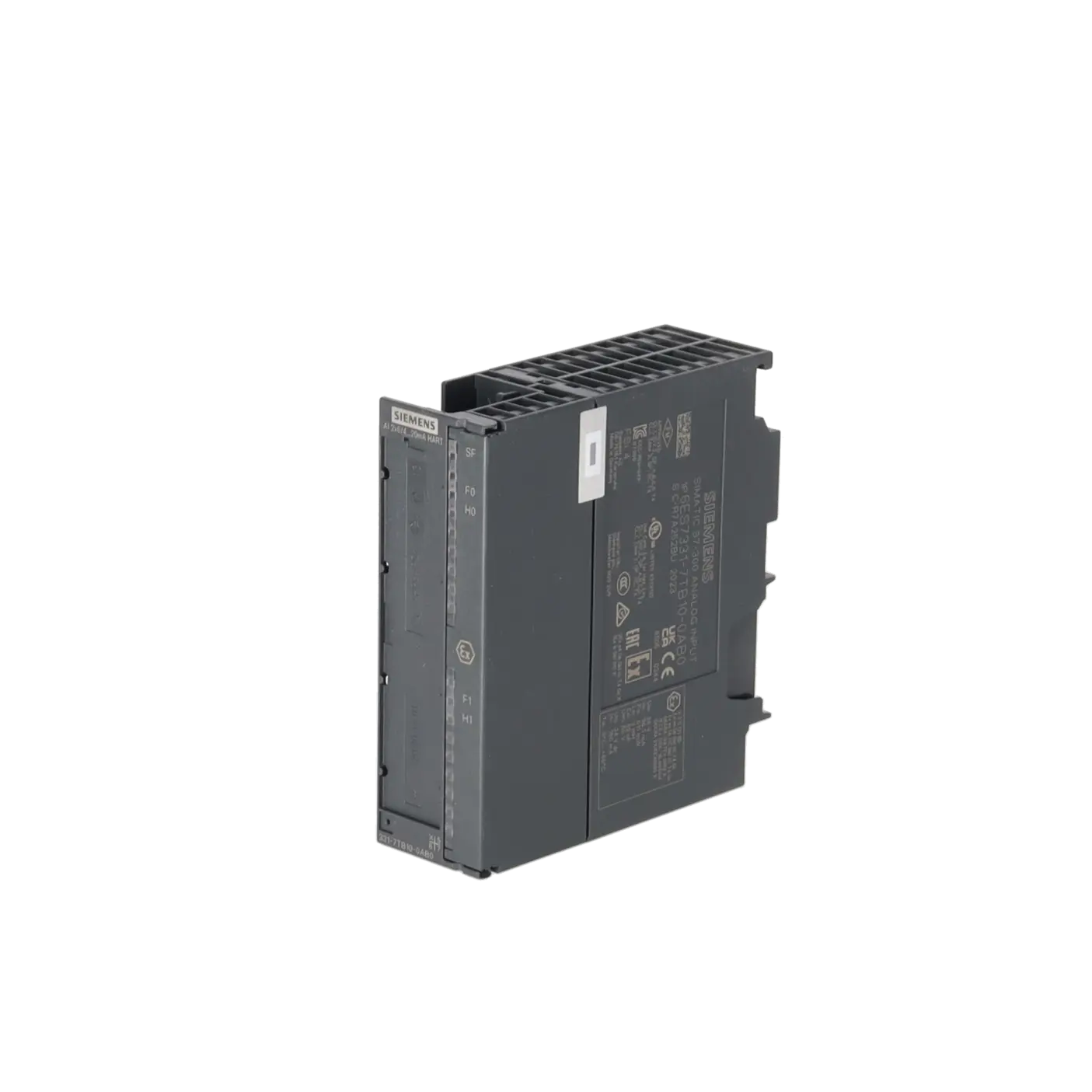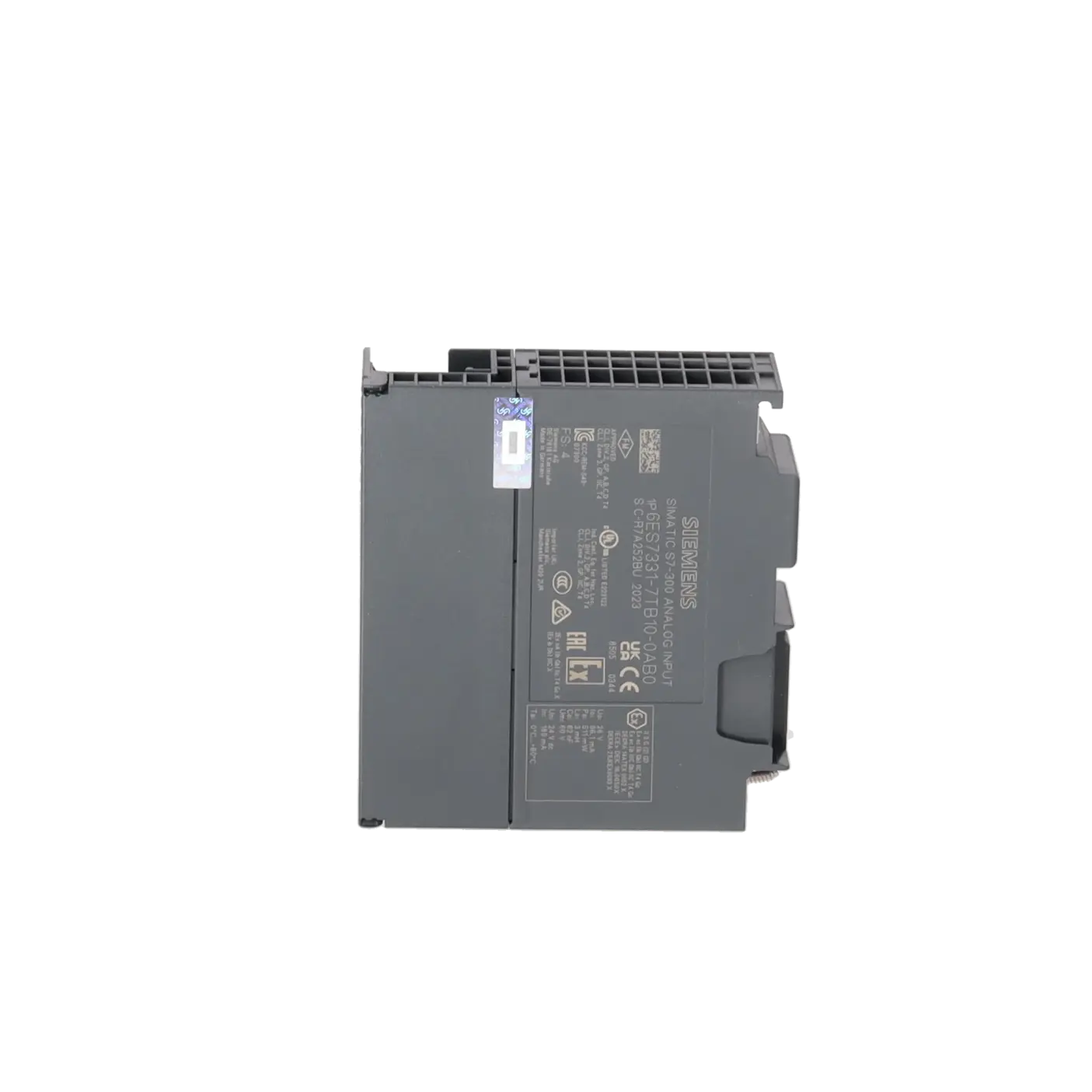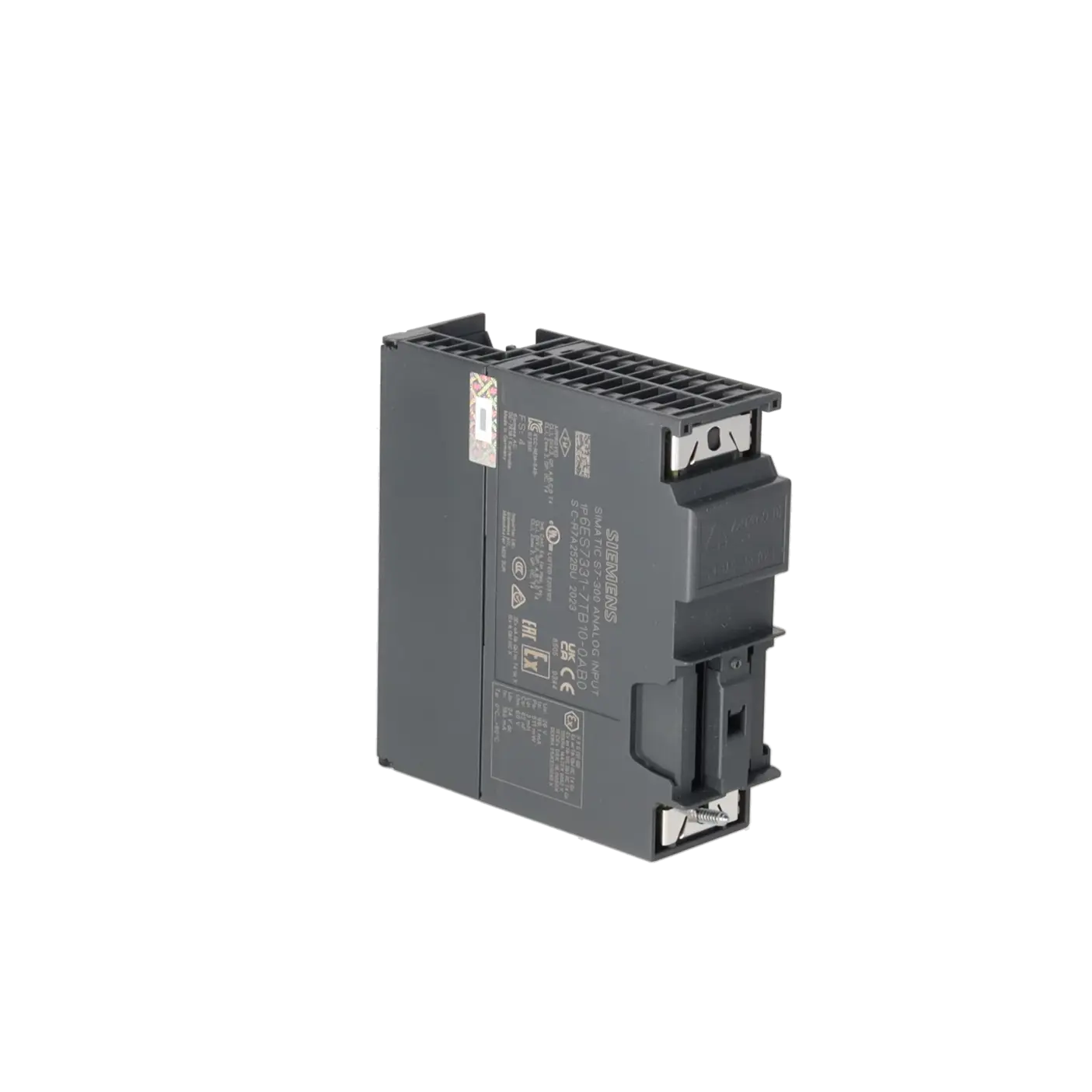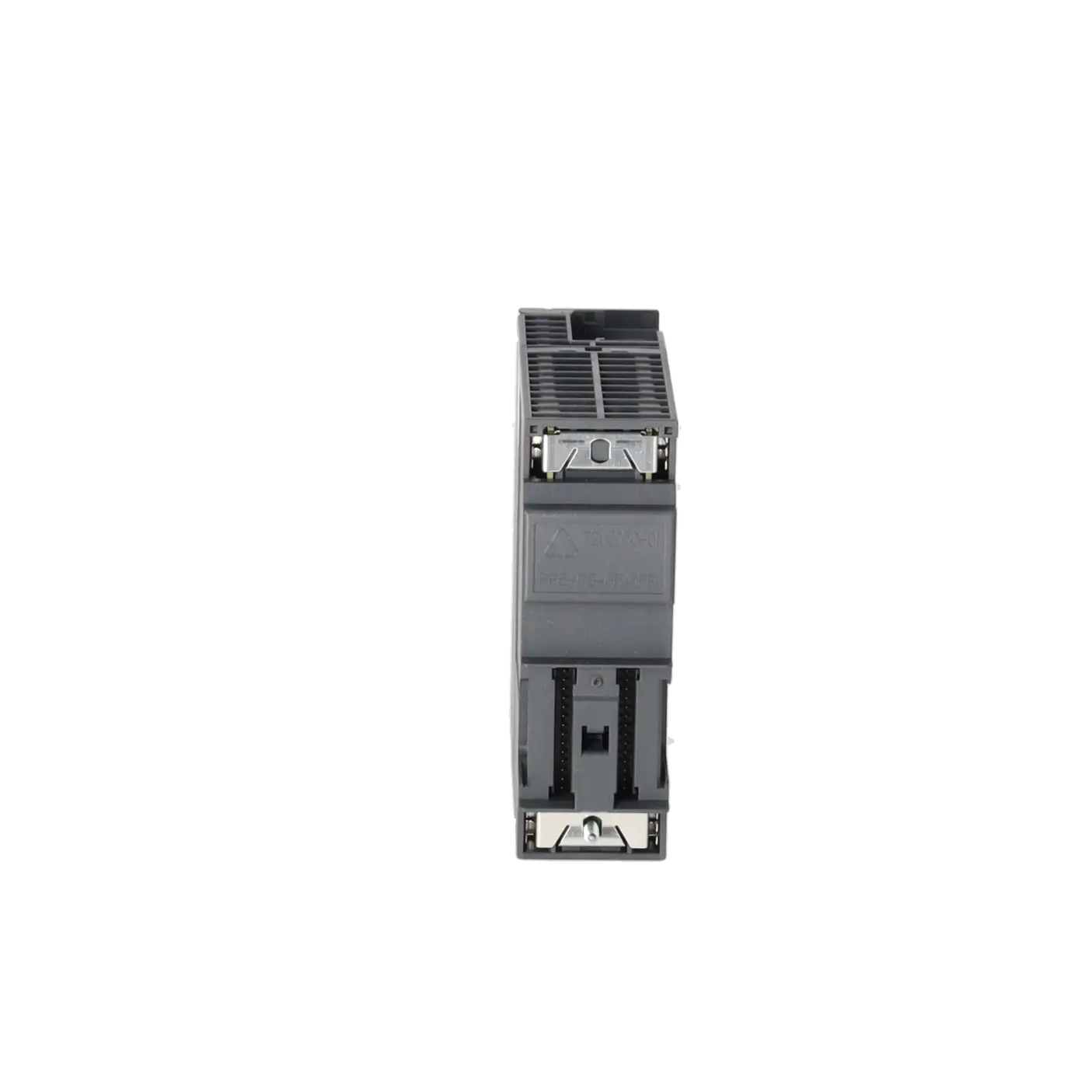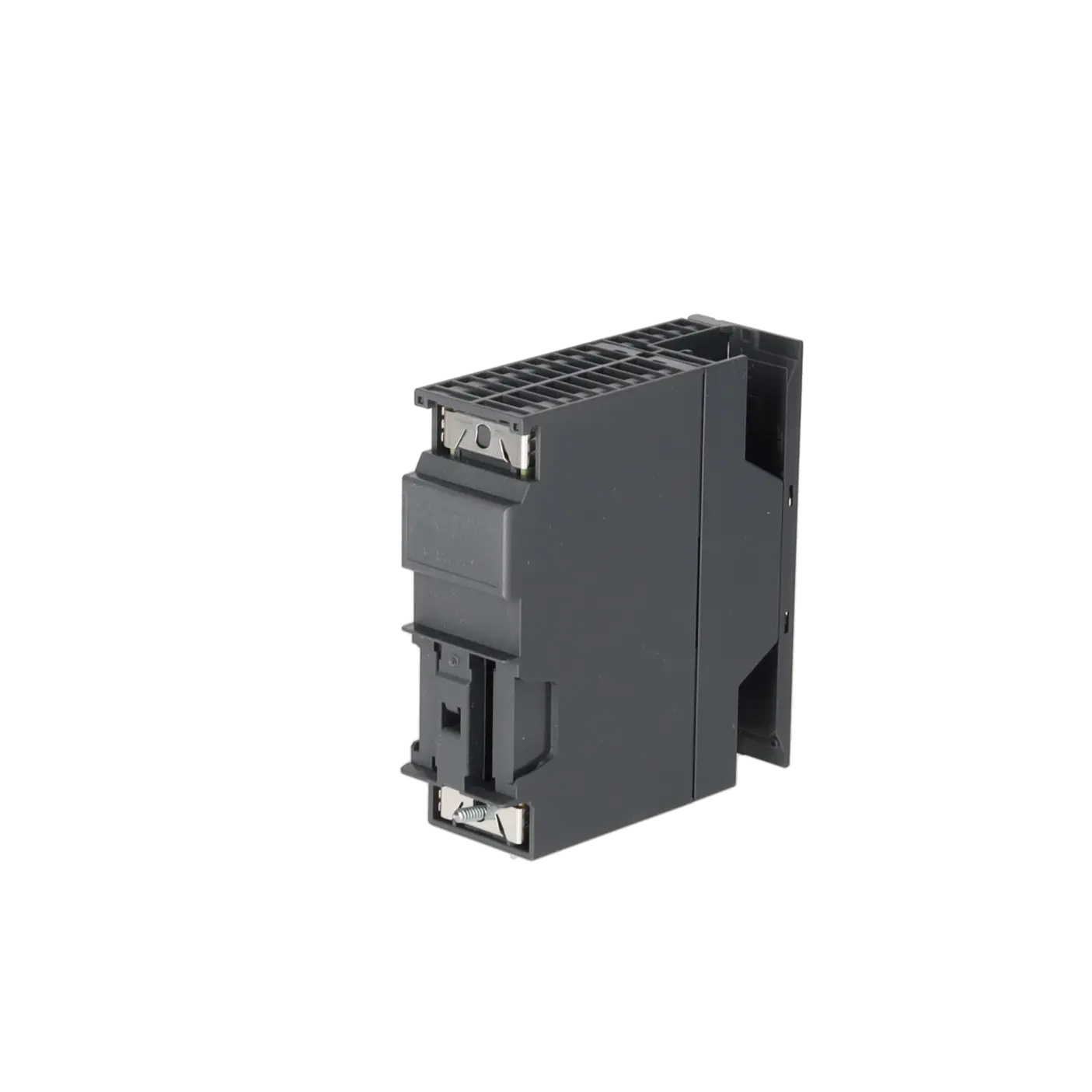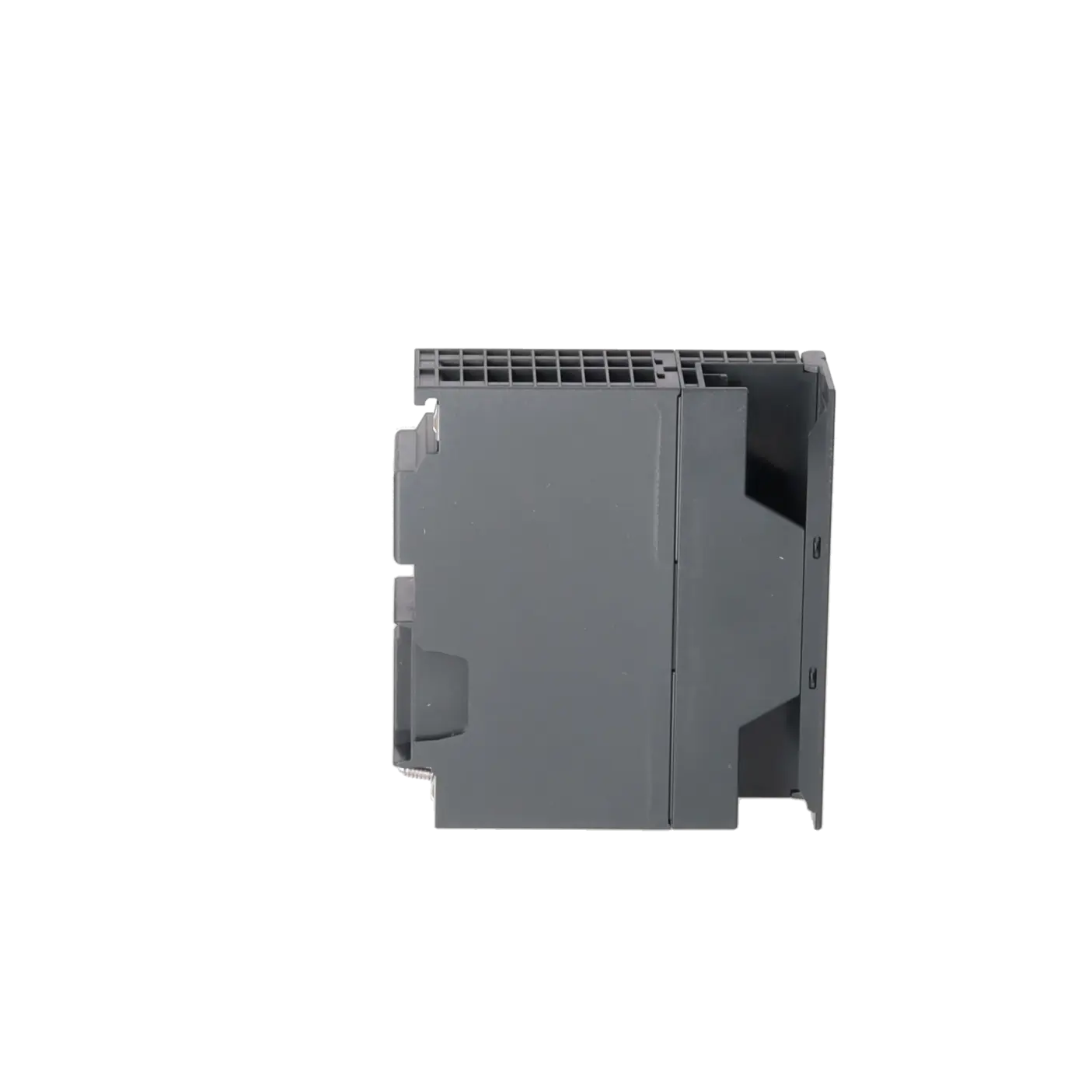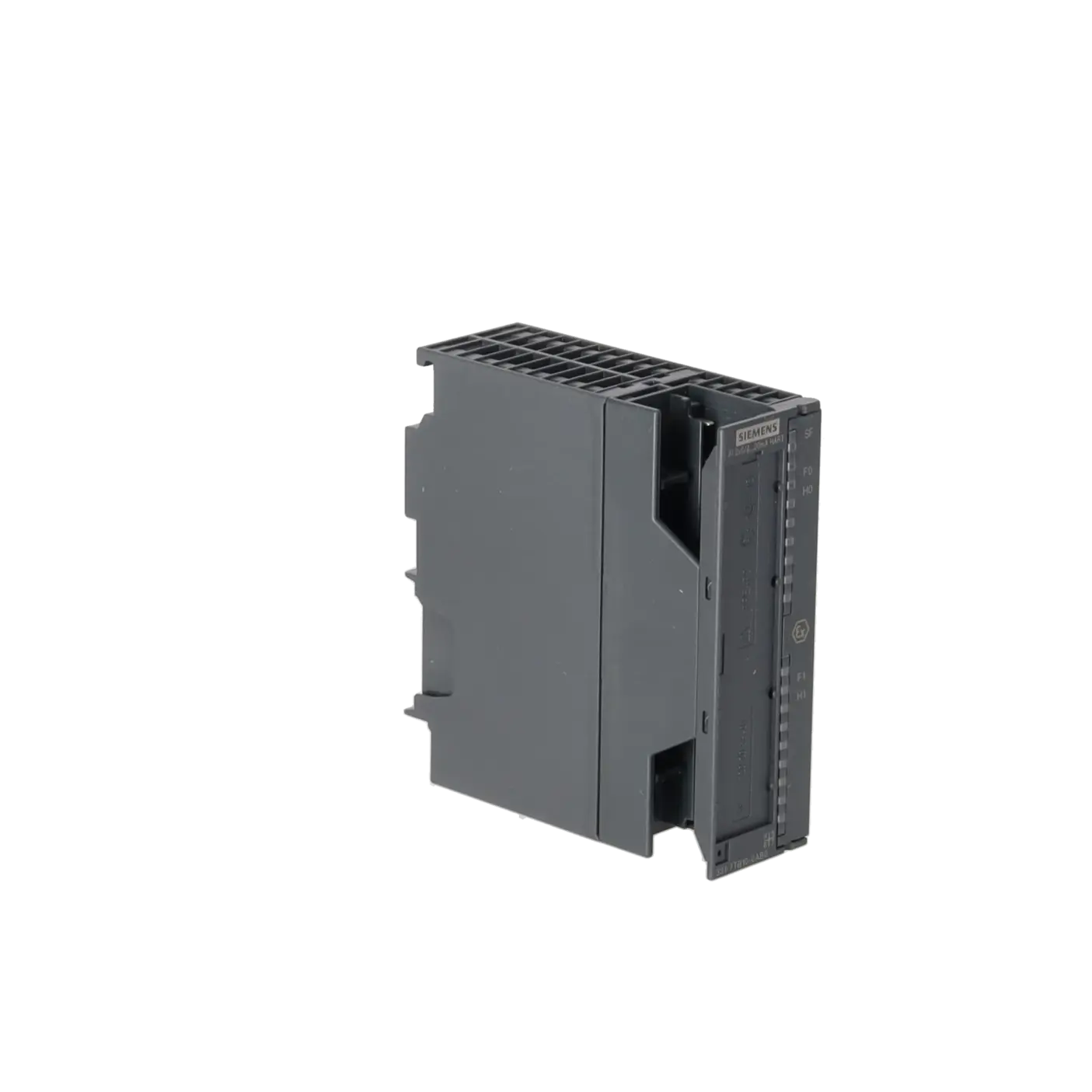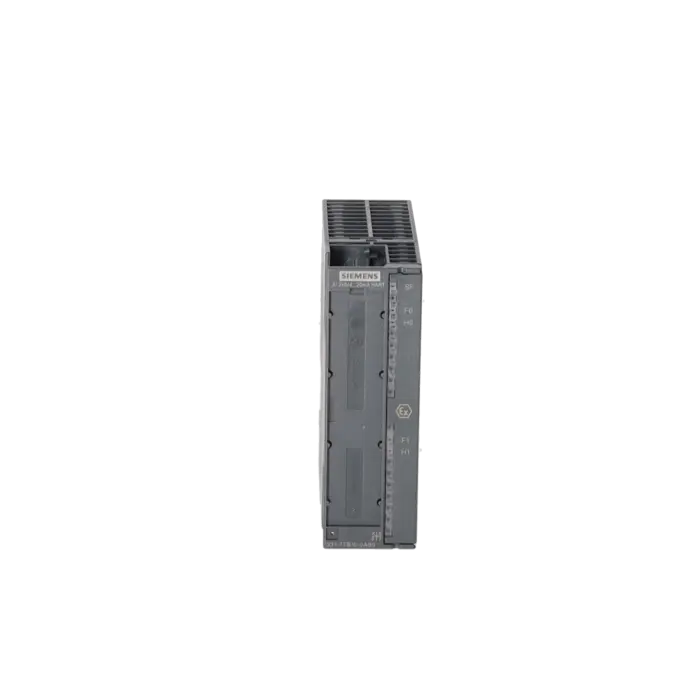
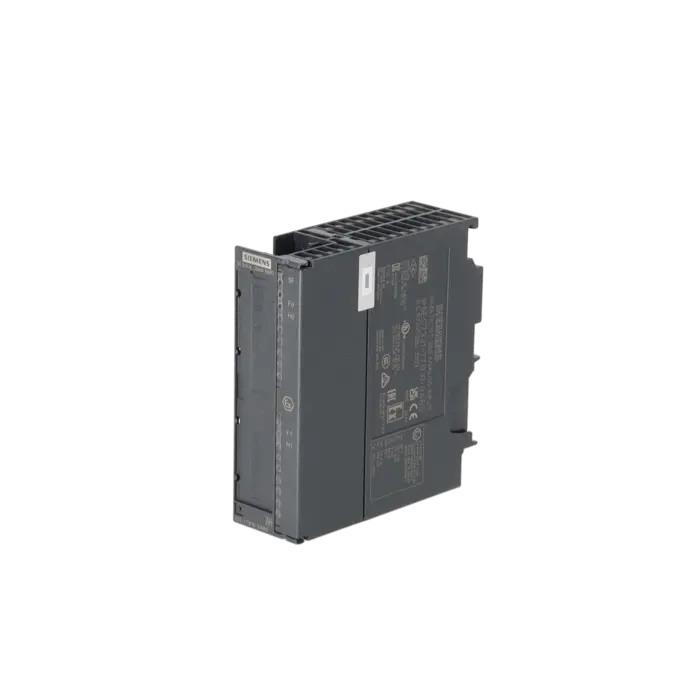
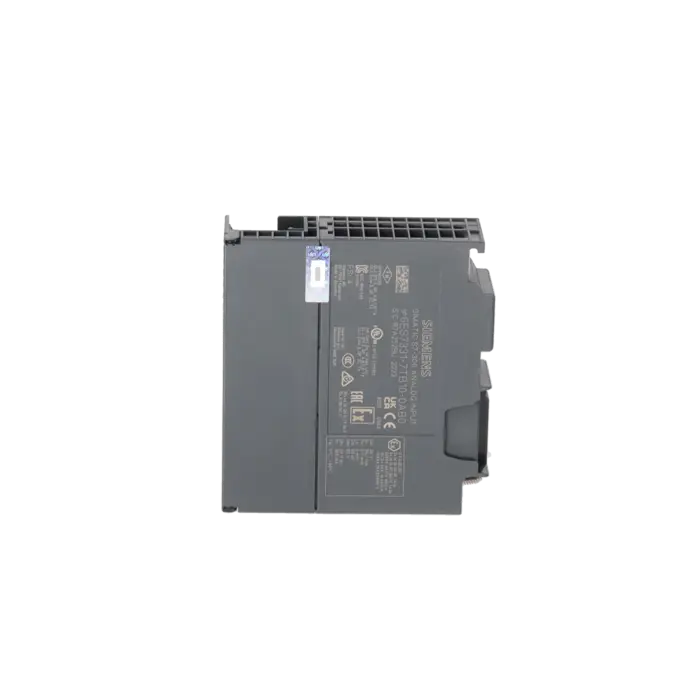
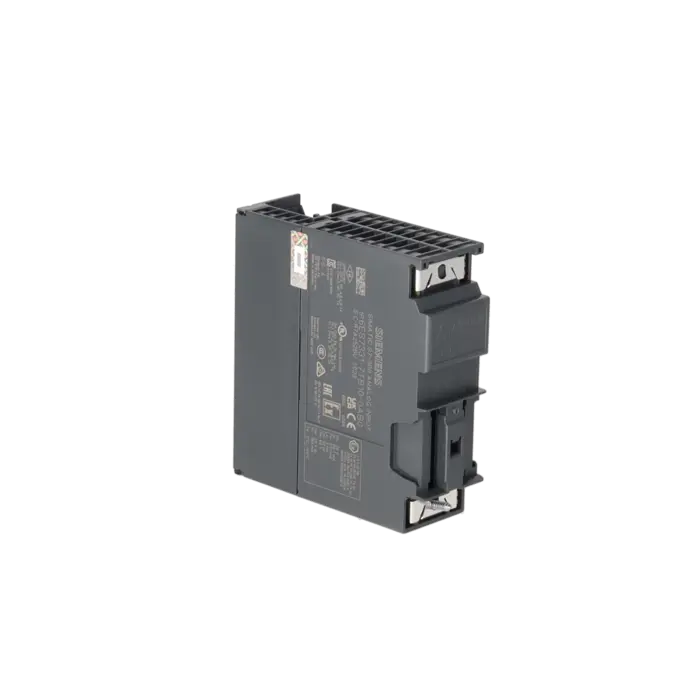
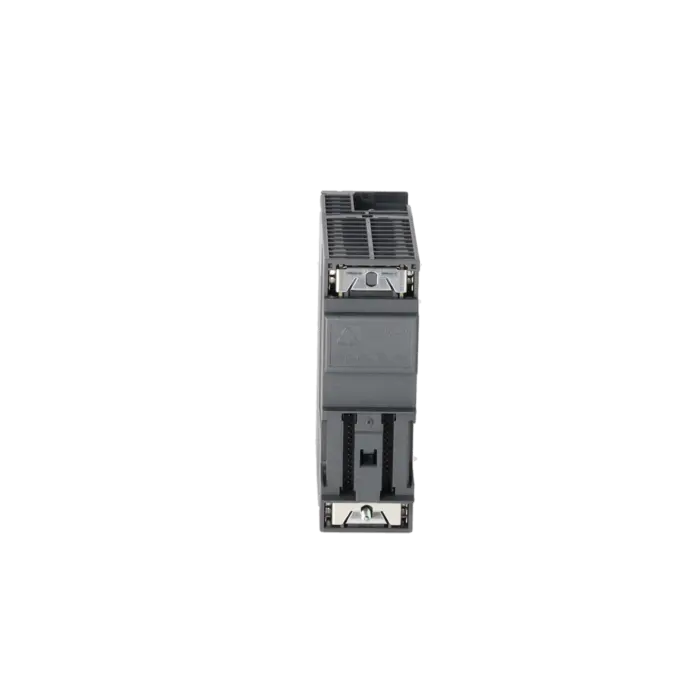
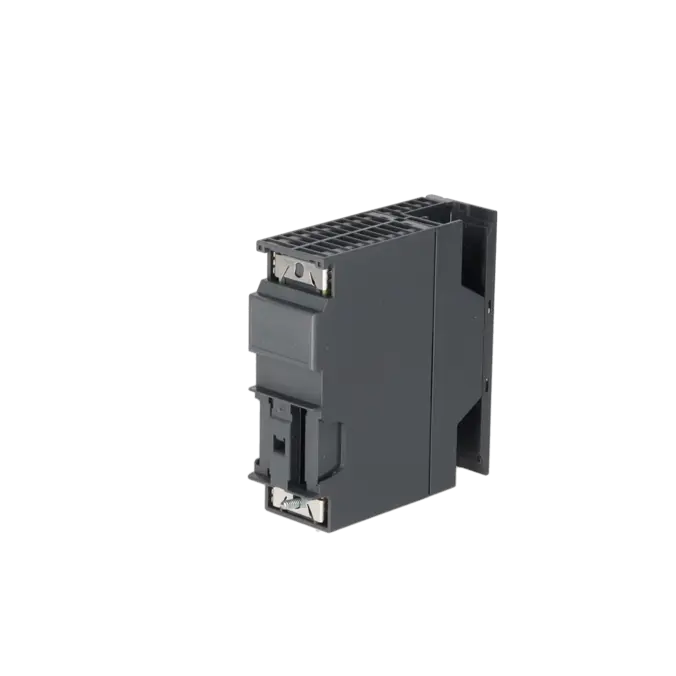
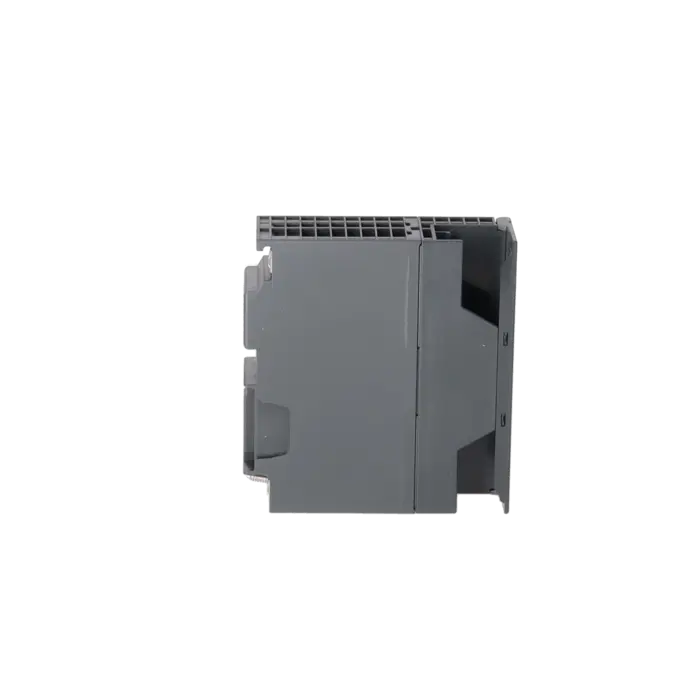
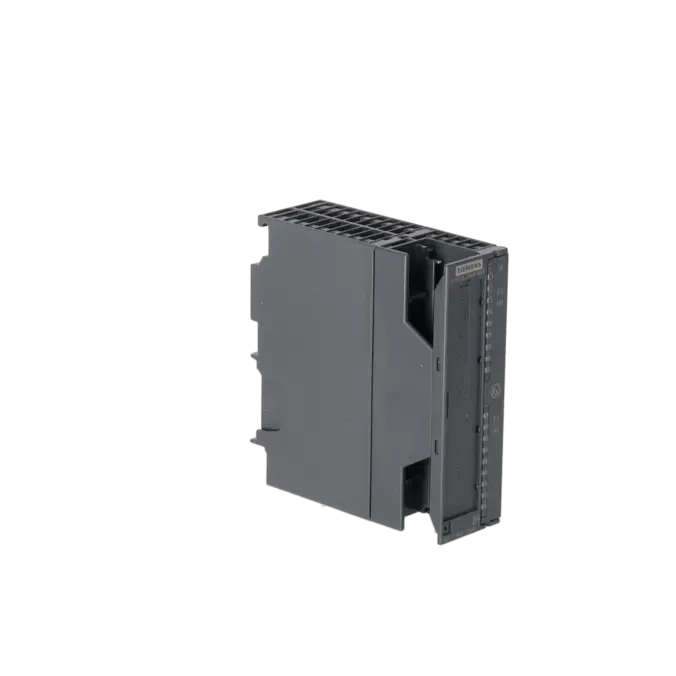
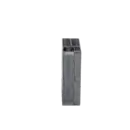
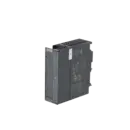
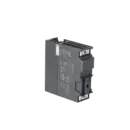

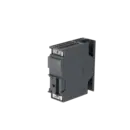
SIEMENS 6ES7331-7TB10-0AB0
- EICHLER-art.no.: K1027192
- EAN: 804766341830
Product description
SIMATIC DP, HART ANALOG INPUT SM 331, 2 AI, 0/4 - 20 MA HART, AS OF HART REV. 5.0, FOR ET200M WITH IM 153-2, 1 X 20-POLE
Services for SIEMENS 6ES7331-7TB10-0AB0
SIEMENS |
6ES7331-7TB10-0AB0 –
additional product information
| Delivery information | |||
|---|---|---|---|
| Export identifier | AL: N ECCN: EAR99H | ||
| Net weight | 0.399 | ||
| Quantity | 1 Stück | ||
| Packaging quantity | 1 | ||
| Additional product information | |||
|---|---|---|---|
| Product status | EOP: 2025-10-01 | ||
| EAN | 804766341830 | ||
| UPC | / | ||
| Static lot number | 85389091 | ||
| List indicator | STPCS7 | ||
| Product group | 4428 | ||
| Country of origin | DE | ||
| Compliance with the substance restrictions according to RoHS directive | Since: 20140826 | ||
| Product classifications | Version | Classification | |
|---|---|---|---|
| eClass | 4 | / | |
| eClass | 5.1 | 27-24-26-01 | |
| eClass | 6.0 | 27-24-26-01 | |
| ETIM | 3 | / | |
| ETIM | 4 | / | |
| ETIM | 5 | EC001596 | |
What is the 6ES7331-7TB10-0AB0 and where is it used?
The 6ES7331-7TB10-0AB0 is a SIMATIC DP HART analogue input module SM 331 for ET 200M systems with IM 153-2. The module provides 2 analogue inputs for 0/4...20 mA signals and is designed for connecting HART-enabled 2-wire and 4-wire transmitters. Typical applications include process signals from pressure, temperature, flow, and level measurement, particularly where additional diagnostic and device information is required via HART communication alongside the actual process value. Due to its ET 200M design, the module is especially suitable for distributed I/O architectures where robust signal transmission, advanced diagnostics and continued operation of existing S7-300/ET 200M installations are important.
Overview of the key technical data and what it means
The module operates with a 24 V DC load voltage, features 2 individually isolated input channels, and supports both 0...20 mA and 4...20 mA signals, although HART communication is only available in the 4...20 mA range. Particularly important in practice are the integrated transmitter power supplies for 2-wire transmitters, configurable diagnostics, limit-value alarms, and the SF, F, and H status indicators for group faults, channel faults and active HART communication. The maximum shielded cable length is 400 m, and the integration times are configurable. Siemens recommends 100 ms integration time when using HART in order to minimise the influence of AC modulation on the measurement signal. Additional features include intrinsic safety (Ex i) properties, ATEX certification, an operating temperature range of 0 to 60 °C, and compact dimensions of 40 x 125 x 120 mm.
Product status, life-cycle status and obsolescence
For the 6ES7331-7TB10-0AB0, the EICHLER shop lists a product status of EOP: 01 October 2025. Siemens continues to list the module as a spare part in available product documentation. This means that the module remains available for many operators, but it is clearly in an advanced stage of its life cycle, making spare-parts strategy, stockholding and downtime risk increasingly important considerations for maintenance and purchasing departments. I could not verify a Siemens-designated 1:1 successor for this exact order number in the available sources. For migration projects, Siemens references the module alongside the ET 200SP HA 6DL1134-6TB00-0HX1 in a comparison document; however, this should be regarded as a migration reference rather than a confirmed direct replacement.
Available EICHLER services and why they are relevant in practice
For the 6ES7331-7TB10-0AB0, EICHLER offers repair, exchange, used, and new units. This is particularly important for maintenance engineers and purchasers dealing with products in an advanced life-cycle phase. A repair helps preserve the existing system architecture and parameterisation, avoiding the need for immediate modifications or retrofits. EICHLER combines its repair service with technical cleaning, preventive maintenance, comprehensive functional testing, and a minimum 24-month warranty. An exchange unit is particularly useful when minimising downtime is the highest priority. Used and new modules provide additional supply security when internal spare-part inventories are insufficient or when obsolescence risks need to be actively managed. This helps ensure the continued operability of an ET 200M installation, even when the original products are no longer in the early stages of their market life cycle.
| Attribute | Value |
|---|---|
| Supply voltage | |
| Load voltage L+ | |
| ● Rated value (DC) | 24 V |
| ● Reverse polarity protection | Yes |
| Input current | |
| from load voltage L+ (without load), max. | 180 mA |
| from backplane bus 5 V DC, max. | 100 mA |
| Output voltage | |
| Power supply to the transmitters | |
| ● present | Yes |
| ● Rated value (DC) | 15 V; at 22 mA |
| ● short-circuit proof | Yes; approx. 30 mA |
| ● No-load voltage (DC) | 29.6 V |
| Power loss | |
| Power loss, typ. | 4.5 W |
| Analog inputs | |
| Number of analog inputs | 2 |
| permissible input current for current input (destruction limit), max. | 40 mA |
| Input ranges (rated values), currents | |
| ● 0 to 20 mA | Yes |
| — Input resistance (0 to 20 mA) | 50 Ω |
| ● 4 mA to 20 mA | Yes |
| — Input resistance (4 mA to 20 mA) | 50 Ω |
| Cable length | |
| ● shielded, max. | 400 m |
| Analog value generation for the inputs | |
| Measurement principle | Sigma Delta |
| Integration and conversion time/resolution per channel | |
| ● Resolution with overrange (bit including sign), max. | 16 bit; 10 bit to 15 bit + sign |
| ● Integration time, parameterizable | Yes |
| ● Integration time (ms) | 2,5 / 16,67 / 20 / 100 ms |
| ● Basic conversion time, including integration time (ms) | 2.5 / 16.67 / 20 / 100 (1 channel enabled); 7.5 / 50 / 60 / 300 (2 channels enabled) |
| ● Interference voltage suppression for interference frequency f1 in Hz | 10 / 50 / 60 / 400 Hz |
| Encoder | |
| Connection of signal encoders | |
| ● for current measurement as 2-wire transducer | Yes |
| ● for current measurement as 4-wire transducer | Yes |
| Errors/accuracies | |
| Operational error limit in overall temperature range | |
| ● Current, relative to input range, (+/-) | 0.45 %; From 0/4 to 20 mA |
| Basic error limit (operational limit at 25 °C) | |
| ● Current, relative to input range, (+/-) | 0.1 %; From 0/4 to 20 mA |
| Interrupts/diagnostics/status information | |
| Diagnostics function | Yes; Parameterizable |
| Alarms | |
| ● Diagnostic alarm | Yes; Parameterizable |
| ● Limit value alarm | Yes; Parameterizable, channels 0 and 1 |
| Diagnoses | |
| ● Overrange | Yes; red LED, signal |
| ● Wire-break in signal transmitter cable | Yes; red LED, signal |
| ● Short-circuit of the signal encoder cable | Yes; red LED, signal |
| ● HART communication active | Yes; green LED (H) |
| Diagnostics indication LED | |
| ● Group error SF (red) | Yes |
| ● Channel fault indicator F (red) | Yes |
| Ex(i) characteristics | |
| Module for Ex(i) protection | Yes |
| maximum values for connecting terminals for gas group IIC | |
| ● Uo (no-load voltage), max. | 26 V |
| ● Io (short-circuit current), max. | 96.1 mA |
| ● Po (power output), max. | 511 mW |
| ● Co (permissible external capacity), max. | 62 nF |
| ● Lo (permissible external inductivity), max. | 3 mH |
| ● Um (voltage at non-intrinsically safe connecting terminals), max. | 250 V; DC |
| Potential separation | |
| Potential separation analog inputs | |
| ● between the channels | Yes |
| ● between the channels and backplane bus | Yes |
| Permissible potential difference | |
| between the inputs (UCM) | 60 V DC/30 V AC permitted potential difference (Viso) of signals from hazardous areas |
| Standards, approvals, certificates | |
| CE mark | Yes |
| UL approval | Yes |
| FM approval | Yes |
| RCM (formerly C-TICK) | Yes |
| KC approval | Yes |
| EAC (formerly Gost-R) | Yes |
| Use in hazardous areas | |
| ● ATEX marking | ATEX II 3 G (2) GD Ex nA [ib Gb] [ib IIIC Db] IIC T4 Gc |
| ● ATEX certificate | DEKRA 14 ATEX 0052X |
| ● FM marking | Class I, Division 2, Group A, B, C, D T4; Class I, Zone 2, Group IIC T4 |
| Ambient conditions | |
| Ambient temperature during operation | |
| ● min. | 0 °C |
| ● max. | 60 °C |
| Connection method | |
| required front connector | 1x 20-pin |
| Dimensions | |
| Width | 40 mm |
| Height | 125 mm |
| Depth | 120 mm |
| Weights | |
| Weight, approx. | 260 g |
| Fault description | Possible solution |
|---|---|
| Why does the 6ES7331-7TB10-0AB0 report a wire break even though the transmitter is still connected? | In 4…20 mA operation, the module detects currents below 3.6 mA as a wire break if group diagnostics and wire-break diagnostics are enabled. With 4-wire transmitters, a short circuit can also have this effect because the input current drops sharply. Therefore, check the actual loop current, wiring, terminals, conductor cross-section, and whether an open channel has accidentally been enabled. |
| Why does the 6ES7331-7TB10-0AB0 only return 7FFFH instead of a plausible measured value? | 7FFFH indicates overflow, an error, or a disabled channel on this module. Common causes include an incorrect measuring range, an overdriven input, a diagnostic event, or a channel that has not been parameterised correctly. Check the channel activation, range setting, and module diagnostics in STEP 7. If the SF or F LED is illuminated, the active diagnostic entry should be evaluated first. |
| Why does 8000H or underflow appear at the analogue input? | An underflow is reported when the input value falls below the permissible range and group diagnostics are active while wire-break diagnostics are not active. For this HART module, the threshold is at currents below approximately 1.1845 mA. Typical causes include an incorrect measuring range, reversed wiring polarity, insufficient loop current, or a faulty sensor. Check the measuring range, polarity, field-device supply, and the actual current present in the loop. |
| Why is HART communication with the 6ES7331-7TB10-0AB0 unstable or not working at all? | For HART, the module must be operated in the 4…20 mA range. Siemens also requires a 200-ohm resistor in the measuring circuit for HART transmitters. In addition, Siemens recommends checking the process wiring in the event of communication errors, ensuring correct parameterisation, increasing the number of retries, and, for analogue inputs, using a parallel capacitor of approximately 150 nF if necessary. The correct terminal assignment for 2-wire and 4-wire HART transmitters is also essential. |
| Why does “Module without parameters” or Event ID 16#F553:8006 appear in STEP 7? | In a PLCtalk discussion on Siemens HART modules, this message was described as potentially remaining as an inactive old message from a phase when no sensors were connected, even though the module later operates correctly. If the message remains active, the hardware configuration, parameterisation, and renewed transfer of parameters should be checked. If the module also shows active diagnostic entries or the SF/F LEDs are illuminated, a current parameterisation or wiring issue is more likely. |
Is 6ES7331-7TB10-0AB0 the right module for ET 200M with IM 153-2?
Yes. The available product information clearly describes 6ES7331-7TB10-0AB0 as a SIMATIC DP HART analogue input module SM 331 for ET 200M with IM 153-2. For operators of existing ET 200M stations, this is important because the module was specifically designed for this decentralised platform and is therefore particularly suitable for replacing existing HART input modules without requiring an immediate migration to a newer I/O generation.
Can I connect 2-wire and 4-wire transmitters to 6ES7331-7TB10-0AB0?
Yes. The module supports both 2-wire and 4-wire current transmitters. Integrated transmitter power supplies are available for 2-wire devices. The 4…20 mA measuring range is relevant for both transmitter types, while 0…20 mA is intended only for 4-wire transmitters. This is important for procurement because the suitability of the module depends not only on the part number but also on the type of field device being used.
What should I consider when wiring HART transmitters?
For HART operation, it is essential that the module uses the 4…20 mA range and that a 200-ohm resistor is installed in the measuring circuit. Siemens also provides specific terminal assignments: a 2-wire HART transmitter should be connected to terminals 3 and 5 or 12 and 14, while a 4-wire HART transmitter should be connected to terminals 5 and 6 or 14 and 15. In addition, the requirements for intrinsically safe installation must be observed. This reduces communication errors and prevents diagnostic messages that are actually caused by incorrect wiring.
Is 6ES7331-7TB10-0AB0 still active or already discontinued?
The module is listed as a spare part in the available Siemens product information. In addition, the EICHLER shop specifies an EOP date of 2025-10-01, and EICHLER includes the module in its overview of S7-300 and ET 200M modules entering the discontinuation phase from 01 October 2025. For operators, this means that procurement, repair capability and spare-part stocking become increasingly important because the module is no longer in the early stage of its product lifecycle.
Is there a confirmed Siemens successor for 6ES7331-7TB10-0AB0?
I could not reliably verify a Siemens product that is explicitly designated as a direct 1:1 successor for this exact part number. However, Siemens presents the ET 200SP HA module 6DL1134-6TB00-0HX1 as a functionally comparable migration option in a current comparison document. This comparison is useful for modernisation projects but should not be interpreted as a plug-and-play replacement. Ex requirements, wiring, topology and engineering details must always be evaluated on a case-by-case basis.
How are additional HART variables transferred to the PLC?
According to Siemens, Revision 7 HART modules can provide up to eight additional HART variables in the user data area. Siemens further states that configured HART variables are stored starting at input byte 15 and require five input bytes per variable. A PLCtalk discussion on Siemens HART modules also confirmed that the variable addresses assigned in HW Config can generally be read directly in practice without necessarily requiring additional SFC58/SFC59 calls. For programmers, it is important to distinguish between the S7 value format and the HART floating-point and status data formats.