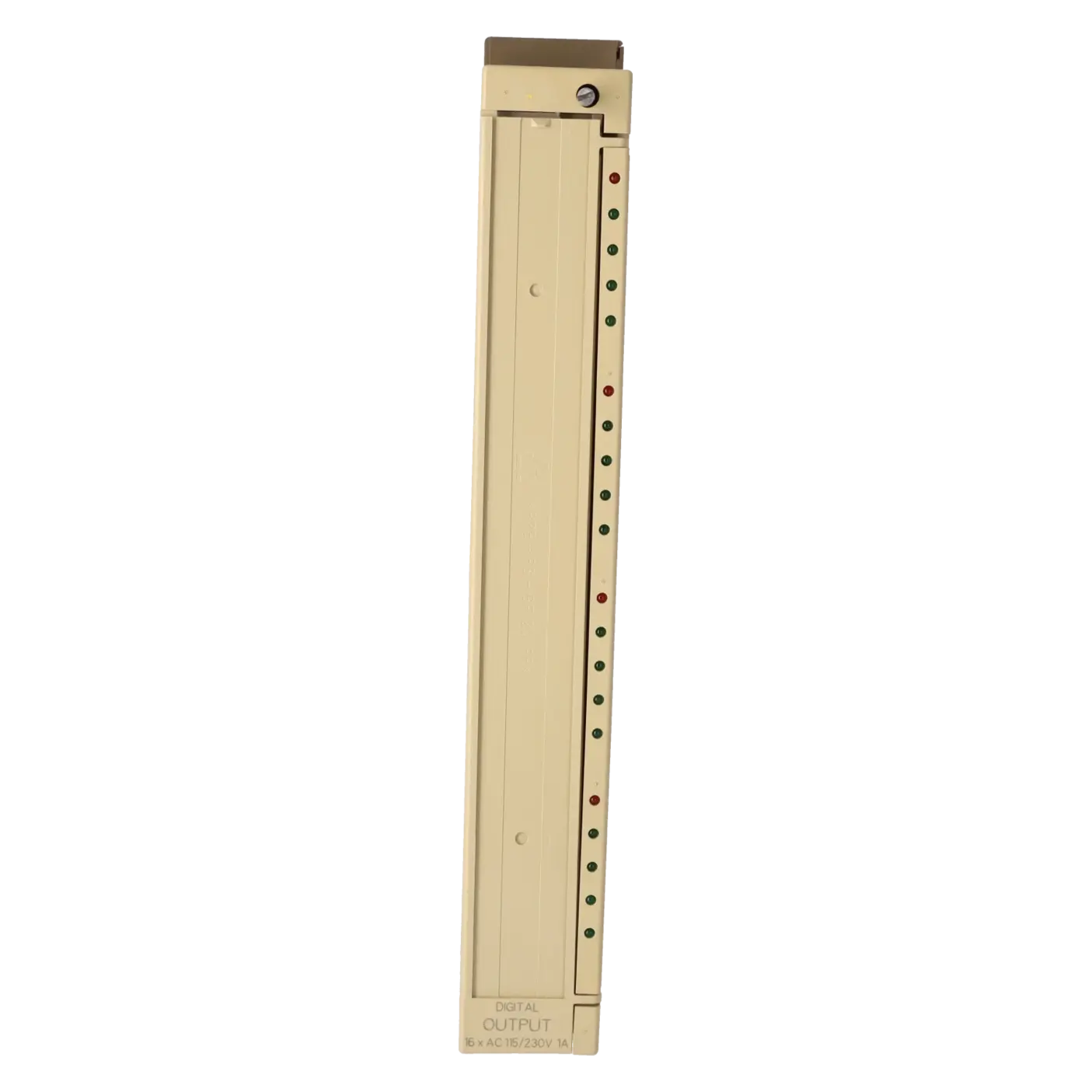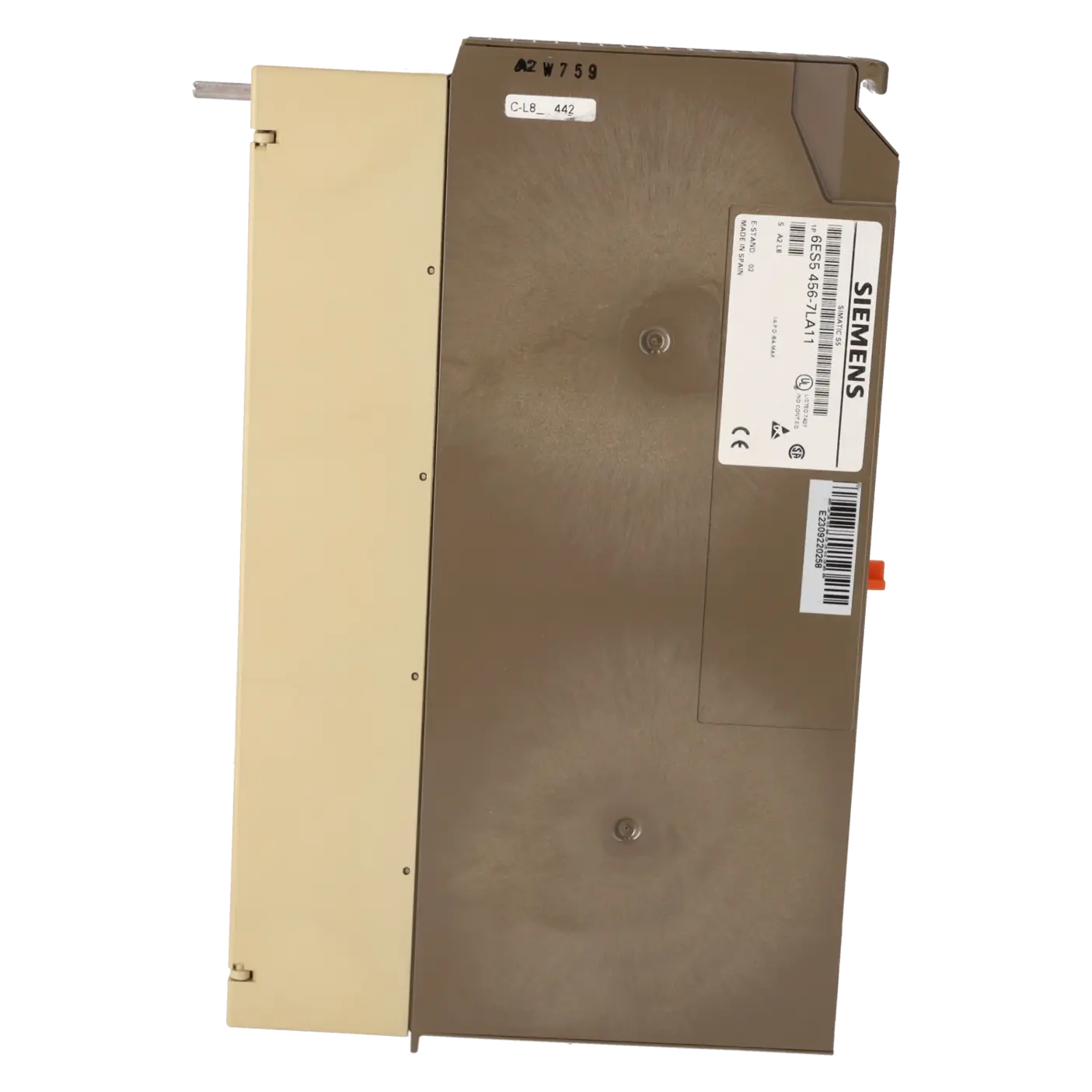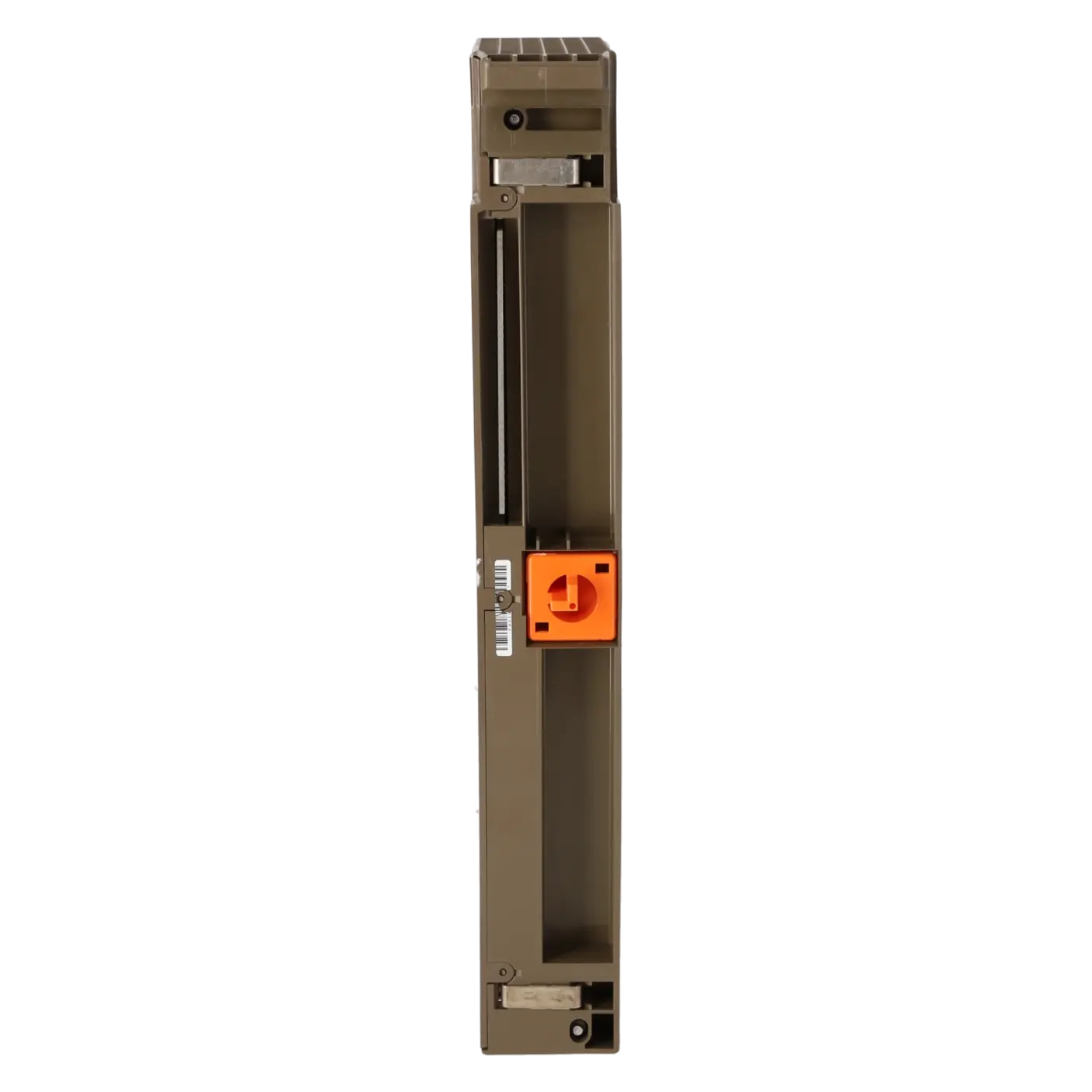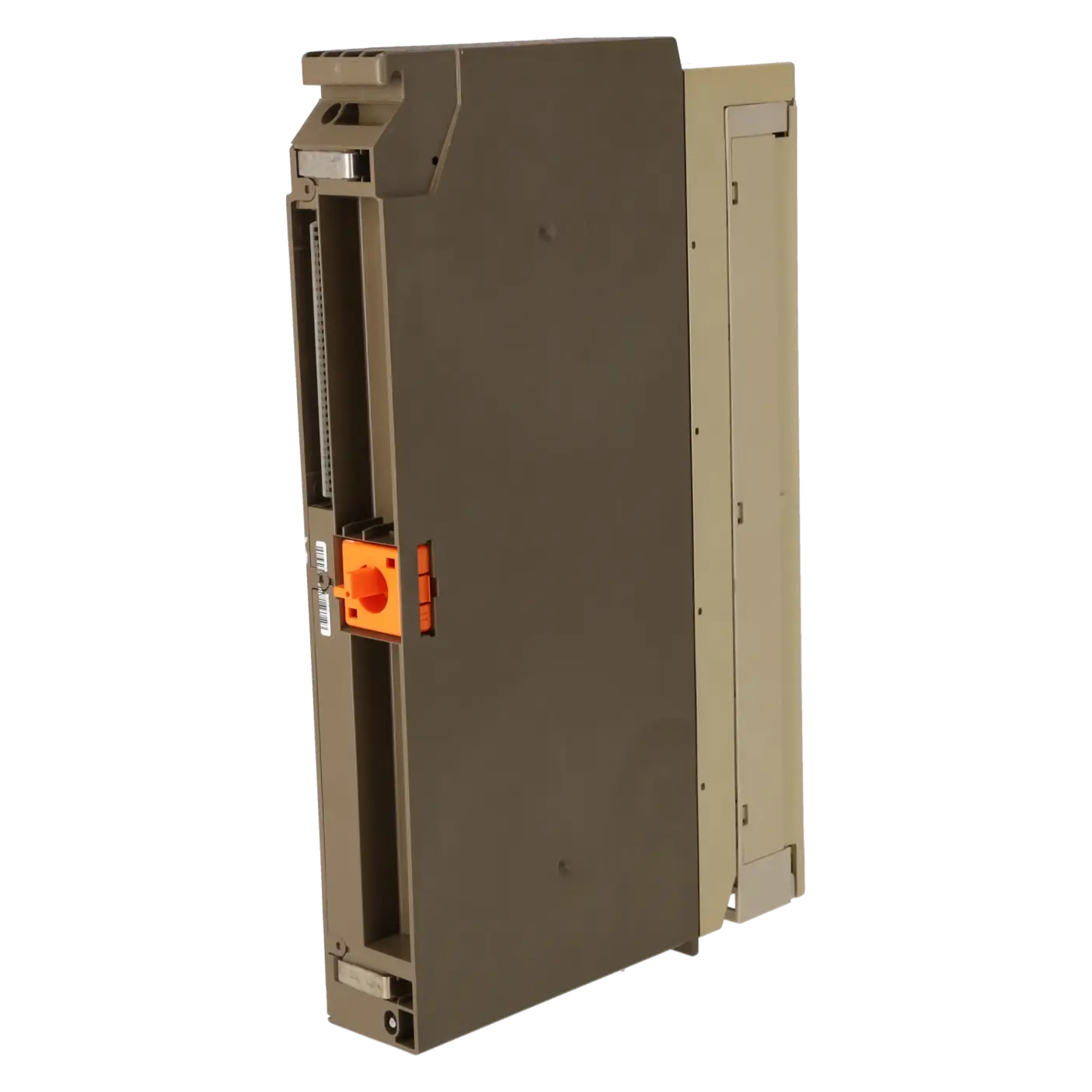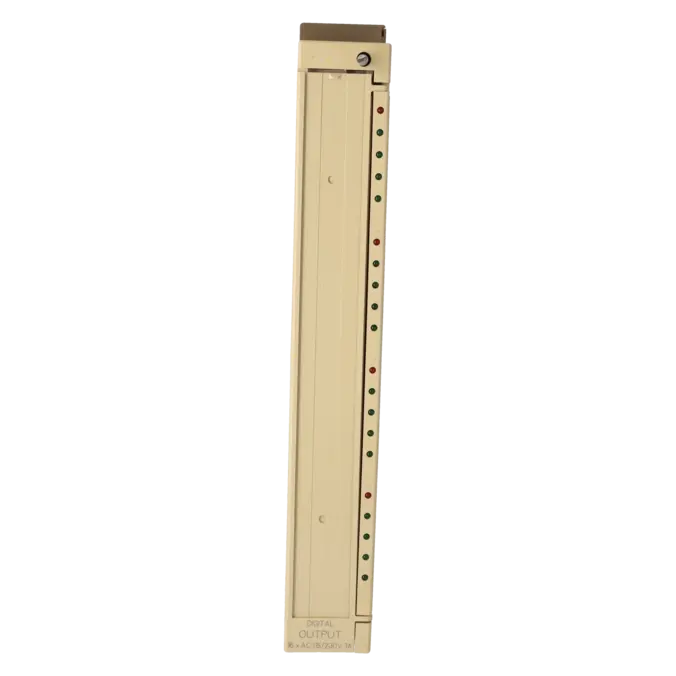
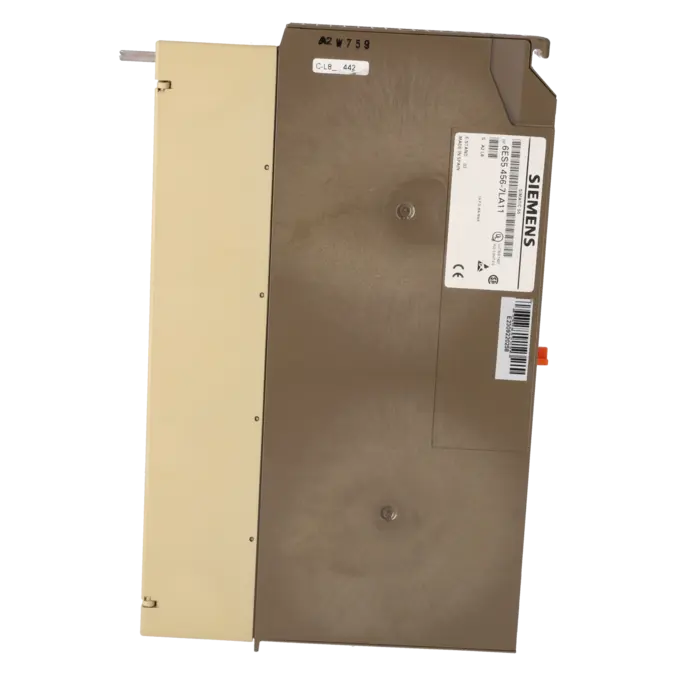
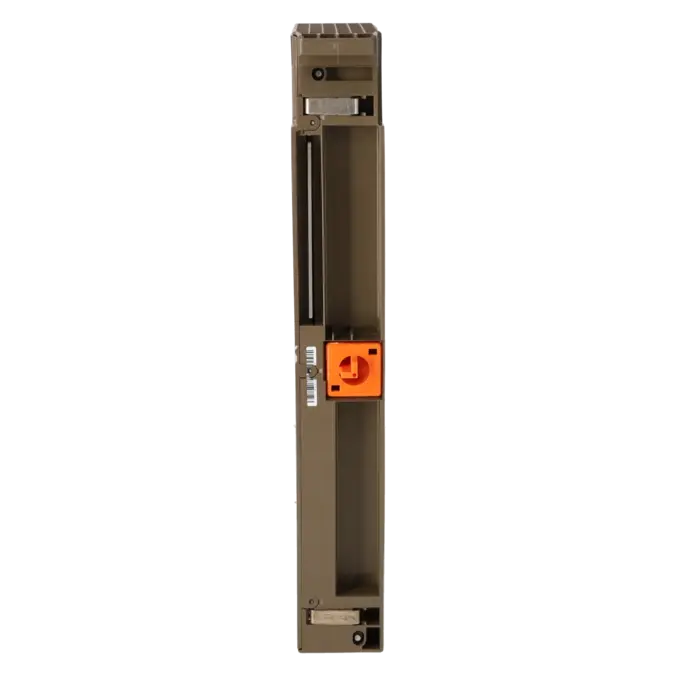
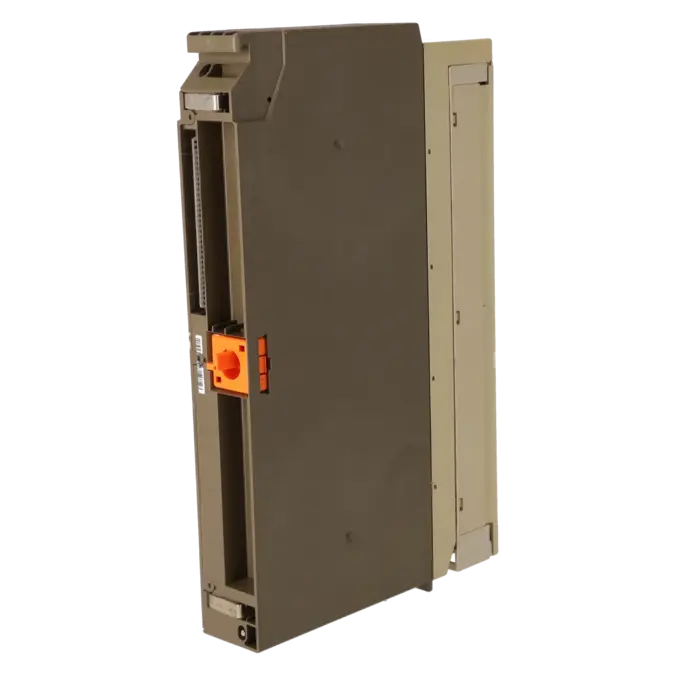

SIEMENS 6ES5456-7LA11
- EICHLER-art.no.: K0117559
- EAN: 4025515054023
Product description
SIMATIC S5, DIGITAL OUTPUT 456 ISOLATED FOR S5-115U 16 OUTPUTS 115/230 V AC; 1A
Services for SIEMENS 6ES5456-7LA11
SIEMENS |
6ES5456-7LA11 –
additional product information
| Delivery information | |||
|---|---|---|---|
| Export identifier | AL: ECCN: | ||
| Net weight | 2.5 | ||
| Quantity | 1 Stück | ||
| Packaging quantity | 1 | ||
| Additional product information | |||
|---|---|---|---|
| Product status | EOP: 2005-10-01 | ||
| EAN | 4025515054023 | ||
| UPC | / | ||
| Static lot number | 85389091 | ||
| List indicator | / | ||
| Product group | 4235 | ||
| Country of origin | / | ||
| Compliance with the substance restrictions according to RoHS directive | Since: / | ||
| Product classifications | Version | Classification | |
|---|---|---|---|
| eClass | 4 | / | |
| eClass | 5.1 | / | |
| eClass | 6.0 | / | |
| ETIM | 3 | / | |
| ETIM | 4 | / | |
| ETIM | 5 | / | |
What is 6ES5456-7LA11 and where is it used?
The SIEMENS 6ES5456-7LA11 is a digital output module for SIMATIC S5 S5-115U control systems. It provides 16 electrically isolated outputs for 115/230 V AC loads, with a rating of 1 A per output, making it suitable for traditional switching applications in legacy systems, such as valves, contactors, indicator lamps and other 115/230 V AC loads used in machine and plant environments. For maintenance personnel, the module is particularly relevant when an existing S5-115U system must remain operational and a suitable spare part is required to maintain production and minimise downtime. For purchasing and production departments, it is important because it helps preserve an existing wiring and control architecture without requiring a complete system redesign.
Overview of the most important technical data and what it means
The key technical characteristics are 16 outputs, electrically isolated in groups of four, with a rated load voltage of 115/230 V AC at 47 to 63 Hz and a permissible operating range of 89 to 264 V AC. The rated output current is 1 A, with an allowable range of 40 mA to 1 A per output. The module is therefore designed for typical AC switching applications in legacy systems, although it is not suitable for every type of load. Other important practical specifications include a 10 A fast-blow fuse per group, a red fault indicator for each group, a maximum switching frequency of 10 Hz, cable lengths of up to 1,000 m with shielded cable or 300 m with unshielded cable, and the explicit restriction that parallel connection of outputs is not permitted. These parameters are particularly useful when assessing loads, planning wiring and diagnosing faults.
Product status, life cycle status and obsolescence status
This module is clearly an obsolescence-related product. Siemens documentation still lists the 6ES5456-7LA11 as a spare part, while the EICHLER product detail page specifies a product status of EOP: 2005-10-01. For operators, this means that the module belongs to a discontinued S5 platform but may still be highly relevant for spare parts supply, repair strategies and extending the service life of existing installations. Siemens does not identify a verified 1:1 direct successor in the available documentation. However, verified migration and adapter paths are available: Siemens associates the module with the S7-300 module 6ES7322-1FF01-0AA0 in combination with 6EZ2041-8UG02-0DA5 in current adapter documentation, while the S5/S7 migration guide identifies the S7-1500 module 6ES7522-5FF00-0AB0 as a migration equivalent. These are migration solutions rather than plug-compatible direct replacements.
Available EICHLER services and when they are relevant
For this module, EICHLER offers repair, exchange, used equipment and new equipment options. Repair is particularly valuable when the system is already wired for a 6ES5456-7LA11 and maintaining functionality is more important than immediately implementing a migration project. EICHLER specifies a repair turnaround time of 2–5 days and describes the service as including technical cleaning, preventive maintenance, comprehensive functional testing and a minimum 24-month warranty. For purchasing departments and decision-makers, this is especially attractive when downtime costs are high, original technology should remain in use or a planned migration is scheduled for a later date. Exchange, used or new modules become the preferred option when a defective unit cannot be repaired or when a replacement must be installed quickly within an existing S5 architecture.
| Fault description | Possible solution |
|---|---|
| Why is the red fault indicator illuminated on an output group of the 6ES5456-7LA11? | On this module, the red LED assigned to each output group indicates a defective group fuse. Siemens specifies a 10 A fast-blow fuse for each group. Troubleshooting should therefore begin by isolating the affected group, checking for short circuits or overcurrent conditions in the load circuit and verifying that all connected loads operate within the specified current limits. Only after the field-side fault has been corrected should the fuse be replaced with the same type and the group tested again. |
| Why does the fuse of the 6ES5456-7LA11 keep blowing? | Repeated fuse failures usually indicate a short circuit, excessive inrush current or an unsuitable AC load. Siemens notes that the switching capacity depends on the fuse rating and that certain contactors from the 3TI1 to 3TI5 series, as well as SIMICOMT devices, cannot be controlled directly. Therefore, the actual inrush current, the wiring of the affected four-channel output group and the suitability of the connected actuator should be checked. For demanding loads, an interposing relay or another form of load adaptation is often the more reliable solution. |
| Why does an output not switch despite the CPU being in RUN and the signal being active? | If the CPU and programme are operating correctly, the most common causes are a missing external load supply at the front connector or a blown upstream control cabinet fuse. Cases discussed in PLC forums describe exactly this situation: signals were present internally within the system, but the outputs could not operate because the supply voltage was missing or a cabinet fuse had failed. Therefore, first check the load voltage present at the module, the front connector, the associated supply feed and verify that the CPU is genuinely in RUN mode. Only then should the module itself be considered a possible fault source. |
| Why does the load remain inactive even though the output LED or output signal is present? | This condition can occur if the load circuit is open, if the supply voltage at the front connector is missing or if the internal output path of the module has been damaged. PLC forum examples describe situations where outputs were indicated correctly but no longer switched electrically. In practice, the first step is to measure the voltage in the load circuit, inspect the fuse and wiring of the affected group and then connect a known test load to verify the channel individually. If the load still fails to operate, repair or replacement of the module is the most likely next step. |
| Why do I measure a residual voltage at a switched-off output, or why does my load glow faintly? | Siemens specifies a typical leakage current of 3/5 mA in the logical “0” state for the 6ES5456-7LA11. With high-impedance loads or certain indicator devices, this can result in a measurable residual voltage or a slight response from the load even though the output is logically switched off. For this reason, measurements should always be carried out under actual load conditions. If this residual effect causes problems, the load circuit should be evaluated with suitable load adaptation, an interposing relay or a wiring arrangement specifically matched to the characteristics of the module. |
Is the 6ES5456-7LA11 still available, or has it been discontinued?
The module has been discontinued, but it has not disappeared from the market. Siemens still lists it as a spare part, and the EICHLER product page shows an EOP status of 01.10.2005. In practical procurement terms, availability today is typically provided through repair, exchange, used units or, occasionally, new old stock. Current market offerings show that such inventory remains available through secondary-market channels, although condition, warranty coverage and delivery times can vary significantly. For critical production systems, a proactive spare parts strategy is therefore far more effective than purely reactive purchasing.
Is there a direct successor to the 6ES5456-7LA11?
A direct plug-compatible successor is not documented in the Siemens sources reviewed. Siemens does, however, provide migration solutions. For adapter-based migrations, the 6ES5456-7LA11 is associated with the S7-300 module 6ES7322-1FF01-0AA0 together with the interface module adapter 6EZ2041-8UG02-0DA5. In the S5/S7 migration guide, Siemens also identifies the S7-1500 module 6ES7522-5FF00-0AB0 as a migration equivalent. For engineering and procurement teams, it is important to understand that these are migration paths rather than direct replacements. Wiring, load characteristics, installation space and the overall migration concept must be evaluated before implementation.
When is repair more sensible than replacement?
Repair is particularly attractive when the system must return to operation quickly, the existing module is fundamentally repairable and a complete migration to S7 is not yet planned or budgeted. The EICHLER service description specifies a repair turnaround time of 2–5 days and includes technical cleaning, preventive maintenance, functional testing and a minimum 24-month warranty. This makes repair an appealing option for maintenance and production departments when existing wiring should remain unchanged and minimising downtime is more important than modernisation. Replacement is generally preferable when an immediately available spare unit exists or when the original module has suffered significant internal damage.
How do I decide whether used, exchange or new is the right procurement option?
The decision depends primarily on time pressure, risk tolerance, budget and the expected remaining service life of the installation. Used equipment is often the fastest and most cost-effective solution for older S5 systems. Exchange units are attractive when a tested replacement is required quickly and the defective module can be returned. New units may be appropriate when genuine unused stock is still available, although this is typically rarer and more expensive for S5 products. Current market availability shows that the 6ES5456-7LA11 is traded in several condition categories. For critical production lines, factors such as testing status, warranty, traceability and delivery reliability are therefore usually more important than purchase price alone.
Which loads should not be switched directly by this module?
Loads with unsuitable inrush or drop-out characteristics can be problematic, even when the nominal voltage appears compatible. Siemens specifically notes that the maximum permissible load capacitance must be observed and that contactors from the 3TI1 to 3TI5 series, as well as SIMICOMT devices, cannot be controlled directly by the 6ES5456-7LA11. It is also important to remember that parallel connection of outputs is not permitted and that each output is designed for a load range of 40 mA to 1 A. Ignoring these limits can result in blown fuses, unreliable switching behaviour or secondary damage to the module. For borderline or highly inductive loads, a properly designed interposing relay arrangement is generally the safer solution.
How can I verify before ordering or replacing the module that it is the correct one?
Before procurement, the article number, controller platform, load voltage, load type and wiring arrangement should all be verified. For this module, the critical factors are that it is intended for the S5-115U platform and provides 16 AC outputs rated at 115/230 V and 1 A. It should also be confirmed that the installed actuators are electrically compatible with the module, that the output group structure matches the application and that the correct load supply voltage is present at the front connector. Performing this verification on older S5 systems helps prevent incorrect purchases, unnecessary downtime and avoidable troubleshooting later on.