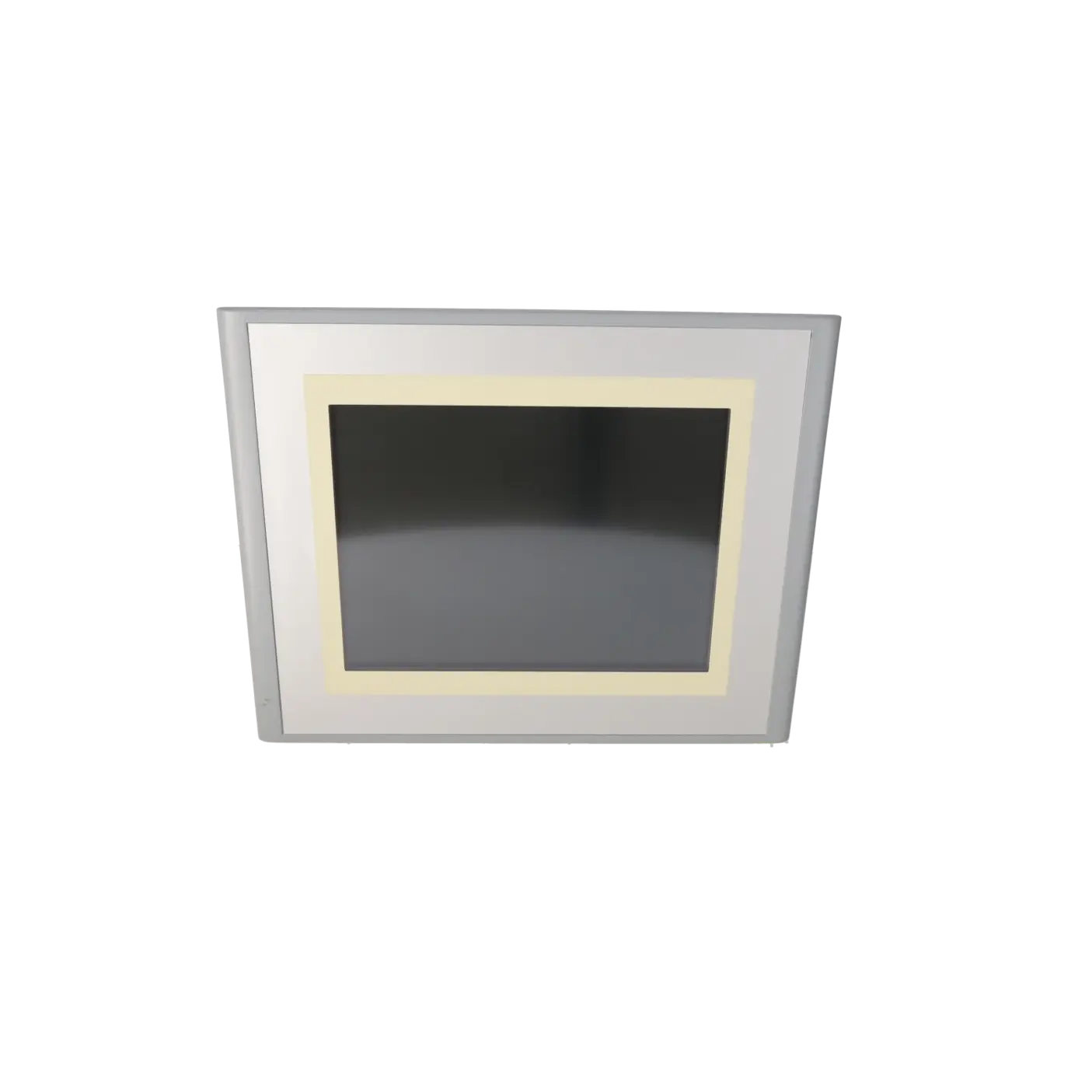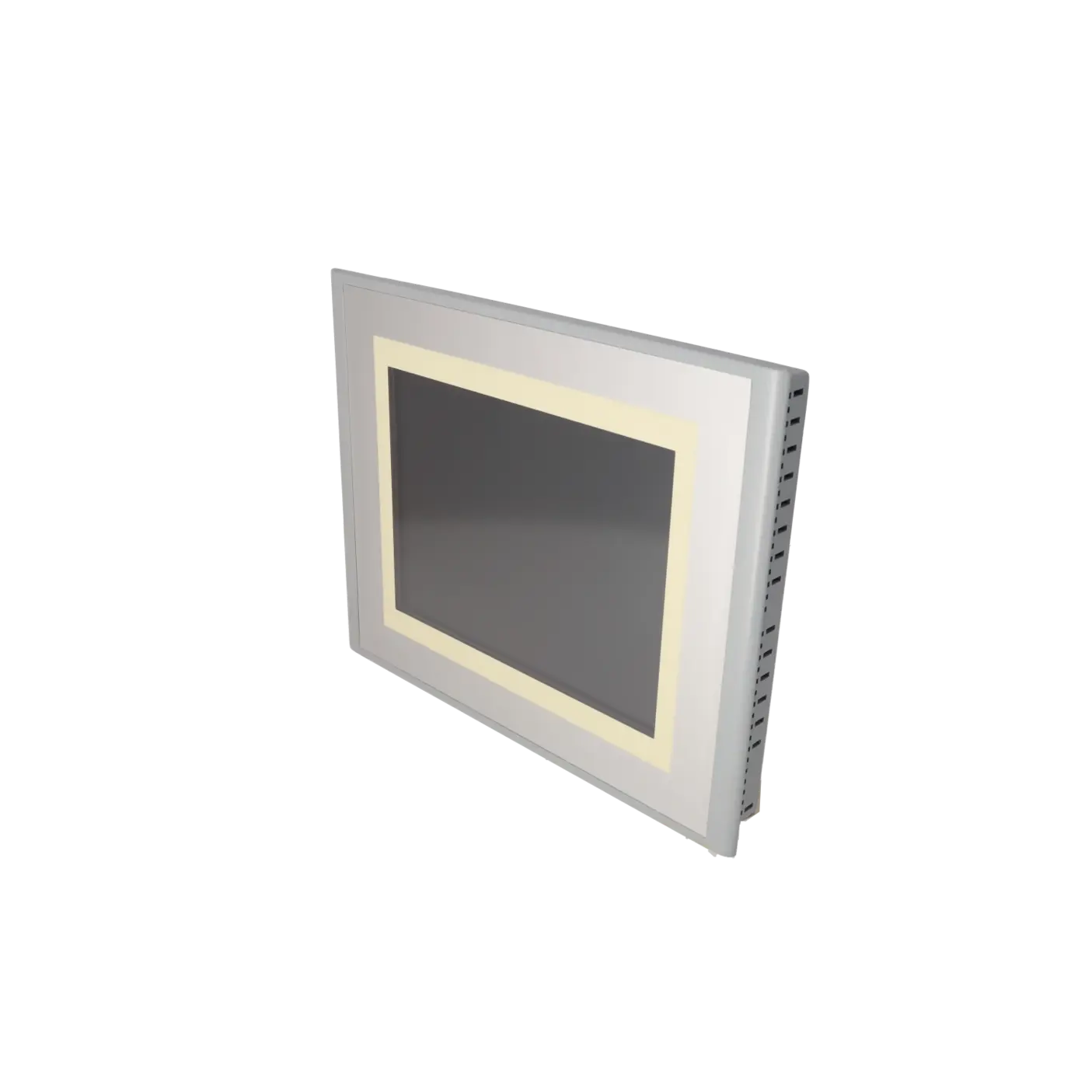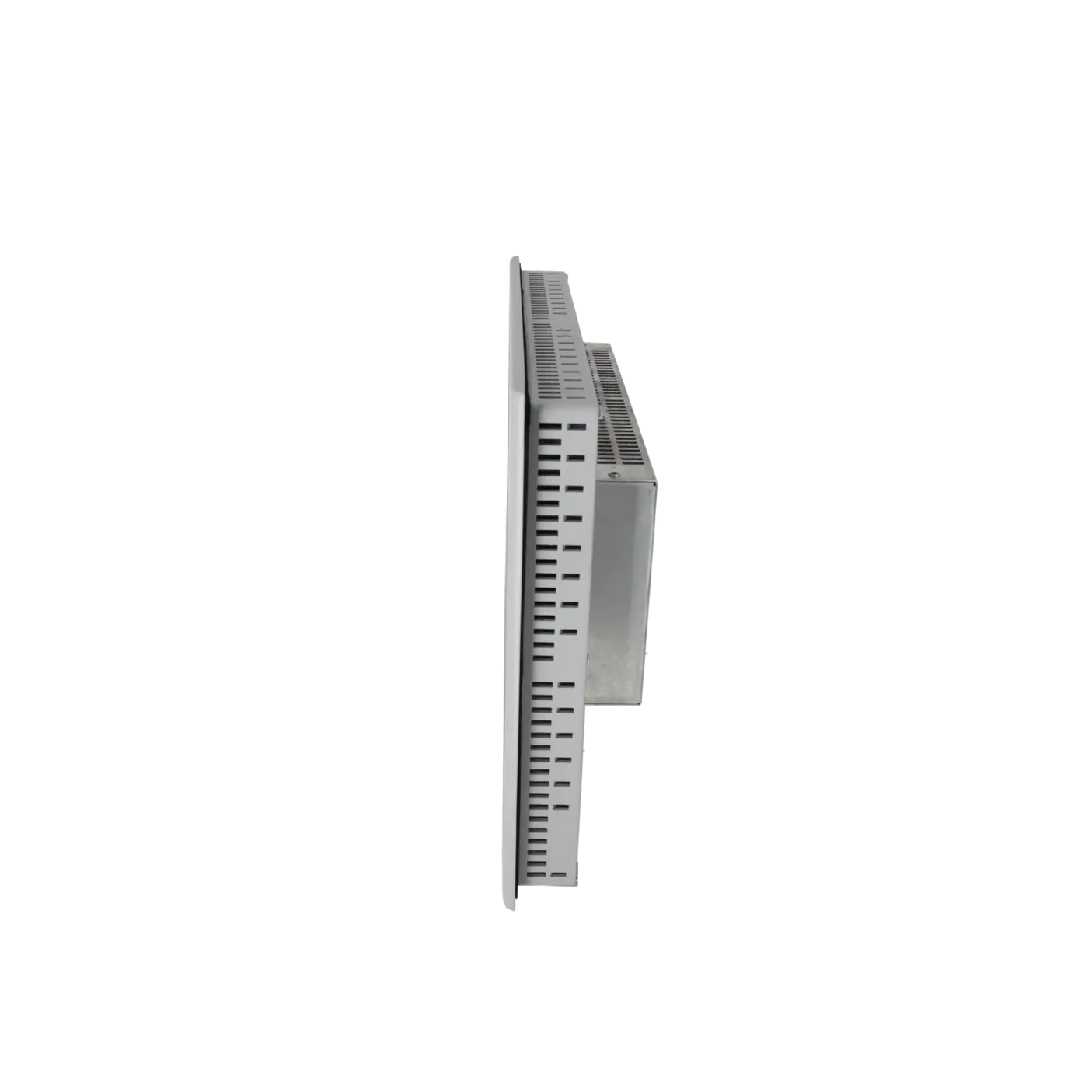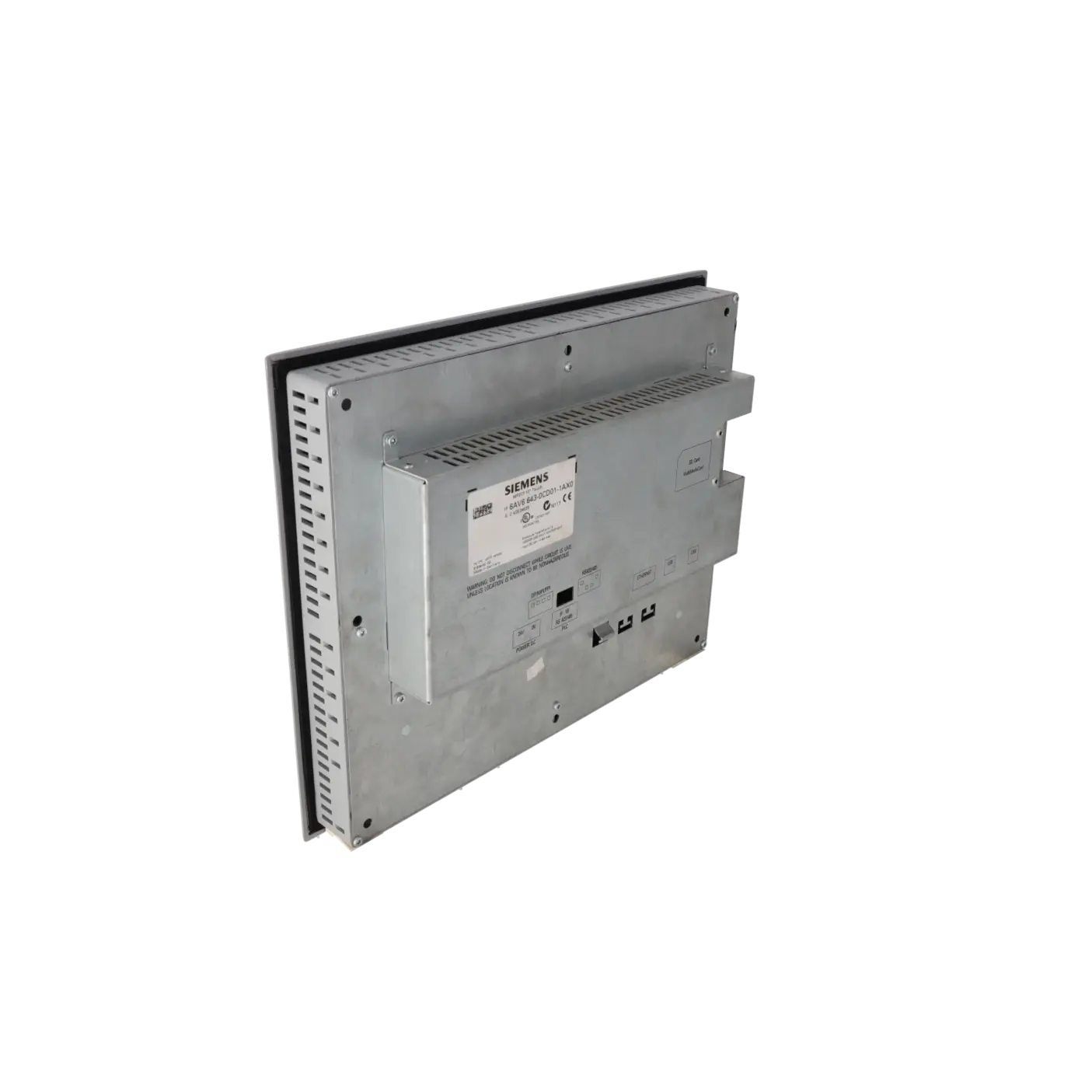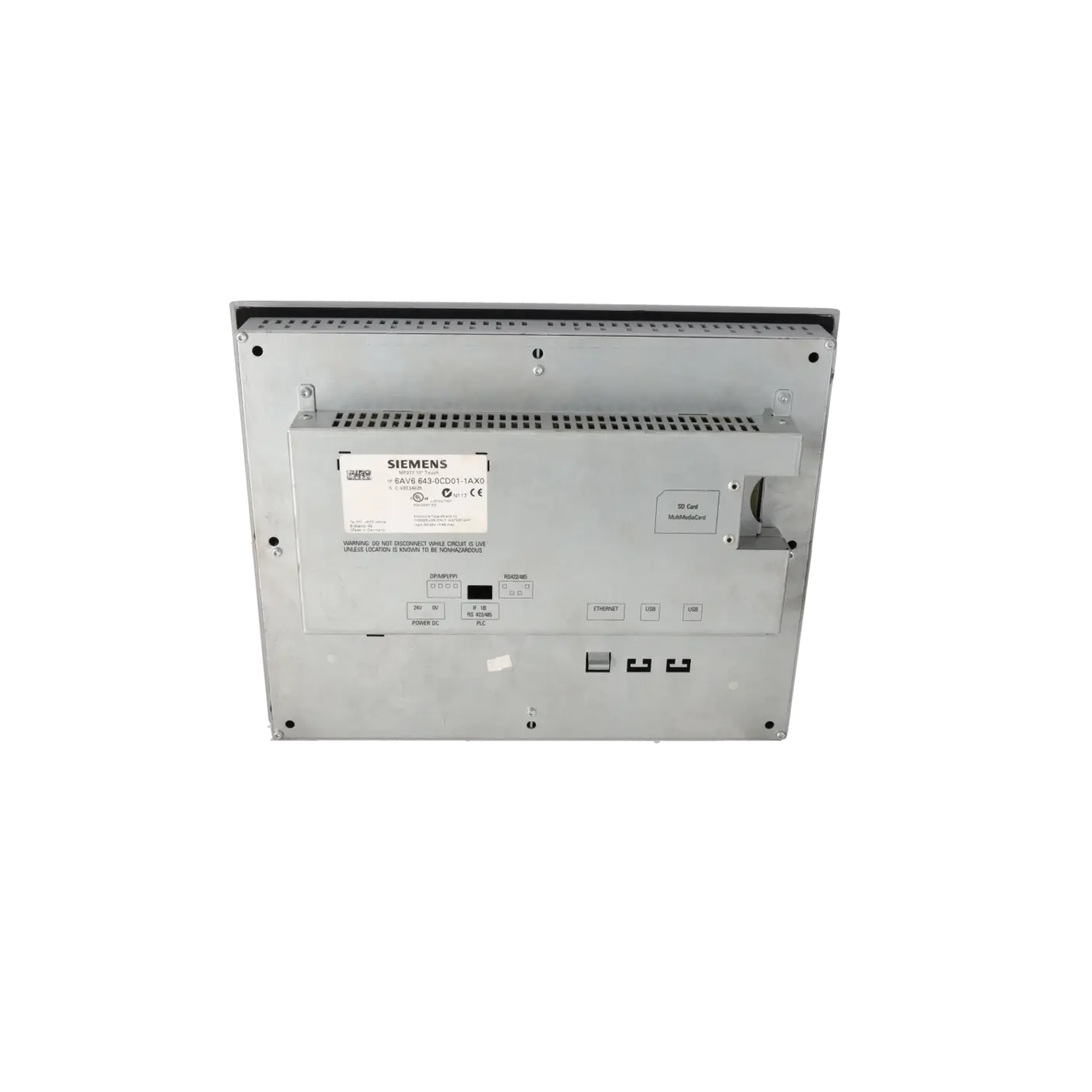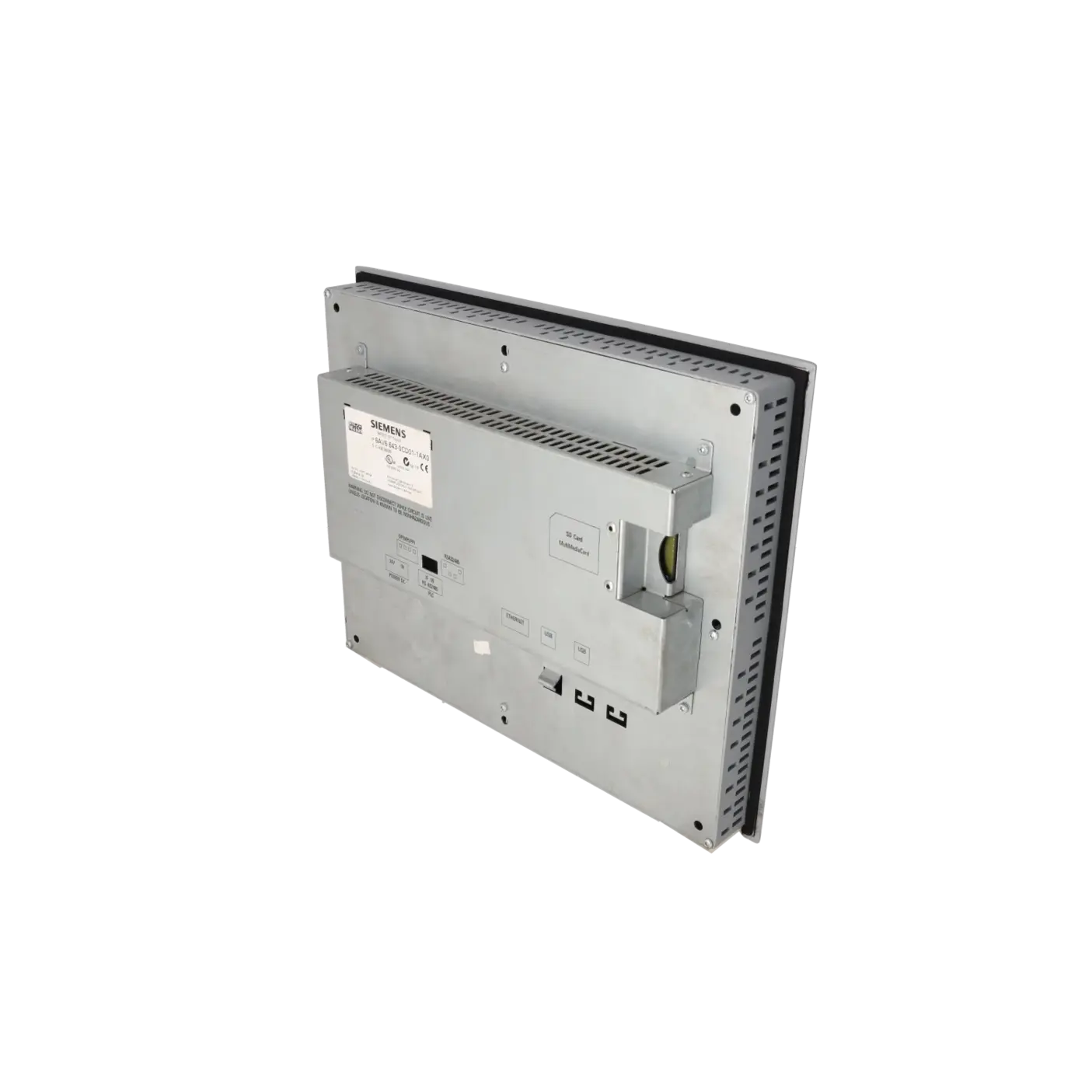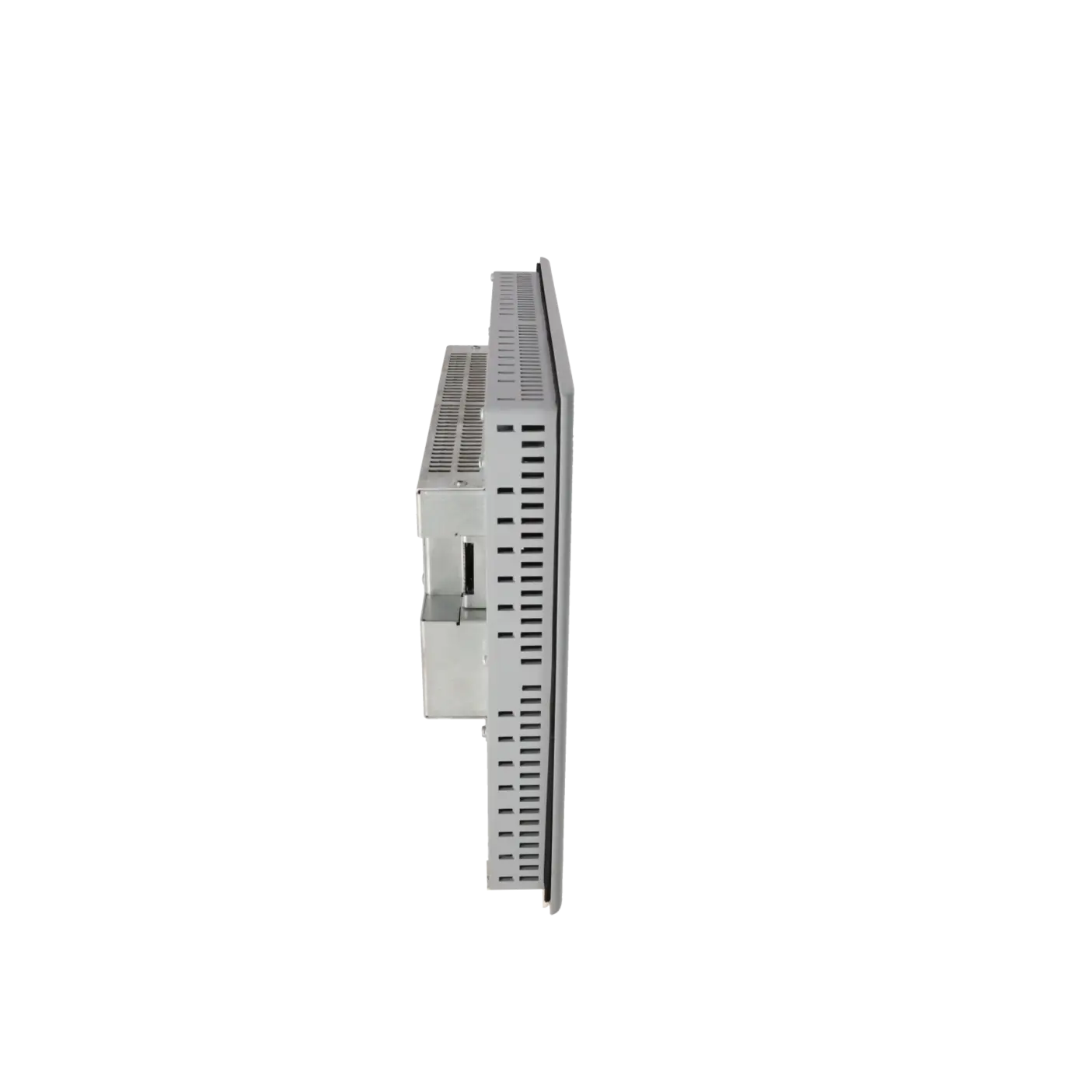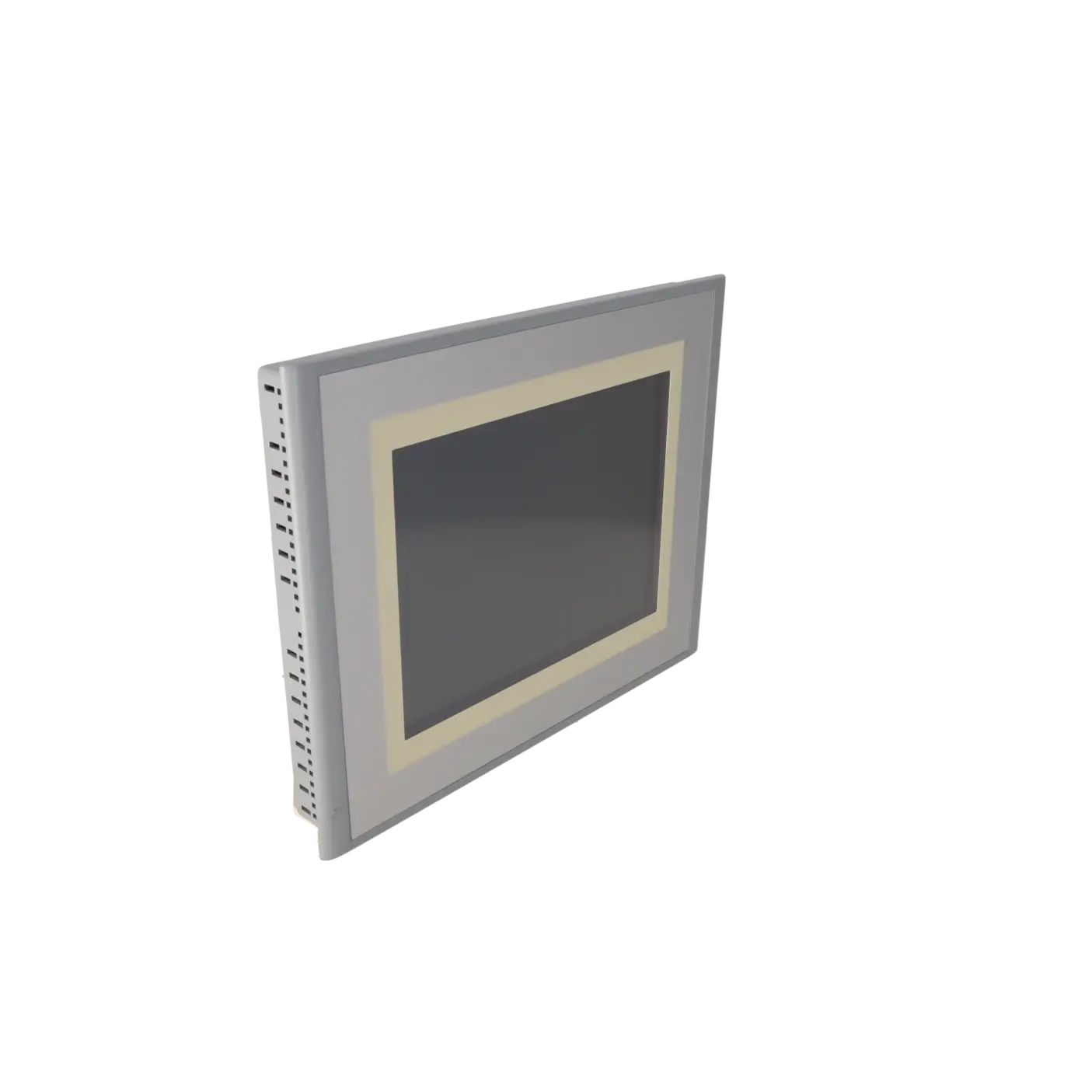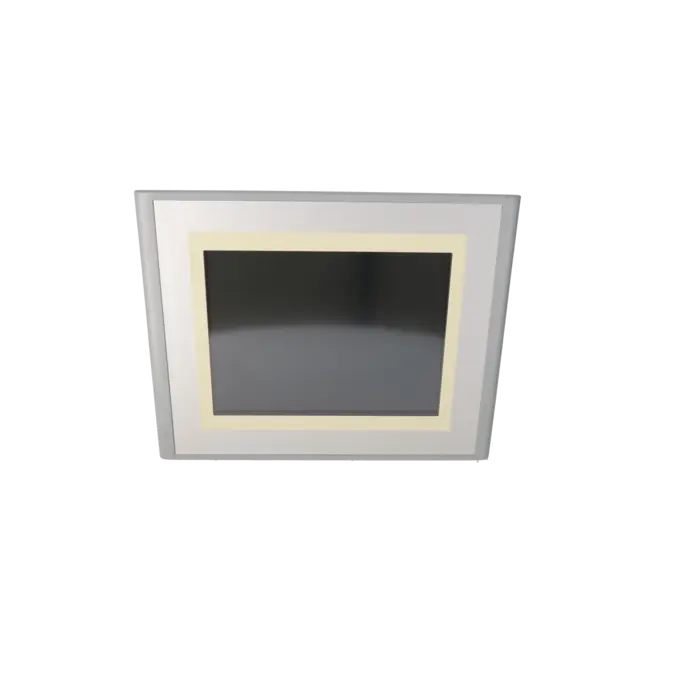
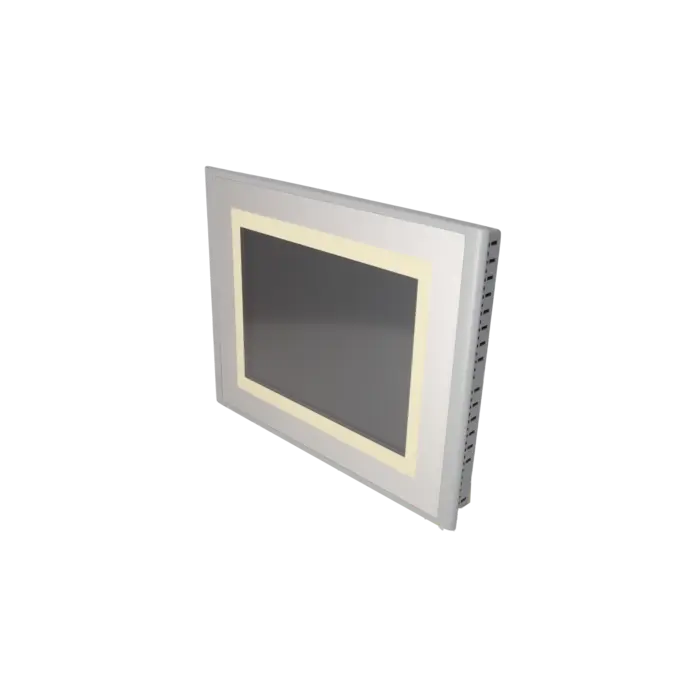
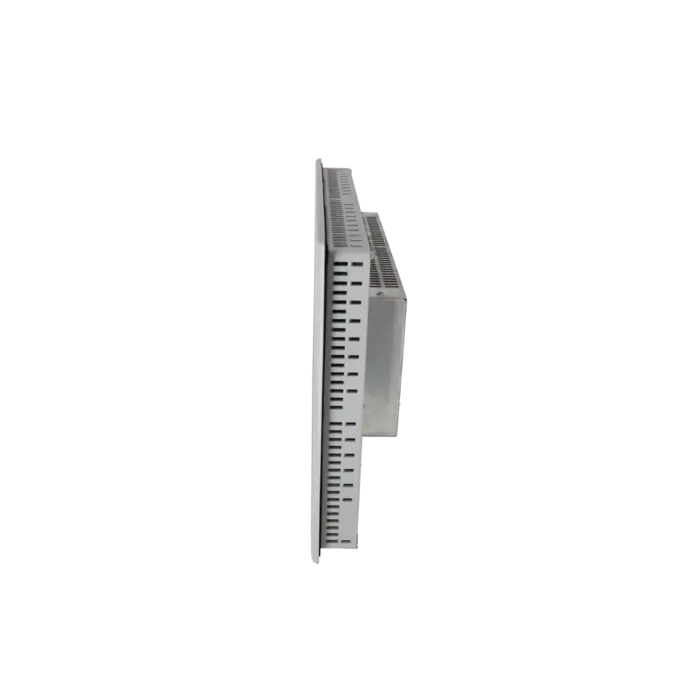
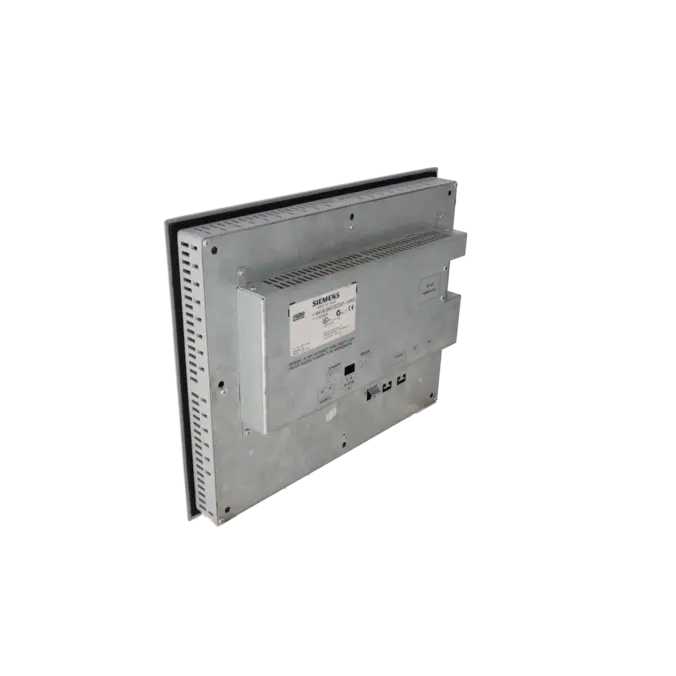
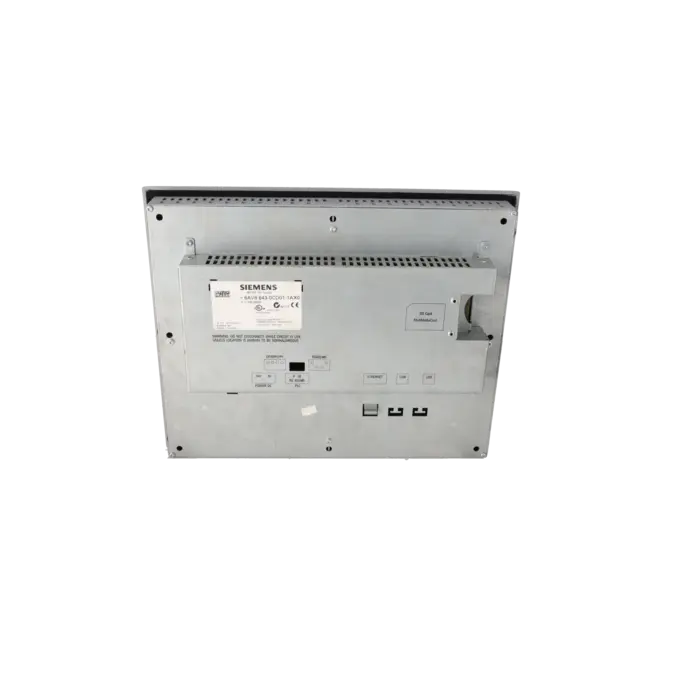
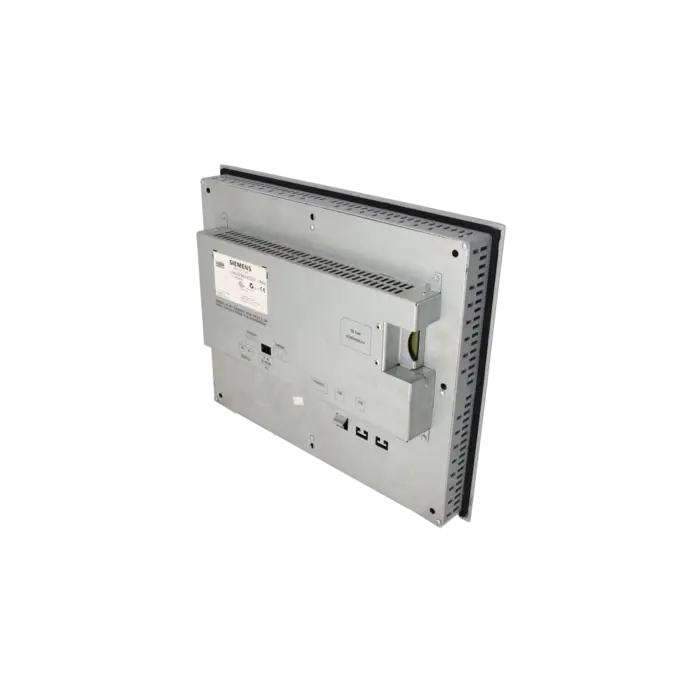
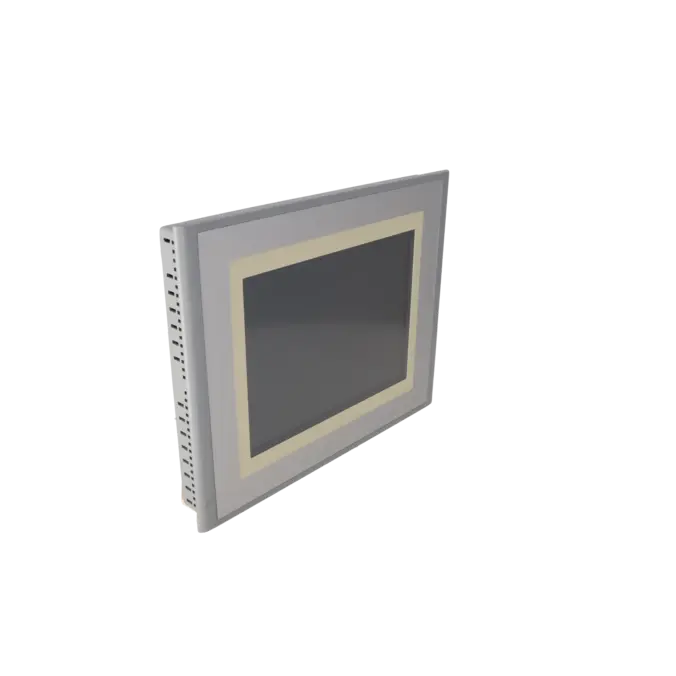
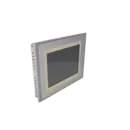
SIEMENS 6AV6643-0CD01-1AX0
-
SIEMENS | HMI | Touch Panels
- EICHLER-art.no.: K0170443
- EAN: 4025515074182
Product description
SIMATIC MP 277 10" TOUCH MULTI PANEL 10,4" TFT DISPLAY 6 MB USER MEMORY CONFIG: WINCC FLEXIBLE 2005 STANDARD SP1
Services for SIEMENS 6AV6643-0CD01-1AX0
SIEMENS |
6AV6643-0CD01-1AX0 –
additional product information
| Delivery information | |||
|---|---|---|---|
| Export identifier | AL: ECCN: | ||
| Net weight | 3.301 | ||
| Quantity | 1 Stück | ||
| Packaging quantity | 1 | ||
| Additional product information | |||
|---|---|---|---|
| Product status | EOP: 2008-01-01 | ||
| EAN | 4025515074182 | ||
| UPC | / | ||
| Static lot number | 85371098 | ||
| List indicator | / | ||
| Product group | 4357 | ||
| Country of origin | DE | ||
| Compliance with the substance restrictions according to RoHS directive | Since: / | ||
| Product classifications | Version | Classification | |
|---|---|---|---|
| eClass | 4 | / | |
| eClass | 5.1 | / | |
| eClass | 6.0 | / | |
| ETIM | 3 | / | |
| ETIM | 4 | / | |
| ETIM | 5 | / | |
What is 6AV6643-0CD01-1AX0 and where is it used?
6AV6643-0CD01-1AX0 is a SIEMENS SIMATIC MP 277 10" Touch Multi Panel from the HMI product range for machines and industrial automation systems. The device is designed for operation, visualisation, and diagnostics directly at the machine. Typical applications include production lines, packaging machinery, conveyor systems, machine tools, and existing installations using SIMATIC S5, S7-200, S7-300/400, or other connected controllers. For maintenance personnel, the panel is particularly relevant when an existing visualisation system must remain in operation and a replacement with similar form and functionality is required. For purchasing departments, the exact order number is important because it clearly defines the installation format, engineering environment, and communication interfaces.
Overview of the key technical specifications and what they mean
The panel features a 10.4-inch TFT colour display with a resolution of 640 × 480 pixels and 65,536 colours. This combination is typical for classic machine visualisations with clear process screens, alarm displays, and recipe pages. The resistive touchscreen is well suited to industrial environments, particularly where capacitive gesture operation is not required. The 6 MB application memory indicates that the device is intended for small to medium-sized WinCC flexible projects. Communication interfaces include 1 × RS422/RS485, 1 × Ethernet RJ45 10/100 Mbit/s, and 2 × USB host ports. The panel operates on 24 V DC, with IP65 protection at the front and IP20 at the rear. In practical terms, this means robust front-panel mounting, established communication options, and excellent suitability for retrofit projects and spare-parts applications.
Product status, life-cycle status, and obsolescence
For 6AV6643-0CD01-1AX0, the EICHLER database lists a product status of EOP (End of Production) with an effective date of 01 January 2008. This clearly identifies the device as belonging to an older HMI generation that is now approaching obsolescence. Siemens specifies a defined migration path for the MP 277 10" Touch family in its migration and status documentation, mapping the device to the TP1200 Comfort as its successor platform. Additional Siemens status information for later MP 277 variants confirms that the product family has been subject to discontinuation and life-cycle transition measures for many years. For operators, this means the primary focus today is generally no longer on new engineering projects for this platform, but rather on spare-parts supply, repair, migration, and risk reduction within existing installations.
Available EICHLER services and when they are relevant
For 6AV6643-0CD01-1AX0, EICHLER offers repair, exchange, used units, and new units on request. Repair is particularly relevant when an existing system must continue operating without mechanical modifications, project migration, or renewed approval procedures. EICHLER combines repair services with technical cleaning, preventive maintenance, comprehensive functional testing, and a minimum 24-month warranty. This is especially important for maintenance teams when touchscreen faults, display failures, or communication issues need to be resolved quickly. Exchange and used-unit solutions are valuable when downtime costs are high and rapid recommissioning is the priority. For purchasing departments, these options reduce procurement risks associated with obsolete assemblies, because operational continuity is no longer dependent solely on the availability of a brand-new replacement unit.
| Attribute | Value |
|---|---|
| Customer-specific configuration | Yes |
| Display | |
| Design of display | TFT |
| Screen diagonal | 10.4 in |
| Color display | Yes |
| Number of colors | 65 536 |
| Resolution (pixels) | |
| ● Horizontal image resolution | 640 Pixel |
| ● Vertical image resolution | 480 Pixel |
| Backlighting | |
| ● MTBF backlighting (at 25 °C) | 50 000 h |
| Control elements | |
| Control elements | Touch screen |
| Keyboard fonts | |
| ● Numeric keyboard | Yes |
| ● alphanumeric keyboard | Yes |
| ● hexadecimal keyboard | Yes |
| Touch operation | |
| ● Design as touch screen | Yes; analog, resistive |
| Connection type | |
| ● Type of connection for mouse/keyboard/barcode reader | USB / USB / USB |
| Installation type/mounting | |
| Mounting position | vertical |
| Processor | |
| Processor type | ARM |
| Memory | |
| Type of memory | Flash / RAM |
| Memory available for user data | 6 Mbyte |
| Capacity of main memory, max. | 128 Mbyte |
| Time of day | |
| Clock | |
| ● Type | Hardware clock, battery backup, synchronizable |
| ● retentive | Yes |
| ● synchronizable | Yes |
| Interfaces | |
| Interfaces/bus type | 1x RS 422, 1x RS 485, 1x Ethernet (RJ45) (max. 12 Mbit/s) |
| Number of industrial Ethernet interfaces | 1 |
| Number of RS 485 interfaces | 1 |
| Number of RS 422 interfaces | 1 |
| Number of USB interfaces | 2; Up to 1 GB respectively |
| Multimedia card/SD card slot | 1x Multimedia Card slot, up to 128 MB |
| Degree and class of protection | |
| IP (at the front) | IP65 |
| IP (rear) | IP20 |
| Standards, approvals, certificates | |
| Certificate of suitability | CE, UL |
| Ambient conditions | |
| Ambient temperature during operation | |
| ● min. | 0 °C |
| ● max. | 50 °C |
| Ambient temperature during storage/transportation | |
| ● min. | -20 °C |
| ● max. | 60 °C |
| Relative humidity | |
| ● Operation, max. | 80 % |
| Operating systems | |
| pre-installed operating system | Windows CE |
| Configuration | |
| Message indicator | Yes |
| Alarm system (incl. buffer and acknowledgment) | Yes |
| Process value display (output) | Yes |
| Process value default (input) possible | Yes |
| Recipe management | Yes |
| Configuration software | |
| ● Configuration tool | WinCC flexible Standard Version 2005 SP1 or higher (to be ordered separately) |
| Languages | |
| Online languages | |
| ● Number of online/runtime languages | 16 |
| Project languages | |
| ● Languages per project | 32 |
| Functionality under WinCC (TIA Portal) | |
| Libraries | Yes |
| Task planner | Yes |
| Help system | Yes |
| ● Number of characters per info text | 80 |
| Message system | |
| ● Number of alarm classes | 32 |
| ● Number of messages | 4 000 |
| ● Bit messages | Yes |
| — Number of bit messages | 4 000 |
| ● Analog messages | Yes |
| — Number of analog messages | 4 000 |
| ● System messages HMI | Yes |
| ● System messages PLC | Yes |
| ● System messages, other (SIMATIC S7, Sinumerik, Simotion, etc.) | Yes |
| ● Lines | 1 |
| ● Number of characters per message | 80 |
| ● Number of process values per message | 8 |
| ● Acknowledgment groups | Yes |
| ● Message indicator | Yes |
| ● First/last value | Yes |
| Recipe management | |
| ● Number of recipes | 300 |
| ● Data records per recipe | 500 |
| ● Entries per data record | 1 000 |
| ● Recipe memory | 64 KB integrated Flash, expandable |
| Variables | |
| ● Number of variables per device | 2 048 |
| ● Number of variables per screen | 200 |
| ● Number of variables | 1 000 |
| ● Type Date & Time | 2 048 |
| ● Limit values | Yes |
| ● Multiplexing | Yes |
| ● Structures | Yes |
| Images | |
| ● Number of configurable images | 500 |
| ● Permanent window/default | Yes |
| ● Start screen configurable | Yes |
| ● Image selection by PLC | Yes |
| ● Image number in the PLC | Yes |
| Image objects | |
| ● Text objects | 10 000 text elements |
| ● Number of I/O fields per image | 200 |
| ● Number of date/time fields | 200 |
| ● Return | Yes |
| ● Graphics object | Bit maps, icons, vector graphics |
| — Icons | 1 000 |
| Complex image objects | |
| ● Status/control | With SIMATIC S7 |
| ● dynamic objects | Diagrams, bar graphs, sliders, analog display, invisible buttons |
| — Number of objects per project | 1 000 |
| — Number of curve diagrams per image | 10 |
| ● Methods | Trend / profile |
| ● Bar graphs | |
| — Number of bars per chart | 10 |
| ● Sliders | |
| — Number of slides per image | 10 |
| ● Pointer instruments | |
| — Number of analog indicators per image | 10 |
| ● Limit value lines | Yes |
| ● Number of alphanumerical fields | 300 |
| — alphanumeric fields per image | 200 |
| ● Number of numerical fields | 2 048 |
| — numerical fields per image | 200 |
| ● Number of password fields | 2 048 |
| ● Number of visible switches per project | 200 |
| — visible switches per image | 200 |
| — hidden switches per image | 200 |
| ● Number of status switches per project | 200 |
| — Number of status switches per image | 200 |
| ● Number of selector switches per project | 200 |
| — Selector switches per image | 200 |
| ● Number of decade switches per project | 200 |
| — Decade switches per image | 200 |
| ● Number of signal lamps per project | 200 |
| — Signal lamps per image | 200 |
| Attributes for dynamic objects | |
| ● Color change | Yes |
| ● X/Y movement | Yes |
| ● Hide | Yes |
| Lists | |
| ● Number of text lists per project | 500 |
| ● Number of text lists per image | 200 |
| ● Number of entries per text list | 256 |
| ● Number of graphics lists per project | 400 |
| ● Number of graphic lists per image | 200 |
| ● Number of entries per graphics list | 256 |
| Archiving | |
| ● Number of archives per device | 20 |
| ● Number of measuring points per project | 20 |
| ● Number of entries per archive | 10 000 |
| ● Message archive | Yes |
| ● Process value archive | Yes |
| ● Archiving methods | |
| — Sequential archive | Yes |
| — Short-term archive | Yes |
| ● Memory location | SD and MultiMediaCard |
| ● Data storage format | |
| — CSV | Yes |
| ● Online evaluation | |
| — using trend curves | Yes |
| Filters | |
| ● cyclic | Yes |
| ● Tolerance | Yes |
| ● Change | Yes |
| Security | |
| ● Number of user groups | 50 |
| ● Number of user rights | 32 |
| ● Password export/import | Yes |
| Logging through printer | |
| ● Recording/Printing | Alarms, report (shift report), color print, hardcopy |
| Transfer (upload/download) | |
| ● Transfer of configuration | MPI/PROFIBUS DP, USB, Ethernet, automatic transfer recognition |
| Process coupling | |
| ● Connection to controller | S5, S7-200, S7-300/400, TI 505, SINUMERIK, SIMOTION, Allen Bradley (DF1), Allen Bradley (DF485), Mitsubishi (FX), OMRON (LINK/Multilink), Modicon (Modbus) see chapter "System interfaces" |
| ● S7-200 | Yes |
| ● S7-300/400 | Yes |
| ● S5 | Yes |
| ● TI 505 | Yes |
| ● Allen Bradley (DF1) | Yes |
| ● Allen Bradley (DF485) | Yes |
| ● Mitsubishi (FX) | Yes |
| ● Mitsubishi (MP4) | Yes |
| ● Telemecanique (Uni-Telway) | Yes |
| ● OMRON (LINK/Multilink) | Yes |
| ● Modicon (Modbus) | Yes |
| ● GE-Fanuc (SNP) | Yes |
| Functions | |
| ● TAB sequence | Yes |
| ● Calculating functions | Yes |
| ● Animate | Yes |
| Service tools/configuration aids | |
| ● Clean screen | Yes |
| ● Touch calibration | Yes |
| ● Backup/Restore manually | Yes |
| ● Simulation | Yes |
| ● Device switchover | Yes |
| ● Delta transfer | Yes |
| Expandability/openness | |
| ● Open Platform Program | Yes |
| Peripherals/Options | |
| Peripherals | Printer, barcode reader |
| SIMATIC HMI MM memory card: Multi Media Card | Yes |
| SIMATIC HMI SD memory card: Secure Digital memory card | Yes |
| USB memory | Yes |
| Additional software components loadable | Yes |
| Dimensions | |
| Width of the housing front | 325 mm |
| Height of housing front | 263 mm |
| Mounting cutout, width | 310 mm |
| Mounting cutout, height | 248 mm |
| Overall depth | 61 mm |
| Weights | |
| Weight (without packaging) | 2.65 kg |
| Fault description | Possible solution |
|---|---|
| Why do I receive the message “wrong OS version” or “update operating system” when transferring to the MP 277? | This message typically appears when the installed OS version does not match the WinCC flexible or TIA environment being used. First, verify that the panel itself, and not the CPU, has been selected as the transfer target. Then switch the panel to the appropriate Transfer mode and perform an OS update using the corresponding engineering version or ProSave. Before updating, back up recipes, user administration data, and licences, as the operating system update will overwrite the data stored on the device. |
| Why can I ping the MP 277, but the project transfer still cannot establish a connection? | A successful ping alone is not sufficient for an HMI transfer. The protocol, interface, IP addressing, and transfer parameters must match on both the engineering PC and the panel. The panel must be in Transfer mode, and the download settings in WinCC must correspond to the transfer settings configured on the operator panel. In addition, verify that the configured device version matches the installed OS version. Only when all these parameters are aligned can a reliable transfer via Ethernet or USB be expected. |
| Why does the touchscreen respond inaccurately or refuse to accept calibration? | The MP 277 allows touchscreen recalibration through the Control Panel. During the procedure, the calibration targets must be touched precisely, and the new calibration must be confirmed within 30 seconds; otherwise, the device discards the changes. If the calibration process repeatedly starts over from the beginning, this often indicates either an ongoing software issue or a fault within the touch system itself. In that case, repeat the calibration procedure carefully and, if the problem persists, consider performing an OS update or arranging technical repair of the touchscreen system. |
| Why does my MP 277 start only with a white screen or without Runtime? | A white screen or startup without Runtime frequently indicates a problem with the operating system, flash memory contents, or hardware. Siemens states that panels without a functioning operating system can generally only be recovered using Reset to factory settings or an OS update. During troubleshooting, first check the power supply, startup behaviour, and whether an OS update can be performed. If the issue remains after these steps, repair is the logical next action, as display faults, memory failures, or mainboard defects may also be responsible. |
Is 6AV6643-0CD01-1AX0 discontinued?
Yes. An EOP (End of Production) status is recorded for this part number, and the MP 277 10" Touch family clearly belongs to an older generation of SIMATIC HMI devices. Siemens now references this family primarily in the context of migration, successor products, and lifecycle status changes, rather than as a current HMI platform for new installations. For operators, this means that long-term availability is now achieved through repair, exchange services, refurbished units, and planned migration strategies, rather than through regular new-device procurement.
Which successor does Siemens recommend for the MP 277 10" Touch?
Siemens assigns the MP 277 10" Touch to the TP1200 Comfort in its official migration guide. The WinCC migration documentation also recommends migration from MP 277 Touch projects to a Comfort Panel, specifically the TP1200 Comfort. This is particularly relevant for decision-makers and maintenance teams when planning not only a repair, but also a platform upgrade with a future-oriented TIA Portal strategy.
Can I still use an MP 277 10" Touch with TIA Portal?
With limitations. Siemens provides HSP106 for the MP 277 in TIA Portal V13 Update 1. However, from TIA Portal V15 onwards, older HMI devices of this class are no longer directly supported. For existing projects, Siemens therefore recommends a migration path via V13/V14, followed by a device conversion to a Comfort Panel. For operators of legacy systems, this helps determine whether a repair is sufficient or whether a planned migration is the more economical long-term solution.
Which interfaces and connection data are particularly important when replacing the panel?
When replacing the device, special attention should be paid to the display size, mounting conditions, 24 V DC power supply, and the existing communication interfaces. The MP 277 10" Touch provides RS422/RS485, 10/100 Mbit/s Ethernet (RJ45), and 2 USB host interfaces. The front protection rating is IP65, making it suitable for standard machine-front and control-cabinet installations. These specifications are critical during the spare-parts selection process because they determine whether the existing project, wiring, and mechanical installation can remain unchanged.
Is it possible to upload the project back from the panel?
Not in every case. Siemens states that a project upload is only possible if the compressed project file was transferred to the panel during the original download process. In addition, an external memory card must be installed in the device. For maintenance and purchasing departments, this is an important consideration before repair, replacement, or migration. Without these prerequisites, work can generally only continue using the original engineering project files rather than a complete project recovered directly from the panel.
What should be backed up before an OS update, repair, or replacement?
Above all, recipes, user administration data, and licences should be secured. Siemens explicitly notes that an operating system update deletes data stored on the panel. For this reason, a complete backup should always be performed before restoring factory settings, reinstalling the operating system, or sending the device for advanced repair. In production environments with limited downtime windows, this is particularly important because technical recovery alone is not enough—the rapid return to productive operation often depends on the availability of these backed-up data sets.