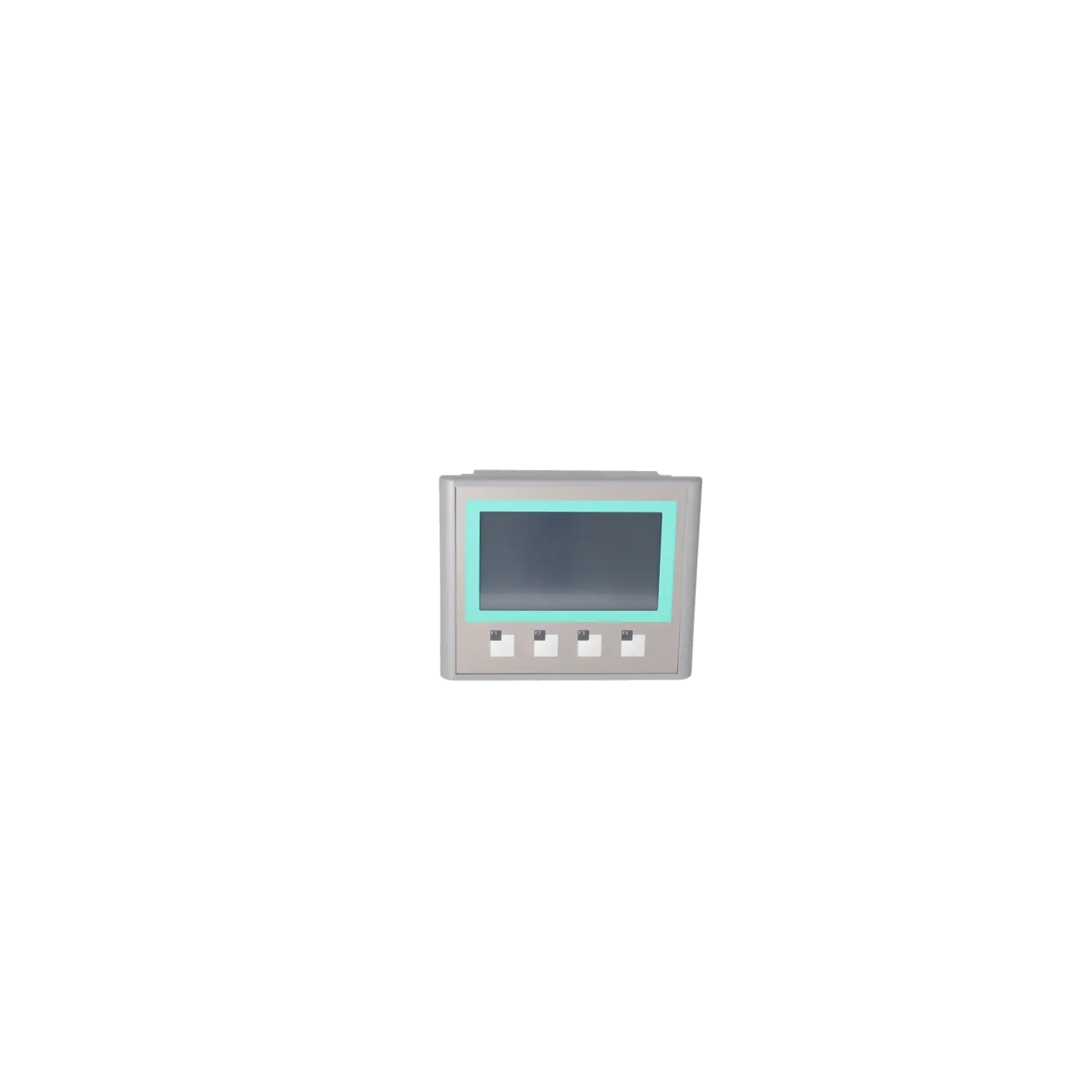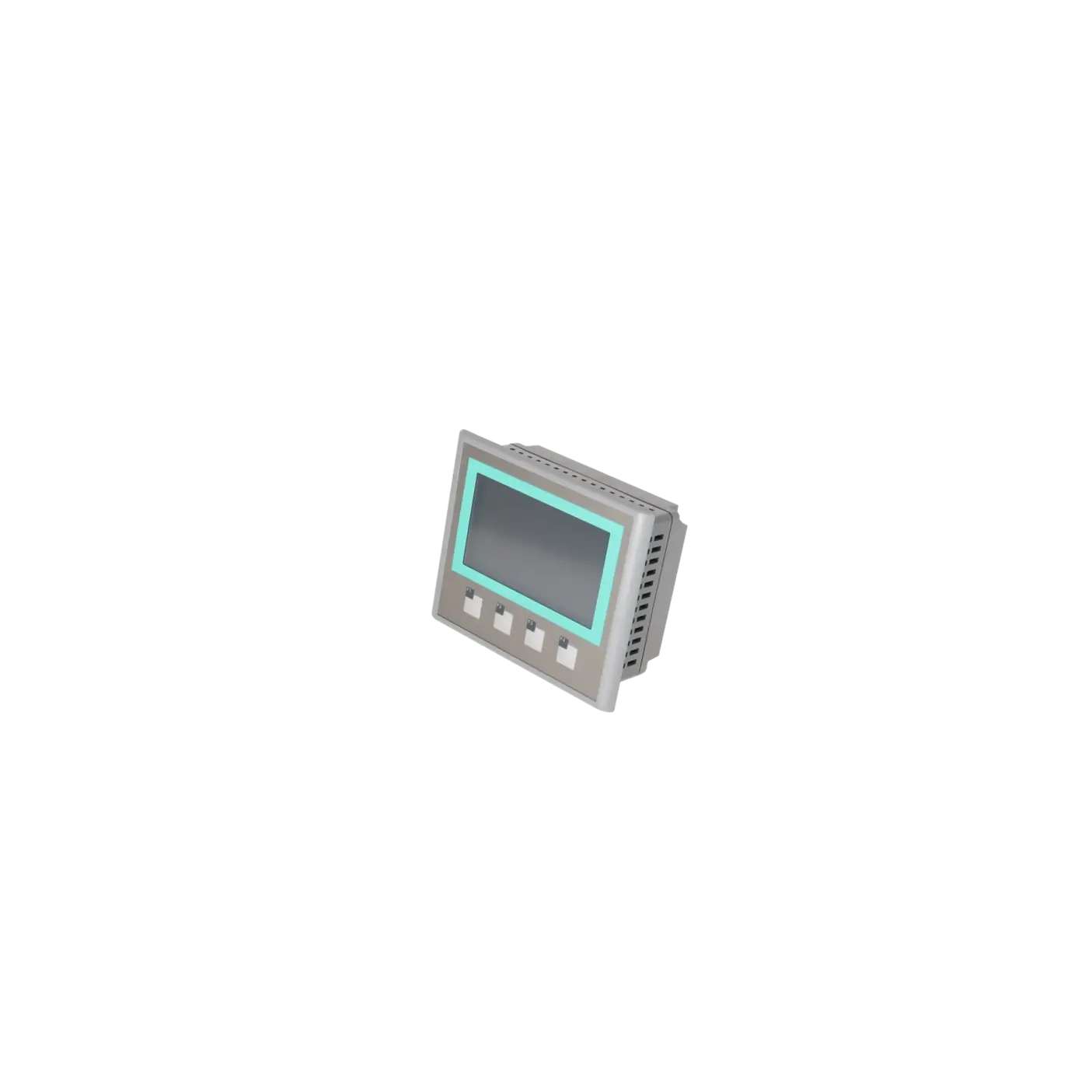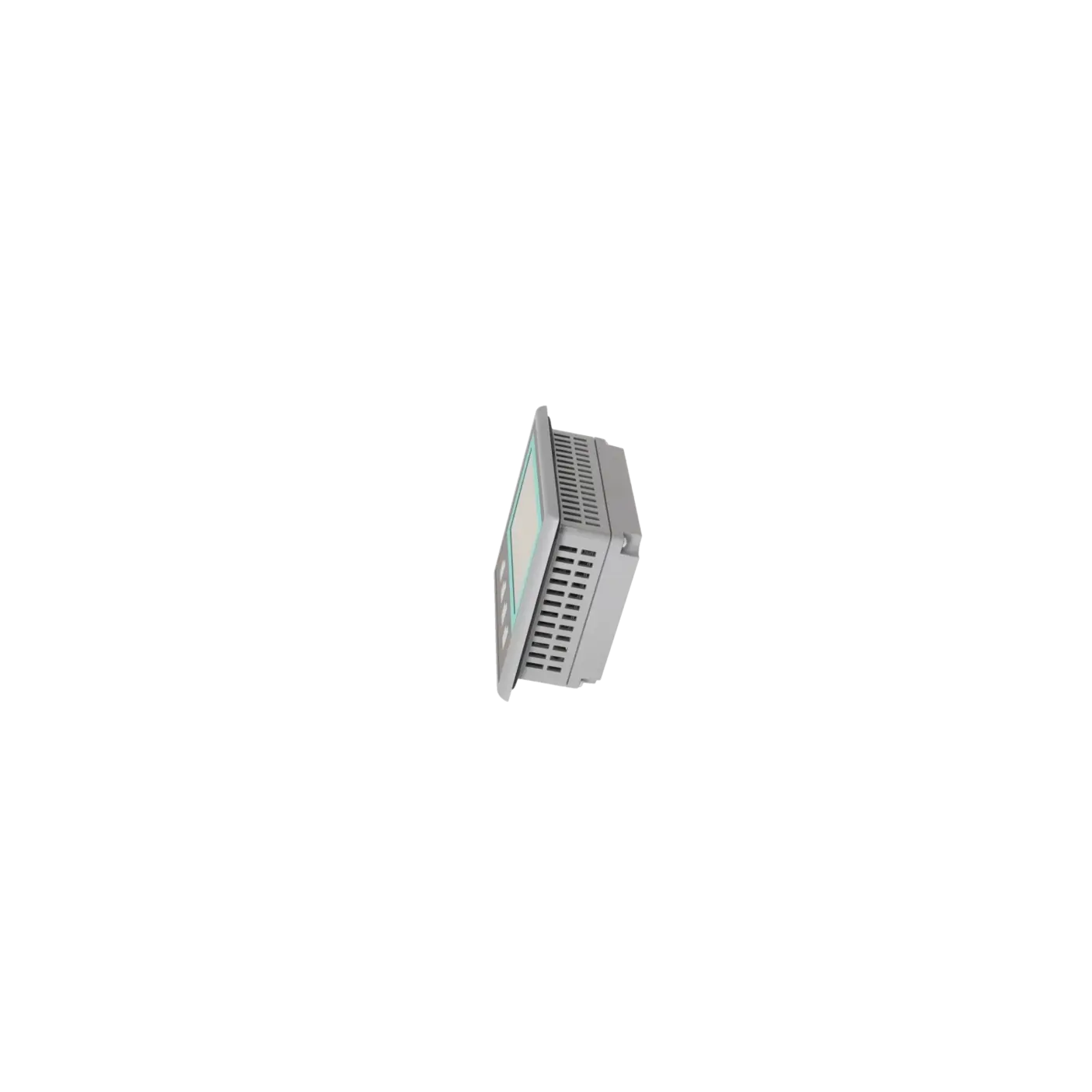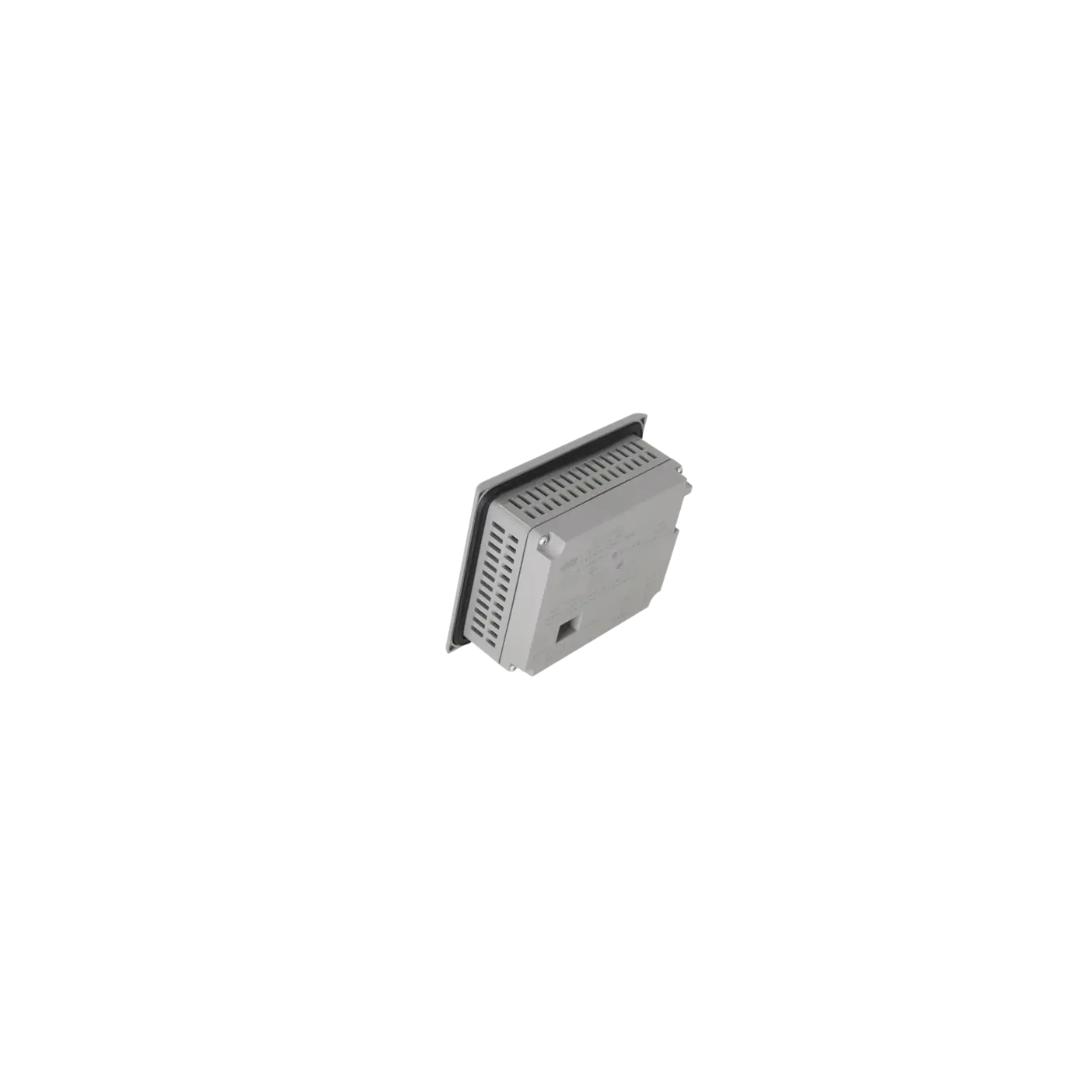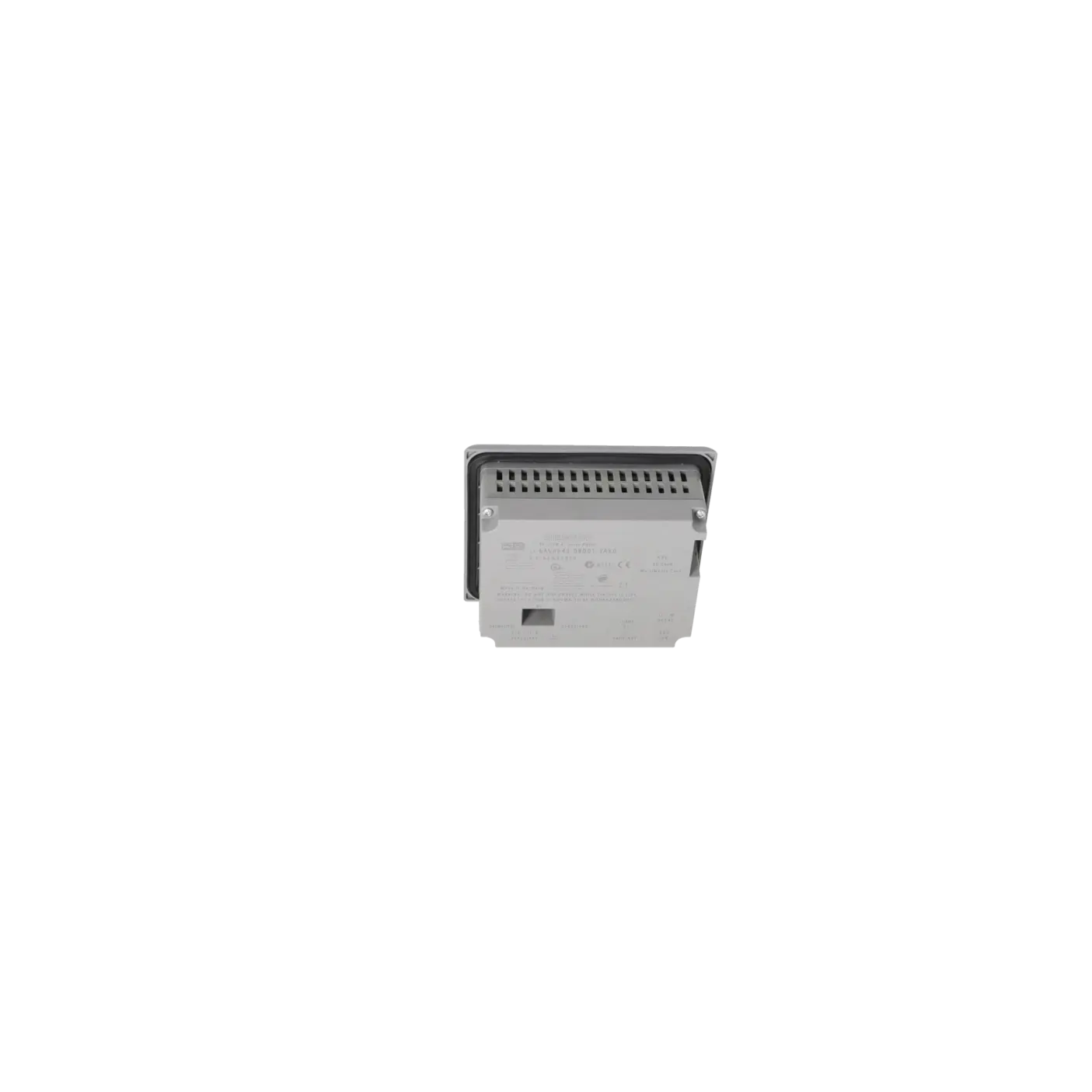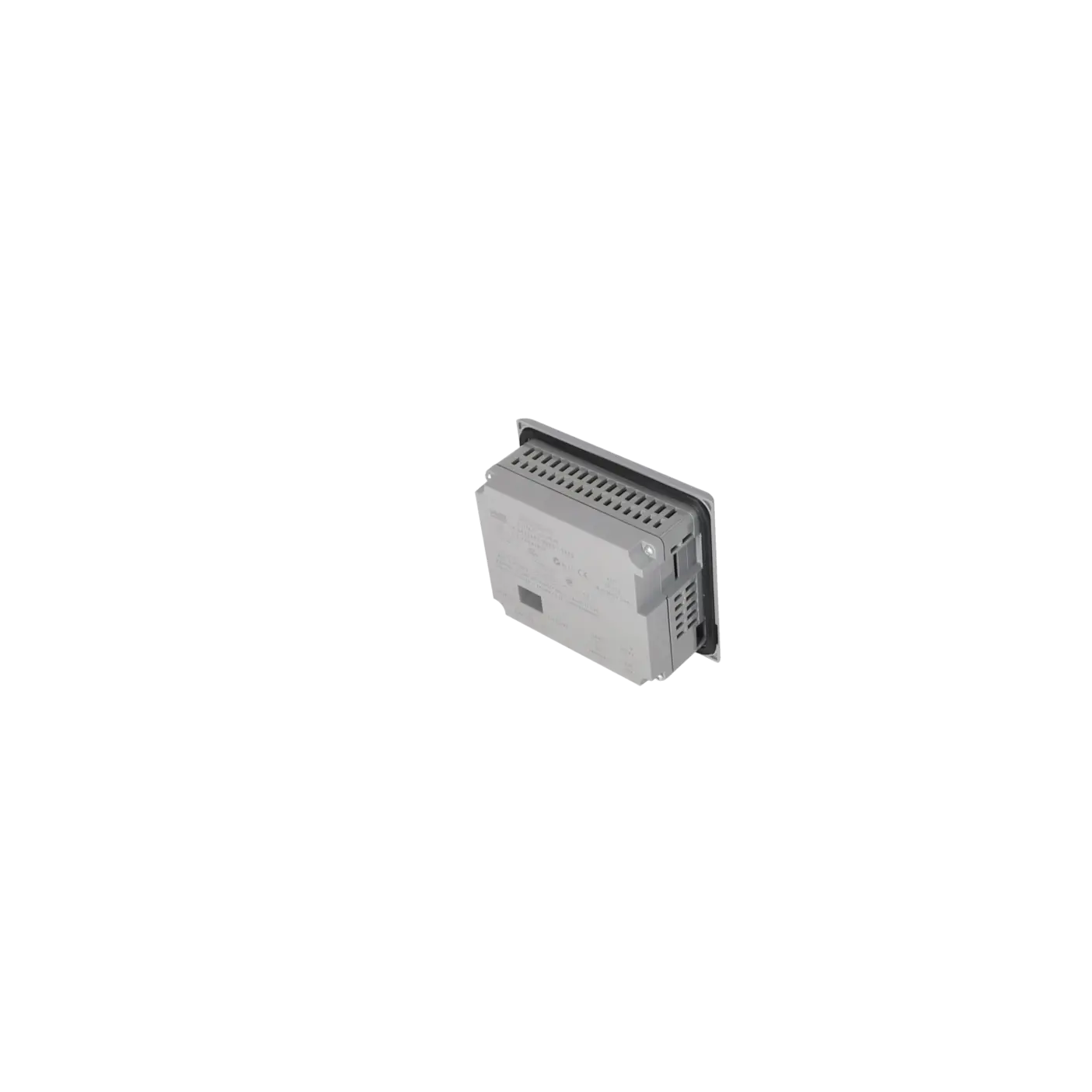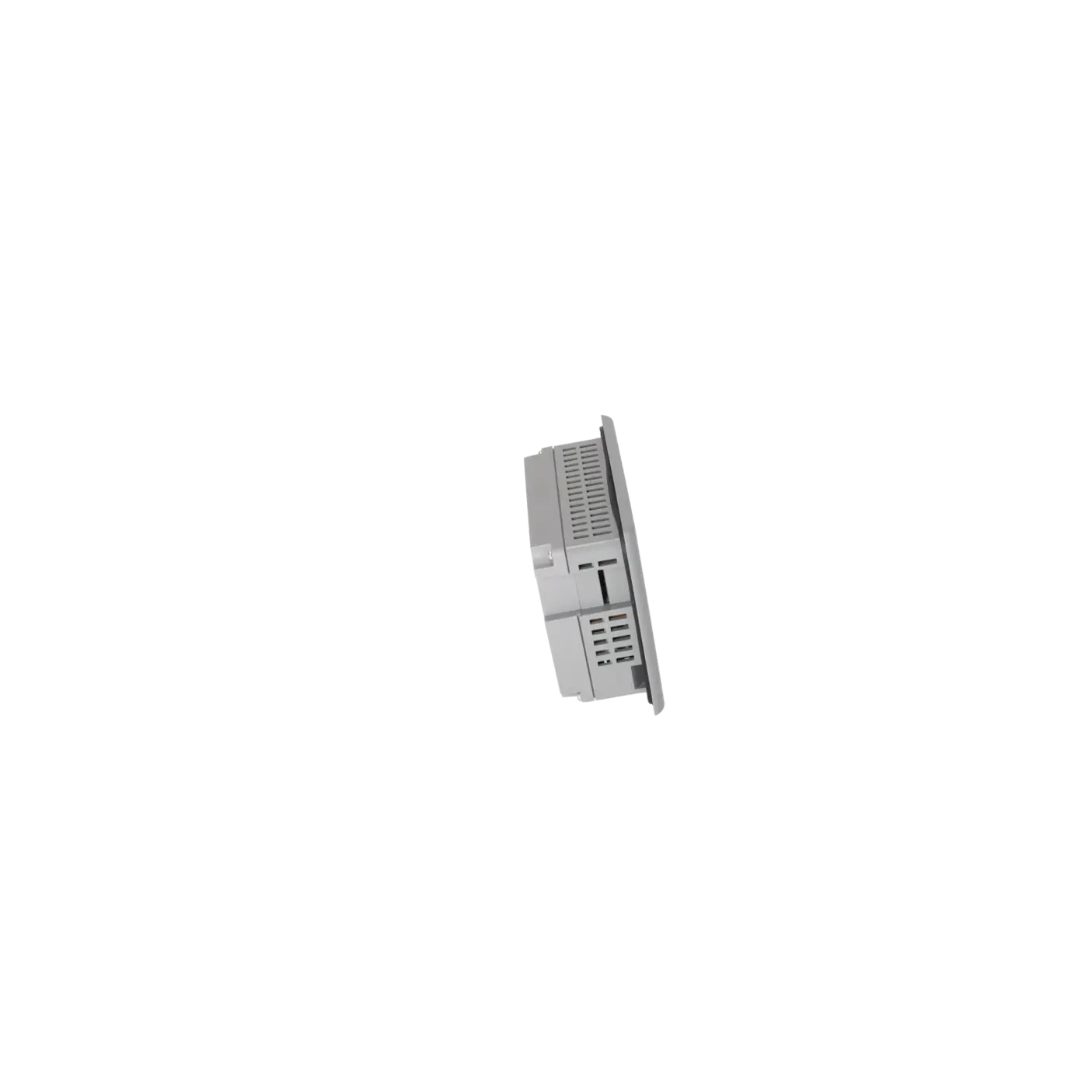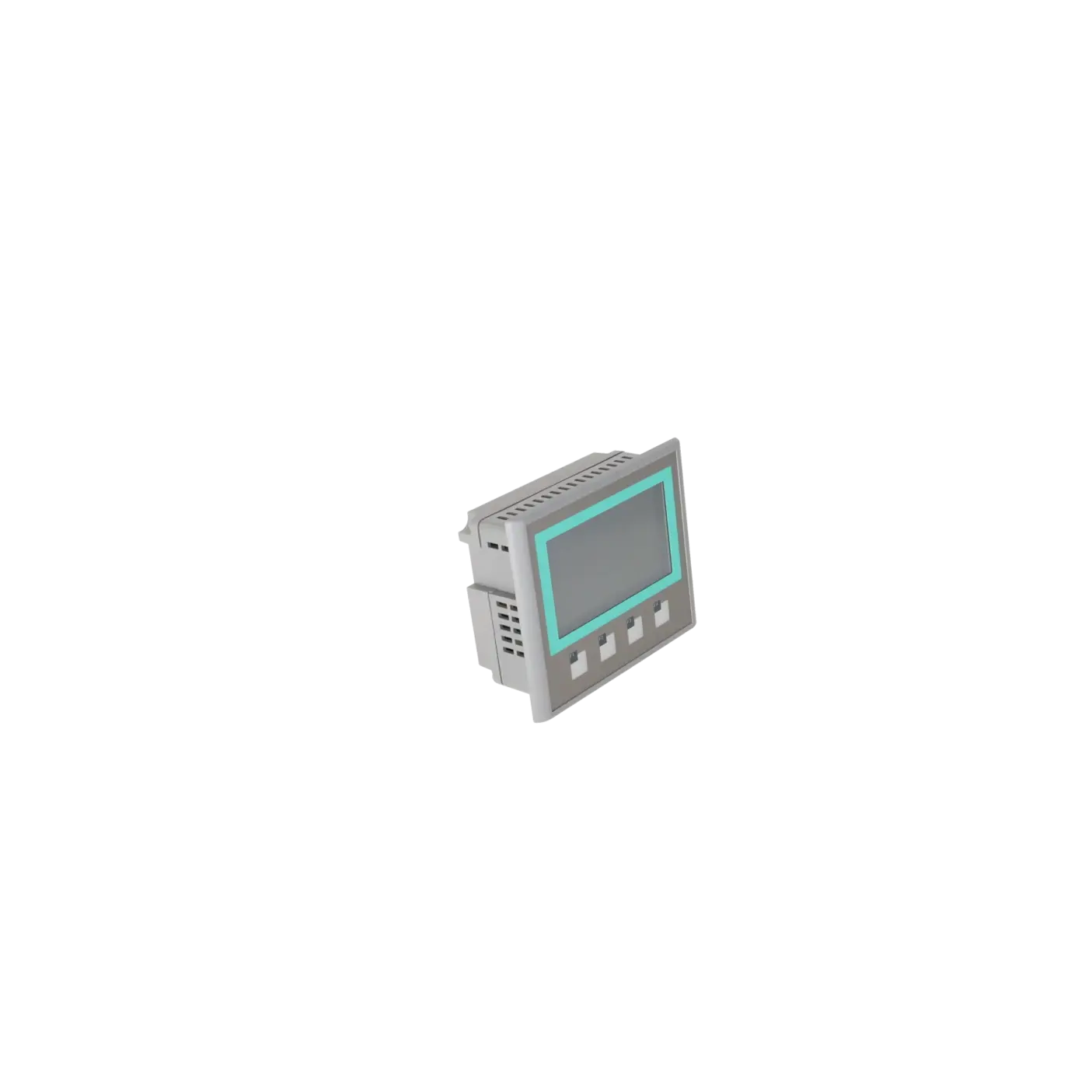
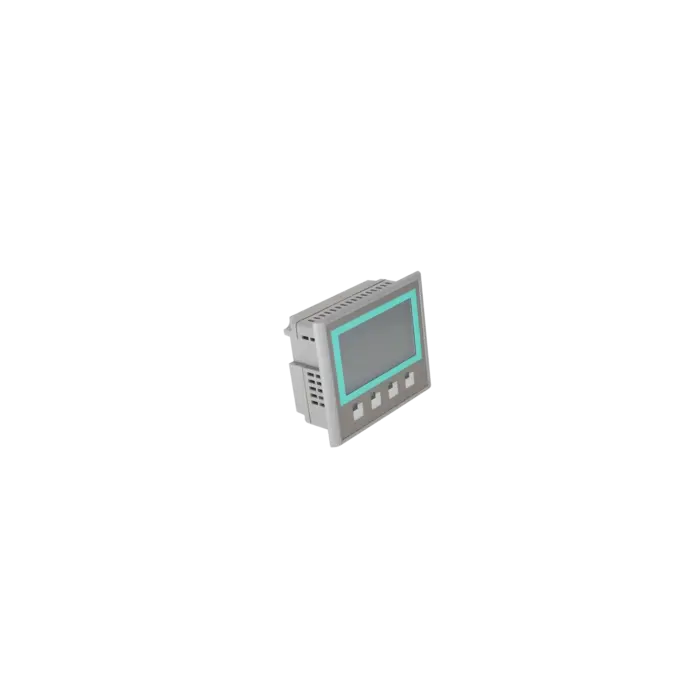




SIEMENS 6AV6642-0BD01-3AX0
-
SIEMENS | HMI | Touch Panels
- EICHLER-art.no.: K0219215
- EAN: 4025515076889
- UPC: 662643396850
Product description
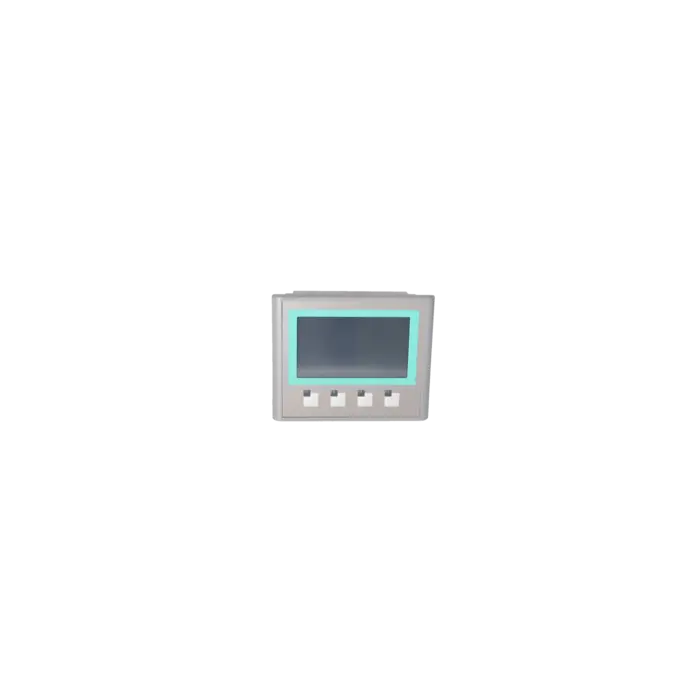
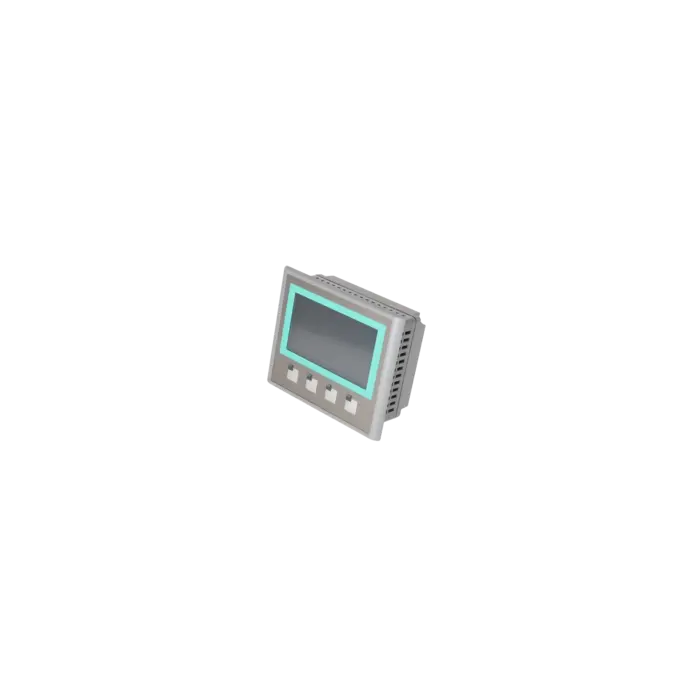
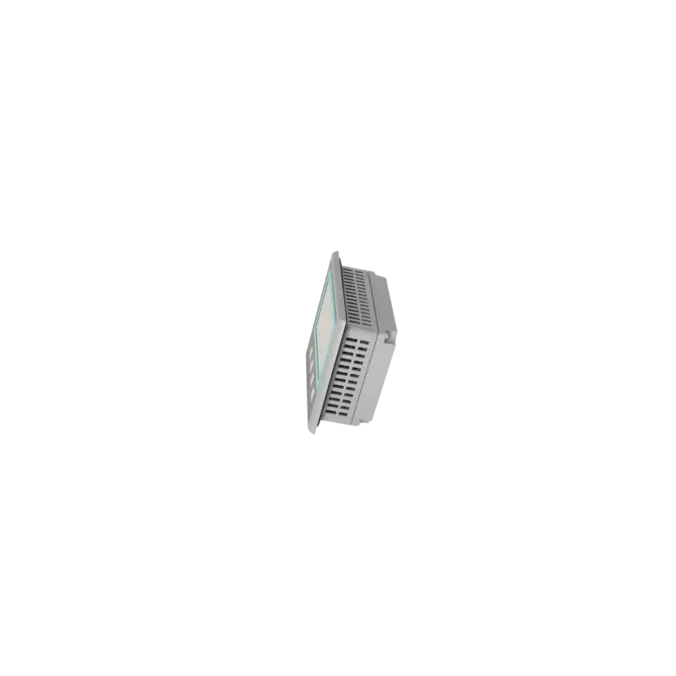
SIMATIC TP 177B 4" COLOR PN/DP TFT 256 COLOR-16: 9-DISPLAY, MPI/PROFIBUS DP PROTOCOL RS 485/RS 422/USB INTERFACE ETHERNET 10/100 INTERFACE PRINTER INTERFACE SLOT FOR MMC CONFIGURABLE WITH WINCC FLEXIBLE 2008
Services for SIEMENS 6AV6642-0BD01-3AX0
SIEMENS |
6AV6642-0BD01-3AX0 –
additional product information
| Delivery information | |||
|---|---|---|---|
| Export identifier | AL: N ECCN: 5D002ENCU | ||
| Net weight | 0.633 | ||
| Quantity | 1 Stück | ||
| Packaging quantity | 1 | ||
| Additional product information | |||
|---|---|---|---|
| Product status | EOP: 2023-10-01 | ||
| EAN | 4025515076889 | ||
| UPC | 662643396850 | ||
| Static lot number | 85371098 | ||
| List indicator | ST9.80 | ||
| Product group | 4356 | ||
| Country of origin | DE | ||
| Compliance with the substance restrictions according to RoHS directive | Since: 20080331 | ||
| Product classifications | Version | Classification | |
|---|---|---|---|
| eClass | 4 | 27-36-01-02 | |
| eClass | 5.1 | 27-24-23-02 | |
| eClass | 6.0 | 27-24-23-02 | |
| ETIM | 3 | / | |
| ETIM | 4 | EC001412 | |
| ETIM | 5 | EC001412 | |
What is 6AV6642-0BD01-3AX0 and where is it used?
The 6AV6642-0BD01-3AX0 is a SIMATIC HMI TP 177B 4" PN/DP from Siemens. It is a compact touch panel used for machine operation and process visualisation in existing automation systems. It is typically found in machines with SIMATIC S7-300/S7-400, where operator screens, alarms, recipes and setpoints need to be displayed and adjusted directly at the machine.
The panel combines a 4.3" TFT display, a resistive touchscreen, and 4 function keys, along with multiple communication interfaces such as PROFINET, PROFIBUS/MPI, RS422/RS485, and USB. This makes it especially relevant for maintenance engineers and procurement teams when an existing HMI needs to be replaced, kept operational, or evaluated for retrofit.
Overview of the key technical data and what it means
The panel provides a 4.3" colour display with 480 × 272 pixels and 256 colours. In practical terms, this means it is designed for clear display of simple process screens, messages and operator dialogs, without the performance level of modern high-end HMIs.
The front protection rating is IP65, which is relevant for machine or cabinet front installation, while the rear side is IP20. Supported communication protocols include PROFINET IO, PROFIBUS, MPI, TCP/IP, Modbus and Sm@rtServer.
The device runs on Windows CE 5, with a 266 MHz RISC processor, 64 MB main memory and 2 MB user memory. The backlight is specified with a 30,000-hour MTBF at 25 °C. For service purposes, it also includes 1 Ethernet interface, 1 USB port, RS422/RS485, and a combined MMC/SD card slot.
Product status, life cycle status and obsolescence
For this panel, the product lifecycle is clearly shifted towards installed base management. According to EICHLER, the product status is EOP (End of Production) as of 01.10.2023. Siemens additionally states that new units have been discontinued since 01.01.2015, but the device remains available as a spare part.
For operators, this means procurement is typically no longer based on new devices, but on repair, replacement, refurbished units or strategic spare part stocking.
As a verified migration successor, Siemens specifies the KTP400 Comfort (6AV2124-2DC01-0AX0). However, this successor is intended for migration purposes and does not automatically replace every legacy system 1:1 without checking the existing project, installation constraints and communication concept.
Available EICHLER services and when they are relevant
To avoid unplanned downtime, the most relevant options for this device are repair, replacement, and used/refurbished units. Currently, EICHLER offers a 1–3 day repair service for the 6AV6642-0BD01-3AX0, including technical cleaning, preventive maintenance, full functional testing, and at least a 24-month warranty.
This is particularly useful when the existing project configuration and installation footprint must be preserved. Replacement units are also available within 1–3 days, as well as used units and new units on request. For procurement and production planning, this helps reduce downtime, migration risk and obsolescence pressure without immediately triggering a full retrofit.
| Attribute | Value |
|---|---|
| Product type designation | TP 177B 4" PN/DP |
| Customer-specific configuration | Yes |
| Display | |
| Design of display | TFT |
| Screen diagonal | 4.3 in |
| Color display | Yes |
| Number of colors | 256 |
| Resolution (pixels) | |
| ● Horizontal image resolution | 480 pixel |
| ● Vertical image resolution | 272 pixel |
| Backlighting | |
| ● MTBF backlighting (at 25 °C) | 30 000 h |
| Control elements | |
| Control elements | Touch screen and membrane keyboard |
| Keyboard fonts | |
| ● Membrane keyboard | |
| — user-definable label membrane keys | Yes |
| ● Function keys | |
| — Number of function keys | 4 |
| — Number of function keys with LEDs | 0 |
| ● System keys | No |
| — Number of system keys | 0 |
| ● Numeric keyboard | Yes; Onscreen keyboard |
| ● alphanumeric keyboard | Yes; Onscreen keyboard |
| ● hexadecimal keyboard | Yes; Onscreen keyboard |
| ● Multi-key operation | Yes |
| Touch operation | |
| ● Design as touch screen | Yes; analog, resistive |
| Connection type | |
| ● Type of connection for mouse/keyboard/barcode reader | USB / USB / USB |
| Installation type/mounting | |
| Mounting position | vertical |
| maximum permissible angle of inclination without external ventilation | 35° |
| Supply voltage | |
| Type of supply voltage | DC |
| Input current | |
| Current consumption (rated value) | 0.2 A |
| Starting current inrush I²t | 0.1 A²·s |
| Processor | |
| Processor type | RISC 32-bit, 266 MHz |
| Memory | |
| Type of memory | Flash / RAM |
| Memory available for user data | 2 048 kbyte |
| Capacity of main memory, max. | 64 Mbyte |
| Time of day | |
| Clock | |
| ● Type | Hardware clock, synchronizable, no battery backup |
| ● retentive | No |
| ● synchronizable | Yes |
| Interfaces | |
| Interfaces/bus type | RS 232 optional, 1x RS 422, 1x RS 485, 1x Ethernet (RJ45) (max. 12 Mbit/s) |
| Number of industrial Ethernet interfaces | 1 |
| Number of RS 485 interfaces | 1 |
| Number of RS 422 interfaces | 1 |
| Number of USB interfaces | 1; Up to 1 GB |
| PC card slot | No |
| CF card slot | No |
| Multimedia card/SD card slot | combined, from E-status 016 in connection with WinCC flexible 2008 SP1, MMC max. 128 MB / SD max. 512 MB |
| With software interfaces | No |
| Protocols | |
| Supports protocol for PROFINET IO | Yes |
| PROFIsafe | No |
| PROFIBUS | Yes |
| EtherNet/IP | Yes |
| MPI | Yes |
| Protocols (Ethernet) | |
| ● TCP/IP | Yes |
| Protocols (terminal link) | |
| ● Sm@rtServer | Yes |
| Further protocols | |
| ● MODBUS | Yes |
| Degree and class of protection | |
| IP (at the front) | IP65 |
| IP (rear) | IP20 |
| NEMA (front) | NEMA 4, NEMA 4x, NEMA 12 (when installed) |
| Standards, approvals, certificates | |
| Certificate of suitability | CE, GL, FM Class I Div. 2, cULus, C-TICK, NEMA 4, NEMA 4x, NEMA 12 |
| cULus | Yes |
| EAC (formerly Gost-R) | No |
| Suitable for safety functions | No |
| Use in hazardous areas | |
| ● ATEX Zone 2 | No |
| ● ATEX Zone 22 | No |
| ● FM Class I Division 2 | Yes |
| Marine approval | |
| ● Germanischer Lloyd (GL) | Yes |
| ● American Bureau of Shipping (ABS) | No |
| ● Bureau Veritas (BV) | No |
| ● Det Norske Veritas (DNV) | No |
| ● Lloyds Register of Shipping (LRS) | No |
| ● Nippon Kaiji Kyokai (Class NK) | No |
| ● Polski Rejestr Statkow (PRS) | No |
| Ambient conditions | |
| Ambient temperature during operation | |
| ● min. | 0 °C |
| ● max. | 50 °C |
| Ambient temperature during storage/transportation | |
| ● min. | -20 °C |
| ● max. | 60 °C |
| Relative humidity | |
| ● Operation, max. | 90 % |
| Operating systems | |
| pre-installed operating system | Windows CE (Version 5) |
| Configuration | |
| Message indicator | Yes |
| Alarm system (incl. buffer and acknowledgment) | Yes |
| Process value display (output) | Yes |
| Process value default (input) possible | Yes |
| Recipe management | Yes |
| Configuration software | |
| ● Configuration tool | WinCC flexible Compact Version 2008 or higher (to be ordered separately) |
| ● STEP 7 Basic (TIA Portal) | No |
| ● STEP 7 Professional (TIA Portal) | No |
| ● WinCC flexible Compact | Yes |
| ● WinCC flexible Standard | Yes |
| ● WinCC flexible Advanced | Yes |
| ● WinCC Basic (TIA Portal) | No |
| ● WinCC Comfort (TIA Portal) | Yes |
| ● WinCC Advanced (TIA Portal) | Yes |
| ● WinCC Professional (TIA Portal) | Yes |
| Languages | |
| Online languages | |
| ● Number of online/runtime languages | 5 |
| Project languages | |
| ● Languages per project | 32 |
| Functionality under WinCC (TIA Portal) | |
| Libraries | Yes |
| Task planner | Yes |
| Help system | Yes |
| ● Number of characters per info text | 70 |
| Message system | |
| ● Number of alarm classes | 32 |
| ● Number of messages | 2 000 |
| ● Bit messages | Yes |
| — Number of bit messages | 2 000 |
| ● Analog messages | Yes |
| — Number of analog messages | 2 000 |
| ● Telegram message procedure Alarm S | Yes |
| ● System messages HMI | Yes |
| ● System messages PLC | Yes |
| ● System event, more (SIMATIC S7, SINUMERIK, SIMOTION, ... ) | No |
| ● Lines | 1 |
| ● Number of characters per message | 80 |
| ● Number of process values per message | 8 |
| ● Acknowledgment groups | |
| — Number of acknowledgement groups | Yes |
| ● Message indicator | Yes |
| ● acoustic feedback | No |
| ● First/last value | Yes |
| Recipe management | |
| ● Number of recipes | 100 |
| ● Data records per recipe | 200 |
| ● Entries per data record | 200 |
| ● Recipe memory | 32 KB integrated Flash, expandable |
| Variables | |
| ● Number of variables per device | 1 000 |
| ● Number of variables per screen | 50 |
| ● Number of variables | 1 000 |
| ● Initial values | 1 000 |
| ● Type Date & Time | 1 000 |
| ● Limit values | Yes |
| ● Multiplexing | Yes |
| ● Structures | No |
| Images | |
| ● Number of configurable images | 500 |
| ● Permanent window/default | Yes |
| ● Start screen configurable | Yes |
| ● Image selection by PLC | Yes |
| ● Image number in the PLC | Yes |
| Image objects | |
| ● Text objects | 2 500 text elements |
| ● Number of I/O fields per image | 50 |
| ● Number of date/time fields | 30 |
| ● Index of screen context | No |
| ● Return | Yes |
| ● Graphics object | Bit maps, icons, icon (full-screen), vector graphics |
| — Icons | 500 |
| — Icon (full screen) | 50 |
| Complex image objects | |
| ● Status/control | With SIMATIC S7 |
| ● dynamic objects | Diagrams, bar graphs, sliders, analog display, invisible buttons |
| — Number of objects per project | 500 |
| — Number of curve diagrams per image | 5 |
| ● Methods | Trend |
| ● Bar graphs | |
| — Number of bars per chart | 5 |
| ● Sliders | |
| — Number of slides per image | 5 |
| ● Pointer instruments | |
| — Number of analog indicators per image | 5 |
| ● Limit value lines | Yes |
| ● Number of alphanumerical fields | 1 000 |
| — alphanumeric fields per image | 50 |
| ● Number of numerical fields | 1 000 |
| — numerical fields per image | 50 |
| ● Number of password fields | 1 000 |
| ● Number of visible switches per project | 1 000 |
| — visible switches per image | 100 |
| — hidden switches per image | 100 |
| ● Number of status switches per project | 1 000 |
| — Number of status switches per image | 100 |
| ● Number of selector switches per project | 1 000 |
| — Selector switches per image | 100 |
| ● Number of decade switches per project | 0 |
| — Decade switches per image | 0 |
| ● Number of signal lamps per project | 1 000 |
| — Signal lamps per image | 100 |
| Attributes for dynamic objects | |
| ● Color change | Yes |
| ● X/Y movement | Yes |
| ● Hide | Yes |
| ● Angle of rotation | No |
| Lists | |
| ● Number of text lists per project | 300 |
| ● Number of text lists per image | 10 |
| ● Number of entries per text list | 30 |
| ● Number of graphics lists per project | 100 |
| ● Number of graphic lists per image | 10 |
| ● Number of entries per graphics list | 30 |
| Security | |
| ● Number of user groups | 50 |
| ● Number of user rights | 32 |
| ● Password export/import | Yes |
| Data carrier support | |
| ● PC card | No |
| ● CF card | No |
| Logging through printer | |
| ● Recording/Printing | Alarms, report (shift report), color print, hardcopy |
| Transfer (upload/download) | |
| ● Transfer of configuration | MPI/PROFIBUS DP, serial, USB, Ethernet, by means of external storage medium, automatic transfer recognition |
| Process coupling | |
| ● Connection to controller | S5, S7-200, S7-300/400, TI 505, SINUMERIK, SIMOTION, Allen Bradley (DF1), Allen Bradley (DF485), Mitsubishi (FX), OMRON (LINK/Multilink), Modicon (Modbus), further non-Siemens drivers, see chapter "System interfaces" |
| ● S7-1200 | Yes |
| ● S7-1500 | No |
| ● S7-200 | Yes |
| — PPI (point-to-point) | Yes |
| — PPI network | Yes |
| — MPI | Yes |
| — PROFIBUS DP | Yes |
| — Ethernet | Yes |
| ● S7-300/400 | Yes |
| — MPI | Yes |
| — PROFIBUS DP | Yes |
| — PROFINET | Yes |
| ● S5 | Yes; only PROFIBUS DP |
| — serial | No |
| — PROFIBUS DP | Yes |
| ● TI 505 | Yes |
| ● Allen Bradley (DF1) | Yes |
| ● Allen Bradley (DF485) | Yes |
| ● Mitsubishi (FX) | Yes |
| ● Mitsubishi (MP4) | No |
| ● Telemecanique (ADJUST) | No |
| ● Telemecanique (Uni-Telway) | Yes |
| ● OMRON (LINK/Multilink) | Yes |
| ● Modicon (Modbus) | Yes |
| ● GE-Fanuc (SNP) | Yes |
| Functions | |
| ● Key repeat | No |
| ● TAB sequence | Yes |
| ● Calculating functions | Yes |
| ● Animate | Yes |
| ● Menu tree editor | Yes |
| ● Unit switchover | No |
| Service tools/configuration aids | |
| ● Clean screen | No |
| ● Touch calibration | Yes |
| ● Backup/Restore manually | Yes |
| ● Simulation | Yes |
| ● Device switchover | Yes |
| ● Delta transfer | No |
| ● Monitoring function for battery and memory | No |
| ● Trace (operation archive) | No |
| Expandability/openness | |
| ● Open Platform Program | Yes |
| Peripherals/Options | |
| Peripherals | Printer |
| SIMATIC HMI MM memory card: Multi Media Card | Yes |
| SIMATIC HMI SD memory card: Secure Digital memory card | Yes |
| USB memory | Yes |
| Additional software components loadable | Yes |
| Dimensions | |
| Width of the housing front | 140 mm |
| Height of housing front | 116 mm |
| Mounting cutout, width | 123 mm |
| Mounting cutout, height | 99 mm |
| mounting depth | 48 mm |
| Weights | |
| Weight (without packaging) | 0.5 kg; max. |
| Fault description | Possible solution |
|---|---|
| Why can I not transfer a project to the TP 177B 4" PN/DP and receive the message “A connection could not be established”? | First check whether the panel was manually switched into Transfer mode during the initial transfer and whether the required channel, such as Ethernet or MPI/DP, is enabled on the device. For Ethernet, the panel should be reachable, i.e. respond to a ping. For MPI/DP, the address, interface and PG/PC parameters must match. A common issue is an address conflict between the engineering PC and the panel. In a documented case in the PLC forum, the PC and panel had the same address; after correcting the PG/PC address, the transfer worked again. |
| Why does the operating system update or restore fail on the TP 177B? | If the operating system is corrupted or no longer contains a bootable image, the device must be reloaded using a factory reset. Siemens states that this requires a point-to-point connection with a suitable PC/PPI access. After a restore, a compatibility conflict may also occur, requiring an operating system update. A practical case in the PLC forum also shows that an incompatible OS version can block the transfer; after correcting the version, access worked again. The key factors are therefore the correct transfer path, correct OS version and a clean restart process. |
| Why does the touch screen respond inaccurately or not at all after a restore? | After a restore process, a new touchscreen calibration may be required. Siemens explicitly states that recalibration may be necessary after restoration. The calibration can be accessed via the panel’s Control Panel. For troubleshooting, this means not immediately assuming a defective digitiser, but first opening the loader or Windows CE menu, accessing the Control Panel and recalibrating the touch function. Only if inputs remain offset, incomplete or unresponsive afterwards should a hardware fault of the touch system be considered. |
| Why does message 130008 or 130009 relating to the storage card appear on the TP 177B? | Message 130008 indicates that no storage card is present, meaning reading or writing is not possible. 130009 indicates that the specified directory is not located on the storage card. In both cases, Siemens recommends checking that the memory card is correctly inserted and verifying the file path. The manual also warns not to remove the card during data access, as this may corrupt data. For the TP 177B 4" PN/DP, the combined MMC/SD slot is relevant; supported card types and sizes depend on the device version and software version used. |
| Why are no process values received from the controller or why can the panel not write values? | For system message 140003, Siemens identifies the cause as no variable updating or writing taking place. The communication connection, controller power state and PG/PC interface parameters should be checked. For 140004, the access point or module parameterisation is also incorrect. In practical terms, this means aligning the communication path in the project with the actual wiring, verifying addresses and protocols, correctly setting interface parameters and then restarting the system. Especially in legacy systems with MPI, PROFIBUS and Ethernet in parallel, a consistent match between configuration and real network is essential. |
Is 6AV6642-0BD01-3AX0 still available as a new device or only as a spare part?
Siemens has classified the device as blocked for new deliveries since 01.01.2015, while it remains available as a spare part. According to the EICHLER product page, the device also has an EOP (End of Production) status as of 01.10.2023. In practical terms, this means that procurement today is no longer focused on new units, but on repair, replacement, used devices, or targeted availability requests.
For operators of legacy systems, this is a typical obsolescence management scenario where not only unit price matters, but above all restart time, project compatibility and procurement risk.
Which successor fits the 6AV6642-0BD01-3AX0?
Siemens specifies the migration successor as the KTP400 Comfort (6AV2124-2DC01-0AX0). This is the relevant manufacturer recommendation for companies that do not only repair, but plan a medium-term upgrade. However, it is important to note that the successor is a Comfort Panel, meaning it belongs to a newer device generation.
For procurement and engineering, this means it is not just a different order number, but part of a changed hardware and software ecosystem. Therefore, before replacement, project migration, communication concept and installation situation must be evaluated.
Can the TP 177B 4" PN/DP be replaced mechanically one-to-one by a KTP400 Comfort?
The mounting cut-out of the KTP400 Comfort is stated by Siemens to be compatible with the TP 177B 4". This is a major advantage for retrofit projects because the cabinet cut-out usually does not need to be changed.
However, Siemens also notes that despite compatible cut-outs, installation depth and/or front dimensions may differ. Therefore, installation depth, cabling, connector space and front projection should be checked in advance. Mechanically, this significantly simplifies migration, but it does not replace a full technical system review.
Which software is required for engineering, service and transfer?
The original engineering tool for the TP 177B 4" PN/DP is WinCC flexible 2008. According to its product data, the device supports WinCC flexible Compact, Standard and Advanced.
For service and data transfer, interfaces such as Ethernet, RS422, RS485 and USB are relevant. When maintaining legacy projects, it is therefore essential to check not only hardware availability, but also the availability of the correct engineering environment and transfer path.
In older HMI systems, software compatibility is often the decisive factor for commissioning, backup and system recovery.
Is the TP 177B 4" PN/DP still directly supported in TIA Portal V15 or higher?
Siemens documents that with WinCC (TIA Portal) V15, several devices previously supported in WinCC flexible 2008 SP3/SP5 are no longer supported, including the TP 177B 4" PN/DP.
For migration projects, this means that an existing legacy project cannot simply be transferred into a current TIA environment without intermediate steps. Siemens instead refers to migration guides and successor devices.
For decision-makers, this is important because it directly affects engineering effort, migration risk and potential retrofit requirements.
When is repair more suitable than replacement or new purchase?
Repair is particularly suitable when the existing system should continue running without project changes, the installation footprint must be preserved and unplanned downtime must be resolved quickly. For this panel, EICHLER currently offers a 1–3 day repair service, including technical cleaning, preventive maintenance, functional testing and at least a 24-month warranty.
A replacement unit is the stronger option when a working spare is needed immediately while the defective unit is repaired separately in parallel. This helps reduce downtime costs while maintaining better control over obsolescence risks.