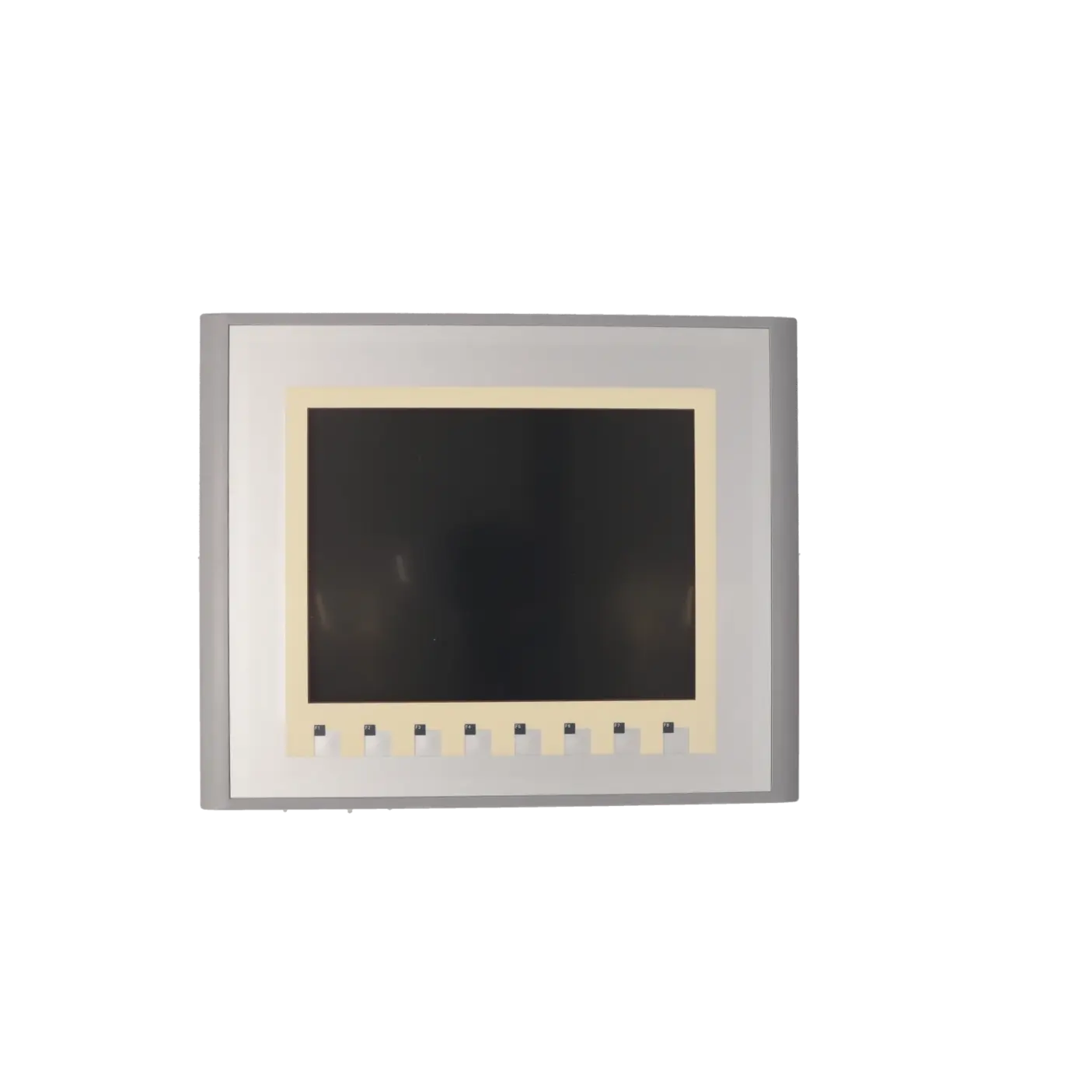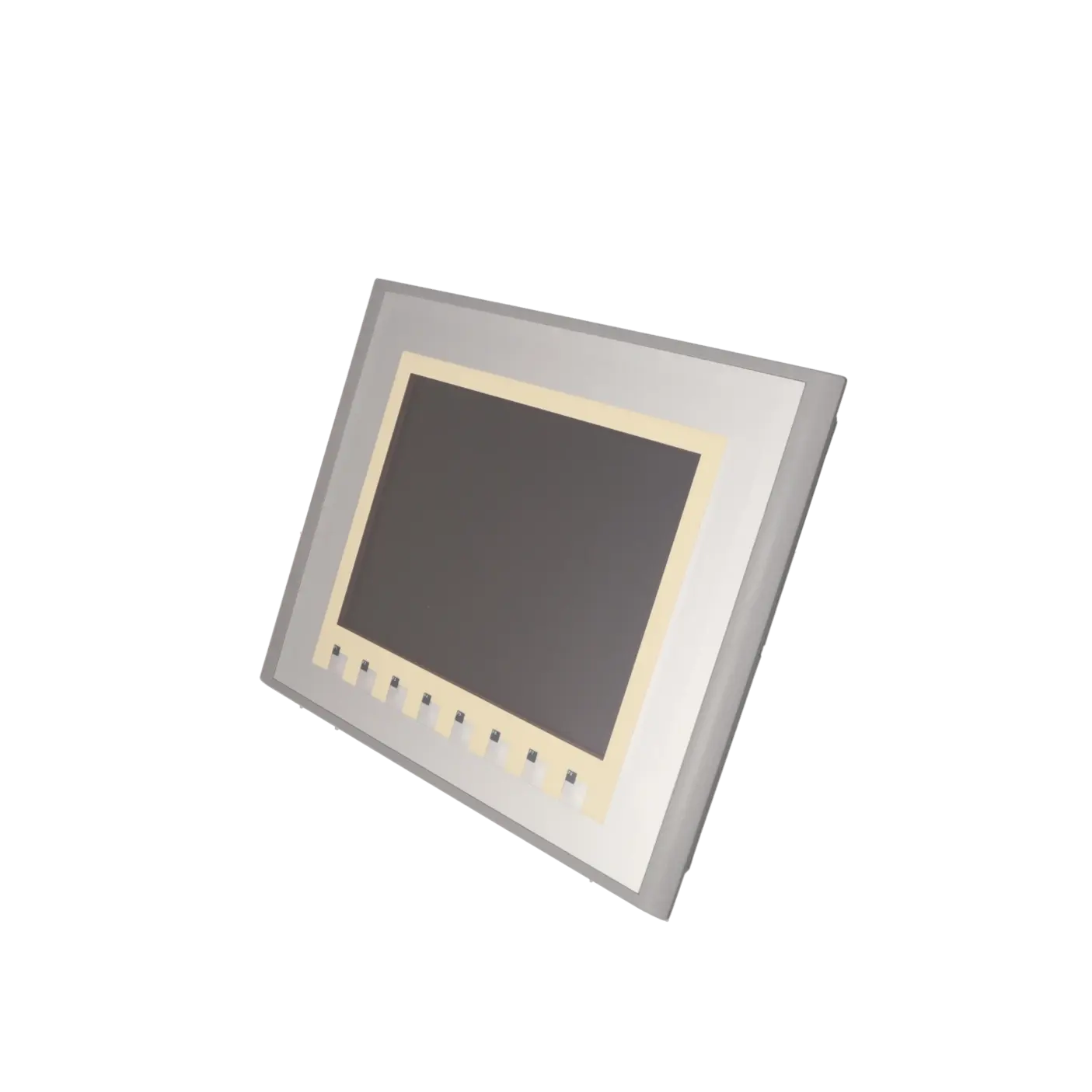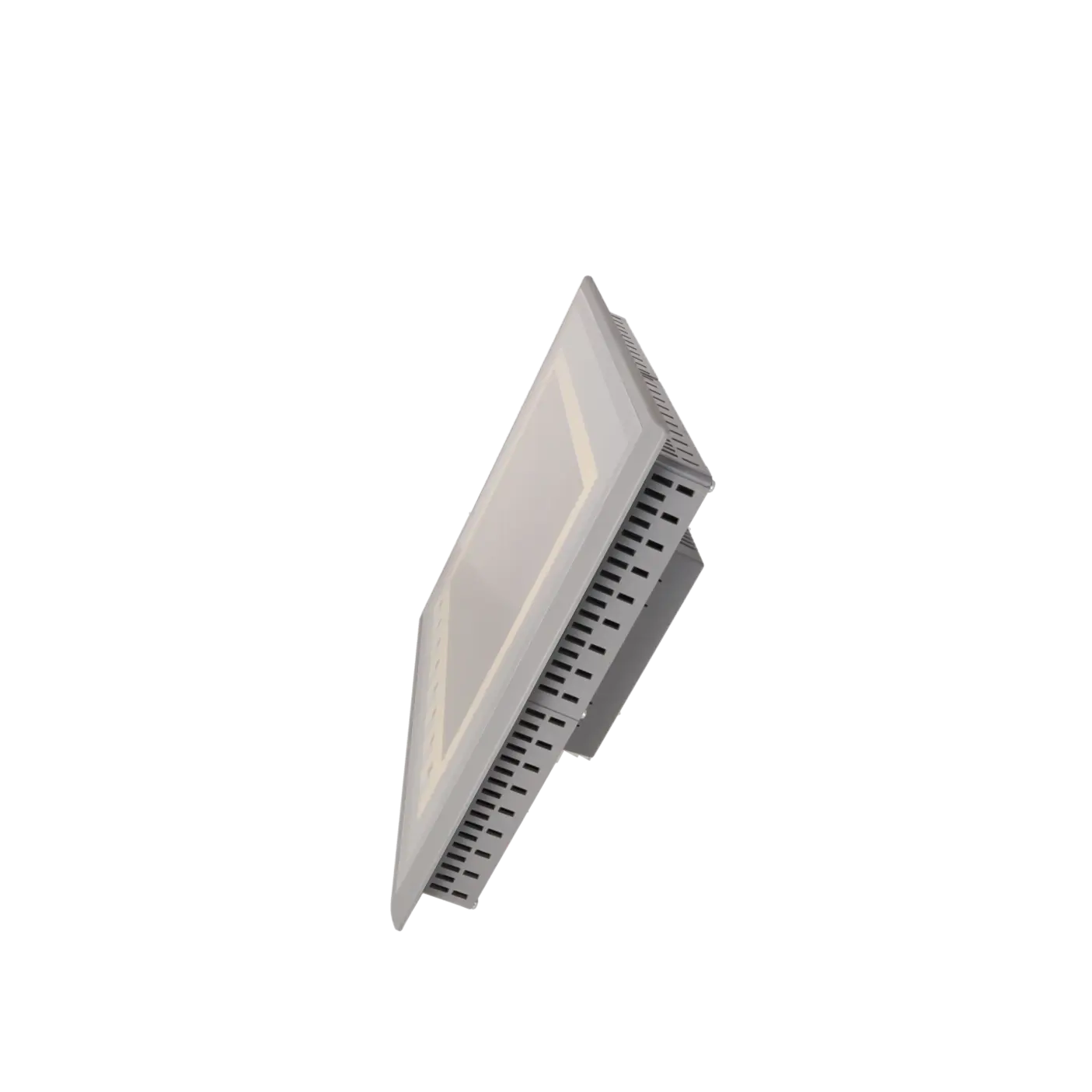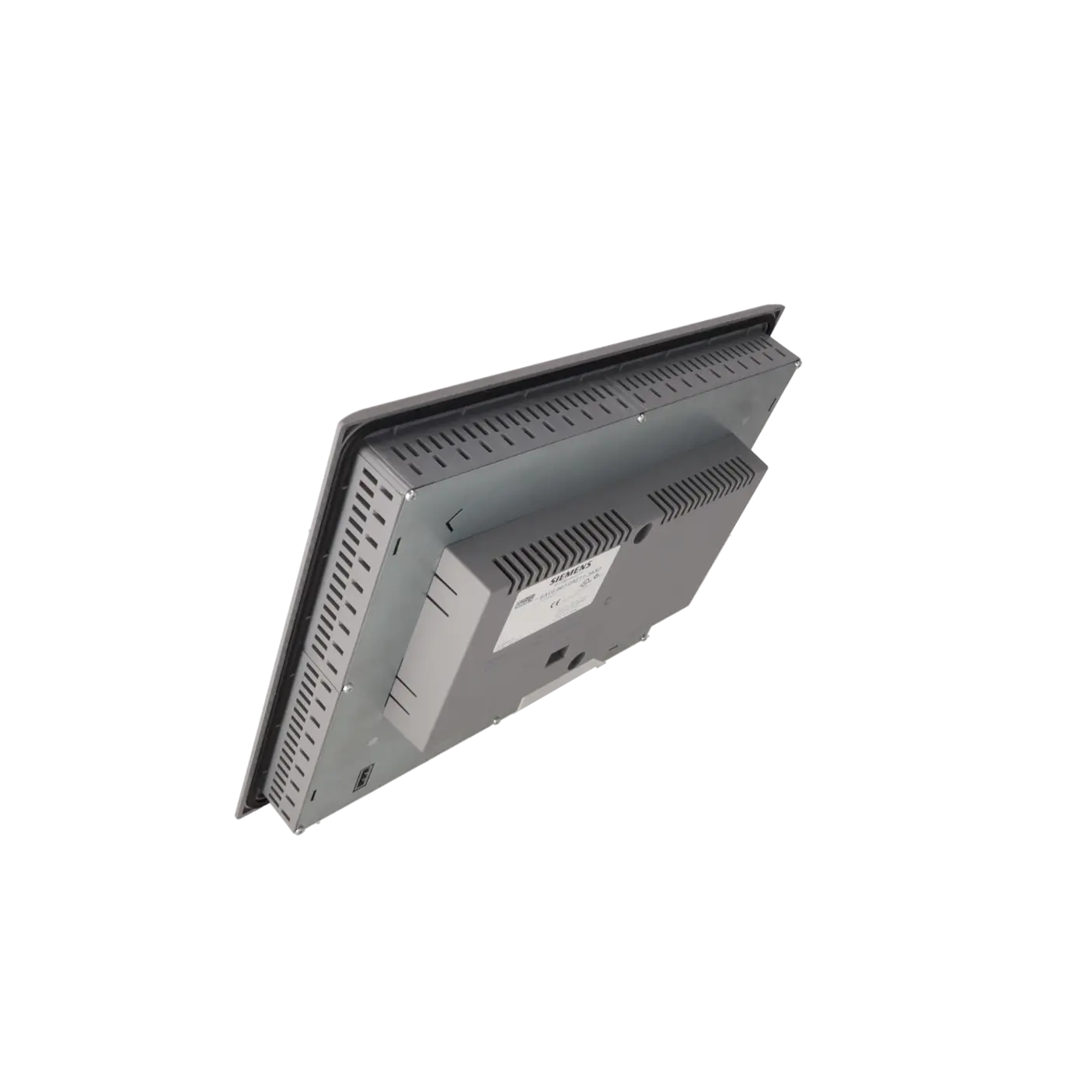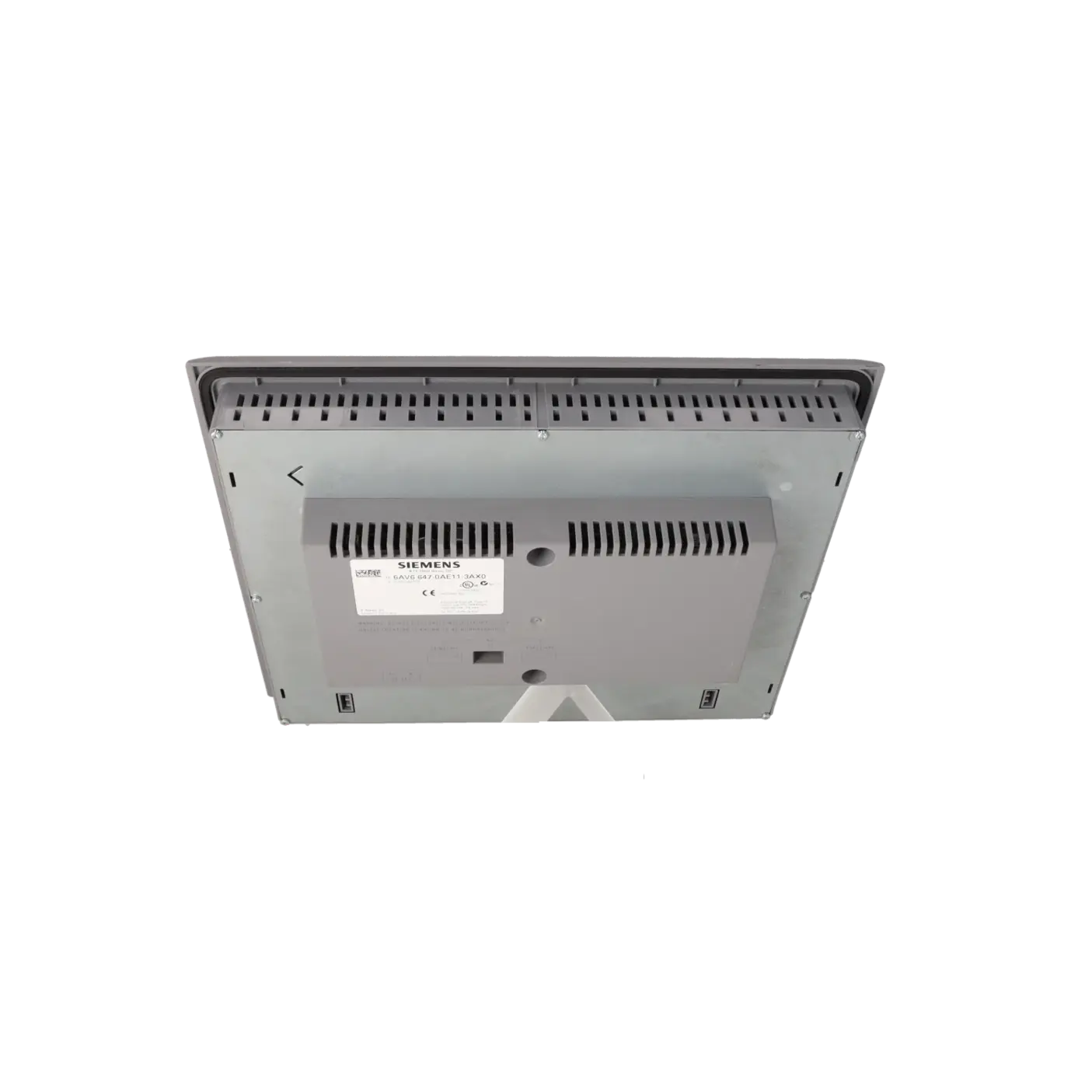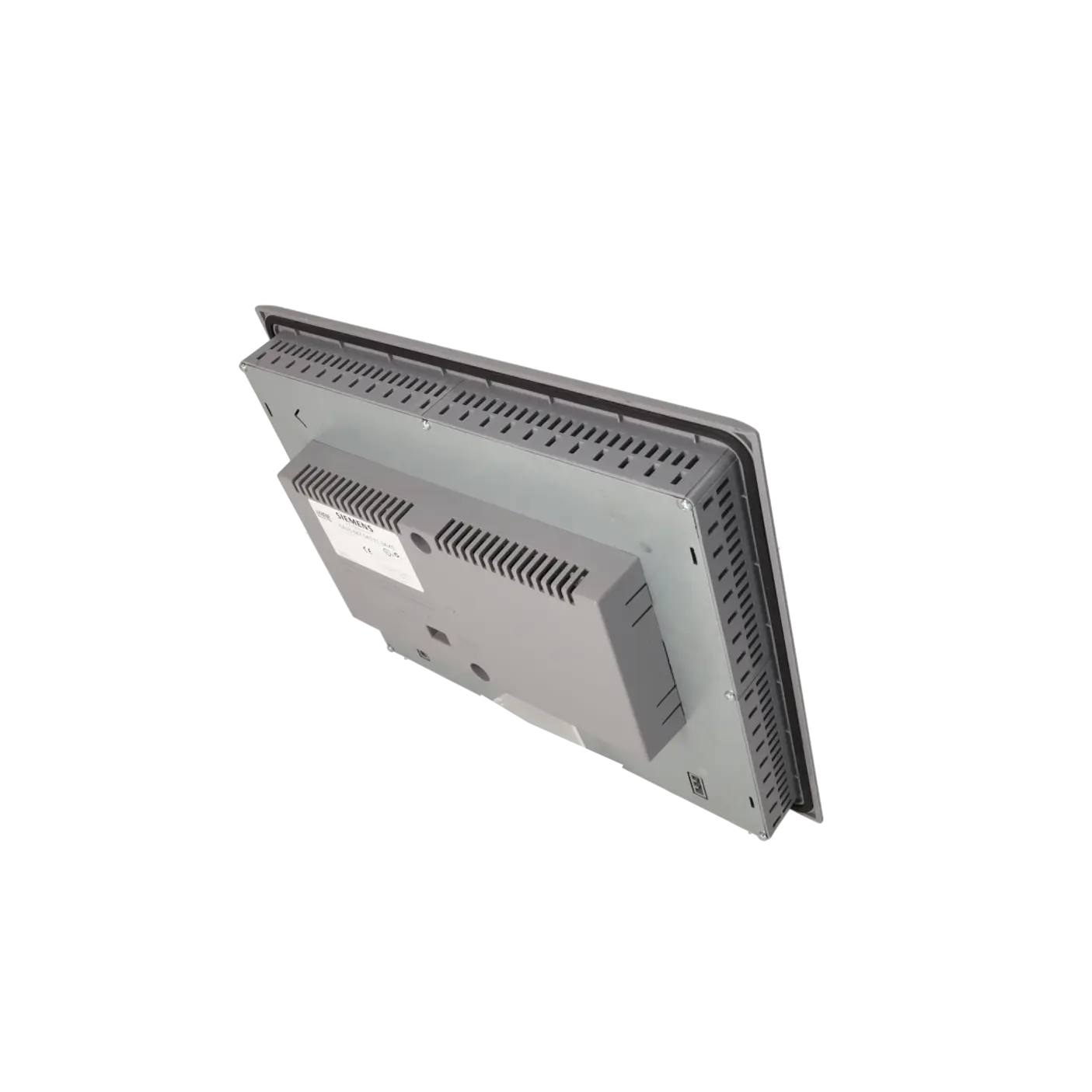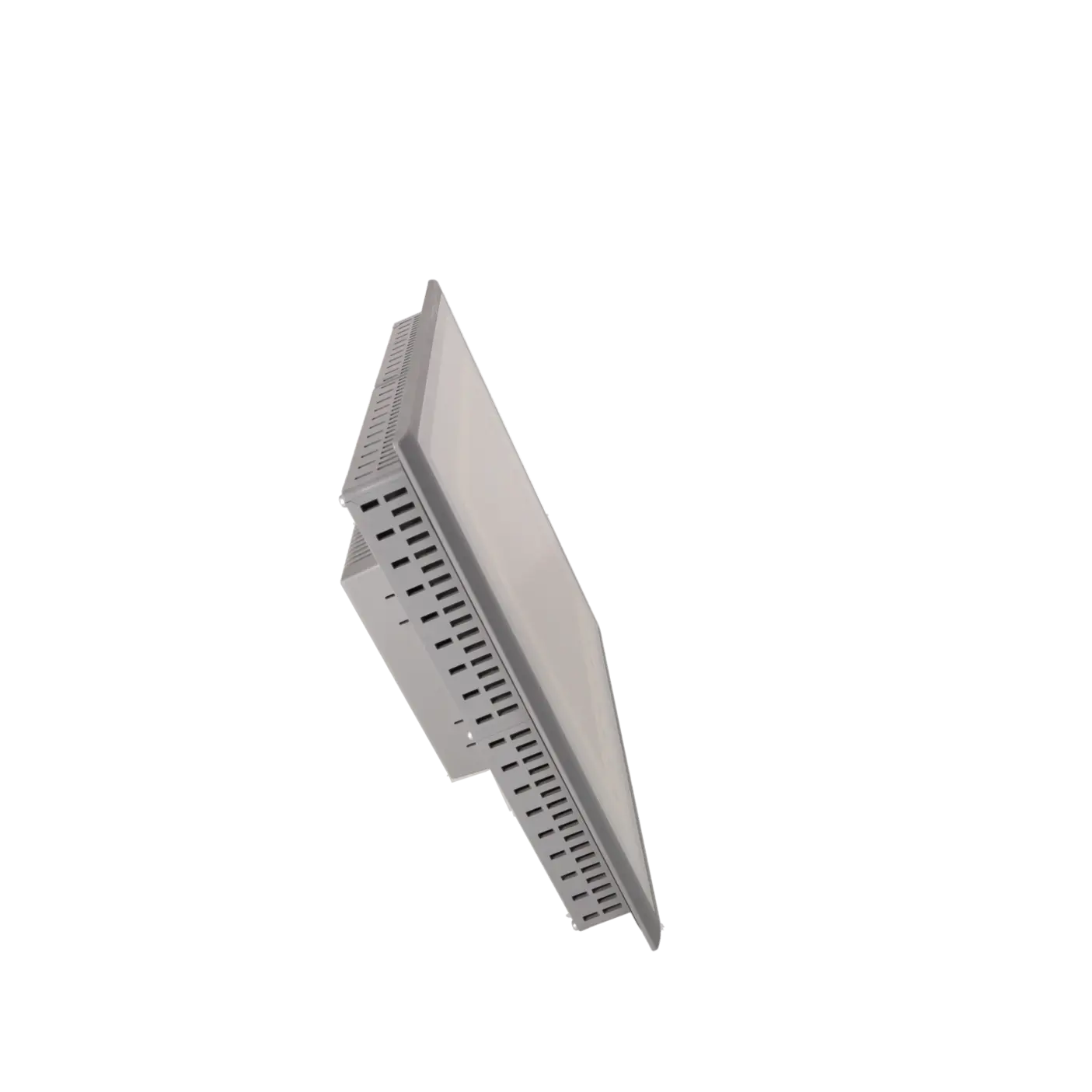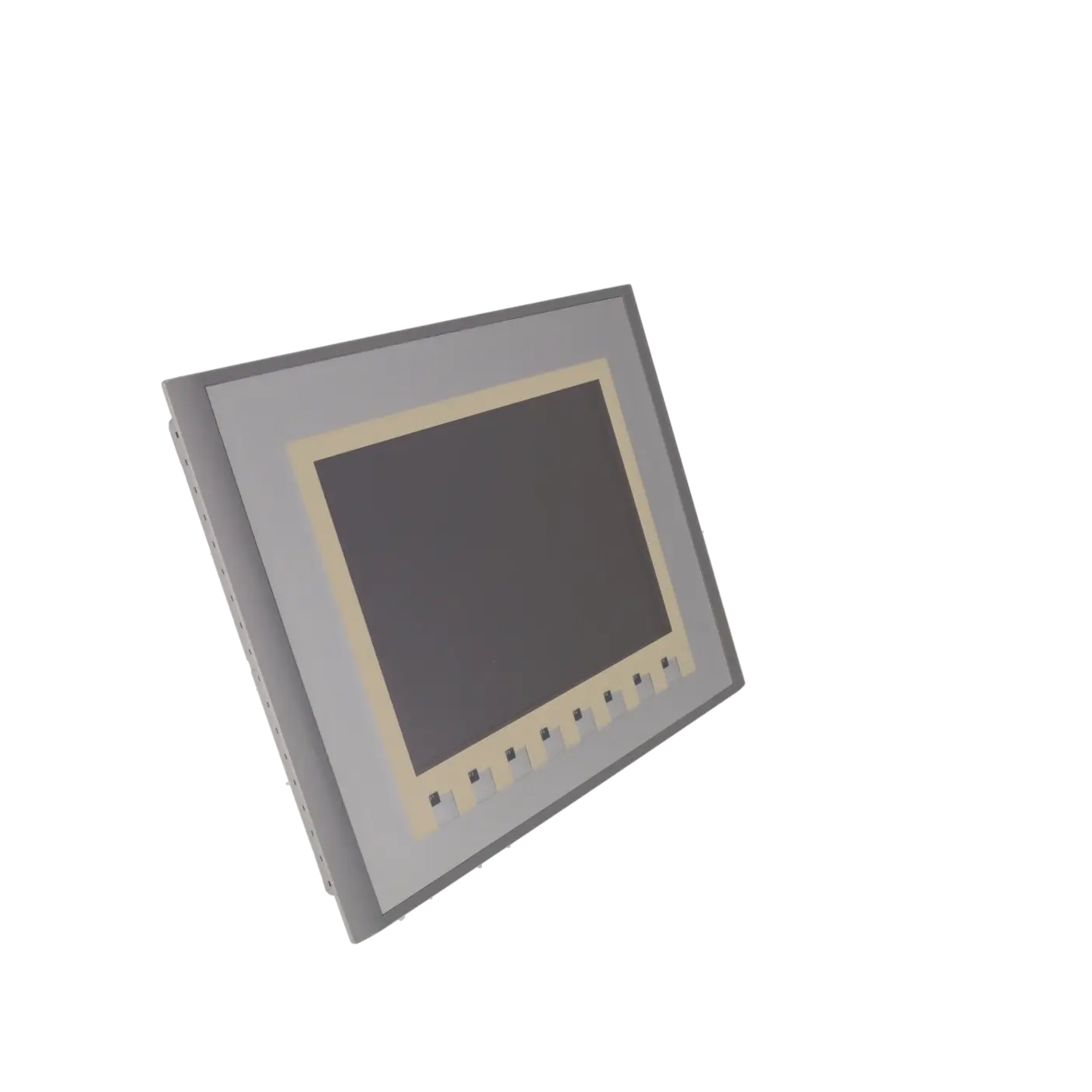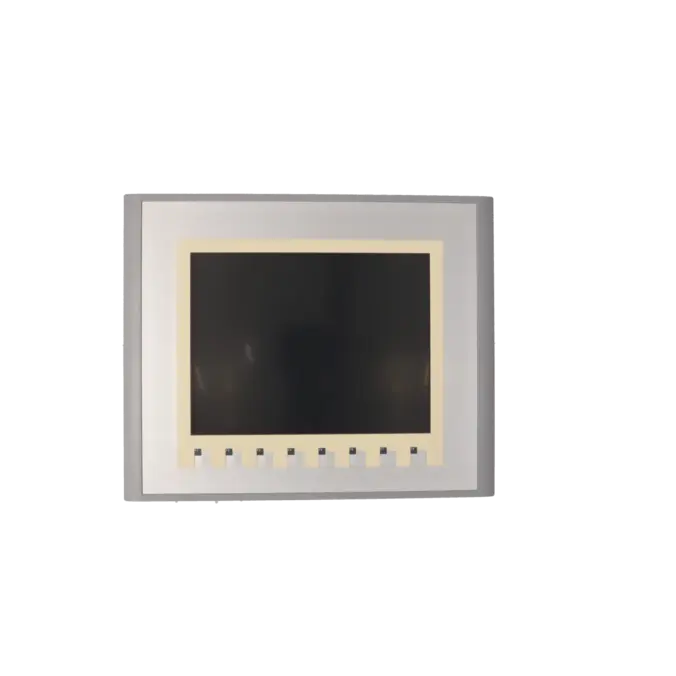
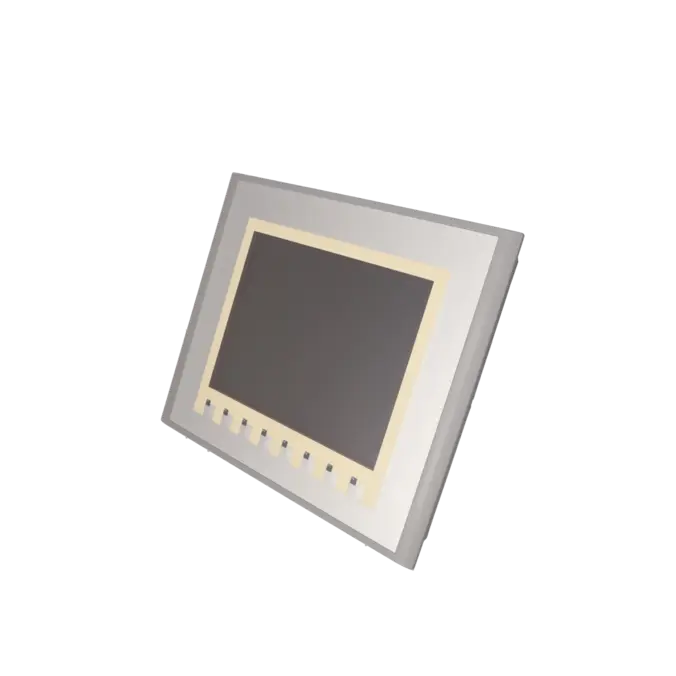
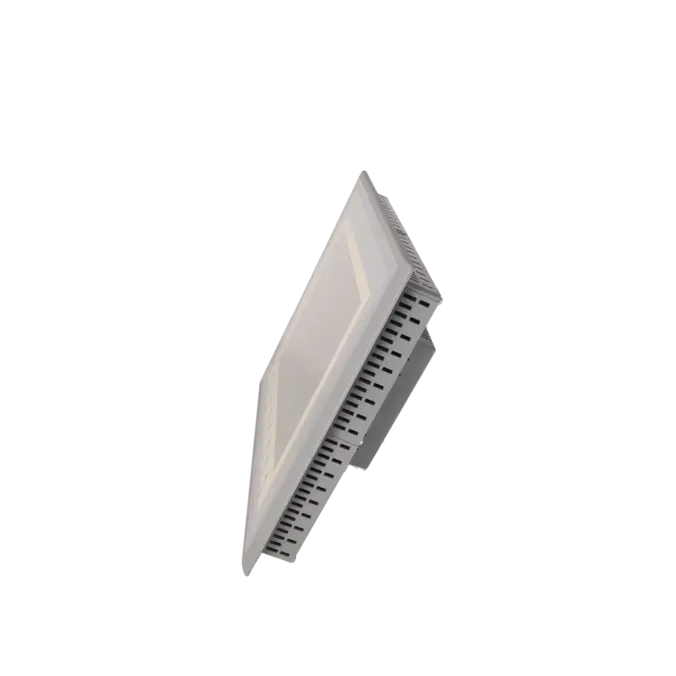
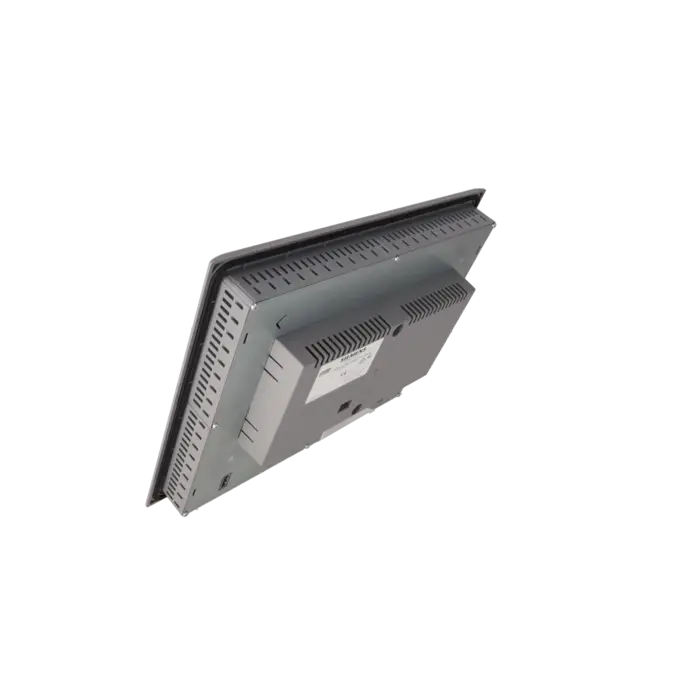
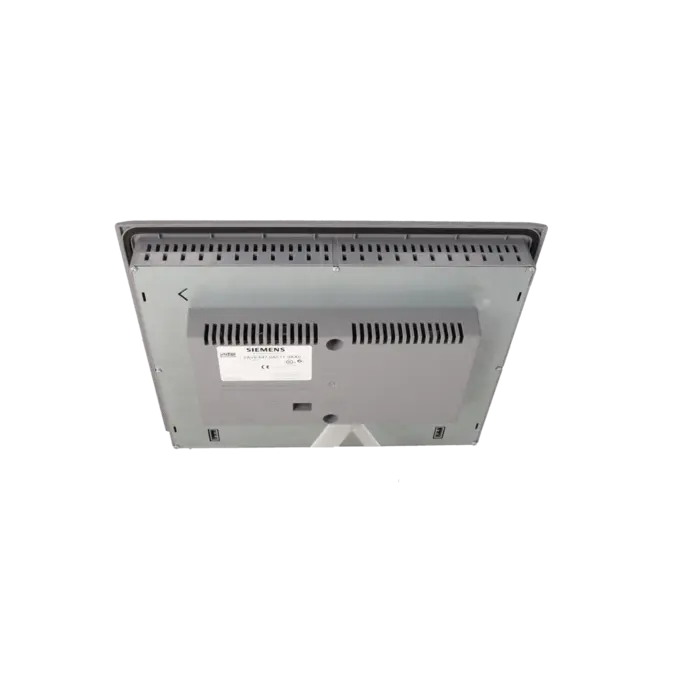
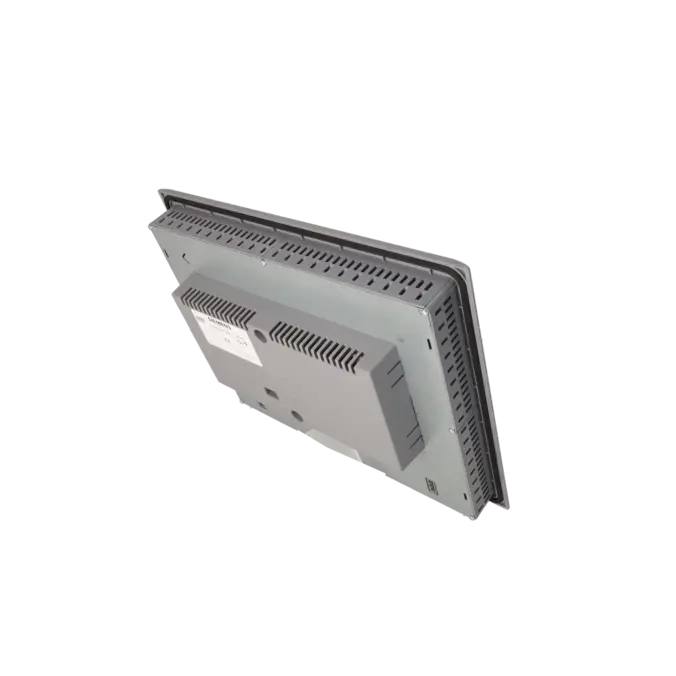
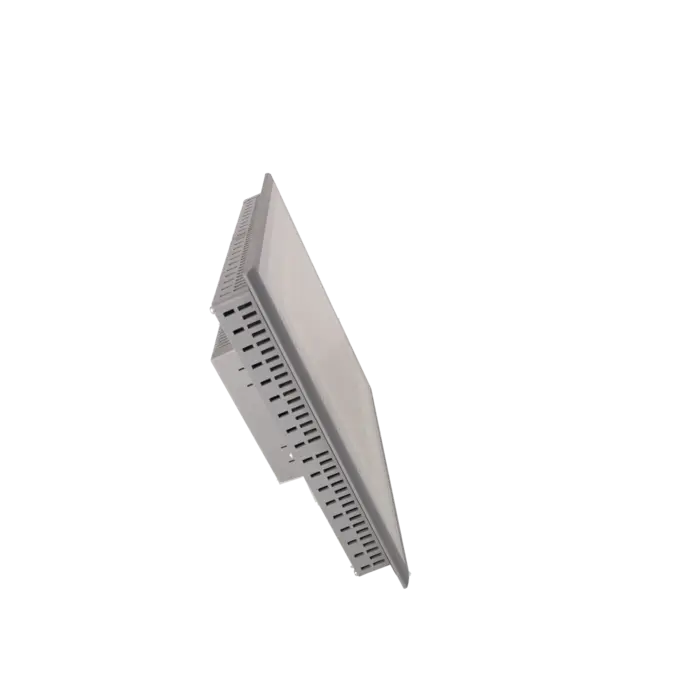
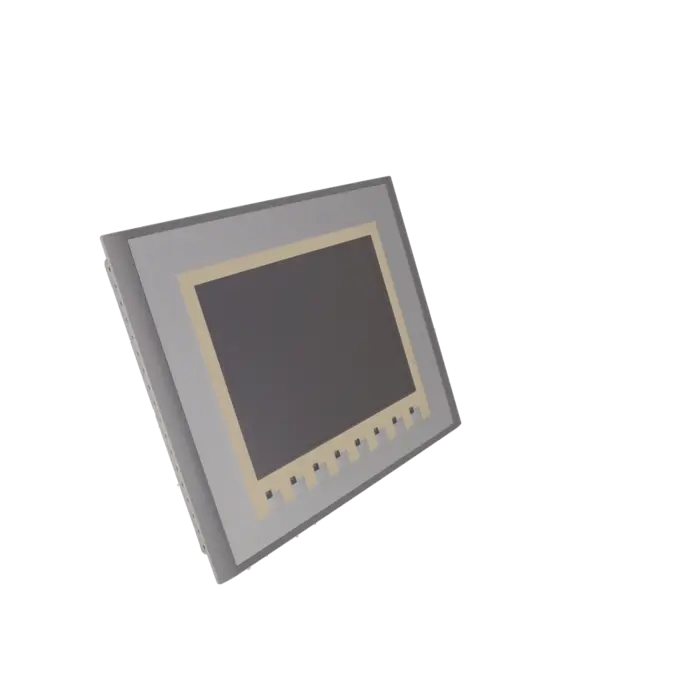

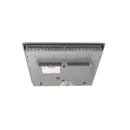
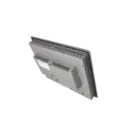

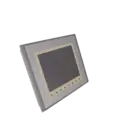
SIEMENS 6AV6647-0AE11-3AX0
- EICHLER-art.no.: K0219224
- EAN: 4025515076957
- UPC: 662643345704
Product description
SIMATIC HMI KTP1000 Basic Color DP, Basic Panel, Key/touch operation, 10" TFT display, 256 colors, MPI/PROFIBUS DP interface, configurable as of WinCC flexible 2008 SP2 Compact/ WinCC Basic V11/ STEP 7 Basic V11, contains open-source software, which is provided free of charge see enclosed CD
Services for SIEMENS 6AV6647-0AE11-3AX0
Repair
from 1.404,13 €
to 2.527,43 €
Replacement
1.711,80 €
1.626,21 €
Used
1.902,00 €
1.806,90 €
New
SIEMENS |
6AV6647-0AE11-3AX0 –
additional product information
| Delivery information | |||
|---|---|---|---|
| Export identifier | AL: N ECCN: EAR99H | ||
| Net weight | 3.08 | ||
| Quantity | 1 Stück | ||
| Packaging quantity | 1 | ||
| Additional product information | |||
|---|---|---|---|
| Product status | EOP: 2022-10-01 | ||
| EAN | 4025515076957 | ||
| UPC | 662643345704 | ||
| Static lot number | 85371091 | ||
| List indicator | ST9.80 | ||
| Product group | 4549 | ||
| Country of origin | DE | ||
| Compliance with the substance restrictions according to RoHS directive | Since: 20080331 | ||
| Product classifications | Version | Classification | |
|---|---|---|---|
| eClass | 4 | 27-36-01-02 | |
| eClass | 5.1 | 27-24-23-02 | |
| eClass | 6.0 | 27-24-23-02 | |
| ETIM | 3 | / | |
| ETIM | 4 | EC001412 | |
| ETIM | 5 | EC001412 | |
What is 6AV6647-0AE11-3AX0 and where is it used
6AV6647-0AE11-3AX0 is the SIMATIC HMI KTP1000 Basic Color DP from Siemens, a basic panel with touch and key operation for machine operation, visualization, and diagnostics. It is mainly used in existing installations with PROFIBUS DP or MPI environments, typically with SIMATIC S7-300/400 controllers or classic automation architectures. Due to the combination of a resistive touchscreen and function keys, it is suitable for robust operator stations where clear process displays and fast operator actions are more important than modern, high-end graphical HMI systems. In practice, the panel is often found in production machines, conveyor systems, packaging equipment, and retrofit projects.
For maintenance and purchasing, the article number is particularly relevant because it is often directly tied to existing mounting cut-outs, project configurations, and PROFIBUS structures. The device is therefore typically required when a faulty panel must be replaced quickly, without redesigning the entire HMI architecture. At the same time, it serves as a basis for deciding between repair, replacement, or migration to a newer HMI generation.
Overview of key technical data and what they mean
The panel features a 10.4-inch TFT display with 640 × 480 pixels and 256 colors. This clearly shows that it is designed for classic machine visualization such as messages, status screens, recipe handling, and simple process displays, but not for modern high-resolution HMI applications. The resistive touchscreen is suitable for industrial environments, including operation with gloves or under harsh conditions, and is complemented by function keys for fixed operating sequences.
The power supply is 24 V DC (19.2 to 28.8 V permitted) with a typical power consumption of around 15 W. The device is rated IP65 on the front and IP20 on the rear, allowing installation in industrial control cabinets. For mechanical integration, the cut-out size of 310 × 248 mm, front dimensions of 335 × 275 mm, and 60 mm installation depth are critical, especially in retrofit applications.
In terms of communication, the device is clearly designed for legacy systems: it supports MPI and PROFIBUS DP via RS422/RS485, but no Ethernet/PROFINET. It also includes standard HMI functions such as backup/restore, touchscreen calibration, simulation, and multilingual capability (5 runtime languages, 32 project languages).
Product status, life-cycle status, and obsolescence
The KTP1000 Basic Color DP belongs to the first generation of Siemens Basic Panels and has been officially discontinued since 01.10.2016. The EICHLER listing additionally shows an EOP status dated 2022-10-01. Siemens has replaced this product family with newer Basic Panels.
The verified successor is the KTP1200 Basic DP (6AV2123-2MA03-0AX0). However, this is not a direct 1:1 replacement, as both the engineering environment (TIA Portal instead of WinCC flexible) and parts of the system architecture differ.
For users, this means the device remains relevant in existing installations, but is no longer a future-proof platform. Supply is increasingly handled through spare parts strategies, repair services, and replacement units, while new projects should be based on the newer generation.
Available EICHLER services and when they are relevant in practice
For 6AV6647-0AE11-3AX0, typical options include repair, exchange, used devices, and new units on request. A repair is suitable when the panel still fits mechanically and in terms of configuration into the machine, and only a technical defect is present, for example in the display, touch system, or power supply. The advantage is that existing project data and installation remain unchanged.
An exchange unit is particularly useful when production must be restarted quickly and downtime is critical. Used devices offer a cost-effective option for short-term availability, while new units on request are mainly used for strategic spare parts planning.
Overall, the device is clearly classified as a legacy HMI with obsolescence relevance, where the decision between repair, replacement, and migration strongly depends on the plant’s downtime strategy.
| Attribute | Value |
|---|---|
| Product type designation | KTP1000 Basic color DP |
| Display | |
| Design of display | TFT |
| Screen diagonal | 10.4 in |
| Display width | 211.2 mm |
| Display height | 158.4 mm |
| Number of colors | 256 |
| Resolution (pixels) | |
| ● Horizontal image resolution | 640 pixel |
| ● Vertical image resolution | 480 pixel |
| Backlighting | |
| ● MTBF backlighting (at 25 °C) | 50 000 h |
| ● Backlight dimmable | No |
| Control elements | |
| Keyboard fonts | |
| ● Function keys | |
| — Number of function keys | 8 |
| — Number of function keys with LEDs | 0 |
| ● Keys with LED | No |
| ● System keys | No |
| ● Numeric keyboard | Yes; Onscreen keyboard |
| ● alphanumeric keyboard | Yes; Onscreen keyboard |
| Touch operation | |
| ● Design as touch screen | Yes; Analog-resistive |
| Installation type/mounting | |
| Mounting position | vertical |
| Rack mounting | No |
| Wall mounting/direct mounting | No |
| Mounting in portrait format possible | No |
| Mounting in landscape format possible | Yes |
| maximum permissible angle of inclination without external ventilation | 35° |
| Supply voltage | |
| Type of supply voltage | DC |
| Rated value (DC) | 24 V |
| permissible range, lower limit (DC) | 19.2 V |
| permissible range, upper limit (DC) | 28.8 V |
| Input current | |
| Current consumption (rated value) | 0.6 A |
| Starting current inrush I²t | 0.2 A²·s |
| Power | |
| Active power input, typ. | 15 W |
| Processor | |
| Processor type | RISC 32 bit |
| Memory | |
| Flash | Yes |
| RAM | Yes |
| Memory available for user data | 2 Mbyte |
| Type of output | |
| Acoustics | |
| ● Buzzer | Yes |
| ● Speaker | No |
| Time of day | |
| Clock | |
| ● Hardware clock (real-time) | No |
| ● Software clock | Yes |
| ● retentive | No |
| ● synchronizable | Yes |
| Interfaces | |
| Number of industrial Ethernet interfaces | 0 |
| Number of RS 485 interfaces | 1 |
| Number of RS 422 interfaces | 1 |
| Number of RS 232 interfaces | 0 |
| Number of USB interfaces | 0 |
| Number of 20 mA interfaces (TTY) | 0 |
| Number of parallel interfaces | 0 |
| Number of other interfaces | 0 |
| Number of SD card slots | 0 |
| With software interfaces | No |
| Industrial Ethernet | |
| ● Industrial Ethernet status LED | 0 |
| Protocols | |
| PROFINET | No |
| Supports protocol for PROFINET IO | No |
| IRT | No |
| PROFIBUS | Yes |
| EtherNet/IP | No |
| MPI | Yes |
| Protocols (Ethernet) | |
| ● TCP/IP | No |
| ● DHCP | No |
| ● SNMP | No |
| ● DCP | No |
| ● LLDP | No |
| WEB characteristics | |
| ● HTTP | No |
| ● HTML | No |
| Further protocols | |
| ● CAN | No |
| ● MODBUS | Yes; Modicon (MODBUS RTU) |
| Interrupts/diagnostics/status information | |
| Diagnoses | |
| ● Diagnostic information readable | No |
| Degree and class of protection | |
| IP (at the front) | IP65 |
| IP (rear) | IP20 |
| NEMA (front) | |
| ● Enclosure Type 4 at the front | Yes |
| ● Enclosure Type 4x at the front | Yes |
| Standards, approvals, certificates | |
| CE mark | Yes |
| cULus | Yes |
| RCM (formerly C-TICK) | Yes |
| KC approval | Yes |
| Use in hazardous areas | |
| ● ATEX Zone 2 | No |
| ● ATEX Zone 22 | No |
| ● cULus Class I Zone 1 | No |
| ● cULus Class I Zone 2, Division 2 | No |
| ● FM Class I Division 2 | No |
| Marine approval | |
| ● Germanischer Lloyd (GL) | Yes |
| ● American Bureau of Shipping (ABS) | Yes |
| ● Bureau Veritas (BV) | Yes |
| ● Det Norske Veritas (DNV) | Yes |
| ● Lloyds Register of Shipping (LRS) | Yes |
| ● Nippon Kaiji Kyokai (Class NK) | Yes |
| ● Polski Rejestr Statkow (PRS) | No |
| Ambient conditions | |
| Ambient temperature during operation | |
| Operation (vertical installation) | |
| — For vertical installation, min. | 0 °C |
| — For vertical installation, max. | 50 °C |
| Operation (max. tilt angle) | |
| — At maximum tilt angle, min. | 0 °C |
| — At maximum tilt angle, max. | 40 °C |
| Ambient temperature during storage/transportation | |
| ● min. | -20 °C |
| ● max. | 60 °C |
| Relative humidity | |
| ● Operation, max. | 90 %; no condensation |
| Operating systems | |
| proprietary | Yes |
| pre-installed operating system | |
| ● Windows CE | No |
| Configuration | |
| Message indicator | Yes |
| Alarm system (incl. buffer and acknowledgment) | Yes |
| Process value display (output) | Yes |
| Process value default (input) possible | Yes |
| Recipe management | Yes |
| Configuration software | |
| ● STEP 7 Basic (TIA Portal) | Yes; via integrated WinCC Basic (TIA Portal) |
| ● STEP 7 Professional (TIA Portal) | Yes; via integrated WinCC Basic (TIA Portal) |
| ● WinCC flexible Compact | Yes |
| ● WinCC flexible Standard | Yes |
| ● WinCC flexible Advanced | Yes |
| ● WinCC Basic (TIA Portal) | Yes |
| ● WinCC Comfort (TIA Portal) | Yes |
| ● WinCC Advanced (TIA Portal) | Yes |
| ● WinCC Professional (TIA Portal) | Yes |
| Languages | |
| Online languages | |
| ● Number of online/runtime languages | 5 |
| Project languages | |
| ● Languages per project | 32 |
| Functionality under WinCC (TIA Portal) | |
| Libraries | Yes |
| Applications/options | none |
| ● Web browser | No |
| ● SIMATIC WinCC Sm@rtServer | No |
| Task planner | |
| ● time-controlled | No |
| ● task-controlled | Yes |
| Message system | |
| ● Number of alarm classes | 32 |
| ● Bit messages | Yes |
| — Number of bit messages | 200 |
| ● Analog messages | Yes |
| — Number of analog messages | 15 |
| ● System messages HMI | Yes |
| ● System event, more (SIMATIC S7, SINUMERIK, SIMOTION, ... ) | No |
| ● Number of characters per message | 80 |
| ● Number of process values per message | 8 |
| ● Message indicator | Yes |
| ● Message buffer | |
| — Number of entries | 256 |
| — Circulating buffer | Yes |
| — retentive | Yes |
| — maintenance-free | Yes |
| Recipe management | |
| ● Number of recipes | 5 |
| ● Data records per recipe | 20 |
| ● Entries per data record | 20 |
| ● Size of internal recipe memory | 40 kbyte |
| ● Recipe memory expandable | No |
| Variables | |
| ● Number of variables per device | 500 |
| ● Number of variables per screen | 30 |
| ● Limit values | Yes |
| ● Multiplexing | Yes |
| ● Structures | No |
| ● Arrays | Yes |
| Images | |
| ● Number of configurable images | 50 |
| ● Permanent window/default | Yes |
| ● Global image | Yes |
| ● Image selection by PLC | Yes |
| ● Image number in the PLC | Yes |
| Image objects | |
| ● Number of objects per image | 30 |
| ● Text fields | Yes |
| ● I/O fields | Yes |
| ● Graphic I/O fields (graphics list) | Yes |
| ● Symbolic I/O fields (text list) | Yes |
| ● Date/time fields | Yes |
| ● Switches | Yes |
| ● Buttons | Yes |
| ● Graphic display | Yes |
| ● Icons | Yes |
| ● Geometric objects | Yes |
| Complex image objects | |
| ● Number of complex objects per screen | 5 |
| ● Alarm view | Yes |
| ● Trend view | Yes |
| ● User view | Yes |
| ● Status/control | No |
| ● Sm@rtClient view | No |
| ● Recipe view | Yes |
| ● f(x) trend view | No |
| ● System diagnostics view | No |
| ● Media Player | No |
| ● Bar graphs | Yes |
| ● Sliders | No |
| ● Pointer instruments | No |
| ● Analog/digital clock | No |
| Lists | |
| ● Number of text lists per project | 150 |
| ● Number of entries per text list | 30 |
| ● Number of graphics lists per project | 100 |
| ● Number of entries per graphics list | 30 |
| Archiving | |
| ● Number of archives per device | 0 |
| Security | |
| ● Number of user groups | 50 |
| ● Number of user rights | 32 |
| ● Number of users | 50 |
| ● Password export/import | No |
| ● SIMATIC Logon | No |
| Character sets | |
| ● Keyboard fonts | |
| — US English | Yes |
| Transfer (upload/download) | |
| ● MPI/PROFIBUS DP | Yes |
| ● USB | No |
| ● Ethernet | No |
| ● using external storage medium | No |
| Process coupling | |
| ● S7-1200 | Yes |
| ● S7-1500 | Yes |
| ● S7-200 | Yes |
| ● S7-300/400 | Yes |
| ● LOGO! | Yes |
| ● WinAC | Yes |
| ● SINUMERIK | No |
| ● SIMOTION | No |
| ● Allen Bradley (EtherNet/IP) | No |
| ● Allen Bradley (DF1) | Yes |
| ● Mitsubishi (MC TCP/IP) | No |
| ● Mitsubishi (FX) | Yes |
| ● OMRON (FINS TCP) | No |
| ● OMRON (LINK/Multilink) | Yes |
| ● Modicon (Modbus TCP/IP) | No |
| ● Modicon (Modbus) | Yes |
| Service tools/configuration aids | |
| ● Backup/Restore manually | Yes |
| ● Backup/Restore automatically | No |
| ● Simulation | Yes |
| ● Device switchover | Yes |
| Peripherals/Options | |
| Printer | No |
| SIMATIC HMI MM memory card: Multi Media Card | No |
| SIMATIC HMI SD memory card: Secure Digital memory card | No |
| USB memory | No |
| Mechanics/material | |
| Enclosure material (front) | |
| ● Plastic | Yes |
| ● Aluminum | No |
| ● Stainless steel | No |
| Dimensions | |
| Width of the housing front | 335 mm |
| Height of housing front | 275 mm |
| Mounting cutout, width | 310 mm |
| Mounting cutout, height | 248 mm |
| mounting depth | 60 mm |
| Weights | |
| Weight (without packaging) | 2.65 kg |
| Weight (with packaging) | 3.52 kg |
| Fault description | Possible solution |
|---|---|
| Why does the touch of the 6AV6647-0AE11-3AX0 respond inaccurately or not at all? | This panel uses a resistive analog touchscreen. If inputs are shifted or buttons do not reliably trigger, the first step is to check the touch calibration. Siemens describes recalibration directly in the Control Panel under OP > Touch > Recalibrate. After an OS update or restore, recalibration may also be required. If the panel continues to behave inaccurately despite correct calibration, the touch foil or front assembly is a typical inspection point. |
| Why do I get no connection or an S7RTM message when transferring to the KTP1000 Basic DP? | Common causes are an incorrect transfer type, a mismatch between configured MPI and actual DP settings, differing addresses, or unsuitable transfer parameters. Siemens states that before transfer, the data channel must be correctly configured and the HMI must be set to Transfer mode. In S7RTM-related cases, forum experience explicitly points to verifying whether MPI or DP is correctly configured in the project and whether the panel settings match. In existing installations, the PG/PC interface, baud rate, and bus address must also be checked for consistency. |
| How do I enter transfer mode on the 6AV6647-0AE11-3AX0 if runtime starts immediately? | Siemens distinguishes between manual and automatic transfer. Manually, transfer mode can be started from runtime via a configured control element or through the loader. Additionally, Automatic Transfer can be enabled so that the panel automatically switches into transfer mode when a transfer is initiated from the engineering PC. This is particularly useful during commissioning. However, this function should be disabled after commissioning, as unintended activation of transfer mode can affect plant operation. |
| What should I do if the Control Panel password for the KTP1000 Basic DP has been forgotten? | Siemens clearly states for Basic Panels that if the Control Panel password is lost, configuration changes are only possible again after an OS update. However, this process overwrites the data on the HMI device. Therefore, it must first be checked whether a project backup or a replacement device with a working configuration is available. If no backup exists, recommissioning must be planned together with project transfer and, if necessary, touch calibration. For critical systems, this highlights the importance of early backup and spare part strategies. |
Which software do I need for 6AV6647-0AE11-3AX0?
The panel can be configured from WinCC flexible 2008 SP2 Compact, WinCC Basic V11 and STEP 7 Basic V11. In addition, the Siemens datasheet mentions support via integrated WinCC Basic in TIA Portal as well as compatibility with further WinCC variants for engineering. In practical terms, this means that before replacement or recommissioning, you should check in which engineering environment the existing project was originally created. This saves time during transfer, OS alignment and project migration.
Is 6AV6647-0AE11-3AX0 still suitable for new systems?
For new systems, rather not. Siemens already phased the Basic Panels 1st generation into end-of-life in 2016 and recommended the transition to the 2nd generation for new machines. In existing systems, however, the device remains relevant if an existing visualisation with MPI/PROFIBUS DP is to continue operating without major modifications. For retrofit decisions, the key question is therefore not only availability, but also whether a 1:1 replacement or migration to the successor is already more economical.
Which successor fits for 6AV6647-0AE11-3AX0?
The successor specified by Siemens is the KTP1200 Basic DP (6AV2123-2MA03-0AX0). This successor is relevant when the system is to be made more future-proof in the long term and the 1st generation is no longer to be strategically stocked. Before making a changeover, however, installation situation, project migration, communication concept and test run should be evaluated, because although a successor is assigned by the manufacturer, it does not automatically replace every existing project without adjustments.
Can I have a faulty KTP1000 Basic DP repaired instead of replacing it completely?
Yes. For exactly this model, EICHLER offers repair, replacement and refurbished devices. This is particularly interesting if the mechanical installation, operating concept and existing PROFIBUS/MPI structure are to be retained. A repair is often economically viable when only individual assemblies are affected and no complete technology change is to be triggered. A replacement is the better option when production downtime needs to be minimised immediately.
What points are important for procurement and storage for 6AV6647-0AE11-3AX0?
The decisive factors are the exact article number, DP variant instead of PN variant, the life-cycle status and the question of whether repair, replacement, used equipment or migration is required in the short term for the machine. Since Siemens now lists the device as a spare part and the 1st generation is already in end-of-life, operators of critical systems should not rely on a purely reactive procurement strategy. For fault-critical machines, it is worthwhile combining a documented project status, a secured transfer path, a defined service partner and a clear decision matrix for repair versus successor change.
Does the panel still support classic PROFIBUS/MPI legacy systems?
Yes. This is precisely one of the most important reasons why 6AV6647-0AE11-3AX0 continues to be in demand in many existing machines. The device is explicitly designed as a KTP1000 Basic Colour DP with MPI/PROFIBUS DP and is therefore suitable for existing architectures where no Ethernet/PROFINET HMI is available. For maintenance engineers, this means that in legacy systems, a suitable DP replacement panel can often involve significantly less modification effort than an immediate technology shift to a completely different communication structure.