EPP Panel Discussion - Obsolescence in Electronics Manufacturing

EPP Talk auf der productronica 2025 in München

Scarce resources, interrupted supply chains, discounted components - for many companies, obsolescence has gone to being a marginal issue to a risk factor. In an expert discussion, representatives from various areas of the electronics industry will discuss how companies can deal with discontinued components and why professional Obsolescence Management has long since become a strategic task.

On the podium

  • Stefanie Kölbl: Member of the Executive Board of Component Obsolescence Group Germany (COGD) and Director of TQ Embedded
  • Holger Krumme: Managing Director, HTV Alter Technology
  • Frank Melerra: Head of Life Cycle Management and seminars at EICHLER
  • Johannes Benjamin Schmidt: Head of Sales at btv technologies

Together, they painted a picture that makes clear: Those who obsolescence only deal reactively are gambling with the future viability of their company.

What is the fundamental problem?

Stefanie Kölbl begins by explaining that the service life of many electronic components today is only six months to five years. This contrasts with systems that have to run for decades, such as those used in railways, aerospace and medical technology.

According to the Expert, the task of Obsolescence Management is to bridge the gap between component life and application life and to minimise the impact of discontinuations.

The issue is currently more pressing than ever. Manufacturers are strongly oriented towards short-lived consumer and server markets. Long-Lived industries are thus falling out of focus. This is precisely where the companies that are hardest hit by obsolescence are located.

Consequences of obsolescence and possible solutions

Obsolescence not only leads to production downtime, but also to short-time purchases at high prices, risks due to unreliable sources of supply, and the tying up of valuable internal resources for the maintenance of old products. To counter these risks, companies rely on authenticity checks using methods such as ultrasound, microscopy or X-rays, as well as long-term storage. After discontinuation, components are stored under controlled conditions for ten to twenty years to protect them from ageing processes such as oxidation, diffusion effects and pollutants.

EICHLER: Recognising obsolescence where it occurs - in the system

Frank Melerra brings a particularly practical perspective to the discussion. While other panel participants are largely involved at the component level, EICHLER works directly in production facilities.

A key problem here is that many companies rely too heavily on maintenance. The issue of obsolescence is often underestimated or "sidelined” for financial reasons.

Frank Melerra emphasises three points in particular:

  • Firstly, companies must recognise that action is needed
  • They need transparency: What is already obsolete? What will expire in the next few years? What quantities will still be needed until the planned end of a system's service life?
  • On this basis, a supply strategy can be developed: with repairs, spare parts concepts, storage and partners who professionally test and repair assemblies

Proactive instead of 'firefighting'

The word strategy plays a crucial role in the discussion. Holger Krumme distinguishes between three levels of dealing with obsolescence:

  1. Strategic: Consider obsolescence early on in development - alternative assembly variants, approved secondary sources, avoidance of ‘exotic’ components.


  2. Proactive: React early when discontinuation becomes apparent - project demand, plan last-time buys, prepare stock and repair concepts.


  3. Reactive: The classic ‘firefall’ when an announcement comes as surprise and there is hardly any time to react.

Frank Melerra sums it up from the perspective of system operators: obsolescence cannot be avoided, but it can be managed, and that is precisely what needs to be done.


Ohne Digitalisierung geht es nicht

Digitalisierung ist ein zentrales Thema des Talks. Die Experten sind sich einig: Ohne passende Tools lassen sich tausende PCNs, EOL-Meldungen und Komponentenlisten kaum beherrschen.

Stefanie Kölbl nennt unter anderem:

  • Lebenszyklusdatenbanken wie SiliconExpert, Arius, Z2Data
  • interne ERP-Auswertungen zu Lieferzeiten, Preisen und Auffälligkeiten
  • KI-Werkzeuge, um unstrukturierte Dokumente (teilweise hunderte Seiten, teils nur als Bilddatei) automatisiert auszulesen und zu bewerten

Parallel arbeiten die COGD mit Verbänden wie dem ZVEI an Smart PCN, einem standardisierten Datenformat für Abkündigungs- und Änderungsmitteilungen. Ziel ist es, EOL/ PCN-Informationen so zu strukturieren, dass sie automatisiert in Unternehmensprozesse einfließen können - statt in Excel-Listen, PDF-Chaos und Mail-Postfächern zu versanden.

Design for Repair

Kreislaufwirtschaft beginnt in der Entwicklung

Im Verlauf des Gesprächs wird auch deutlich: Reparierbarkeit ist ein entscheidender Baustein. Frank Melerra beschreibt, wie wichtig es ist, Komponenten und Baugruppen so zu gestalten, dass sie reparierbar und prüfbar bleiben. 

Stefanie Kölbl ergänzt, dass immer kleinere Bauformen zwar technisch attraktiv, für Reparaturen aber oft ein Problem sind. Manchmal scheitert eine Instandsetzung an einem winzigen Cent-Bauteil - mit der Folge, dass ganze Baugruppen verschrottet werden müssten.

Hier wird der Bogen zur Kreislaufwirtschaft geschlagen: Längerer Nutzungsdauer, Reparatur statt Austausch und Wiederverwendung von Komponenten sind zentrale Hebel - vorausgesetzt, diese Aspekte werden bereits in der Entwicklungsphase berücksichtigt.

Fazit

Die Paneldiskussion macht deutlich, dass Obsoleszenz längst kein Nischenthema mehr ist, sondern eine Querschnittsaufgabe über Entwicklung, Einkauf, Produktion, Instandhaltung und Management hinweg.

Entscheidend sind eine frühzeitige Strategie, abteilungsübergreifende Zusammenarbeit und der konsequente Einsatz digitaler Werkzeuge. Künstliche Intelligent wird dabei eine immer wichtigere Rolle spielen - nicht als Allheilmittel, sondern als Unterstützung für ein vorausschauendes Obsoleszenzmanagement.

Platzhalterbild für Person

About the author

As a student assistant in marketing at EICHLER, she is responsible for translations and editorial content. In doing so, she combines her passion for language with creativity, writing magazine articles that both inform and delight readers. 

Siemens has announced the discontinuation of Sinamics S210 modules as of October 1, 2025.
SINAMICS S210 (6SL3) – Product discontinuation for Siemens drive technology as of 01.10.2025
Siemens Sinumerik machine control panel, front view
Update: Discontinuation of SINUMERIK 840D sl HMI Hardware as of 1 October 2025
SIMATIC S7-1200 G1 – Siemens announces product discontinuation for November 1, 2026
SIMATIC S7-1200 G1 – Siemens announces product discontinuation for 1 November 2026
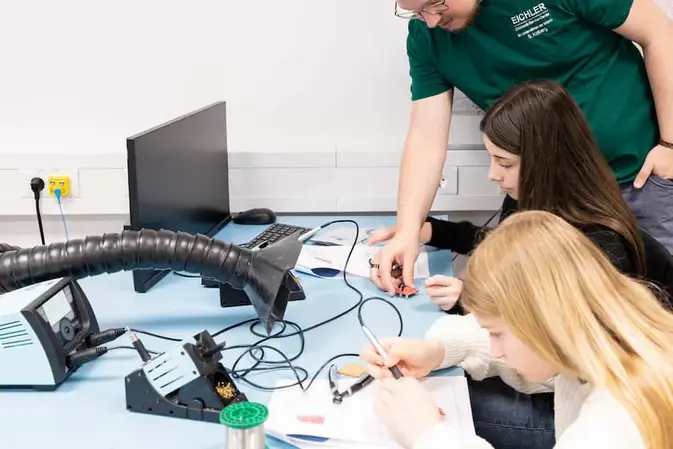
Students at Eichler's Training Day 2025
Day of Training 2025 at EICHLER
Important documents

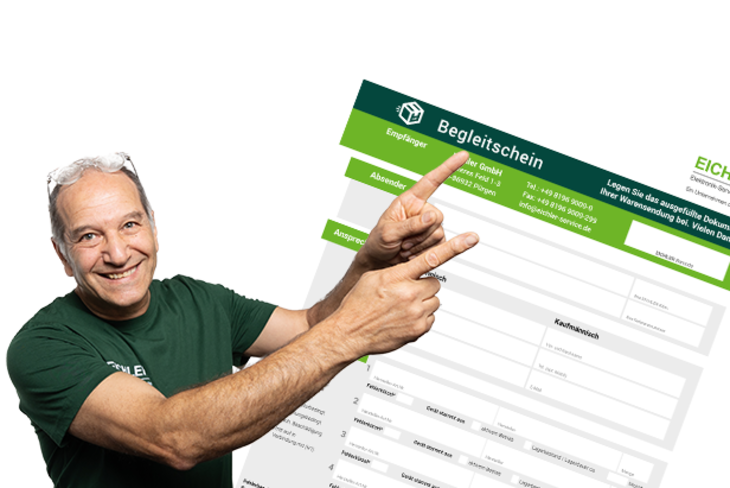
Repair accompanying note

Download the repair accompanying note as a PDF, or use the digital repair registration and send your defective modules to the EICHLER Service Centre for repair.

Laughing Eichler technician points to green PDF with special sale of automation technology

Your shopping basket

There are currently no items in your shopping basket.

Loading shopping basket